Can You Wash a Comforter in the Washing Machine? A Complete Guide for Safe Cleaning
You can wash a comforter in the washing machine if it fits properly and you follow the right steps for safe cleaning. This works well for most comforters made of washable materials such as cotton, polyester, or blends. People with home machines that have enough drum space will find machine washing a cost-effective and convenient method to keep their comforters fresh.
This advice suits homeowners or renters who want to clean comforters without damaging them or their machines. The guide covers checking your washer’s capacity, prepping your comforter, selecting detergent and settings, and drying techniques that protect your bedding. You’ll also learn about common mistakes and when professional cleaning is a better choice.
Key Takeaways
- Confirm your washing machine has at least 4.5 cubic feet capacity for king-size comforters to allow proper movement.
- To maintain freshness and cleanliness, wash your comforter at intervals ranging from 3 to 6 months during typical use.
- Spot-treat stains first and let the solution sit for 15 minutes before washing to reduce overall wash frequency.
- Choose gentle detergents without bleach or fabric softeners to preserve comforter filling and fabric.
- Use a delicate or bulky cycle running 45 to 80 minutes to thoroughly clean without damaging fibers.
- Pause the dryer every 20 to 30 minutes to remove and shake the comforter, preventing the filling from clumping.
Can You Wash a Comforter in a Washing Machine?
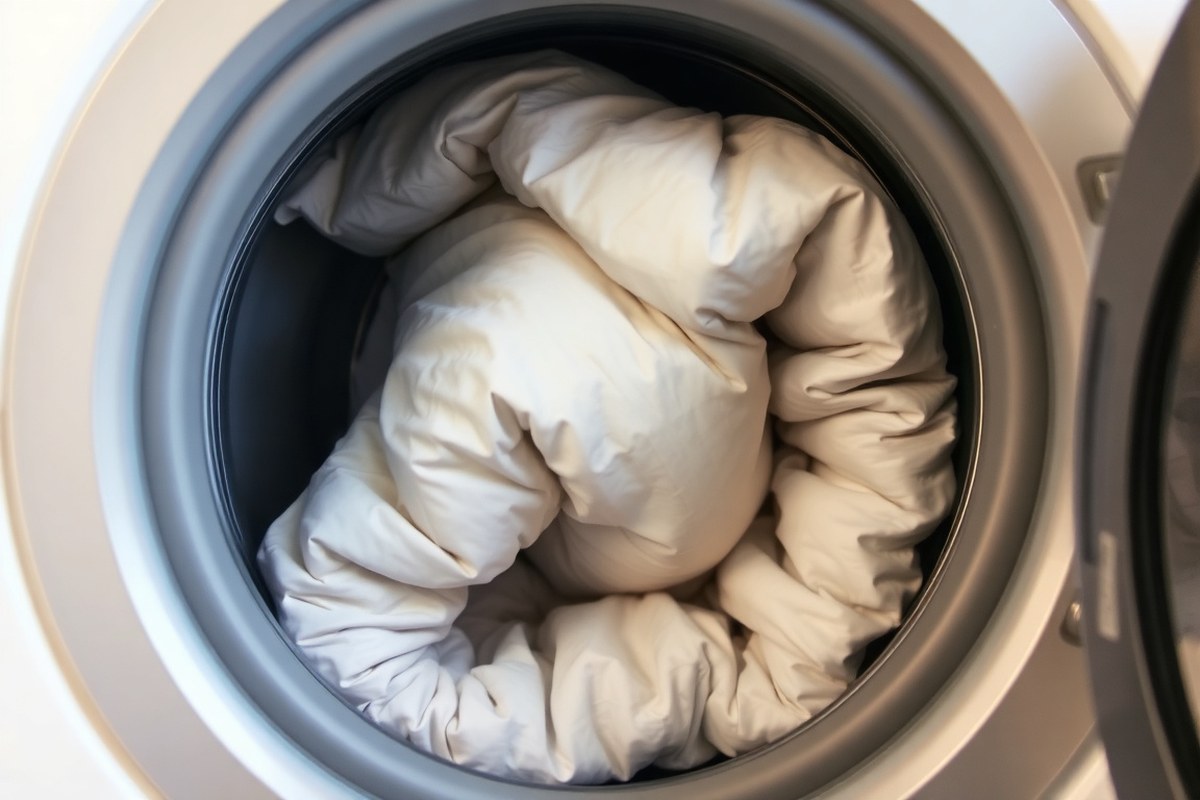
Most comforters can be washed safely in a washing machine, but whether you should depends on the type of filling, the size of your washing machine, and the care label instructions. The key rule to decide if machine washing is appropriate is to always check the care label first. When the label says “machine washable,” you can safely wash the comforter in your machine as long as it fits comfortably and has room to move during the cycle.
Down comforters, which are filled with duck or goose feathers, are usually safe to wash in a machine. They benefit from gentle cycles with cold water and mild detergent to avoid damaging the feathers. Washing on a delicate or bedding setting helps preserve the loft and prevents clumping. Synthetic comforters filled with polyester or microfiber also handle machine washing well, typically on warm or cold water using a mild detergent.
Some comforters, like those filled with wool, silk, or specialty natural fibers, may not respond well to machine washing. Wool can shrink or felt, and silk can lose its texture or color. These often require professional cleaning or hand washing. Comforters with waterproof liners or intricate quilting might also be damaged if washed in a machine, so follow the label carefully.
Size matters for machine washing your comforter. A twin-size comforter can usually be washed alone in a standard home machine. Larger sizes, like queen or king, need a large-capacity commercial washer to avoid poor cleaning results or machine strain. Overcrowding the washing machine prevents thorough cleaning and can damage both the comforter and the machine’s motor.
Risks of machine washing include filling clumps, fabric damage, shrinkage, or frame distortion. Filling can become lumpy if the comforter is washed with too much detergent or on an aggressive cycle. To prevent this, use a mild detergent, choose low spin speeds, and consider adding a few clean tennis balls or dryer balls in the dryer to help redistribute filling after washing.
Your rule for machine washing is to follow the care label exactly, make sure the comforter fits with extra space in the washer, and pick the correct cycle and detergent depending on the filling type. This method protects your comforter from damage and prolongs its life while ensuring a clean and fresh result at home.
How to Check If Your Comforter Fits Your Washing Machine

You can wash a comforter in your washing machine as long as the comforter fits comfortably inside without overfilling the drum. The key is to compare your comforter’s size and weight against your machine’s capacity, measured in cubic feet. Most home washers handle twin and queen comforters, but king-size often requires special care or a larger machine.
Determining Washing Machine Capacity
Washing machine capacity is measured in cubic feet, reflecting the size of the drum inside. Most home washers have capacities between 3.5 and 5 cubic feet. Typically, front-load and high-efficiency (HE) washers offer slightly larger drums than traditional top-loaders. For a queen-size comforter, a washer with at least 4.5 cubic feet is recommended, while king-size comforters usually need machines with a drum of 5 cubic feet or larger. To find your machine’s capacity, check the user manual or manufacturer’s label inside the door or on the back panel. For machines without a clear label, measure the drum diameter and depth yourself, multiply these dimensions (in feet) to estimate capacity roughly:
- Measure diameter and depth of drum in inches
- Convert inches to feet (divide by 12)
- Calculate volume using the formula for a cylinder: π × (radius)² × depth
- Remember radius is half the diameter
- Example: a 21-inch diameter and 15-inch depth drum equals approximately 3.4 cubic feet
Washing a comforter in a machine that is too small can lead to ineffective cleaning and strain on the washer’s motor.
Measuring Your Comforter Size and Weight
Check the actual dimensions of your comforter by laying it flat on a surface and measuring its length and width in inches. Convert these to feet if you want to visualize the space needed inside the drum. Comforters come in standard sizes:
- Twin: about 68 × 86 inches
- Full/Queen: about 86 × 86 inches
- King: about 104 × 90 inches
Weight is also important since wet comforters can be very heavy, adding stress to your machine. The type of filling affects weight greatly; down or feather comforters are lighter, while cotton or polyester fills weigh more. A typical queen-size comforter weighs between 5 to 8 pounds dry but can double or triple when wet. You can use a home scale by folding the comforter into a manageable size and getting an approximate weight before washing.
Matching Comforter to Washer Capacity
To ensure your comforter fits, the machine drum should have enough room for the comforter to move freely so water and detergent circulate well. As a practical rule, the comforter should occupy no more than 75% of the washer drum volume. This lets the fabric tumble and keeps the motor from overworking. For instance, a queen comforter in a 4.5 cubic foot washer will generally fit well.
- Fold the comforter loosely and place it into your washer; it should have space all around
- Avoid washing a comforter that feels overly packed in your machine. Using a laundromat or professional cleaning service is a better option in this case.
- Check the care label to be sure machine washing is recommended
- Note weight limits in the manual; don’t exceed recommended load size by weight
- For king-size comforters, look for commercial washers with 5.0+ cubic feet capacity or use a large laundromat machine
- Consider washing smaller comforters in your home machine rather than overloading it
- Drying a heavy, wet comforter also requires large dryer capacity to prevent mildew
Overloading your washer may cause poor cleaning, detergent residue, or mechanical damage. Machines can struggle to spin out water properly if a bulky comforter is stuffed too tightly. This could lead to longer drying times or the need to repeat rinsing.
Preparing Your Comforter for Machine Washing
Preparing your comforter before machine washing is key to preventing damage and ensuring a thorough clean. Start by checking for any rips or loose threads, spot treating stains, and removing any covers or attachments. Careful preparation protects both your comforter and washing machine.
Inspecting for Tears and Loose Threads
Before placing your comforter in the washing machine, examine it carefully for any holes, tears, or loose seams. Washing a damaged comforter can make these issues worse and may cause filling to escape. Repair small tears with fabric glue or by sewing them closed to maintain the integrity of the comforter during washing.
Also, check for loose threads that could tangle or pull during the wash cycle. Trimming these threads will reduce the risk of further unraveling. Along with inspecting your comforter, confirm your washing machine is in good working order to avoid mechanical problems that could harm your bedding.
Spot Treating Stains Properly
Removing stains before washing improves the final results and helps prevent setting stains permanently. Use a gentle stain remover or apply a small amount of mild detergent directly to the soiled areas. Let the stain treatment sit for 10 to 15 minutes to work effectively.
For best results, carefully blot (do not rub) the stain with a clean cloth after applying the remover. Avoid using harsh chemicals or bleach, as these can weaken the fabric and damage the comforter’s filling. Spot treating also reduces the need for harsh wash cycles, which contributes to longer comforter life.
Removing Covers and Accessories
Always remove duvet covers, pillow shams, or any attachments before washing the comforter itself. Duvet covers should be washed separately, often with other bedding items, to ensure thorough cleaning and to avoid uneven wear.
Take off decorative elements such as buttons or ties where possible, or secure them to prevent snagging during the wash cycle. Washing one comforter at a time keeps the load balanced and avoids overloading your machine, which could stress both your appliance and the comforter.
- Carefully inspect the entire comforter for tears, holes, and loose seams.
- Patch or sew small damaged areas before washing.
- Apply stain remover or mild detergent directly to any stains.
- Let the stain treatment sit for about 10 to 15 minutes.
- Remove duvet covers and any other detachable fabric accessories.
- Secure or remove attachments like buttons or ties to prevent damage.
- Check your washing machine to ensure it operates properly.
- Place only one comforter in the machine at a time to avoid overloading.
Choosing the Best Detergent and Wash Settings
Choosing the right detergent and wash settings is essential for protecting your comforter while cleaning it effectively. Use a mild detergent designed for delicate fabrics. Avoid standard or harsh detergents that can damage the filling or outer fabric. High-efficiency detergents in small amounts, about 2 teaspoons or one laundry pod, work best because they produce fewer suds and rinse out cleanly, preventing residue buildup inside the comforter.
Water temperature should match the care label instructions exactly. Most comforters clean well in cold or warm water, which preserves fabric strength and prevents shrinking or clumping of the filling. Hot water is generally not recommended unless the label specifically says it’s safe, as high heat can degrade materials.
Washing on the gentlest cycle available helps avoid stress on the comforter caused by the agitator or fast spin speeds in many machines. The gentle cycle uses slower agitation and a delicate spin, lowering the risk of tears, compressing the filling, and extending the comforter’s life.
| Factor | Recommended Setting or Amount | Reason |
|---|---|---|
| Detergent Type | Mild, high-efficiency detergent, about 2 tsp or 1 pod | Prevents damage and residue buildup while cleaning effectively |
| Water Temperature | Cold or warm, per care label | Protects fabric and filling, avoids shrinking or damage |
| Wash Cycle | Gentle or delicate cycle | Reduces wear from agitation and spinning |
| Load Size | Comforter must have enough room to move freely | Ensures even cleaning and prevents excess mechanical stress |
Some comforters require specific care situations. For example, down-filled comforters often benefit from a cold water wash and the gentlest cycle to preserve loft and prevent clumping. Synthetic fills may tolerate warm water better but still need gentle agitation. Always check your comforter’s label as it provides the exact water temperature and cycle recommendations based on the material and fill.
If you’re using a machine that lacks a true gentle cycle, consider selecting a hand-wash or delicate option or reduce the spin speed if the settings allow. Lower spin speeds reduce the chances of the filling bunching up or tearing the fabric. Loading the comforter loosely is equally important; overloading the machine can cause ineffective washing and increased wear on the fabric.
Step-by-Step Guide to Washing a Comforter in Your Machine
Washing a comforter in your machine involves careful loading, using the right cycle, and pausing to redistribute the filling. The total process usually takes about 1 to 1.5 hours, depending on your machine’s settings. Proper technique helps prevent clumping and fabric damage.
Loading and Balancing the Comforter
Place the comforter evenly inside a large-capacity washing machine, keeping the load balanced to avoid strain on the machine. The comforter should fill no more than three-quarters of the drum, especially in front-load washers where space is tight. Distribute it loosely rather than stuffing it in, to allow water and detergent to circulate freely.
Small top-loaders may not accommodate a full comforter. For comforters that are too large, try washing it loosely folded or use a professional cleaning service.
Using the Correct Wash Cycle and Timing
Use a gentle or bulky/bedding cycle set to cold or warm water to preserve the fabric and protect the filling. Select an extra rinse cycle if your machine offers it; this helps remove detergent residues that can stiffen the filling. Expect the washing process to last about 45 to 60 minutes, depending on your machine model and cycle length.
Detergent should be mild and used in moderation to avoid buildup. Avoid bleach and fabric softeners unless the care label specifically allows them.
Pausing and Fluffing During Washing
Pause the washing cycle every 15 to 20 minutes to redistribute the filling evenly inside the comforter. This prevents clumps, maintains loft, and ensures even cleaning. Carefully open the washer and gently shake or fluff the comforter by hand to reposition the fibers and filling.
Resuming the cycle after fluffing helps complete the wash thoroughly and keeps the comforter balanced. This step adds only a few minutes but significantly improves cleaning results.
- Look at the care label on your comforter to find the recommended washing directions.
- Load the comforter loosely into a large front-load or top-load machine, filling no more than 75% of the drum.
- Add mild detergent according to the product instructions, avoiding fabric softeners and bleach.
- Set the machine to a gentle or bulky/bedding cycle with cold or warm water.
- Start the cycle, then pause every 15 to 20 minutes to open the machine and shake or fluff the comforter.
- Complete the wash cycle, running an extra rinse if available.
- Remove the comforter promptly to prevent wrinkles and allow proper drying.
Pausing to fluff the comforter during washing helps keep the filling evenly distributed, preventing lumps and reducing wear on your machine.
How to Dry Your Comforter Without Damage
Putting your comforter in the dryer is safe if you use the right heat setting and drying techniques. Using low heat prevents damage to the fabric and filling. High heat can cause shrinking, melting, or clumping inside the comforter, which affects warmth and comfort. Checking for complete dryness is important to avoid mold or odors, while dryer balls help keep the filling evenly distributed.
Dryer balls or tennis balls bounce around during the drying cycle and break up clumps. This helps your comforter dry faster and more evenly. Without them, wet spots can stay damp, leading to trapped moisture. Periodically stopping the dryer to fluff and shake the comforter exposes wet areas to heat and redistributes the filling for uniform drying.
- Place the comforter loosely inside a large-capacity dryer. Ensure it has room to tumble freely to avoid uneven drying and reduce wear on the fabric.
- Add two to three clean tennis balls or wool dryer balls. These prevent the filling from clumping and help air circulate better.
- Select the low heat or air fluff setting on your dryer. Using low heat protects the fabric and prevents shrinking or damage to the insulation.
- Run the dryer for 20 to 30 minutes at a time. After each cycle, pause the dryer to remove the comforter and give it a good shake.
- Fluff the comforter by hand during each pause. Separate any clumps and check for damp spots to ensure even drying.
- Repeat drying and fluffing steps as needed until the comforter feels fully dry. Complete dryness may take 1 to 2 hours depending on your dryer’s power and the comforter’s thickness.
- After drying, hang the comforter or lay it flat for an hour or so to air out any remaining moisture or static. This helps prevent mildew and keeps the comforter soft.
Following these steps keeps your comforter safe and fluffy. A fully dry comforter will have no damp spots, feel light and puffed up, and smell fresh. Skipping the fluffing or using high heat can cause cold, clumped areas or fabric damage that shortens the comforter’s life. Avoid drying more than one comforter at a time to ensure enough space for effective tumbling and heat distribution.
Common Mistakes When Washing Comforters and How to Fix Them
Overloading the washing machine with a comforter leads to inadequate cleaning and can strain the machine’s motor. When the tub is too full, water and detergent can’t circulate properly, which leaves dirt and soap residue on your comforter. To prevent this, check that your comforter fits loosely in the drum with room to move. Large capacity washers can handle queen or king sizes but avoid stuffing the machine, there should be at least one-third of the drum space free.
Using too much detergent is another common mistake that causes buildup rather than better cleaning. Excess soap doesn’t rinse out completely and can leave a sticky residue on the fabric. This residue attracts dirt and irritates skin, especially for sensitive sleepers. Use the amount recommended on the detergent label for bulky items. For a standard comforter, that usually means one to two tablespoons in a high-efficiency (HE) washer. If your machine lacks an HE label, stick to even less to prevent sudsing.
When drying, uneven fluffiness or clumping happens if the comforter is left damp in folds or crowded in the dryer. This leads to cold and lumpy spots that fail to dry thoroughly. To fix this, tumble dry on a low heat setting and add clean tennis balls or dryer balls to break up clumps and help the filling dry evenly. Pause every 20 to 30 minutes to manually shake out the comforter. This redistributes the filling and cuts drying time.
- Ensure comforter fits loosely in the washer with one-third of drum space free
- Measure detergent carefully to avoid overuse, use 1-2 tablespoons HE detergent
- Check comforter stitching before washing to prevent tears and filling loss
- Tumble dry on low heat with dryer balls to maintain even filling
- Pause drying periodically to shake out the comforter and break up clumps
- Skip fabric softeners, which can coat filling and reduce breathability
- Wash every 1 to 2 months for pet owners or heavy sweaters to remove buildup
Addressing these common issues keeps your comforter clean, soft, and in good shape. Avoiding overload and excess detergent protects both your bedding and your washer. Taking extra steps in drying prevents uncomfortable clumps that make your comforter less cozy. By following these tips, you’ll help your comforter last longer and feel fresher each time you wash it.
When to Choose Professional Cleaning for Your Comforter
Some comforters require professional cleaning because they are too delicate, too large, or already damaged for safe machine washing. Comforters filled with unusual materials like wool or bamboo often need specialized care to avoid shrinkage or matting. These fillings may not handle water agitation and heat well, which typical home machines cannot accommodate.
Comforters heavily stained with embedded dirt, pet messes, or persistent odors usually require professional cleaning. Attempting to remove these difficult spots at home might not get rid of all residues or smells and can cause harm through scrubbing or soaking. Professional services have specialized tools and cleaning agents that thoroughly clean large and delicate items without causing damage.
A good decision rule is to check your comforter’s label and size first. The comforter needs enough room to move freely in your washer; it should not fill more than about two-thirds of the drum. Overcrowding can lead to uneven washing and could harm both the comforter and the washing machine. Most household machines cannot handle bulky comforters larger than queen size safely.
Any comforter with visible tears, fabric thinning, or broken stitching should be taken to a professional cleaner. Agitation and spinning in a home machine can worsen damage or cause filling to leak out, ruining the comforter’s insulation and shape. Professionals often spot-treat and reinforce these weak spots before cleaning.
Finding the right cleaning service involves locating one that specializes in large bedding or down comforters if applicable. Ask about their cleaning methods, such as dry cleaning for wool or water-based methods for other fabrics. Prices range from about $30 to $100 per comforter depending on size, fill type, and cleaning method, often worth the cost to avoid costly damage or shrinkage at home. Look for services with positive reviews and clear policies on damage or cleaning satisfaction.
Use this short checklist before deciding on professional cleaning: Confirm your comforter’s size fits your machine capacity; Identify the fill material type and check washing instructions for special needs; Assess the level of soiling and presence of stains or odors; Inspect for any fabric or seam damage; If any condition applies or you doubt your machine’s capability, opt for professional cleaning. These steps help protect your investment and keep your comforter clean and intact longer.
Never force a bulky comforter into a washing machine that feels too small; this can cause damage to both your machine and bedding.
Step-by-Step Action Plan for Washing Your Comforter
Follow these steps to safely wash your comforter at home and keep it in good shape.
- Before you start: Check your comforter’s care label and measure your washing machine’s drum to ensure it can hold the comforter without crowding. A loose fit means even cleaning and less wear on the fabric.
- Preparation phase: Inspect your comforter for tears or loose seams and repair them. Close all zippers and remove duvet covers. This prevents damage during washing.
- Detergent selection: Choose a gentle, liquid detergent without additives like bleach or fabric softeners. Use the recommended amount for a large load to avoid buildup.
- Washing phase: Select a cold or warm water cycle with a gentle or bulky bedding setting, if available, to protect the comforter’s filling. Make sure the spin cycle isn’t too fast; this helps reduce clumping.
- After washing: Run an extra rinse cycle to remove any detergent residue. Check for any remaining stains and treat if necessary before drying.
- Drying phase: Dry on low heat or air fluff setting in a large capacity dryer. Add clean tennis balls or dryer balls to break up clumps and speed drying. Check periodically to avoid overheating.
- Final check: After drying, fluff the comforter by hand to redistribute filling evenly. If still damp, continue drying in short intervals until completely dry to prevent mildew.
Frequently Asked Questions
Can I Wash Any Type of Comforter in a Washing Machine?
Not all comforters are machine washable; check the care label first. Some fillings, like certain down or silk, may require special care or professional cleaning.
How Often Should I Wash My Comforter in the Washing Machine?
Washing your comforter every few months is usually enough unless it’s stained or a pet sleeps on it. Overwashing can wear out fabric and filling more quickly.
Can Washing a Comforter in a Machine Damage It over Time?
Frequent machine washing, especially on harsh settings, can cause lumps or damage the filling. Use gentle cycles and low spin speeds to help protect it.
Will a Comforter Shrink If I Wash It in a Washing Machine?
Some fabrics and fillings can shrink if washed with hot water or dried on high heat. Follow label instructions and choose cold water washes and air drying when possible.
How Do I Prevent My Comforter from Getting Lumpy After Washing?
Use gentle wash cycles and add tennis balls or dryer balls to the dryer to fluff the filling evenly. Avoid overloading the washer and dry thoroughly.
Is It Safe to Use Bleach in the Washing Machine to Clean My Comforter?
Bleach can weaken fabric and damage some comforter fillings, so it’s best to avoid it. Use mild detergent and stain removers specifically made for delicate bedding instead.
Wrapping Up
Washing your comforter in a machine is possible with the right preparation and care, protecting both the fabric and filling. Start by checking your comforter and washer size to avoid damage. Taking cautious steps now will save you time and keep your bedding fresh and comfortable for longer.