How to Wash a Down Feather Jacket: Simple Steps for Clean, Fluffy Results
Washing a down feather jacket requires gentle care to keep it clean, fluffy, and well-insulated. Use cold water with a down-specific detergent, soak the jacket for 10 to 15 minutes, and rinse thoroughly to maintain its loft and waterproof qualities.
This advice is ideal for outdoor enthusiasts and anyone who owns a down jacket but lacks experience with specialty garment care. These steps will help you safely wash your jacket while avoiding feather clumping and damage.
Key Takeaways
- Choose cold water or temperatures no warmer than 86°F (30°C) to protect down insulation.
- Use detergents like Nikwax Down Wash or Granger’s Down Wash designed specifically for down materials.
- Soak your jacket for 10 to 15 minutes before rinsing to loosen dirt and stains effectively.
- If you spot-treat, dilute the cleaner with water, spray the stain, and let it sit for about 30 minutes.
- Remove the jacket from the dryer every 20 to 30 minutes to shake and fluff the feathers during drying.
- Expect drying to take 2 to 3 hours or longer; regularly break up clumps by hand throughout the process.
Safe Step-by-Step Washing Process for Down Jackets
Washing a down feather jacket requires care to protect its delicate filling and fabric. Using a down-specific detergent and cold water on a gentle cycle prevents damage to the natural oils in the feathers that keep them fluffy. Avoid harsh soaps and fabric softeners that strip these oils. Proper rinsing is important to remove all detergent residue, which can cause feathers to clump. A slow spin helps remove excess water without stressing the fabric. Follow these detailed steps to wash your jacket safely while preserving its insulating qualities and appearance:
- Clean the detergent compartment and add down-safe soap. Wipe the washing machine’s detergent dispenser with a cloth to remove any leftover product. Use a detergent specifically formulated for down, like Nikwax Down Wash or Granger’s Down Wash, adding the amount recommended on the label.
- Seal all closures. Zip up all zippers, fasten velcro, and close flaps to prevent snagging or damage during the wash cycle.
- Select the right settings. Set your washing machine to a cold water cycle on delicate, hand wash, or wool setting with a small load size. Use only a front-loading machine or a high-efficiency top-loader without a center agitator to avoid excessive agitation.
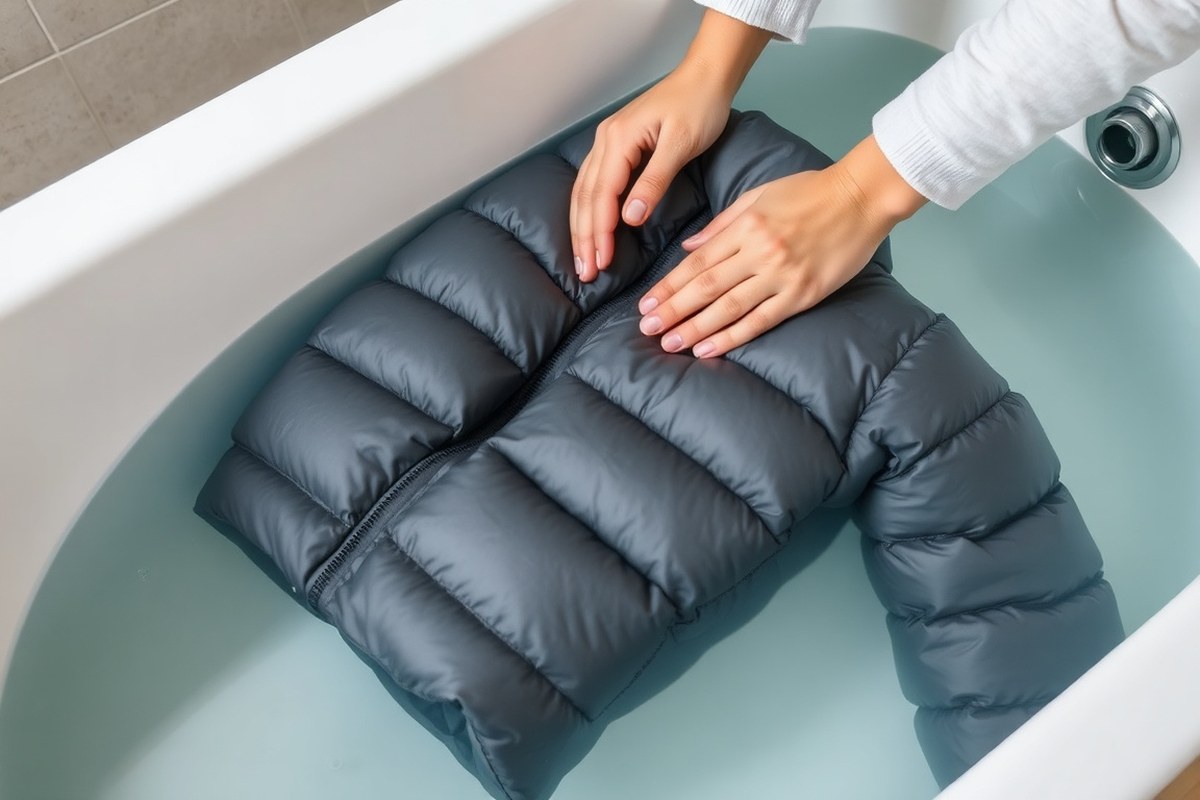
- Soak your jacket. After a gentle spot-cleaning of stains, submerge the jacket in warm water and let it soak for about 15 minutes. This loosens dirt without harsh scrubbing.
- Run the washing cycle. Start the machine on the selected settings. Optionally, add 2 to 3 clean tennis balls (in socks) during the cycle to help prevent feather clumping inside the jacket.
- Rinse thoroughly. Once the wash cycle finishes, run an additional rinse to fully remove detergent residue. Residual soap can reduce loft and cause feather clumps.
- Spin gently. Use a slow spin speed to extract water without damaging the down or stitching.
- Remove excess water by hand if needed. If washing by hand, gently squeeze the jacket without wringing to avoid damaging the feathers.
Choosing Between Machine and Hand Washing
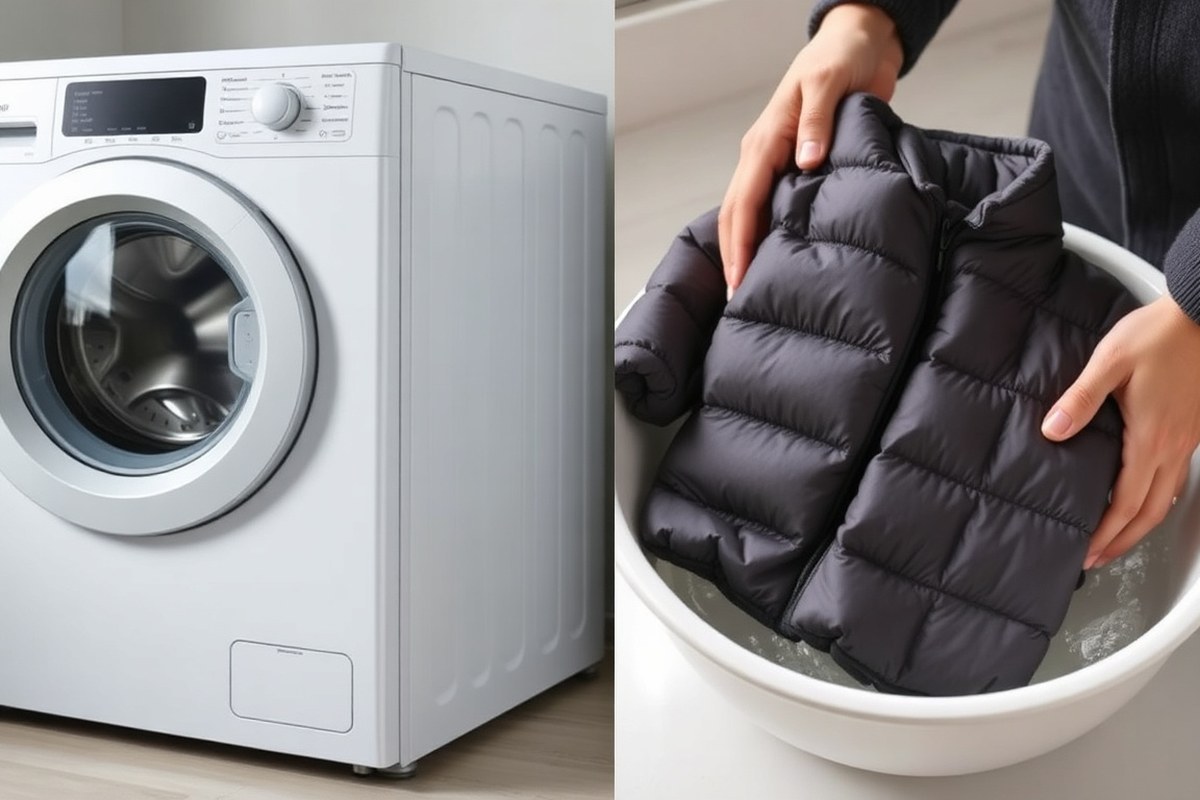
Choosing between hand washing and machine washing your down jacket depends mostly on the jacket’s care label, the washing equipment you have, and the jacket’s condition. Hand washing works best if you want to keep your jacket’s integrity intact and prefer a gentler, more controlled cleaning process. Machine washing can be effective for deeper cleaning but requires caution to avoid damaging the delicate feathers.
Top loading washing machines are not safe for down jackets because the center agitator may tear or crush the fabric and feathers. Front-loading machines or those with a gentle cycle at 30°C (about 86°F) are suitable options if your jacket’s label permits machine washing. Hand washing is safer if your jacket has no machine wash instructions or is fragile from wear. You can also opt for hand washing if your jacket only needs minor cleaning or if you want to avoid risking feather damage.
| Method | Best For | Machine Type | Water Temperature | Time/Process | Pros | Cons |
|---|---|---|---|---|---|---|
| Hand Washing | All down jackets; fragile or older jackets; minor stains | Not applicable | Warm (around 30°C) | Soak, gently agitate by hand, rinse, gently squeeze | Gentle on feathers; no machine damage; precise stain treatment | More time-consuming; requires manual effort; slower drying |
| Machine Washing | New or machine-washable jackets; heavier soiling | Front-loading or agitator-free washers | 30°C, gentle cycle | Use down-specific detergent; slow spin; check and fluff during rinse | Thorough cleaning; time-efficient; good for bigger stains | Risk of damage if using wrong washer; feather clumping risk; requires careful setup |
Start by checking the manufacturer’s care label on your jacket. Choose machine washing only if it explicitly states the jacket is machine washable and select a front-loading or similar washer without a center agitator. Use a down-specific detergent to protect the feathers and set the temperature to 30°C with a gentle cycle. In the machine, pause every 30 minutes to fluff the jacket by hand to avoid feather clumping.
When hand washing, fill a large tub with warm water and a small amount of down cleaner. Soak the jacket and gently agitate to release dirt. Rinse thoroughly, pressing out water without wringing, which could damage the feathers. Hand washing takes longer but avoids any mechanical risks, especially valuable for older jackets or those with delicate seams and treatments.
Never wash your down jacket in a top-loading machine with an agitator, as it can severely damage the insulation and fabric.
Preparing and Inspecting Your Jacket for Washing
Properly preparing your down feather jacket before washing helps protect its insulation, fabric, and hardware. This involves spot cleaning stains, repairing any damage, securing zippers and closures, and loading the jacket correctly. Taking these steps reduces wear and prevents common washing problems like feather loss or fabric tears.
Spot Cleaning Stubborn Stains
Before washing the entire jacket, treat visible stains with spot cleaning to minimize full washes and protect the down fill. Use a mild detergent diluted with water or a down-safe technical wash solution. Apply the solution directly to the stain using a soft cloth or spray bottle, then let it sit for about 30 minutes to loosen dirt and oils, especially around areas prone to sweat like the collar and cuffs.
After soaking, gently rub the stain with a clean damp cloth, taking care not to scrub harshly, which can damage the fabric. Spot cleaning small marks is often enough to keep your jacket fresh without frequent full washing, which can reduce the jacket’s lifespan.
Inspecting and Repairing Damage
Check your jacket thoroughly for any rips, holes, or loose seams before washing. Small tears can allow feathers to escape during the wash, diminishing insulation and ruining the jacket’s loft. Use a needle and thread or fabric repair tape designed for down garments to fix these issues beforehand. Inexpensive repair kits typically cost between $5 and $15.
Don’t ignore damaged areas, even if they seem minor, since water pressure and agitation from the washing process can worsen them. Proper repairs preserve the jacket’s performance and keep it looking good for years.
Preparing Zippers, Velcro, and Pockets
Secure all zippers fully and fasten Velcro straps and snaps to prevent snagging and fabric tears during washing. Open zippers can catch on other clothes or the washer drum, causing damage. Fastening closures keeps the jacket in its proper shape and protects delicate materials.
Empty every pocket completely. Items like tissues, coins, or keys can damage both your jacket and the washing machine. Checking pockets also helps keep your jacket clean by avoiding trapped debris.
- Zip all jacket zippers fully
- Fasten Velcro straps and snaps
- Empty and check all pockets
- Remove detachable parts if possible (hoods, liners)
- Close buttons and snaps securely
Following these preparation steps reduces the risk of damage and makes washing safer for your down jacket.
Loading the Jacket for Washing
Place the jacket alone or with a few lightweight items to avoid harsh mechanical action that can damage the delicate down and outer fabric. Washers filled too tightly cause excess friction, leading to clumping feathers or fabric wear. Front-loading machines are preferred because agitator washers can be rough on down garments.
Consider soaking the jacket in cold water with down-safe detergent before running a wash cycle to help loosen dirt and residual soap from prior spot cleaning. This step can improve cleaning results, especially if you spot treated areas first.
Drying Techniques to Prevent Feather Clumping
To prevent feather clumping while drying your down feather jacket, use a dryer on a low heat setting along with 2-3 clean dryer balls or tennis balls. These balls bounce around inside the dryer, breaking up feather clusters and restoring the jacket’s loft. Throughout the drying process, shake or fluff the jacket regularly to ensure even drying and avoid cold spots.
Using a Dryer Safely
Dry your down jacket on a low heat setting to avoid damaging the delicate feathers and water-resistant coating. Using moderate or high heat can cause the down filling to melt or clump permanently. A dryer with a large drum is ideal, so air can circulate properly around the jacket for even drying.
Add two to three clean tennis balls or special dryer balls to the dryer load. Tennis balls should be placed inside clean socks to prevent lint or dye transfer. These balls tumble along with the jacket, physically breaking up clumps of down to restore loft and insulation. Without them, the feathers often stick together, reducing warmth.
Air Drying Best Practices
You can air dry a down jacket if you don’t have access to a dryer, but it takes much longer and requires active care to prevent clumping. Hang the jacket in a well-ventilated area away from direct sunlight and heat sources. Avoid hanging where airflow is limited; stagnant air slows drying and can cause odor.
To minimize feather clumping, shake and fluff the jacket every 30 minutes while air drying. This redistributes the down evenly and helps maintain its loft. Using a radiator or clothes dryer rack near gentle heat helps speed drying, but be cautious as excessive heat can damage the jacket.
Fluffing and Shaking Schedule
Consistent fluffing throughout the drying process is key to preventing feather clumping and restoring your jacket’s warmth. Pause the dryer every 30 to 45 minutes to take the jacket out, shake it vigorously in all directions, then put it back in. This manual breaking of clumps helps the down dry evenly and remain fluffy.
The entire drying process can last between one to three hours in a dryer, depending on the jacket’s thickness and the dryer’s efficiency. For air drying, expect it to take one to three days or more. Your jacket is fully dry and ready to wear when the feathers feel light and no longer clump together.
- Set your dryer to a low heat or delicate cycle to protect the down.
- Place the damp jacket inside the dryer drum along with 2-3 clean tennis balls or dryer balls.
- Start the dryer and let it run for 30 to 45 minutes.
- Pause the dryer and remove the jacket.
- Shake the jacket vigorously from all angles to break up any feather clumps.
- Return the jacket and balls to the dryer and continue drying on low heat.
- Repeat shaking every 30 to 45 minutes until the jacket feels dry and fluffy.
- If air drying, hang the jacket in a ventilated area and shake it every 30 minutes until completely dry.
Common Washing Mistakes and How to Fix Them
Clumping feathers, lingering dampness, and unpleasant odors are common problems after washing a down jacket. These issues often stem from washing mistakes such as insufficient drying or using harsh detergents not suited for down insulation. Preserving the jacket’s loft and fluffiness depends heavily on handling these steps carefully to maintain warmth and comfort.
One frequent error is skipping or shortening the drying cycle. Air drying alone may take days, causing feathers to clump and the fabric to retain moisture, which leads to odor and loss of insulation. Using a tumble dryer on low heat with special care helps restore loft by breaking up clusters and evenly drying the feathers. Paired with dryer balls or clean tennis balls, this simulates the natural fluffing of down inside the dryer.
The other typical washing mistake involves washing the jacket too often or with regular detergents that strip natural oils from the feathers, making them brittle and less resilient. Applying a down-specific wash product helps preserve oils and maximizes water repellency, preventing clumping and fabric damage. Rinsing thoroughly is also essential to remove detergent residues that weigh down insulation.
- Shake and gently fluff the jacket periodically during drying to evenly redistribute feathers.
- Use recommended amounts of down wash and avoid fabric softeners or bleach.
- Set the dryer temperature to low or air fluff to avoid damaging feathers or shell fabric.
- When feathers still clump, repeat tumble drying in short intervals using dryer balls.
- For lingering dampness or smell, run an additional drying cycle rather than air drying.
- Repair any small holes promptly to prevent feather loss and maintain insulation.
Do not add regular detergent or fabric softener; these products can reduce loft and damage the down’s natural oils.
Your jacket may still feel damp after drying; avoid wearing it right away. The cold spots where feathers have clumped or remained wet will reduce warmth and comfort. Instead, placing the jacket in the dryer again for 30 to 60 minutes while fluffing it by hand can restore puffiness. The key is patience and ensuring all moisture is out, which prevents mold or long-lasting odors.
By avoiding these errors and carefully drying while using the right products, you can restore your down jacket’s loft and extend its useful life. It takes some extra effort but returns the jacket to a cozy, insulated state ready for your next outdoor adventure.
When and How Often Should You Wash a Down Jacket?
How often you wash your down jacket depends largely on how much you use it and the conditions it’s exposed to. For heavy outdoor use, such as hiking or skiing through dirt, mud, or sweat, washing after every one to two seasons typically works well. In daily or light use, washing it once a year or when you notice grime is enough. Overwashing can strip natural oils and damage the jacket’s insulation, so try to avoid washing it too frequently.
Look out for visible dirt, stains, or a musty odor as signs that your jacket needs cleaning. If you notice the outer fabric absorbing water instead of beading it, this indicates the durable water repellent (DWR) finish is wearing off and it’s a good idea to wash and treat the jacket to restore water resistance. A sticky or dirty feel on the fabric also suggests it’s time for a wash. Spot cleaning small marks can extend the time between full washes and reduce wear.
It helps to use a simple checklist to decide on washing. Check for dirt spots, stains, body oils or sweat buildup that dulls loft or causes odor. Test the water repellency by sprinkling water on the jacket; if water soaks in instead of beading up, the jacket’s performance is declining. Consider how often you’ve worn it and whether heavy physical activity caused sweat and grime. You can extend the jacket’s life by washing it only when these signs are noticeable rather than on a fixed schedule.
Seasonal changes also affect washing frequency. After winter sports or rainy periods, dirt and sweat may accumulate more quickly, making washing necessary. Before storing your jacket for summer, wash it to keep it fresh and ready for the next season. During off-seasons, keep it clean by airing it out and performing minor spot cleaning instead of full washes.
Washing a down jacket costs little in time and supplies but too frequent cleaning can reduce loft and the natural insulating power of the feathers. Balancing cleanliness and jacket longevity means washing every few months with attention to visible dirt and odor, using proper down cleaner and drying carefully. Wear and use are key factors in deciding how often to wash. Taking time to inspect and maintain your jacket regularly helps you avoid unnecessary washing, preserves the insulation, and keeps your jacket performing well on every outdoor adventure.
Safe Storage and Post-Wash Care to Maintain Loft
Store your down jacket only after it is fully dry to prevent mold and mildew growth. Damp down traps moisture in its feathers, which can quickly lead to odor issues and damage the insulation. Before storing, thoroughly check the jacket by feeling for any cold or damp spots, especially under seams and inside pockets.
Keep the jacket fluffy in storage by avoiding compression. Storing it in a tight bag or compressed space can crush the down clusters and reduce its loft, harming the jacket’s warmth. Instead, use a breathable cotton storage bag or hang the jacket on a wide, padded hanger in a well-ventilated closet where it has room to maintain its shape and loft.
- Ensure the jacket is 100% dry, feeling all layers inside and out before storage
- Keep your jacket somewhere cool and dry, avoiding spots that get direct sunlight or are near heat sources.
- Use a breathable fabric bag or hang on a wide hanger to avoid compression
- Keep the storage area clean and avoid plastic bags that trap moisture
- Periodically shake or gently fluff the jacket to redistribute the down
- Store the jacket after the winter season or a drying cycle to keep it fresh
Following these steps prevents damage to the fine down feathers and maintains the jacket’s insulating properties through off-seasons. For long-term storage, avoid environments with high humidity or temperature swings. Should you detect any moisture or odors before putting your jacket away, let it air out or run it on a gentle dry cycle another time.
Best Detergents and Cleaning Products for Down Jackets
Using a detergent made specifically for down jackets is the best way to clean your jacket without harming its insulating properties. These products are designed to be gentle on the fabric and feathers, preserving the natural oils essential to down’s loft and warmth. Avoiding harsh chemicals and regular laundry soaps protects your jacket and extends its lifespan.
Recommended Down-Specific Detergents
Down-specific detergents, such as those labeled as “Down Wash” or “Down Cleaner,” are formulated to clean without stripping the natural oils found in down feathers. These oils keep the feathers fluffy and water-resistant. These detergents are usually mild liquid formulas that rinse out easily, preventing residue buildup. Products like Nikwax Down Wash Direct or Granger’s Down Wash typically cost between $10 and $20 per bottle and are used in small amounts, usually one to two ounces for a full front-loading washer cycle. Using these detergents will maintain your jacket’s loft while cleaning it well.
To use, add the down detergent to your washing machine’s detergent compartment, then run a gentle or delicate cycle with cold or lukewarm water, usually between 80°F and 90°F. Down-specific detergents do not contain harsh enzymes or bleach, which can degrade the jacket’s fabric and feathers. This attention allows the jacket to retain its insulating performance after washing.
Detergents and Soaps to Avoid
Regular laundry detergents should be avoided because they are generally too harsh for down jackets. These detergents can strip the essential oils from down feathers, causing them to clump and lose insulation. Using regular soap, bleach, or fabric softeners often results in feathers losing their loft and becoming susceptible to moisture. This damage reduces the jacket’s warmth and makes it harder to dry evenly.
Dry cleaning is not a safe alternative since the chemicals used in the process can harm down insulation. Likewise, powdered detergents might leave residues that clog the fabric. If you only have access to these, it’s better to wait or seek a specialized cleaner rather than risking damage that will affect your jacket’s performance and durability.
Never use bleach or fabric softeners on your down jacket; they can cause irreversible damage to the feathers and fabric.
Natural Cleaning Alternatives
Some people consider natural remedies like vinegar or baking soda, but these are not recommended for down jackets. Vinegar can affect the feathers’ natural oils, and baking soda is abrasive and may not rinse out completely. These alternatives may clean superficially but risk harming the insulation and fabric integrity over time.
Occasional spot cleaning with a damp cloth and mild soap made for delicate fabrics can help when full washing isn’t necessary. However, for a full wash, using a down-specific detergent is safer and more effective. The extra investment in a specialty cleaner prevents long-term damage and maintains your jacket’s warmth and water resistance, even if the upfront cost is higher than home remedies.
Step-by-Step Action Plan for Washing Your Down Feather Jacket
Follow these key steps to clean your down jacket safely while keeping its loft and warmth intact.
- Before you start: Check all zippers and fasten Velcro straps to avoid damage during washing.
- Day 1: Use a front-loading washing machine with a gentle cycle or hand wash using down-specific detergent; successful washing means no detergent residue remains on the fabric.
- Immediately after washing: Gently press out excess water without wringing; the jacket should feel damp but not dripping wet.
- Within 2 hours: Tumble dry on low heat with clean tennis balls or dryer balls to restore loft evenly; your jacket should feel fluffy and springy after drying.
- After drying: Inspect for any clumped feathers by gently shaking or massaging the jacket; separate any clumps by hand if needed.
- Weekly (during use): Spot clean small stains promptly with a damp cloth and mild soap to minimize full washes.
- Every 4-6 months: Perform a full wash following this plan, unless heavy soiling occurs sooner.
- Before storage: Make sure the jacket is completely dry and store it loosely in a breathable bag to keep its loft intact until next use.
Frequently Asked Questions
How to Wash a Macpac Puffer Jacket?
Wash it in a front-loading machine with down-safe detergent and avoid fabric softeners. Make sure to spot-treat stains beforehand for better cleaning results without damaging the jacket.
How Do I Wash a Down Jacket?
Use a front-loading machine with a down-specific cleaner on a gentle cycle, or hand wash gently. Avoid top-loading machines with agitators that can damage the feathers inside.
How to Dry a Down Jacket Without a Dryer?
Hang it to air dry in a warm, ventilated area or over a radiator if possible. Shake the jacket regularly to break up feather clumps during drying.
How to Fix Down a Feather Jacket After Washing?
Tumble dry on low heat with dryer balls to fluff the feathers and restore loft. Shake it out every 30 minutes to prevent clumping until fully dry.
Is It Harmful to Wash a Down Jacket Often?
Frequent washing can reduce loft and water resistance, so wash only when necessary to maintain performance.
Can I Use Regular Detergent on My Down Jacket?
Regular detergents can damage feathers; use only cleaners designed for down garments.
The Bottom Line
Keeping your down jacket clean and fluffy relies on gentle washing and thorough drying soon after. Your next step is to gather a suitable down-specific detergent and prepare your washing area today, so you’re ready to refresh your jacket whenever it needs care. Consistent attention to these details will help your jacket last through many outdoor adventures.