How to Bleach Whites Safely: 8 Expert Methods for Bright Results
How to bleach whites effectively involves using the right type of bleach, controlling soaking time, and rinsing thoroughly to avoid fabric damage. For most white clothes, soaking in a dilute bleach solution for about 5 to 10 minutes in warm water gives bright results without weakening fibers. Avoid over-soaking, as this can lead to yellowing or holes.
This guidance is for anyone responsible for laundry who wants bright, white clothes while preventing damage. You’ll learn safe bleach selection, soaking techniques, and how to protect both your clothes and yourself throughout the bleaching process.
Key Takeaways
- Use warm water between 90 and 110 degrees Fahrenheit for most white laundry loads.
- Limit bleach soaking to no longer than 10 minutes to prevent fabric damage.
- Choose regular household bleach with 5-8% sodium hypochlorite for typical home use.
- Always check garment care labels before using bleach to avoid ruining delicate fabrics.
- Fully submerge clothes in the bleach solution to ensure even whitening.
- Rinse clothes thoroughly with water or a neutralizing solution after bleaching.
1. How to Bleach White Clothes Effectively Without Damage
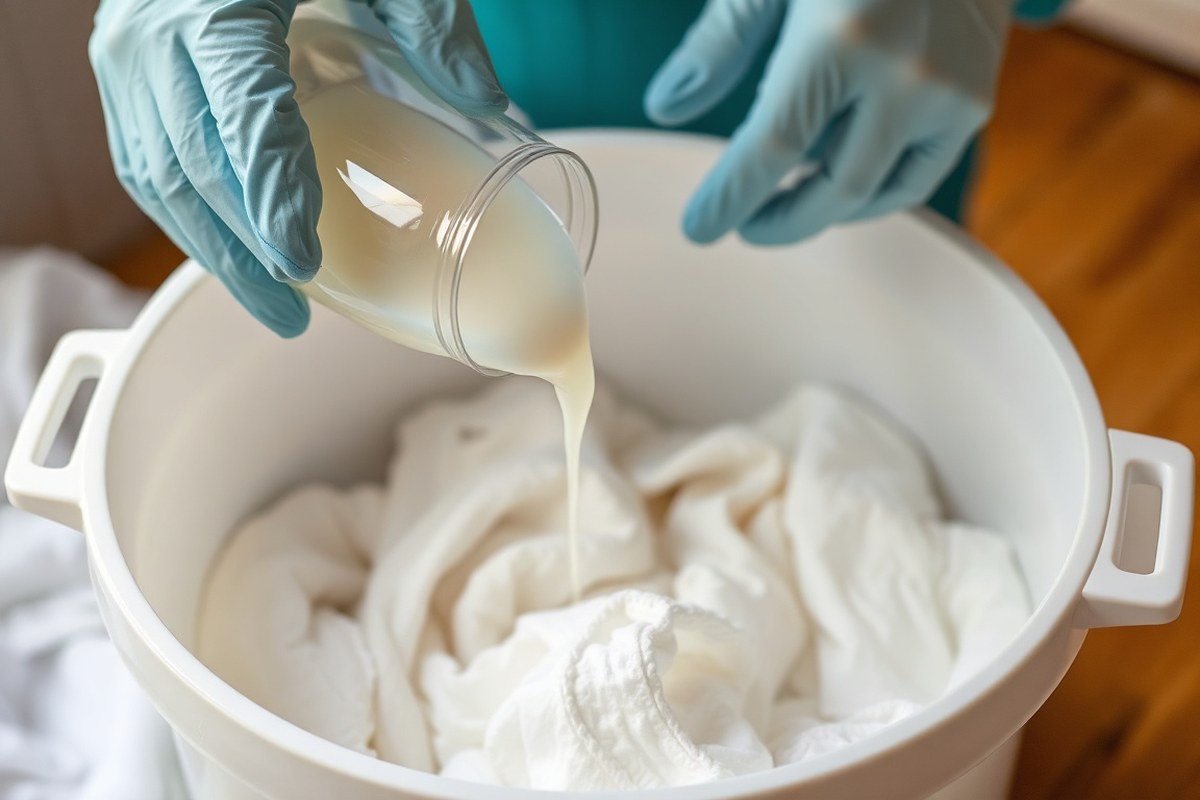
Bleaching white clothes requires careful handling to ensure the fabric stays intact and the whiteness improves effectively. Using a soaking method with a properly diluted bleach solution lets the chlorine work on the fabric without overexposure that can cause damage or weakening of fibers. Precise measurements and timing are key. Generally, soaking for about 5 to 10 minutes in warm to hot water, followed by thorough rinsing, strikes the balance between brightening and fabric safety.
Use about ¼ cup of chlorine bleach per gallon of water for most average loads. Warmer water, around 130°F, helps remove dirt and activates the bleach. Avoid soaking longer than 10 minutes to prevent the corrosive bleach from eating fibers. Rinsing with cold water right after soaking removes excess bleach and stops the chemical reaction to preserve fabric quality. Follow these steps for safe and effective bleaching by soaking your whites:
- Fill a plastic bucket or basin with warm to hot water. Aim for around 120°F to 130°F to optimize bleach effectiveness without damaging fabric.
- Add bleach to the water. Use approximately ¼ cup of regular household chlorine bleach for each gallon of water. Adjust amount if you have a larger load, up to 1 cup of bleach.
- Mix gently. Stir the solution slowly to disperse bleach evenly without splashing or splattering.
- Submerge your white clothes fully. Ensure garments are completely soaked in the bleach solution. Avoid overcrowding to allow bleach contact with all fabric surfaces.
- Soak for 5 to 10 minutes. This timeframe sufficiently whitens clothes but limits fabric damage risk. Do not extend soak time.
- Remove clothes and rinse immediately in cold water. This halts bleaching action and removes residue. Rinsing in cold water also prevents fabric from weakening due to heat stress.
- Wash the soaked clothes with detergent promptly. Wash in the warmest safe water setting for the fabric to fully clean and remove leftover chemicals.
- Dry as usual. After washing, dry your whites normally, either in a dryer or hung to air dry.
Using this soaking method ensures your white garments brighten effectively with minimal risk of fabric damage. Avoid longer soaks and always rinse promptly to protect fibers. Adjust bleach amounts if dealing with larger loads or particularly dingy whites, keeping the water-to-bleach ratio consistent for best results.
2. Choosing the Best Bleach Type for Your White Garments

Choosing the right type of bleach depends on your fabric type, desired whitening strength, and sensitivity to chemicals. Chlorine bleach delivers the fastest and strongest whitening but risks damaging fabrics if misused. Oxygen bleach offers a gentler option safe for more fabric types and repeated use. Hydrogen peroxide serves as a mild, natural alternative ideal for delicate fabrics like wool or silk.
Chlorine Bleach: Strongest Whitening Power
Chlorine bleach, commonly found as sodium hypochlorite, is the most powerful whitening agent for white fabrics. It works quickly and effectively on heavily soiled cotton clothes and durable items like white socks or denim. However, its harsh nature can cause yellowing or fiber damage over time, especially with extended exposure or high concentrations.
Use chlorine bleach only on sturdy white fabrics and follow care labels closely. Dilute according to label instructions and soak clothes for about 5 to 15 minutes depending on fabric toughness. Avoid using it on delicate fabrics such as wool, silk, or synthetics, as the chemical can cause holes or fabric weakening.
Oxygen Bleach: Gentler Everyday Option
Oxygen bleach (such as sodium percarbonate-based products like OxiClean) provides a milder, safer alternative suitable for most white fabrics and even colored clothes. It’s an oxidizing bleach that whitens without the harsh effects of chlorine. Oxygen bleach is effective for frequent use, helping maintain brightness without damaging fibers.
This type is ideal for everyday white wear and works well when used in the washing machine by scooping into the drum. Soak times vary between 5 and 30 minutes depending on clothing type. Because it’s less aggressive, oxygen bleach can be repeated more often and still preserve fabric integrity.
Hydrogen Peroxide and Natural Alternatives
Hydrogen peroxide acts as a mild reducing bleach and is safest for delicate white fabrics such as wool, mohair, or silk. It can be paired with baking soda to tackle light stains and maintain whiteness without harsh chemicals. Although less potent than chlorine or oxygen bleach, it reduces risk of damage and fades less color when used cautiously.
Another natural method to brighten whites is sun exposure, which uses UV rays to remove yellowness gently. These natural options tend to require longer treatment times but are gentle enough for sensitive fabrics and frequent use. Rinse hydrogen peroxide, treated items in water for about 1 minute to neutralize bleaching effects completely.
| Bleach Type | Pros | Cons | Recommended Use |
|---|---|---|---|
| Chlorine Bleach | Strong whitening power; fast action; cheap and widely available | Can damage fibers; may cause yellowing; unsafe for delicate fabrics | Durable white cotton, denim, socks; short soak times (5, 15 mins) |
| Oxygen Bleach | Gentler; safe for colors; suitable for repeated use | Slower action; may require longer soak (5, 30 mins); pricier than chlorine | Everyday white fabrics; colored clothes; mild to moderate stains |
| Hydrogen Peroxide | Mild; safe for delicate whites; less harsh chemical | Weaker whitening; longer treatment; best paired with baking soda | Delicate fabrics like wool, mohair, silk; light stain removal |
Always test a small, hidden spot before applying any bleach to check fabric reaction and colourfastness.
3. How to Bleach Whites Safely in the Washing Machine
You can bleach whites safely in your washing machine by using the right cycle, temperature, and bleach amount. Always add bleach to the dispenser or dilute it first, never pour it directly on clothes. Follow the label instructions for temperature and bleach type to avoid fabric damage while whitening and brightening your whites effectively.
Selecting the Right Wash Cycle and Temperature
Set your washing machine to the hottest water temperature safe for the fabric, as indicated on the care label. Hot water helps activate the bleach and lift stains while brightening the whites. Use a short or normal wash cycle depending on fabric thickness and soil level; a hot, shorter cycle reduces wear on the fabric.
Select the warmest water temperature allowed on the clothing label when hot water is not recommended. Avoid cycles with a prolonged soak if your machine doesn’t automatically control bleach exposure time, since excessive contact can weaken fibers. High-efficiency machines usually handle bleach cycles automatically.
Measuring and Adding Bleach Properly
Measure the bleach according to the product’s instructions, usually about 1/3 cup of liquid bleach for a standard load. Add the bleach to your washer’s bleach dispenser before starting the cycle to ensure proper dilution. Add the bleach gradually after the washer tub fills to prevent fabric spots if your machine does not have a built-in dispenser.
Never pour bleach directly onto any clothes to prevent yellow spots and fiber damage. Using the correct bleach amount avoids residue that can remain on fabric and cause deterioration. Follow your bleach label guidelines carefully for the type of fabric and load size to balance whitening power and fabric care.
Post-Wash Rinsing and Drying Advice
After the wash cycle finishes, remove your clothes promptly and rinse them thoroughly with cold water. This extra rinse helps remove any leftover bleach to protect clothes from damage. Avoid re-running the bleach cycle if stains or yellowness persist, since excessive bleaching weakens fabric.
Machine dry whites according to garment instructions, knowing that heat can shrink some fabrics. Air drying may be preferable for delicate whites. Proper rinsing and drying ensure your whites stay bright and your clothes last longer.
- Sort whites according to bleach safety and fabric type.
- Load washing machine without overstuffing to allow water and bleach circulation.
- Set the washer to the hottest safe wash cycle per garment labels.
- Add detergent as usual.
- Use the specified amount of liquid bleach in the dispenser. When a dispenser is not available, mix bleach with water and add it once the washer tub has filled.
- Start the washing machine to run the cycle with bleach.
- After the cycle, promptly remove clothes and rinse with cold water if not automatically rinsed.
- Dry whites according to care labels, preferring air drying for delicate fabrics.
4. How to Pretreat and Remove Stubborn Stains Before Bleaching
Pretreating stains on white clothes improve the bleaching process by breaking down tough marks before exposure to bleach. Using compatible stain removers like liquid detergent or oxygen-based products helps lift yellow, sweat, and other stubborn stains without damaging the fabric. Applying these treatments for about 15 to 30 minutes before bleaching optimizes stain removal and keeps whites bright.
Identifying Common White Garment Stains
Whites often show yellowing from sweat, deodorant, or body oils, especially around collars and underarms. Food stains such as grease or sauces, and dirt from outdoor activities, also affect brightness. Some stains, like transfer dye from colored fabrics, are more difficult to remove and may require professional treatment. Spotting these early helps you decide how strong the pretreatment should be.
It’s beneficial to examine the fabric type and care label before pretreatment. Cotton and durable synthetic blends tolerate stronger stain removers, including chlorine bleach later. Delicate fabrics may need gentler options to avoid damage.
Using Detergents and Stain Removers Before Bleaching
Liquid laundry detergent is a readily available and effective pretreatment for most stains and works well with bleach. Apply a dab directly to the stain, then gently scrub with a soft-bristle brush or old toothbrush. For more stubborn stains, oxygen-based stain removers can be added to a warm water soak. Avoid using bleach directly on spots before pretreatment, as it can set some stains worse if not diluted properly. Some recommended pretreatment products include:
- Liquid laundry detergent (clear or color-safe formulas)
- Oxygen bleach stain removers (such as sodium percarbonate-based powders)
- Commercial stain sticks labeled safe for whites and bleach use
Stay clear of ammonia or acidic cleaners mixed with bleach to prevent harmful fumes. Also, ensure the pretreatment remover does not contain colorants that might affect the fabric.
Timing and Application Tips
Effective pretreating balances exposure time to lift stains without harming the fabric. A general timespan is 15 to 30 minutes for soaking or allowing detergent to work on the stained spot. Over-soaking or leaving strong detergents for too long might weaken fibers or cause yellowing of whites. For thick or greasy stains, repeated treatment sessions could be necessary. Always rinse or lightly wipe excess detergent before proceeding to bleach to avoid chemical interactions. Follow these steps for pretreating stubborn stains before bleaching:
- Inspect the garment to identify stain types and fabric sensitivity.
- Apply a small amount of liquid detergent directly to the stains.
- Gently scrub stained areas with an old toothbrush or soft brush.
- For tough stains, soak the garment in warm water with oxygen-based bleach for 15, 30 minutes.
- Rinse the treated areas to remove excess detergent or stain remover.
- Check if the stains have lightened; repeat treatment if necessary for persistent marks.
- Proceed to bleach the garment as directed on the care label and bleach instructions.
5. Safety Precautions to Protect Yourself and Your Clothes When Bleaching
Protecting yourself and your clothes from bleach starts with wearing the right gear. Always put on rubber gloves to avoid skin irritation, since bleach is harsh and can cause redness or burns. An apron or old shirt will shield your clothing from splashes. If you spill bleach on your skin, rinse immediately with plenty of water.
Ventilation is key to avoiding toxic fumes. Use bleach only in well-ventilated rooms, open windows and doors to create airflow or use a fan to help move air. Masking your nose and mouth with a simple cloth or mask can reduce inhalation of fumes, especially if you have respiratory issues. Never bleach in a closed space, as chlorine gas can build up quickly and cause coughing, headaches, or worse.
Some common cleaning chemicals cause dangerous reactions when mixed with bleach. Ammonia, acids (including vinegar), rubbing alcohol, and dish detergents should never be combined with bleach. Mixing these products can release toxic gases, such as chloramine, which is harmful or even deadly. Always read the labels of any cleaning agents before use, and keep your bleach containers clearly separated to avoid accidents.
- Wear rubber gloves and a protective apron before handling bleach.
- Open windows and doors or use a fan to ventilate the work area.
- Never mix bleach with ammonia, vinegar, or other cleaners.
- Rinse skin immediately if bleach makes contact.
- Use bleach in cold water to reduce fumes and fabric damage.
- Store bleach in a cool, dry place away from other chemicals.
- Keep bleach out of reach of children and pets.
Always use bleach in a well-ventilated area to avoid inhaling toxic fumes and protect your lungs.
Handling bleach carefully makes the difference between clean whites and damaged fabric. Submerge clothes fully in a diluted bleach solution for about 5 to 10 minutes, not longer. Hot water speeds up bleaching but increases fumes and fabric wear, so room temperature or cold water is safer for your lungs and clothing. After bleaching, promptly rinse your clothes to stop the bleach action and reduce fabric weakening.
6. How to Neutralize Bleach and Rinse Clothes Properly After Soaking
Neutralizing bleach after soaking your white clothes is essential to stop the bleaching process immediately and prevent fabric damage or over-bleaching. Bleach left on garments can weaken fibers and cause yellowing or holes over time. Using a neutralizing solution also helps restore fabric brightness without leaving harmful residues.
The most effective neutralizer is a simple hydrogen peroxide solution. Mix equal parts 3% hydrogen peroxide and cool water in a bucket or basin. This not only halts the bleach’s chemical action but also contributes to further whitening. Vinegar can be a backup neutralizer, but hydrogen peroxide is generally preferred for better safety and whitening results.
After soaking your clothes in the neutralizing solution, rinse them thoroughly with cold water to remove both the peroxide and any remaining bleach. Rinsing should last several minutes, enough to ensure that the fabric no longer smells of bleach or peroxide and feels clean without any slippery residue.
- Prepare the neutralizing solution: In a bucket, mix equal parts 3% hydrogen peroxide and cool water. Stir gently to combine.
- Soak the bleached clothes: Fully submerge your garments in the hydrogen peroxide solution for 10 minutes to neutralize the bleach. Avoid soaking longer to prevent fabric strain.
- Drain and remove clothes: After 10 minutes, carefully lift the clothes out of the solution and gently squeeze out excess liquid without wringing harshly.
- Rinse thoroughly: Place the clothes under cold running water or fill a clean basin with cool water for rinsing. Rinse for at least 2 to 3 minutes to ensure all peroxide and bleach residues are washed out.
- Repeat rinsing if necessary: If the clothes still have a bleach or peroxide smell or feel slippery, rinse again until the fabric returns to a neutral state.
- Handle gently when wet: After rinsing, gently squeeze excess water out and avoid rough handling that could weaken the fabric.
- Dry promptly: Hang dry the clothes in a well-ventilated area away from direct sunlight to avoid yellowing and preserve brightness.
Using vinegar to neutralize bleach is less common since it can react with residual bleach to release fumes and might not be as effective at stopping bleaching action quickly. If vinegar is used, dilute it in water (about 1 cup vinegar per gallon of water) and soak clothes briefly, followed by thorough rinsing. However, hydrogen peroxide remains the better choice for safety and performance.
Neutralizing bleach and rinsing properly protects your white garments from damage, helps them stay bright, and ensures your clothes are safe to wear after bleaching. This method costs only a few dollars for hydrogen peroxide, widely available in drugstores, and takes about 15 minutes total, offering a low-cost step that preserves your investment in white clothing.
7. How to Maintain White Clothes Brightness After Bleaching
Bleaching your whites too often can weaken fabric fibers, so limit bleaching to when clothes actually look dull or stained, usually every few months or less. To keep your whites bright in between bleaches, choose laundry detergents with optical brighteners that help maintain whiteness. Washing whites in warm water between 90°F and 110°F helps detergents work better to remove soils that cause yellowing without harsh treatment.
Sunlight naturally bleaches white fabrics by breaking down stains and brightening fibers, but it should be used with care. Dry your whites outside in indirect sunlight or for short periods to prevent fabric damage. Excessive direct sun exposure can weaken fibers and cause dulling or yellowing over time.
Adopting fabric-friendly laundry routines plays a major role in preserving brightness. Avoid overloading your washing machine to let water and detergent circulate properly. Rinse thoroughly to remove detergent residues that might cause greying. Air dry or tumble dry on low heat to protect fabric integrity and avoid heat-induced yellowing.
- Wash white clothes separately to prevent color transfer
- Use detergent with optical brighteners for everyday loads
- Choose warm water cycles (90°F to 110°F) for whites
- Limit bleach soaking to under 10 minutes when needed
- Hang whites in shady spots or dry with limited direct sunlight
- Turn whites inside out to reduce surface wear when washing
- Use fabric softener sparingly to avoid residue buildup
Over-bleaching or soaking longer than recommended can cause yellowing or fabric damage. Handle whites gently and avoid ironing on high heat, which can set stains or cause yellowing. Proper washing and drying care protect fibers and extend your whites’ bright look after bleaching. Checking labels for fabric-specific instructions also helps maintain color and strength.
8. Common Bleaching Mistakes and How to Fix or Avoid Them
Using bleach incorrectly often leads to common problems such as bleach spotting, yellowing, or fabric damage. These issues occur mainly when bleach is overdosed, left on white clothes for too long, or spilled unintentionally. Bleach spotting happens when undiluted bleach touches certain areas directly, causing light patches that disrupt the uniform whiteness. Yellowing usually results from prolonged exposure or damage to natural fibers, which weakens them and alters color.
To avoid making these mistakes, always dilute bleach with water at a safe ratio, typically around 1 part bleach to 3 parts water for strong whitening effects. Applying bleach undiluted or using too much can cause irreversible holes and fabric weakening. Leaving clothes to soak longer than 10 to 15 minutes in this solution risks yellowing and fiber damage. Delicate fabrics like silk or wool should never be bleached or require much lower bleach concentrations and shorter soak times to prevent harm.
Fixing bleach damage can be difficult. For minor spots or uneven whitening, rinsing the garment immediately and applying a color restorer or oxygen-based brightener may help. To address unwanted yellowing, a soak in a solution of warm water and a laundry booster like baking soda or an oxygen bleach according to product instructions might reduce discoloration. However, widely damaged fibers with holes or heavy weakening usually require replacing the garment.
- Overdosing bleach: Use recommended dilution to avoid fabric burn and holes.
- Soaking too long: Limit bleach exposure to 10-15 minutes to prevent weakening and yellowing.
- Using undiluted bleach directly on clothes: Always pre-mix bleach with water first.
- Applying bleach to delicate fabrics: Avoid or use minimal amounts with short exposure times.
- Failing to neutralize bleach after soaking: Rinse thoroughly to stop bleach action and protect fibers.
- Poor ventilation when bleaching indoors: Ensure air flow to avoid health risks from fumes.
- Ignoring bleach spills on skin or surfaces: Clean immediately to prevent damage or irritation.
Always add bleach to water, never water to bleach, to control concentration and avoid splashes.
Preventing these problems starts with careful measurement and timing. Use a timer to track soak duration and check fabrics frequently during bleaching. Always rinse whites thoroughly after bleaching to remove residual chemicals. Handling bleach outdoors or in a well-ventilated area safeguards your lungs from fumes. Remember, slower and gentler treatment works best for delicate whites and heavily stained items that need repeated bleaching sessions rather than a harsh single soak.
Step-by-Step Action Plan for Safely Bleaching White Clothes
Follow these steps carefully to brighten your whites without risk of damage or safety issues.
- Before washing: Sort your whites by fabric type and check care labels to identify bleach-safe items.
- Pre-treatment phase: Apply a stain remover directly to stubborn spots and let it sit for 5 to 10 minutes; a visible lightening of the stain indicates it’s working.
- Machine setup: Select the recommended bleach type for your fabric and add the exact amount according to package instructions; use the washing machine’s bleach dispenser if available to avoid direct bleach contact.
- Wash cycle: Choose the longest wash with hot water safe for the fabric; check clothes afterward to confirm they look visibly brighter but undamaged.
- Rinse and neutralize: Run an extra rinse cycle with a neutralizing agent like vinegar to stop bleach action; inspect that no bleach smell remains.
- Drying: Air-dry or tumble dry on a low setting to prevent heat damage and check final whiteness once dry.
- Maintenance: Wash whites separately with a detergent containing optical brighteners and use bleach sparingly in future loads to keep clothes bright longer.
Frequently Asked Questions
Can You Bleach Whites in Cold Water?
Bleach works best in warm or hot water, typically between 90 and 130 degrees F. Using cold water reduces its effectiveness in whitening and stain removal.
What Fabrics Should Never Be Bleached?
Avoid bleaching delicate fabrics like wool, silk, spandex, and some synthetics, as bleach weakens fibers and causes damage. Always check care labels before use.
How Long Should You Soak Whites in Bleach Solution?
Soaking for 5 to 10 minutes is usually sufficient to brighten whites without fabric damage. Longer soaks increase the risk of weakening the cloth.
Can You Use Vinegar After Bleaching Whites?
Vinegar can neutralize bleach residues but avoid mixing bleach and vinegar directly, as it produces harmful chlorine gas. Use vinegar only after thorough rinsing.
Is It Safe to Bleach Synthetic White Fabrics?
Some synthetic fabrics tolerate diluted bleach, but many do not. Always test on a hidden area first and follow fabric care guidelines to prevent damage.
How Do You Remove Yellowing from White Clothes Before Bleaching?
Pre-soak yellowed whites in a mixture of water and oxygen-based stain remover or baking soda before bleaching. This can lift yellow stains and improve whitening results.
Before You Go
Bleaching whites safely means following precise steps for preparation, treatment, and post-wash care. Taking care to select the right bleach, protecting fabrics, and neutralizing the bleach after washing will keep your garments bright and intact. Your next step is to perform a spot test on an inconspicuous area before treating the full garment. This helps prevent unexpected damage and gives you confidence before bleaching your whites.