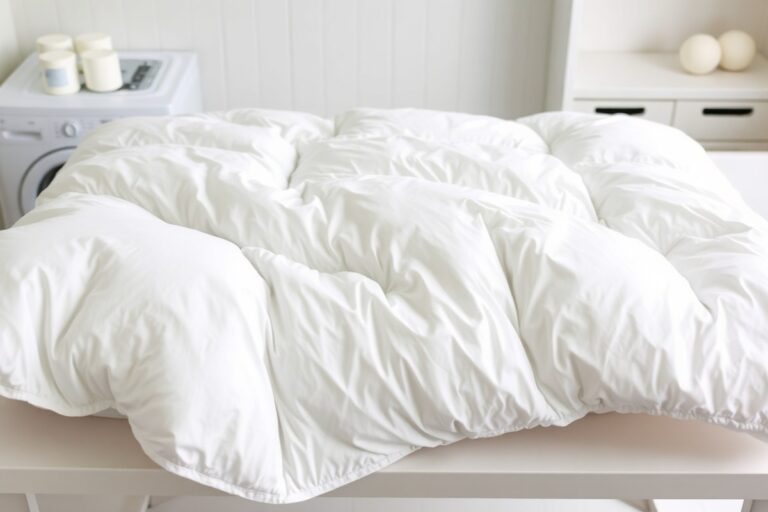
Can You Wash Down Comforters in a Washing Machine? A Complete Guide
Yes, you can wash down comforters in a washing machine, but choosing the right machine and settings is essential for best results. This process works well for homeowners or renters who want to clean their down comforters safely at home without damaging the filling or shell.
This article provides clear instructions on washing and drying down comforters, helping you maintain their loft and freshness while avoiding common mistakes. You’ll also find practical advice on detergent choice, drying techniques, and when to consult a professional cleaner.
Key Takeaways
- Use a washing machine with at least a 7kg drum capacity to fit a double down comforter comfortably.
- Select a gentle wash cycle with cold or warm water and a low spin speed to protect down filling.
- Choose a mild, down-safe detergent without bleach or fabric softeners to avoid damaging feathers.
- Ensure the comforter is fully submerged and soaked for about 30 minutes before gently agitating during the wash.
- Dry on low heat (maximum 135°F/57°C) using dryer balls or clean tennis balls to prevent clumping.
- Check the comforter every 15 to 20 minutes during drying to redistribute filling and promote even drying.
Can You Wash a Down Comforter in a Washing Machine?

You can wash many down comforters in a home washing machine, but certain conditions must be met for safe and effective cleaning. Most store-bought down comforters are designed to be machine washable, especially if their care label confirms it. A key consideration is the size of your washing machine. Full, queen, and king comforters may be too large for standard machines, making a large-capacity, front-loading washer necessary. Your home washer can handle the comforter if it fits loosely inside the drum with room to move freely and the label allows machine washing.
Machine washing is generally safe for down fill as long as you follow precautions. Down is delicate and can lose loft if exposed to harsh detergents, improper temperatures, or aggressive agitation. Use a cold water wash and a gentle cycle with an enzyme-free detergent to protect the down clusters. Washing removes body oils that flatten the down over time, restoring fluffiness. However, using a standard top-loader with an agitator could cause damage due to aggressive motion, so a front-loading washer is preferred to minimize stress on the material.
A few down comforters require dry cleaning instead. Those marked strictly “dry clean only” usually have additional treatments like waterproof coatings or delicate fabric shells that water and detergent might harm. Your best option is to follow the label’s recommendations when it says dry cleaning or if the comforter has blends or delicate trim. Some down comforters designed with specialty finishes or synthetic blends are not suitable for home washing. For these, handwashing or spot cleaning might be safer alternatives than machine washing.
Without a label, assume the comforter is washable if it’s made of common shell materials like cotton or polyester, which most store-bought down comforters use. Carefully measure your comforter and test whether it fits in your washer. Taking the comforter to a laundromat with extra-large commercial washers is an option when your washer won’t fit it. These machines offer the room and gentle spinning action needed for bulky bedding.
Choosing to machine wash your down comforter at home typically means saving on professional cleaning costs, which can be $30 to $50 or more per load. Using your machine correctly limits wear and tear on the comforter while restoring freshness and loft. However, machines that are too small or wrong type can lead to clumping, uneven cleaning, or damage. Knowing your washer’s size, the care label details, and washing with cold water on a gentle cycle are essential steps to protect your down comforter during home machine washing.
Choosing the Right Washing Machine and Settings

Use a washing machine with a drum capacity of at least 7 kg to comfortably fit a down comforter. The extra room prevents bunching, which can damage the down filling and reduce loft. Front-loading machines or agitator-free washers handle bulky items better because they cause less agitation, reducing the risk of tearing or compressing the comforter. Follow these five points as a checklist to match your machine size with your comforter size:
- Confirm your comforter’s size (twin, full, queen, king).
- Check the washing machine drum capacity in kilograms (kg).
- Ensure the machine is front-loading or agitator-free.
- Verify the washer has a delicate cycle setting.
- Choose a medium or low spin speed to avoid stressing the comforter.
To guide your choice between washing machine types and settings, the following table compares key features:
| Washing Machine Type | Drum Capacity (kg) | Agitation Style | Recommended Cycle | Recommended Spin Speed | Pros for Down Comforters |
|---|---|---|---|---|---|
| Front Loader | 7 or more | No agitator (tumbling) | Delicate | Medium to low (around 400-800 RPM) | Gentle on fabric and filling, prevents bunching |
| Top Loader (agitator) | 7 or more (larger recommended) | Central agitator | Delicate, if available | Low spin only | May cause more stress and tangling, risk of damage |
| High-Efficiency Top Loader (agitator-free) | 7 or more | Gentle tumbling without agitator | Delicate | Medium to low | Better than agitator models, but less common |
Set your machine to the delicate cycle with cold water to protect the down filling from heat damage. Cold water preserves the natural oils of the down and prevents shrinking. Use a medium to low spin speed, around 400 to 800 revolutions per minute, to avoid compressing and damaging the loft. Removing the comforter promptly after the cycle finishes prevents it from bunching up inside the drum.
Tip: Always wash your down comforter alone; adding other heavy items can cause uneven washing and damage the delicate filling.
These steps keep your down comforter clean without compromising its loft or causing damage. While repeated washing reduces loft over time, proper machine choice and settings extend the comforter’s lifespan. Avoid small or agitator-based machines that squeeze or pull heavily on the fabric, which can tear seams and flatten the filling.
Preparing Your Down Comforter for Washing
Preparing your down comforter for washing involves careful inspection and treating stains before loading it properly. These steps help protect the down filling, prevent damage, and achieve the best cleaning results.
Inspecting for Holes and Stains
Start by laying your comforter flat on a clean surface with good lighting. Check both sides thoroughly for tears, holes, or thinning fabric areas that could leak filling during washing. If you find any damage, patch it with fabric tape or sew it closed to avoid further problems.
Also inspect the comforter for any visible stains. Identifying these spots early allows you to target them with spot treatments instead of washing the entire comforter excessively, which can wear down the down fill.
Spot Treating Common Stains
Spot treating stains before washing helps avoid setting odors or discolorations. Use a mild, down-safe stain remover or diluted liquid detergent for best results. Dab gently rather than scrubbing hard, as abrasiveness can harm the fabric and fill.
- Mix a small amount of mild detergent with water (about one teaspoon in a cup).
- Dab the stain carefully with a clean white cloth or soft sponge soaked in the solution.
- Let it sit for 5 to 10 minutes, then blot the stain lightly to lift it.
- Repeat if necessary, but don’t saturate the area excessively to avoid down clumping.
- Allow the spot to air dry before washing the whole comforter.
Spot treating costs just a few minutes and minimal product but protects your comforter’s integrity better than washing when unnecessary.
Folding and Loading the Comforter Properly
Proper folding and loading prevent your washing machine from becoming unbalanced and protect the down from clumping during the wash cycle. Folding the comforter into an “S” shape works well to distribute bulk evenly around the drum.
- Pick one end of the comforter and fold it back and forth in broad S-shapes until the whole length is folded in this pattern.
- Place the folded comforter vertically into the washing machine drum with the S facing you to ensure even water and detergent distribution.
- Make sure the load is balanced by adding other bedding items if necessary, or by adjusting the comforter’s position.
- Use a front-loading washing machine if possible, as agitator machines can be rougher on down.
- Avoid overpacking; the comforter should have enough space to move freely to prevent strain on your machine and uneven washing.
Following these steps helps keep your comforter in good shape and protects both your washing machine and bedding investment.
Selecting the Right Detergent and Wash Cycle
Choose a mild, specialty detergent designed specifically for down or delicate fabrics to protect the delicate feathers inside your comforter. Regular laundry detergents can strip away natural oils in down, leading to clumping and loss of loft. Products marketed for sleeping bags or down jackets are suitable and widely available at outdoor or home goods stores, typically costing around $10 to $15 per bottle. Use just the recommended amount on the detergent label; usually, this means about one to two tablespoons for a standard washing machine load. Using too much detergent can leave residue that’s hard to rinse out and may damage the down filling.
Set your washing machine to a gentle or delicate cycle to minimize agitation, which helps prevent tearing the fabric or compressing the down excessively. Water temperature should be warm but not hot, ideally around 90°F to 105°F (32°C to 40°C). This temperature range balances effective cleaning with the need to avoid shrinking or damaging the comforter. Follow your comforter’s care label instructions closely, as some may specify cooler water if the fabric or stitching is fragile.
Using too high a temperature may cause down feathers to lose their insulating properties or clump together, resulting in uneven filling and cold spots in the comforter after drying. A gentle cycle typically lasts 30 to 40 minutes, which is sufficient to clean without excessive wear. When your machine has an extra rinse option, use it to remove all detergent residue, which helps keep your comforter soft and fluffy.
Choose a low or medium spin speed on your washing machine to lessen the wear and tear on your comforter. High spin speeds can damage seams and compress the down unevenly. After the cycle finishes, gently shake the comforter to redistribute the filling before drying. This step helps prevent clumping and promotes even drying later on. Allow adequate time for washing and drying, as the entire process often takes several hours. Proper detergent choice and cycle settings are essential to keeping your down comforter clean and comfortable while preserving its lifespan.
How to Dry a Down Comforter Without Clumping
Drying a down comforter without causing clumps requires low heat, patience, and interrupting the drying cycle to redistribute the filling. Using dryer balls or tennis balls inside the dryer breaks up the down and restores loft. Follow a slow, controlled drying process to avoid mildew and maintain fluffiness.
Setting the Dryer Temperature and Time
Always use the lowest heat setting or the air fluff option on your dryer to protect the delicate down. High heat damages the feathers and can cause clumping or shrinkage. Drying a down comforter usually takes several hours, sometimes 3 to 4 hours, depending on the comforter’s size and your dryer’s efficiency.
Start with a long drying cycle on the lowest heat setting. Avoid quick, high-heat drying because the down inside can remain damp, leading to mildew and odor.
Using Dryer Balls to Maintain Loft
Adding three or four clean tennis balls or wool dryer balls in the dryer helps break up clumps and distribute the filling evenly. The balls act as agitators, preventing the down from bunching or compressing permanently. Some people put tennis balls inside a clean white sock or a pair of canvas shoes (laces removed) to avoid any marks on the comforter.
This method also helps restore the comforter’s loft faster and keeps it feeling fluffy. Dryer balls are reusable and cost between $10 and $20, which makes them a worthwhile investment for maintaining quality.
Checking and Fluffing During Drying
Stop the drying cycle every 30 minutes to pull out your comforter and manually break up any forming clumps. This keeps the down distributed evenly and prevents heavy spots of moisture from lingering inside. If you skip this step, parts of the comforter might dry while others stay soggy, increasing mildew risk.
Fully drying your comforter is critical. Even after the dryer stops, it may feel slightly flat. Allow it to air out for 24 to 48 hours, shaking or fluffing occasionally to regain its loft fully. Here is a step-by-step timeline for drying your down comforter:
- Set your dryer to air fluff or the lowest heat option.
- Place your comforter in the dryer with 3-4 clean tennis balls or wool dryer balls.
- Run the dryer for 30 minutes.
- Stop the dryer and remove the comforter.
- Manually shake and fluff the comforter to break up any clumps.
- Return the comforter to the dryer for another 30 minutes.
- Repeat the fluffing and drying cycle every 30 minutes until the comforter is completely dry, which may take 3 to 4 hours.
- After drying, let the comforter air out for 24-48 hours, fluffing occasionally to restore loft.
Always ensure your down comforter is 100% dry before storing it to prevent mildew and unpleasant odors.
Maintaining Your Down Comforter Between Washes
Keeping your down comforter fresh between washes extends its life and maintains its loft without the wear that frequent washing causes. Airing your comforter outside once every one to two months helps keep it dry and fresh by reducing moisture buildup and odors. Choose a sunny, breezy day, spread the comforter flat or hang it over a clean line, and leave it out for a few hours. Avoid leaving it all day in direct, strong sunlight, as excessive UV exposure can degrade down fibers.
Using a duvet cover is one of the simplest ways to protect your comforter from dirt and body oils. A cover acts as a removable barrier, so you only need to wash the cover more frequently, about every two weeks or once a month depending on use and personal hygiene. This reduces how often the down comforter itself requires washing, helping it stay cleaner and fluffier for longer.
Spot cleaning is essential for dealing with small stains or spills immediately without committing to a full wash. To spot clean, gently blot the stained area with a clean, damp cloth and a mild detergent solution. Avoid rubbing vigorously to prevent damaging the delicate down or fabric shell. Rinse the area with a cloth dipped in clean water to remove soap residue, then air dry the spot completely before use. Spot clean any stains as soon as you notice them to prevent them from setting in.
- Air out comforter on a dry, breezy day about once a month
- Use a clean duvet cover and wash it every 2 to 4 weeks
- Blot stains gently with mild detergent and water immediately
- Avoid rubbing stains or soaking the entire comforter when spot cleaning
- Air dry spot-cleaned areas fully to prevent mildew
- Fluff the comforter regularly by shaking or gentle kneading to maintain loft
Routine maintenance like airing and spot cleaning keeps your comforter smelling fresh, reduces allergens, and lessens the need for frequent washing. Using a duvet cover not only protects the comforter but also makes upkeep more convenient and less time consuming. When the comforter looks and feels clean with no bad odors or visible dirt, you can hold off on a full wash, preserving the insulation and softness of the down fill longer.
Common Mistakes When Washing Down Comforters (and Fixes)
One common mistake is letting your down comforter clump during washing or drying. Clumping happens because the down filling absorbs water unevenly and sticks together, leading to cold spots and poor loft. To fix this, add clean tennis balls or dryer balls during drying. They break up lumps by gently beating the comforter, helping the down spread evenly. Also, pause the drying cycle periodically and manually fluff the comforter to redistribute the fill.
Machine imbalance is another frequent issue that can damage your washing machine and comforter. A heavy, wet comforter can clump on one side, causing the washer to shake violently or stop mid-cycle. Prevent this by making sure your washing machine has at least a 4.5 cubic feet capacity, especially for queen or king sizes that usually require a commercial machine. Also, center the comforter evenly inside the drum before starting the wash.
- Using a machine that’s too small for your comforter
- Not evenly distributing the comforter in the washer drum
- Skipping the gentle or delicate cycle and using hot water
- Failing to use a down-safe mild detergent
- Ignoring the need to add dryer balls during the drying phase
- Overdrying or underdrying, leading to clumping or smell
Your comforter often feels soaking wet after the spin cycle when the spin time isn’t long enough or the machine is unbalanced. Extend the spin cycle or run an additional spin-only cycle to remove more water. Water pooling calls for redistributing and rebalancing the comforter before spinning it again. Avoid wringing out the comforter by hand, as this can damage the down clusters.
In case clumping or wetness persists after drying at home, consider partial air drying and reclumping the down manually before continuing in the dryer. Use low heat settings and allow plenty of time, sometimes up to several hours. This approach prevents overheating the down, which can break the clusters and reduce loft.
When to Seek Professional Cleaning for Your Comforter
Professional cleaning is best when your down comforter has a “dry clean only” label, delicate decorative elements, or damage that could worsen in a home washer. Choose professionals if you lack the right washing equipment or want to avoid risks like clumping or shrinking. When selecting a service, prioritize cleaners experienced with down bedding and confirm their methods match your comforter’s needs.
Care Label Warnings and Restrictions
The care label on your down comforter is the first guide to whether you should seek professional cleaning. When the label says “dry clean only,” avoid washing it in a home machine, as the fabric or fill may react poorly to water or agitation. This label often appears on comforters with special shell fabrics, such as silk or delicate synthetics, or those with elaborate stitching or embellishments that water and tumbling could damage. Some labels also advise against machine drying, even if washing is allowed, which increases the challenge of home laundering.
Ignoring the label may cause irreversible harm including fabric shrinkage, color bleeding, or loss of loft in the down fill. Your safest choice is to follow these instructions when present since professional cleaners use solvents specially designed for such materials and follow protocols that protect fragile construction.
Fabric and Construction Factors
A down comforter’s outer material and how it is made influence whether you should trust home washing. Comforters made from tightly woven cotton or polyester are usually sturdy enough for front-loading washers with large capacities. However, comforters with delicate fabrics like silk, velvet, or certain waterproof shells require professional care to avoid surface damage or loss of fabric integrity. Also, comforters with sewn-in decorative features, buttons, or piping may unravel or deform in home machines.
When your comforter shows tears, thinning fabric, or seam damage, having it cleaned professionally helps avoid making these problems worse. Experts can perform gentle handling and sometimes minor repairs. Consider professional services especially when your comforter is older, heirloom quality, or expensive, to maximize its lifespan.
Benefits of Professional Services
Professional cleaning ensures thorough, safe treatment tailored to your comforter’s specific needs. Providers use commercial washers designed for bulky bedding, avoiding excess agitation common in home units. They have access to approved detergents and solvent-based cleaning methods that preserve down loft, remove oils and odors effectively, and maintain shell fabric quality. This results in a fluffier, cleaner comforter without clumps or damage.
When selecting a laundry service, verify they specialize in down comforters or luxury bedding. Ask about their cleaning processes, guarantees, and handling times. Prices typically range from $30 to $80, depending on size and location, including pickup and delivery in some services. Services with good reputations offer advice on storage and maintenance post-cleaning.
Choose a cleaner that clearly states experience with down bedding and offers a written guarantee against damage for peace of mind.
Step-by-Step Action Plan for Washing Your Down Comforter
Follow these steps to wash your down comforter safely in a washing machine and keep it fluffy and clean.
- Before Washing: Check your comforter’s care label and washing machine capacity to ensure it fits comfortably. This prevents damage during washing and spinning.
- Pre-Wash Inspection: Spot clean any stains with a mild detergent and rinse. This helps avoid embedding stains deeper during the full wash.
- Washing Day: Use a front-loading washing machine or a large-capacity top loader, select a gentle cycle with cold water, and add a down-specific or mild detergent. Confirm the machine runs without overfilling or unbalancing.
- Immediately After Washing: Remove the comforter promptly and gently press out excess water without wringing. Visual check for water retention ensures even drying later.
- Drying Phase: Tumble dry on low heat with clean tennis balls or dryer balls to break up clumps. Check every 30 minutes until the comforter is completely dry.
- Final Check: Fluff your comforter by hand to restore loft. Confirm there are no damp spots or smells indicating incomplete drying.
- Ongoing Care: Air out your comforter weekly and spot clean as needed to maintain freshness between washes.
Frequently Asked Questions
Should I Throw Away Old Down Comforter?
You don’t have to throw away an old down comforter if it’s still intact. Check for tears, persistent odors, or mold, which could mean it’s time to replace it or get professional cleaning.
What to Do If a Comforter Is Soaking Wet?
Remove excess water by pressing gently with towels, then dry it quickly to prevent mold. Use a large dryer on low heat or air dry in a well-ventilated area.
How to Wash a Comforter at a Laundromat?
Use a large-capacity, commercial washing machine and follow care label instructions. Choose gentle cycles and mild detergent to avoid damaging the down or fabric.
Can I Wash a Duvet in the Washing Machine?
Yes, most duvets are machine washable if they fit in the drum and the care label allows it. Use a large, front-loading machine on a gentle cycle for best results.
Why Does My Down Comforter Smell After Washing?
A damp or poorly dried comforter can develop a musty smell. Ensure thorough drying with low heat and occasional fluffing to prevent moisture buildup.
Is It Safe to Use Bleach on Down Comforters?
Avoid bleach as it can damage the down filling and fabric. Use mild detergents designed for down or delicate fabrics instead.
Final Thoughts
You can wash your down comforter in a washing machine if you prepare it properly and use the right settings and detergent. Drying it thoroughly and fluffing it regularly helps prevent clumping and keeps the down loft intact. Start by checking your washer’s size and the care label, then gently clean and dry your comforter following these steps to extend its life and comfort.