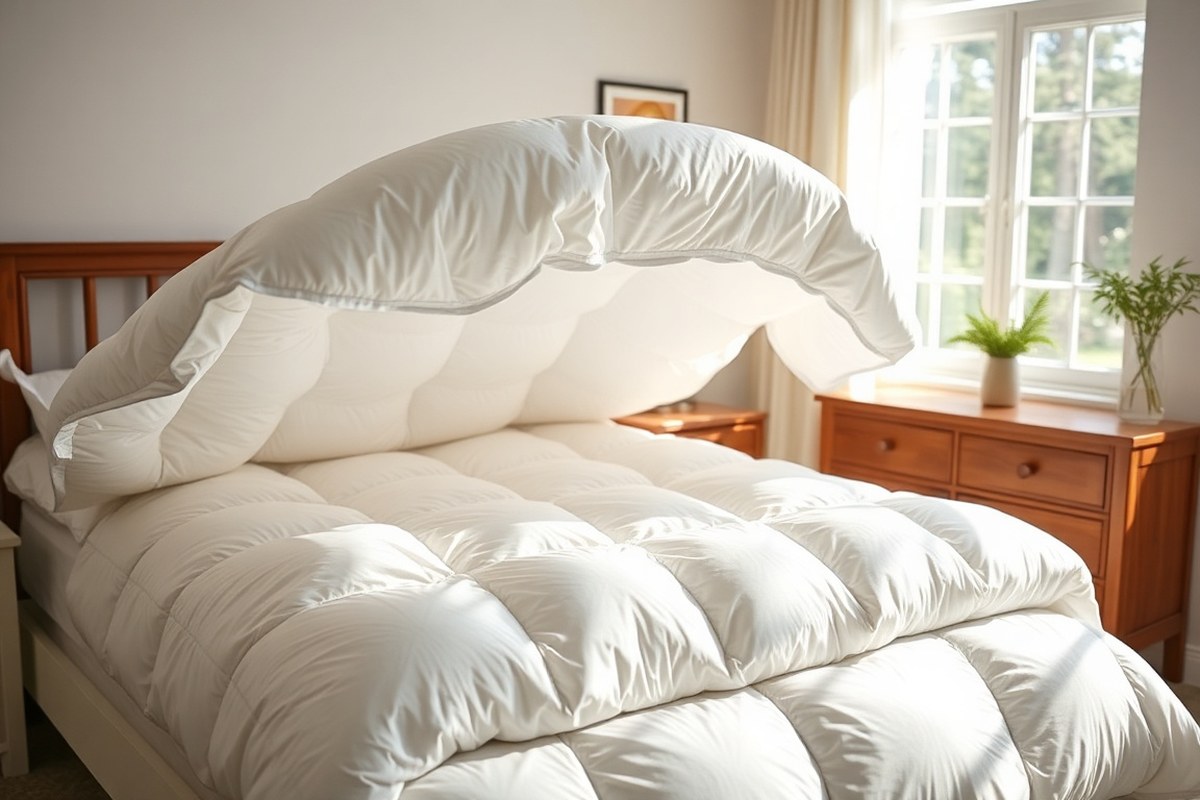
How to Wash a Down Comforter: Complete Steps for Safe, Fluffy Results
You can clean a down comforter at home by using a front-loading washing machine that has a large capacity. Choose a gentle detergent and set the water temperature low. Caring for your comforter properly during washing and drying keeps it fluffy and intact. This guide provides safe and effective instructions for homeowners and renters aiming to wash down comforters without causing harm.
This article explains what equipment and settings to use, how to dry your comforter thoroughly, and tips for maintenance and storage. Following these methods helps keep your comforter fresh, fluffy, and durable over time.
Key Takeaways
- Use a front-loading washer of at least 4.5 cubic feet without a central agitator to avoid damaging the down clusters.
- Wash your comforter in cold or warm water, between 86°F and 104°F (30-40°C), to preserve down oils and fabric quality.
- Choose a mild, down-friendly detergent free of bleach or fabric softeners for cleaning.
- Tumble dry on low heat, pausing every 20, 30 minutes to shake and pat the comforter to maintain loft.
- To kill dust mites, use 140°F (60°C) briefly in the dryer for 20 minutes, then reduce heat to finish drying.
- Drying can take 2, 4 hours; ensure the down is completely dry to avoid mold or odors.
Can You Wash a Down Comforter in a Home Washing Machine?

You can wash a down comforter in your home washing machine if it meets specific conditions. The key factor is using a large-capacity, front-loading washer without a central agitator to avoid damaging the down filling or compressing it unevenly. A minimum capacity of 4.5 cubic feet is recommended, with larger machines preferred for queen- or king-size comforters.
Top-loading washing machines with agitators are not suitable for washing down comforters at home because the agitator can cause excessive agitation, leading to clumping and damage. Your comforter needs enough room in the drum to avoid tight fitting or compression, which prevents thorough cleaning and can cause uneven filling.
Start by loading the comforter loosely into the washer. Use cool to warm water, never exceeding 110°F, to protect the natural oils in the down and prevent shrinking or fabric warping. Choose a mild, enzyme-free detergent designed for delicate fabrics. Choose the bulky or sheets cycle on your machine when available; otherwise, the delicate or gentle cycle works best. Running an extra rinse cycle helps remove detergent residue and maintains loft.
| Machine Type | Capacity Guideline | Recommended Wash Cycle | Water Temperature | Suitability for Down Comforter |
|---|---|---|---|---|
| Front-Loading Washer | 4.5 cu. Ft. Or larger | Bulky/Sheets or Delicate/Gentle | Cool to Warm (below 110°F) | Ideal for most down comforters |
| Top-Loading Washer with Agitator | Varies, typically smaller drum | Delicate/Gentle (but often too rough) | Cool to Warm (below 110°F) | Not recommended; risk of damaging down |
| Laundromat Commercial Washer | Large, 5.0 cu. Ft. Or more | Bulky/Sheets or Heavy Duty Delicate | Cool to Warm (below 110°F) | Best choice for oversized or thick comforters |
For comforters larger than queen size or ones that feel cramped even in your home washer, consider using a laundromat’s commercial-sized front loader. These machines have more space to allow the comforter to move freely during the wash, ensuring even cleaning without excessive compression.
After washing, complete drying is essential to keep the down loft intact and prevent mold or mildew. Washing does not guarantee the filling won’t clump, but following these machine and cycle recommendations reduces the risk. Specialty down detergents like NikWax Down Wash Direct are also available and can help maintain the natural oils in the down during the wash cycle.
Preparing Your Down Comforter for Washing at Home

Preparing your down comforter before washing is essential to protect the fabric and filling while ensuring the best clean. Careful inspection, spot treatment of stains, and following manufacturer instructions set the foundation for safe at-home washing. Taking these steps helps avoid damage and keeps your comforter fluffy and fresh.
Inspecting for Stains and Damage
Start by laying your down comforter flat in a well-lit area. Look closely for visible stains, rips, or loose feathers. These issues affect cleaning methods and can worsen if washed without repair. You want to catch stains early so they don’t set during drying, and mend any small tears to prevent feathers from escaping inside your machine.
Check both sides and the folded edges because stains or damage can be hidden. You might notice loose feathers; carefully tuck them back inside or sew small holes shut. This inspection helps you decide if a full wash or just spot treatment is needed.
Spot-Treating Common Stains Safely
Spot treatment targets stains so they don’t spread or become permanent. Use a gentle, down-safe method to avoid damaging delicate fabric or filling. A small amount of hand-wash laundry detergent diluted in water works well for most stains like food, body oils, or dirt.
- Blot the stain gently with a clean white cloth to remove any excess material without rubbing it deeper.
- Mix a mild detergent with cool water to create a light cleaning solution.
- Use a clean rag or sponge dipped in the solution to dab the stain carefully. Avoid soaking the area too much.
- Rinse the spot by dabbing with a clean cloth dampened with plain water to remove detergent.
- Let the comforter air dry completely before washing or storing to prevent mildew.
- Retreat the stain and wash again if necessary since stains won’t set until heated in the dryer.
Stains can often be removed by repeating gentle spot treatments before the comforter goes through a full wash and dry cycle.
Use caution with bleach or harsh chemicals as they can ruin down filling and fabric. For tougher stains or oil-based spots, lightly rubbing a small amount of a down-safe stain remover may help, but patch test first.
Checking Washing Instructions and Warnings
The care label on your down comforter holds key information on whether it can be washed at home and the preferred settings. Read it carefully for symbols and written instructions about water temperature, detergent type, and drying method. Some comforters may say “Dry Clean Only” but tell you how to wash gently if you choose to clean at home.
Check for warnings about machine size limits or special precautions like removing duvet covers or using gentle cycles. You should follow advice to get your comforter professionally cleaned to avoid voiding warranties or damaging the bedding. Preparing by following the manufacturer’s specific instructions avoids surprises, like shrinking, clumping, or feather loss, and helps you plan your washing process safely.
Choosing the Right Detergent and Water Temperature
Using a mild, down-safe detergent and washing your comforter in warm water between 86°F and 109°F is essential to protect the delicate down fill and fabric. Avoiding harsh detergents and hot water helps maintain loft and prevents damage to the natural oils that keep down soft and insulating.
Why Mild Detergents Matter
Mild detergents designed for down or delicate fabrics clean without stripping the natural oils from the feathers. These oils are responsible for the down’s softness, loft, and insulating properties. Regular laundry detergents or fabric softeners can coat the feathers, causing clumping and reducing fluffiness over time.
Choose detergents labeled as “down-cleaning,” “wool-safe,” or “gentle/delicate.” These formulas typically avoid enzymes, bleach, and strong surfactants that damage down. Using too much detergent leaves residues that stiffen the fill and trap moisture, increasing mildew risk.
- Down-specific detergents (e.g., Nikwax Down Wash, Rockin’ Green Down Cleaner)
- Gentle, wool-safe laundry detergents
- Fabric softeners, bleach, or strong alkaline detergents (avoid)
- Mild baby detergents without additives (only if labeled safe for down)
Using the right detergent helps maintain the comforter’s loft and lifespan. Always follow the manufacturer’s dosage instructions and add an extra rinse cycle to remove detergent fully.
Safe Water Temperature Range Explained
Washing a down comforter in water between 86°F (30°C) and 109°F (43°C) strikes the best balance between cleaning and preserving the fill. Temperatures below this range may not clean well; above it, the natural oils and fabrics can degrade.
Cold water washing is possible but may not dissolve detergent as effectively, requiring longer or additional rinse cycles. Warm water is generally recommended to help loosen dirt while being gentle on the materials.
| Water Temperature | Impact on Down Comforter |
|---|---|
| < 86°F (Cold) | Poor detergent solubility; longer rinse needed; gentle on fibers |
| 86°F to 109°F (Warm) | Optimal cleaning; preserves natural oils; protects shell fabric |
| > 110°F (Hot) | Strips natural oils; risks shrinking or damaging fabric; clumps fill |
You can check water temperature by using a thermometer or the washer’s warm setting. Avoid any washer cycles labeled “hot” or above 110°F.
Avoiding Damage from Hot Water
Hot water damages down comforters by stripping away the oils that provide softness and warmth. This causes feathers to clump and reduces loft, leaving the comforter flat and less insulating. High temperatures may also shrink or weaken the outer fabric shell, causing tears or stiffness. Follow these safety tips to avoid damage:
- Set your washer to a warm or delicate cycle, never hot
- Use a thermometer inserted in the water for accuracy when hand washing
- Choose detergents that clean effectively at lower temperatures to compensate
- Run at least two rinse cycles to remove all detergent thoroughly
- Dry fully on low heat with periodic fluffing to prevent clumping post-wash
Skipping these precautions leads to yellowing, clumped down, stiff fabric, and a shorter comforter lifespan. Mild detergent, warm water within the safe range, and careful rinsing preserve your comforter’s loft and softness for many seasons.
Effective Drying Techniques to Keep Down Lofty and Even
Yes, you can put a down comforter in the dryer, but it requires care to avoid overheating and clumping. Drying on low heat is essential, along with regular fluffing and shaking to keep the down evenly distributed. The full drying process usually takes several hours, sometimes requiring multiple drying cycles combined with air drying to ensure the comforter is completely dry.
Setting Dryer Temperature and Cycle
Use the lowest heat or air-only setting on your dryer to prevent heat damage to the down filling. High heat risks shrinking the fabric and causing the down to clump or lose loft. Most dryers have a “delicate” or “fluff” cycle ideal for down comforters. Drying usually takes about 3 to 4 hours depending on comforter thickness and dryer efficiency.
Check the care tag on your comforter for specific temperature recommendations. When in doubt, choose the gentlest cycle with warm or low heat. Avoid using high heat or timed cycles that might over-dry the outer fabric while leaving the inside damp.
Using Dryer Balls to Maintain Loft
Dryer balls help break up clumps and circulate air to dry the comforter evenly. Use three to four clean wool or rubber dryer balls. Tennis balls can also serve this purpose as a budget-friendly alternative. Adding these balls at the start of the drying cycle helps fluff the down, preventing flat spots.
The dryer balls bounce around with the comforter, gently tapping the down and loosening clumps. This action keeps the insulation lofted, which maintains warmth and softness after washing. Without this, the down inside may dry unevenly and collapse into dense patches.
When and How to Shake and Turn the Comforter
Pause the drying cycle every 20 to 30 minutes to remove the comforter, shake it out, and gently pat or knead the filling. This prevents the down from settling or clumping and helps spot damp areas. Give the comforter enough space when shaking, spread it out fully rather than bunching it.
Rotate or flip the comforter before returning it to the dryer to promote even drying. After the final drying cycle, check thoroughly for any damp spots inside seams or thicker areas. If needed, lay the comforter flat or hang it in open air to finish drying completely before storing or using.
- Place the down comforter loosely in the dryer drum.
- Set the dryer to the lowest heat or air-only/fluff cycle.
- Add three to four clean wool or rubber dryer balls or tennis balls.
- Start drying and set a timer for 20 to 30 minutes.
- Pause the dryer and remove the comforter to shake, pat, and knead it gently.
- Flip or rotate the comforter and place it back in the dryer.
- Repeat the drying and shaking process every 20 to 30 minutes.
- Once dry in the machine, lay or hang your comforter to air dry fully before use or storage.
How Often Should You Wash and Maintain a Down Comforter?
Down comforters should be washed sparingly to maintain their loft and warmth. Generally, washing your down comforter two to three times per year is sufficient, especially if you use a protective duvet cover. The cover acts as a barrier against sweat, body oils, dust, and spills, reducing the need for frequent washing of the comforter itself. Without a cover, the comforter may require washing more often, about every year or so, depending on use and cleanliness standards.
Between washes, you can keep your down comforter fresh with simple maintenance steps. Airing it out regularly in the sun helps remove moisture and odors, while spot cleaning any stains preserves its overall condition without a full wash. This routine upkeep ensures you don’t have to wash the comforter as often, which can stress the delicate down filling.
- Use a high-quality duvet cover to protect the comforter from daily dirt and oils.
- Air the comforter outdoors on a sunny, dry day for a few hours to freshen it up.
- Spot clean stains promptly using a gentle detergent and a soft cloth.
- Shake the comforter to redistribute down and avoid bunching.
- Wash the duvet cover more frequently, ideally every two weeks or monthly.
- Consider washing the comforter once every 4 to 6 months in high-use situations or humid climates.
Using a duvet cover reduces washing frequency for your down comforter and prolongs its life.
Environmental factors also influence how often to wash. In dry, cool climates with minimal airborne dirt, you might extend the washing interval to every two years when using a cover. In contrast, humid or dusty environments, or households with pets and allergies, may require washing the comforter more often to maintain hygiene.
Maintaining freshness without washing preserves the down’s natural oils and loft, important for its insulating properties. Regular airing, spot treatment, and cover use keep the comforter feeling clean and fluffy. Washing involves careful steps to avoid damaging the down or fabric, which is why frequent full washes are not recommended unless necessary.
What to Do When Your Down Comforter Says ‘Dry Clean Only’
The label “Dry Clean Only” on a down comforter means the manufacturer recommends professional dry cleaning to prevent damage. This applies especially to comforters made with delicate fabrics or special finishes that can lose their texture, shape, or insulation power if washed in water. Ignoring this label and washing the comforter at home risks fabric shrinkage, damaging the down fill, or ruining finishes designed to keep the down loft intact.
You can wash some “Dry Clean Only” down comforters at home, but only with great caution. Start by checking the fabric’s weave and any additional finishes. Choosing professional cleaning is the safest option for delicate down comforters or to eliminate any risk, though it usually costs between $20 and $50 depending on local prices. A professional laundry uses solvents and equipment designed to remove dust, dirt, and dust mites gently, preserving the down’s volume and fabric integrity.
Trying to wash a “Dry Clean Only” down comforter at home should start with a careful gentle hand wash. Fill a bathtub or large basin with cool water, about 60-80°F (16-27°C), and add a small amount of mild detergent formulated for down or delicate fabrics. Submerge the comforter, gently pressing it down to saturate without twisting or wringing, which can break fibers or ball up the down. Let it soak for 15 to 30 minutes, then rinse fully with clean, cool water until no soap residue remains.
After rinsing, remove excess water carefully by pressing the comforter against the basin’s side or using towels to absorb moisture. Avoid wringing or twisting, as this can cause clumps and damage. Lay the comforter flat on a clean surface to air dry in a warm, well-ventilated room or use a large, low-heat dryer cycle with clean tennis balls or dryer balls to help maintain loft and distribute the down evenly. The drying process may take several hours and might require pausing to fluff the comforter periodically.
Follow this decision rule: if the label says “Dry Clean Only” and the comforter’s fabric looks fragile or includes delicate stitching, send it to a professional cleaner. For sturdier fabrics with “Dry Clean Only” but no other warnings, the gentle hand washing method can be a safe alternative if done carefully. Avoid machine washing unless the label specifically states it’s safe.
Spot cleaning is an important strategy if your comforter isn’t heavily soiled. Use a mild detergent solution and a soft cloth to treat small stains. This reduces how often full washing is needed, preserving the comforter’s life and down quality.
Professional dry cleaning offers a thorough, low-risk cleaning, perfect for expensive or heirloom down comforters that you want to keep in top condition. Cost, scheduling, and access to services can influence your choice, but when you factor in the risk of damage and the value of your comforter, professional cleaning is often the best investment.
Common Washing Mistakes and How to Fix Them
Overloading your washing machine is a frequent mistake when cleaning a down comforter. An XL front-loading machine works best because it offers enough space for the comforter to move freely. Your machine could be too small, causing the comforter to tangle, and the wet weight might knock a top-loader off balance, which can lead to damage. Before washing, check your machine’s capacity and wash the comforter alone to avoid lumps and tears.
Using harsh detergents or too much soap can strip natural oils from the down fill, leaving your comforter less fluffy and more prone to clumping. Opt for a gentle, down-specific detergent or a mild liquid detergent without additives. Avoid bleach and fabric softeners, as they can harm the delicate feathers. Proper detergent choice helps maintain the loft and softness after washing.
Uneven drying is another common source of problems. When a comforter isn’t dried evenly and thoroughly, the down tends to clump, resulting in lumps and uneven insulation. Using a large-capacity dryer set to low heat with several clean tennis balls or dryer balls can help by pounding the comforter, which loosens clumps and restores loft. Make sure to check the comforter every 30 minutes to redistribute the insert and avoid overheating.
- Do not overload the washing machine; use only an XL front-loader with enough room.
- Select a gentle or down-specific detergent; avoid bleach and fabric softeners.
- Use the washer’s gentle cycle and a full spin to remove as much water as possible.
- Dry on low heat with dryer balls or clean tennis balls to break up clumps.
- Periodically pause the dryer to manually fluff and rearrange the comforter.
- Allow sufficient drying time, as rushing leads to damp spots and mildew risk.
Once your down fill clumps after washing and drying, place the comforter outside on a dry, sunny day to help fluff it up. Gently shake and fluff it several times throughout the day. This natural airing often helps restore loft. For difficult clumps, gently knead the lumps by hand before tossing back into the dryer with balls on low heat. Avoid ironing or high heat, as these can damage the feathers and fabric.
Following machine capacity guidelines and using the right detergent and drying methods will protect your down comforter. These steps minimize damage risk, maintain softness, and preserve the insulating qualities of the down fill for years to come.
Storing Your Down Comforter to Preserve Quality
Proper storage of your down comforter is key to preserving its loft, warmth, and lifespan. Avoid putting your comforter away while it’s even slightly damp, since trapped moisture leads to mildew and musty odors. Make sure the comforter is fully dry by leaving it in a well-ventilated space for several hours or until you no longer feel any dampness when you squeeze the fill. Once dry, store it correctly to keep the down fluffy and free from damage.
Use a breathable cotton storage bag or a large cotton pillowcase rather than plastic bags or airtight containers. Plastic traps moisture, which can encourage mildew growth. Cotton allows air to circulate, which helps maintain a dry environment. Avoid compressing the comforter during storage as this crushes the down clusters, reducing insulation and causing permanent flattening. Store it loosely folded or rolled to keep the down fill from clumping.
- Ensure the comforter is completely dry before storing.
- Use a breathable cotton bag or pillowcase for storage.
- Store in a cool, dry place away from direct sunlight.
- Avoid airtight containers or plastic bags.
- Keep the comforter loosely folded or rolled, not compressed.
- Air out the comforter every 1 to 3 months during storage.
- Check periodically for any signs of moisture or mildew.
Long-term care includes airing out your comforter every few months by shaking it outdoors or in a bright, dry room. This refreshes the loft and helps evaporate any built-up moisture. If you notice any musty smell or dampness during storage checks, remove the comforter from its bag immediately and dry it thoroughly to prevent permanent damage. Proper storage adds years to your down comforter’s life, keeping it warm, lightweight, and fluffy.
Never store a down comforter while damp, as moisture trapped inside encourages mildew that damages both the fill and cover.
Step-by-Step Action Plan for Washing Your Down Comforter at Home
Follow these essential steps to safely wash and care for your down comforter, ensuring it stays fluffy and clean.
- Before Washing: Check the care label for instructions and test your washing machine’s capacity to confirm it can handle the comforter without compression.
- Prep Stage: Spot-treat any stains with a mild detergent and check for tears or weak seams to prevent damage during washing.
- Wash Day: Use a front-loading washing machine if possible, select a gentle cycle with cold or warm water, and use a down-specific detergent for best results.
- Rinse and Spin: Run an extra rinse cycle to remove all detergent and use a slow spin cycle to avoid clumping, ensuring the down remains lofted.
- Drying Start: Tumble dry on low heat with clean tennis balls or dryer balls to break up clusters and help the comforter dry evenly.
- Mid-Dry Check: Pause drying every 30 minutes to fluff and break apart any damp clumps of down, checking for even drying throughout.
- Final Drying: Continue drying until the comforter is completely dry to prevent mold and odors, which could take several hours.
- Storage Prep: Once fully dry, store your comforter in a breathable cotton bag or loosely folded in a closet to maintain loft and freshness.
Frequently Asked Questions
Can I Wash a Down Comforter in the Washing Machine?
You can clean a down comforter in your washing machine as long as it fits properly and you select an appropriate cycle such as bulky or delicates. Use only cool or warm water to keep the filling and fabric safe from damage.
Can You Put a Down Feather Comforter in the Dryer?
Yes, you can dry a down comforter in the dryer. Add 2-3 dry tennis balls to help break up clumps and keep the loft fluffy. Drying fully is important to prevent mildew.
Should I Throw Away an Old Down Comforter?
Not necessarily. Should your down comforter develop an odor, lumps, or tears, it usually indicates it’s time for a replacement. Otherwise, washing and proper care can extend its life.
Should a Down Comforter Be Washed or Dry Cleaned?
Washing a down comforter at home is usually safe, but some delicate fabrics might need professional laundering, which is different from dry cleaning. Check the care tag for guidance.
How Do I Prevent Down from Clumping When Washing?
Use a gentle cycle and cool water, plus tennis balls in the dryer, to keep down from clumping. Avoid overloading the machine and dry thoroughly.
Can I Use Regular Detergent on a Down Comforter?
It’s better to use a detergent made for down or a mild liquid detergent, as regular ones can strip natural oils and damage the down clusters.
Final Thoughts
Washing your down comforter at home is safe and effective when you follow careful steps that protect the delicate down filling. Take the time to check your washing machine’s capacity and use the right detergent and drying methods. Start by inspecting your comforter and spot-cleaning any stains today to prepare it for a full wash. Your next wash can leave your comforter fresh, fluffy, and ready for many cozy nights ahead.