How Do You Take Out Deodorant Stains: 8 Proven Methods for Fast Removal
To take out deodorant stains quickly and safely, pre-treat the area with a gentle cleaner like baking soda or a diluted citric acid solution, then launder promptly. Avoid harsh scrubbing to prevent fabric damage and always allow your treatment to sit for at least 15 to 30 minutes before rinsing or washing.
This advice helps anyone dealing with visible white marks or yellowing on clothing caused by deodorant. You will learn effective stain removal methods, reasons behind stain formation, prevention tips, and when professional cleaning is necessary.
Key Takeaways
- Soak white antiperspirant stains for 12 hours to loosen tough residue before washing.
- Apply baking soda paste to stains and let sit for 30 to 60 minutes for natural stain lifting.
- Prepare a 20% citric acid solution to soak stains for about 30 minutes to break down minerals.
- Limit deodorant application to 2-3 swipes and wait until dry before dressing to reduce staining.
- Dilute vinegar with two parts water before applying to cotton or linen fabrics to avoid damage.
- Flush persistent stains with warm sudsy water mixed with one tablespoon of ammonia as a last resort.
1. How to Take Out Deodorant Stains Quickly and Safely

Removing deodorant stains quickly helps keep your clothes looking fresh and avoids the need for harsh chemicals or professional cleaning. Fresh stains can often be treated on the spot with common household items like baking soda, vinegar, or lemon juice. For set-in stains, a bit more effort with soaking and scrubbing using a mild enzymatic detergent can be necessary. Avoid fabric softeners during cleaning, as they can trap residue and make stains harder to remove.
Gather supplies such as baking soda, white vinegar, lemon juice, an enzymatic laundry detergent, water, a soft brush or cloth, and optionally a nylon stocking for gentle scrubbing. Test any cleaning solution on a small hidden area of the fabric first to ensure it won’t cause damage or discoloration.
- Act quickly for fresh stains: Gently scrape off any excess deodorant with a dull knife or your fingernail to avoid rubbing the stain deeper.
- Make a baking soda paste: Combine three parts baking soda with one part water until you get a thick paste. Cover the stain with this paste and allow it to rest for 15 to 30 minutes. Baking soda gently scrubs away stain particles while being safe for fabric, particularly effective on white clothes.
- Use vinegar or lemon juice for stubborn stains: Dab white vinegar or lemon juice onto the stained area and let it sit for 10 minutes. Both act as natural stain removers by breaking down residue from aluminum salts and sweat.
- Gently scrub the stain: Use a soft brush, nylon stocking, or cloth to lightly scrub the treated area. Avoid vigorous scrubbing to prevent fabric damage.
- Rinse thoroughly: Rinse the fabric under cold water to flush out baking soda, vinegar, or lemon juice and loosened stain particles.
- Pre-treat with enzymatic detergent: Apply an enzymatic laundry detergent directly to the stain to help break down proteins and chemicals in the deodorant and antiperspirant. Let it sit for at least 5 minutes before washing.
- Wash properly: Wash the clothing according to the care label, using the warmest water safe for the fabric. Do not use fabric softeners, as they can trap stain residues.
- Air dry and inspect: Air dry the garment rather than using a dryer, as heat can set any remaining stain. Check if the stain is gone; repeat the treatment if necessary before drying again.
Keeping these steps in mind helps treat both fresh and set-in deodorant stains effectively with materials you likely have at home. Costs are minimal, typically just the price of baking soda or vinegar, and results should show a noticeable reduction or full removal of the stain. Avoiding fabric softener during this process is key to preventing the stain from lingering or worsening.
2. What Causes Deodorant Stains and How Do They Form?

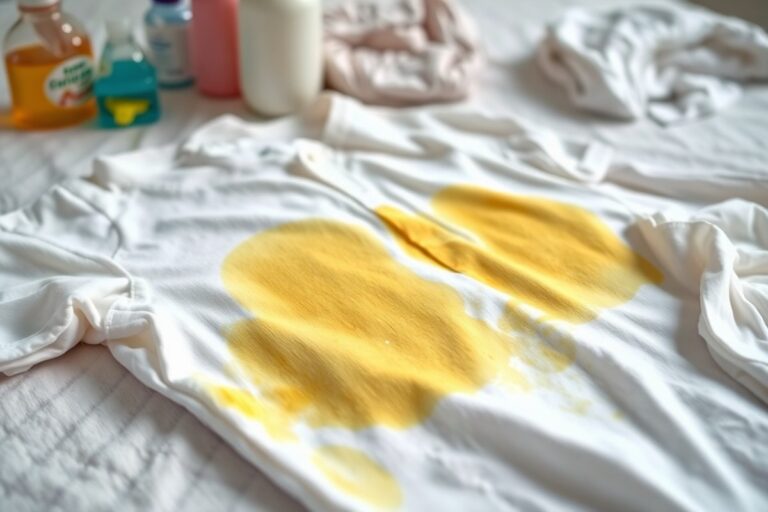
Deodorant stains form primarily because of the ingredients in deodorants reacting with sweat and the fabric itself. These stains usually appear as white marks or yellow discoloration on clothing. The white residue results from solid deodorant particles left behind, while the yellow stains develop through a chemical reaction involving aluminum compounds commonly found in antiperspirants and sweat.
The Role of Aluminum in Deodorant Stains
Many antiperspirants contain aluminum-based compounds like aluminum zirconium, which reduce sweating by blocking sweat glands. These aluminum compounds are a key cause of yellow stains on clothing. When sweat, which is naturally acidic, interacts with aluminum, it reacts with the fabric fibers, especially natural ones like cotton. This reaction causes the stain to become embedded and discolored over time, which makes yellow marks more noticeable and harder to remove.
White marks come from the solid residue of deodorant ingredients left on the fabric surface. These often occur when the deodorant hasn’t fully dried before putting on clothes or if too much deodorant is applied. This residue transfers directly onto the clothing, most visibly on dark or black fabrics due to the contrast.
Why White and Yellow Stains Differ
White marks and yellow stains are distinct in how they appear and form. White marks are typically powdery and sit on top of the fabric as residual deodorant particles. They can usually be brushed or washed off more easily. Yellow stains develop inside the fabric fibers through the reaction of aluminum and sweat, making them more stubborn and set-in.
Not all deodorant stains look the same because some deodorants lack aluminum. Aluminum-free deodorants still leave residue but tend not to cause yellow discoloration. They might still leave white marks if the ingredients clump on the fabric, but these are often easier to remove than stain from aluminum reactions.
How Sweat Contributes to Deodorant Stain Formation
Sweat is naturally acidic and contains salts and body oils that interact with deodorant ingredients. Perspiration adds moisture that helps spread deodorant particles across fabric fibers. This wet environment triggers chemical reactions, especially with aluminum compounds, leading to the more stubborn yellow stains. Sweating more than usual increases the chance and severity of these stains because the mix of sweat and deodorant has more contact with fabric fibers.
The acidity of sweat particularly affects natural fibers like cotton, which absorb liquids and stains more deeply. Synthetic fibers may show white marks more prominently but often resist yellow staining because they don’t absorb sweat as readily.
Why Some Clothes Show Stains More Clearly
Dark fabric exaggerates white deodorant marks because the light-colored residue contrasts sharply with the dark surface. Conversely, white or light-colored fabrics highlight yellow stains more obviously, especially in underarm areas. The fabric type influences stain visibility and removal difficulty. Cotton and other natural fibers absorb both sweat and deodorant particles, making stains harder to wash out the longer they sit.
Fast drying deodorants and waiting a couple of minutes before dressing can reduce residue transfer on clothes. Wearing fabrics less likely to display stains, like patterned or textured materials, can also help hide unavoidable marks.
Allow your deodorant to dry before putting on clothes to minimize white residue transferring and reduce visible stains on fabric.
3. Choosing the Right Remover: Natural Versus Chemical Methods
Natural deodorant stain removers like baking soda and vinegar offer a simple, fabric-friendly option that works well for most stains. Commercial stain removers tend to be more effective on stubborn marks and require less time but may not be safe for all materials. Choosing between natural and chemical methods depends on the stain’s severity, fabric type, and your preference for safety versus speed.
Natural Removers and How They Work
Baking soda combined with water forms a mild abrasive paste that helps lift deodorant stains from fabric fibers. For best results, make the paste, apply it on damp stains, and let it sit for 30 minutes to an hour before rinsing. Vinegar, or lemon juice, being acidic, works by breaking down residue and discoloration. Mixing vinegar with baking soda creates a fizzing reaction that can further loosen grime.
These natural options are cheap, typically costing just a few cents per application, and are gentle on most fabrics. However, they might require multiple treatments for tougher stains. You should test these removers on your fabric first to avoid any unexpected fading or weakening of delicate materials.
Commercial Stain Removers to Consider
For deodorant stains that don’t fade with baking soda or vinegar, commercial stain removers are your best bet. These products often contain enzymes or surfactants designed to break down oils and solids quickly. Many brands are available for around $5 to $15 per bottle, with easy spray or gel applications.
Apply commercial stain removers directly to dry or damp stains, following the label instructions, then let them sit for 5 to 15 minutes before washing. They usually perform better on older, set-in stains.
Some fabric rinse products designed to break down deodorant buildup can also be used before detergent in your wash cycle. These targeted treatments can be more effective than standard detergents alone.
Safety Tips for Using Chemical Removers
Chemical stain removers can cause color fading, fabric weakening, or skin irritation if not used properly. Avoid using these products on delicate fabrics such as silk, wool, or any labeled ‘dry clean only’ items unless the packaging says it is safe. Always follow the manufacturer’s instructions for application and safety precautions.
Wear gloves to protect your hands, and work in a well-ventilated area. Test any commercial remover on a hidden area of the garment before full use to check for colorfastness. Rinse the fabric thoroughly after treatment to remove any residues that could cause damage later.
| Remover Type | Effectiveness | Fabric Safety | Cost per Use | Application Time |
|---|---|---|---|---|
| Baking Soda + Water | Good for most stains, may need repeat | Safe for most fabrics | Less than $0.10 | 30-60 minutes sit time |
| Baking Soda + Vinegar | Improve stain loosening, best for light to medium stains | Generally safe; test on delicate fabrics | Less than $0.15 | 30-60 minutes sit time |
| Commercial Stain Removers | Strong for stubborn or set-in stains | Varies; avoid on delicate or dry-clean-only fabrics | $0.30-$1.00 per use | 5-15 minutes sit time |
| Fabric Rinse Products | Effective on deodorant buildup | Safe if product label indicates | $0.50-$1.00 per use | During wash cycle |
Choosing the right remover depends on the fabric you’re treating and the stain’s stubbornness. Natural options take longer but are gentler and cheaper, while commercial products offer quicker, stronger action but with more caution needed for fabric safety. Matching the remover to your fabric and following instructions carefully will help prevent damage and achieve cleaner clothes.
4. How to Treat Deodorant Stains by Fabric Type
Deodorant stains vary in difficulty to remove based on fabric type. Natural fibers often respond well to common stain removers, while synthetics and delicates need gentler methods to avoid damage. Adjusting your approach by fabric helps protect your clothes and increases the chances of fully removing stains.
Cotton and Natural Fibers
Cotton and other natural fibers such as linen and rayon usually tolerate stronger stain removers and hotter water. These fabrics absorb deodorant residue deeply, so acting quickly is important before the stain bonds. Use warm water around 104°F (40°C) and a mild detergent or a stain remover with enzymes to break down proteins in the deodorant.
For white or light-colored cotton, applying lemon juice before washing can help break down stains thanks to its acidity, which also brightens fabric. Avoid drying until stains are fully removed; heat can set them permanently.
Synthetics and Blended Fabrics
Synthetics like polyester and nylon can trap deodorant differently because they are less absorbent but more prone to showing white residue. These materials usually require cooler water, ideally under 86°F (30°C), and a gentle detergent. The fine, naturally abrasive texture of nylon can help physically lift stains without excess moisture.
Blended fabrics combine natural and synthetic fibers and often need a balance in treatment. Test removers on a hidden area first to avoid unexpected colour loss or fabric damage.
- Use cooler water to prevent setting stains in synthetics
- Apply a small amount of liquid detergent directly on the stain
- Gently rub with a soft brush or cloth to loosen residue
- Rinse thoroughly before washing the full garment
- Check stain removal results before drying to prevent permanent setting
- Avoid using bleach on synthetic blends unless label allows
- Consider detergent especially formulated for synthetic fabrics
Dealing with deodorant stains on dark synthetics can be tricky since white residue is particularly noticeable. Regular pretreatment followed by a full wash typically yields the best results.
Delicate Fabrics and Wool
Delicates, silk, and wool require special care due to their sensitivity to chemicals, agitation, and water temperature. Avoid harsh stain removers or soaking; use only mild detergent diluted in cold water. Dab the stain gently rather than rubbing to prevent fabric distortion or fibre damage.
Spot treat stains using a mixture of cold water and a few drops of gentle detergent, applying it with a clean cloth or cotton swab. Rinse the treated area with cold water and avoid wringing or twisting. Air dry flat away from direct sunlight or heat sources.
5. How to Prevent Deodorant Stains with Smarter Habits
Applying deodorant carefully can prevent stains before they form. Limit yourself to 2 or 3 swipes, rolls, or sprays per underarm to avoid excess buildup. More product doesn’t mean better odor control, but it does increase the chances of residue transferring to your clothes. Using too much deodorant or antiperspirant can leave white or yellow stains that stick around no matter how well you wash them later.
Waiting for deodorant to dry before putting on your shirt is another simple but key step. This usually takes about 1 to 3 minutes, depending on the product formula. Letting it dry completely reduces the risk of the deodorant smudging onto fabric, particularly on lighter-colored clothes that show stains more easily. A quick pause before dressing gives the product time to settle on your skin instead of your shirt.
Choosing the right deodorant can also make a big difference. Products without aluminum compounds are less likely to cause the common chalky white marks or yellow stains typical with antiperspirants. Aluminum-free deodorants mostly focus on odor control rather than sweat reduction but often have pure, non-metallic ingredients that won’t react with your clothing fibers. Switching to one of these can help prevent buildup that’s hard to clean.
- Use 2 to 3 swipes, rolls, or sprays per armpit for effective coverage without overuse
- Choose aluminum-free deodorants to minimize white residue and yellow stains
- Wait 1 to 3 minutes after application before dressing to allow the product to dry
- Avoid deodorants with white or solid particles that can transfer onto clothes
- Apply deodorant on clean, dry skin to improve absorption and prevent clumping
Applying deodorant to clean, dry skin and allowing it to dry fully before dressing greatly reduces the chance of leaving stains on your clothes.
Applying deodorant over damp or sweaty skin increases the risk of clumping and staining. Always pat your underarms dry after showering before applying deodorant. This helps the product adhere evenly and absorb quickly. Consider testing a new deodorant on an older shirt before using it regularly to see if any residue appears. These practices cost no more than your regular deodorant but can save you time and effort spent on stain removal later.
6. How Long to Treat Deodorant Stains and When to Repeat
To effectively treat deodorant stains, the duration of soaking and treatment depends on the age and severity of the stain. Fresh stains can often respond to brief treatments, typically soaking for 15 to 30 minutes in a stain remover or a solution of water and gentle detergent. This time allows the cleaning agents to break down the residue without risking damage to the fabric. For older or set-in stains, soaking may need to extend to one hour or longer, depending on how deeply the stain has set. Long-term stains require patience and repeated treatments, as simply washing a dozen times might not remove them completely.
Longer soaking does not always guarantee better results. Leaving fabric immersed in aggressive solutions for too long can weaken fibers or cause color fading, especially on delicate materials. For most everyday fabrics, a maximum soak time of two hours is advisable. Always check your care label before treating stains to avoid damaging the garment. After soaking, gently rub the stained area to help lift residue before rinsing and laundering as usual.
Deciding when to repeat treatment depends on visual and tactile cues. Examine the garment in good lighting after washing. Any discoloration or residue left after drying means you should apply the stain remover again and soak the item once more. Repeat soaking up to three times for stubborn stains. Avoid over-treating in one session; spread applications over multiple washing cycles to preserve fabric integrity.
For a clear process, start by applying your chosen stain remover directly to the deodorant mark, then soak the garment for 20 to 30 minutes. Launder according to the fabric’s care instructions and check the spot once dry. The stain may require another application of remover and soaking for as long as an hour. Repeat this cycle as necessary, limiting treatments to no more than three in total. Between each treatment, air dry the garment rather than using heat, which can set the stain further.
Fresh deodorant stains often fade noticeably after one to two treatments, whereas old stains can require multiple attempts over several days. Understanding this timeline will help manage expectations and protect your clothing from unnecessary wear. Monitoring the stain after each wash and treating it promptly is the best way to keep fabrics looking their best.
7. Common Mistakes When Removing Deodorant Stains and Fixes
Using bleach on deodorant stains can damage fabrics and cause yellowing or weakening of fibers, especially on delicate or colored clothing. Chlorine bleach is generally unsafe for deodorant stains and often worsens them. Oxygen-based bleach is a safer alternative but still requires careful use according to the label.
Avoid scrubbing too hard when treating deodorant stains. Vigorous rubbing can embed the stain deeper or damage fabric fibers, making the stain harder to remove. Use gentle blotting or dabbing motions instead. Overheating clothes in the dryer before fully removing the stain can set it permanently. Always treat and rinse the stain thoroughly before drying at high heat.
Common mistakes also include using hot water on protein-based deodorant stains or using the wrong stain remover for the fabric type, which can lock in the stain or cause color changes. Cold water works better on fresh sweat and deodorant stains because it prevents the proteins from coagulating.
- Avoid chlorine bleach on colored or delicate fabrics; opt for oxygen bleach if needed.
- Do not scrub vigorously; use gentle pressure to lift the stain.
- Never put stained clothes in the dryer until the stain is fully removed.
- Use cold water to rinse freshly stained areas before applying stain treatments.
- Check fabric care labels before applying any stain remover.
- Test stain removers on a hidden area first to prevent color loss.
If deodorant stains worsen after an improper treatment, re-treating gently with a specialized stain remover or a mixture of liquid detergent and warm water often helps. Apply the solution, let it sit for 10 to 15 minutes, then rinse with cold water. For white cotton, a paste of baking soda and water can lift yellowing caused by bleach misuse. Repeat treatment before drying again.
Some stains can become more difficult if left untreated too long or handled with harsh chemicals. When that happens, soaking the garment overnight in a solution of oxygen bleach and water at room temperature can break down stubborn residues. Avoid bleach soaking for silk, wool, or other sensitive fabrics, as it may cause damage.
8. When to Get Professional Help for Stubborn Deodorant Stains
Not all deodorant stains can be completely removed at home. Sets of stains that have been washed and dried multiple times often become deeply embedded in fabric fibers, leaving behind a faint yellowish or white residue. While home treatments such as pre-treating with enzymatic detergents or laundry stripping can improve the results, these methods sometimes fall short with stubborn stains, especially on delicate or specialty fabrics.
Choosing professional cleaning services becomes a better option when stains persist after multiple home attempts. Dry cleaners or laundry services use advanced techniques unavailable in typical home laundering. For example, professionals often apply targeted solvents specific to the fabric and stain type, combined with precision pretreatments under controlled temperatures to break down tough deodorant residues safely. You can expect that, depending on the garment and stain severity, a dry cleaner may take a few days to complete the process and charge anywhere from $5 to $20 per item.
Professional methods include using solvents like perchloroethylene or liquid CO2, along with gentle agitation and controlled drying to prevent fabric damage. These methods allow cleaners to lift set-in stains without risking color fading or fabric weakening. Since deodorant residues often interact with fabric fibers and sweat components, professionals may also use enzymatic or oxidation treatments that help dislodge the build-up at a molecular level. This often improves the garment’s overall appearance and extends its lifespan.
Here is a checklist to decide when professional help is needed: if your deodorant stain has set after washing and drying twice; if the fabric is labeled as dry-clean only or delicate (like silk, wool, or certain synthetics); if home treatments cause discoloration or fabric weakening; or if the garment is valuable and you want to avoid accidental damage. In these cases, taking the item to a trusted dry cleaner early can save you time and preserve your clothing.
Professionals usually recommend against repeated home stain treatments on delicate fabrics, as excessive scrubbing or chemical exposure can worsen fabric integrity. Inform your cleaner about the type of deodorant used and stains’ history to help them choose the best treatment. Pricing varies by location and fabric type, but the extra cost is often justified by better stain removal and fabric care.
Persistent deodorant stains on delicate or expensive clothing are best left to professionals to avoid permanent damage from DIY treatments.
Step-by-Step Action Plan to Remove Deodorant Stains
Follow these practical steps to tackle deodorant stains and keep your clothes looking fresh.
- Before washing: Gently scrape off any residue with a dull knife or credit card without damaging the fabric.
- Immediate treatment: Apply a small amount of liquid detergent or a paste made from baking soda and water directly on the stain and let it sit for 10 to 15 minutes to break down the deposit.
- Wash as usual: Use the warmest water that’s safe for the fabric, checking the garment label, and run a full wash cycle.
- After wash check: Inspect the stained area before drying. If the stain remains, repeat the stain treatment step.
- For persistent stains: Use a stain remover recommended for your fabric type, following label instructions, and let it work for up to 30 minutes before rewashing.
- Air dry only: Avoid the dryer until the stain is gone; heat can set deodorant stains permanently.
- Regular prevention: Apply deodorant fully dry before dressing to reduce fresh stains forming.
- Periodic review: Check your clothes regularly for early signs of stains to treat them quickly.
Frequently Asked Questions
Can Old Armpit Stains Be Removed?
Yes, old armpit stains can be removed by soaking the clothing in diluted vinegar overnight, which helps break down sweat and deodorant residues without damaging most fabrics.
Does Dawn Dish Soap Remove Deodorant Stains?
Dawn dish soap can help remove deodorant stains because it contains degreasers that break down residue, especially when used in cold water soaking before washing.
Do Deodorant Stains Go Away?
Deodorant stains can go away with proper treatment such as soaking, washing, and using stain removers; however, some older or set-in stains may need repeated care.
Why Is My Deodorant Leaving White Stains on My Shirt?
White stains appear because solid deodorant residue doesn’t absorb completely and transfers onto fabric, especially visible on dark clothing.
Tired of Those Stubborn Deodorant Marks Ruining Your Clothes?
Using a safer stain remover like AtomFresh can remove stains without damaging your clothes’ look or fabric integrity.
Can Fabric Softener Make Deodorant Stains Worse?
Yes, fabric softener can sometimes set deodorant stains, making them harder to remove later.
The Bottom Line
Removing deodorant stains promptly with the right approach keeps your clothes in good shape and extends their life. Start treating stains as soon as you notice them and adjust your routine to prevent new ones. Next time you see a stain, follow the action plan step by step, and don’t hesitate to try a professional cleaner if needed for tough cases.