
What Is Permanent Press on Dryer? The Complete Guide to Wrinkle-Free Clothes
Permanent press on a dryer is a setting that uses medium heat and a cool-down phase to dry clothes gently while reducing wrinkles. It suits synthetic fabrics, blends, and wrinkle-resistant clothing, balancing drying efficiency with fabric care. You’ll find this cycle handy for keeping dress shirts and polyester blends looking crisp without extra ironing.
This explanation is for homeowners and renters who want to maintain their clothes better and save time on ironing. You’ll learn how the permanent press cycle works, which fabrics benefit most, how it compares to other cycles, and how to pick the best dryer setting for wrinkle-free results.
Key Takeaways
- Permanent press uses medium heat and finishes with a cool-down to prevent wrinkles.
- It’s best for polyester, nylon, cotton-polyester blends, and wrinkle-resistant garments.
- A typical permanent press cycle lasts about 30 minutes with moderate tumbling.
- Use normal cycles for heavy items like towels and bedding, not permanent press.
- Look for a dryer symbol with one line underneath to identify permanent press settings.
- Avoid using permanent press for delicate fabrics like silk, wool, or lace.
What Is the Permanent Press Cycle on a Dryer?

The permanent press cycle on a dryer is designed to gently dry clothes while minimizing wrinkles. This cycle uses medium heat for most of the drying process and finishes with a cool-down period. The cool-down phase helps relax fabric fibers, reducing the chance that wrinkles set in before you remove the clothes.
Permanent press is intended for synthetic fabrics, blended materials, and wrinkle-resistant clothing that tend to crease easily in a regular drying cycle. The medium heat setting is lower than the normal or heavy-duty cycle, protecting fabric integrity without sacrificing drying efficiency. The moderate tumbling throughout the cycle also prevents excessive stress on the fibers, keeping garments smooth and wearable without ironing.
Compared to the normal cycle, which uses higher heat and longer drying times best suited for heavy fabrics like towels and jeans, permanent press balances drying speed with gentle care. Normal cycles can cause synthetic fabrics to melt or create more wrinkles by applying excessive heat. The permanent press setting avoids these issues by using a controlled, medium temperature that safely dries clothes marked as permanent press or tumble dry on their care labels.
Operating the permanent press cycle means loading your dryer as usual, selecting “Permanent Press” on the control panel, and starting the cycle. Expect the drying time to be moderate, often between 30 to 45 minutes depending on your dryer’s make and load size. The cool-down period at the end usually lasts several minutes, ensuring clothes come out ready to wear or hang with fewer wrinkles to iron out.
Using this setting costs no extra money beyond your regular energy use, but it can save time and effort by reducing the need for ironing. Clothes dried on permanent press typically feel soft and less creased. Watch for dampness at the end of the cycle, which might occur if your dryer’s vent gets blocked or its moisture sensor is dirty. Keeping these parts clean helps the permanent press cycle work properly.
Permanent press differs from delicate cycles by using higher heat and stronger tumbling, making it unsuitable for fragile fabrics like lace or fine wool. It also differs from heavy-duty by applying lower heat and a cool-down to protect synthetics and blends. This cycle is a practical middle ground for everyday clothes that need wrinkle prevention without harsh treatment.
How Does the Permanent Press Setting Work to Reduce Wrinkles?
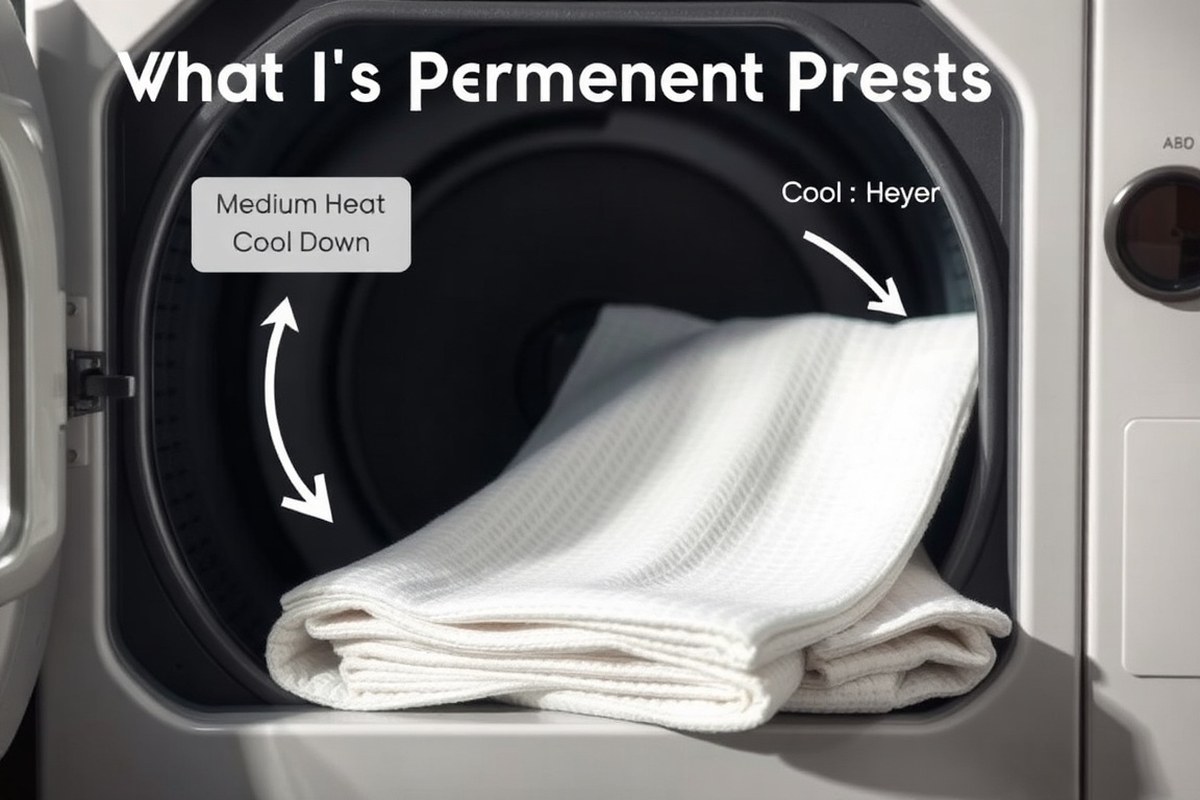
The permanent press cycle reduces wrinkles by combining medium heat with gentle tumbling and a cool-down phase at the end of the drying process. Medium heat is chosen because it provides enough warmth to dry synthetic fibers and blends without causing excessive shrinkage or fabric damage. High heat can tighten these fabrics too quickly, setting wrinkles and risking shrinkage, while low heat may leave the clothes damp and encourage wrinkles to form. During tumbling, the dryer gently rotates the clothes, allowing them to move freely and preventing them from settling in one position where creases could form.
After the main drying phase with medium heat, the cycle usually concludes with a cool-down period during which the dryer tumbles the clothes without applying heat or with very low heat. This gradual cooling prevents wrinkles from locking in as the fabric cools from a hot state, which can happen if you pull clothes out immediately after a hot cycle. The tumbling continues during cool-down to keep clothes loose and moving, further reducing the opportunity for wrinkles to form. This makes it easier to wear clothes straight from the dryer or to minimize ironing later.
Using medium heat with tumbling and cool-down balances drying efficiency with garment care. For example, if you dry a polyester blend shirt on medium heat, the dryer will heat the fabric just enough to remove moisture while moving it enough to avoid folds setting in sharply. The cool-down phase then ensures the heat doesn’t cause permanent creasing. Timing varies by machine, but permanent press cycles generally last longer than a high-heat normal cycle because of the added cool-down period, often adding 10 to 20 minutes more. This extra time is a tradeoff for better wrinkle control and less fabric stress.
For best results, start by sorting your laundry to include only wrinkle-prone synthetics and blends in the permanent press cycle. Avoid overloading the dryer, which can prevent clothes from tumbling freely and increase wrinkling. Removing clothes promptly after the cycle finishes also helps since extended sitting in the dryer can allow wrinkles to form despite the cool-down. When dealing with stubborn wrinkles, lightly spray the garment with water and use the permanent press cycle again for 10 to 15 minutes to refresh the fabric.
Always avoid using permanent press on heavy cottons or towels; they require higher heat and longer drying that permanent press cycles don’t provide, risking both wrinkles and insufficient drying.
What Fabrics and Clothes Are Ideal for Permanent Press Drying?
Permanent press drying suits wrinkle-prone and moderately durable fabrics like synthetic fibers and cotton blends. Avoid using it for heavy or delicate items such as jeans, towels, or fragile fabrics that require gentler care. Always follow the care label instructions to ensure the best drying results.
Fabrics Suitable for Permanent Press
Synthetic blends, such as polyester, rayon, and nylon, respond well to permanent press drying because this cycle uses medium heat and a cool-down period to reduce wrinkles. Cotton blends labeled “tumble dry medium” also fit well with this setting, as the cycle protects the fabric finish while preventing excessive heat damage.
Permanent press works best for wrinkle-resistant and permanent press fabrics that have a special finish to keep them smooth. These textiles often combine natural and synthetic fibers, typically cotton mixed with polyester or rayon, balancing durability and wrinkle control. The medium heat setting is ideal because it’s gentle enough to avoid fabric shrinkage or damage while still drying clothes effectively.
Garments to Avoid Drying on Permanent Press
Heavy fabrics like denim jeans and thick towels usually require the normal or heavy-duty dryer cycle. These clothes need higher heat and longer drying times to dry thoroughly and maintain freshness. Using a permanent press cycle with medium heat may leave these items damp and produce a stale smell.
Fragile fabrics such as silk, lace, or delicate synthetics should avoid permanent press because the heat, although moderate, can still cause damage or change their texture. Instead, choose delicate cycles or air dry these items to prolong their lifespan and preserve appearance.
Reading Clothing Care Labels for Permanent Press
Clothing care labels provide the most reliable guidance on the appropriate dryer cycle. Look for tags that say “permanent press,” “wrinkle-resistant,” or instructions like “tumble dry medium.” These indicate that permanent press drying is safe and effective for the garment.
Items labeled with “tumble dry low” or “do not tumble dry” suggest avoiding permanent press. Instead, select delicate drying or air dry options. For heavy items labeled “tumble dry high,” use the normal cycle. When in doubt, refer to the dryer settings matching the care labels to protect your clothes and keep them looking their best. The following table summarizes the best fabric types and garment categories for permanent press drying:
| Fabric/Clothing Type | Suitable for Permanent Press? | Recommended Dryer Cycle |
|---|---|---|
| Polyester, Nylon, Rayon | Yes | Permanent Press (medium heat, wrinkle-resistant) |
| Cotton Blends (with synthetic fibers) | Yes, if labeled “tumble dry medium” | Permanent Press |
| 100% Cotton (heavy fabrics like jeans or towels) | No | Normal (higher heat and longer drying time) |
| Silk, Delicates, Lace | No | Delicate or air dry |
| Permanent Press or Wrinkle-Resistant Garments | Yes | Permanent Press |
Checking care labels before drying and matching the fabric type to the appropriate dryer setting preserves your clothes. Using permanent press drying for synthetic blends and wrinkle-resistant fabrics gives you the best wrinkle reduction with safe drying temperatures.
Permanent Press vs. Normal and Delicate Dryer Cycles
The Permanent Press cycle in a dryer differs from Normal and Delicate cycles by balancing heat, drying time, and handling of fabrics to reduce wrinkles and protect clothing. It typically uses medium heat combined with a cool-down period at the end to prevent wrinkles from setting in. Normal cycles use higher heat and faster drying times, which work well for durable fabrics but increase wear and wrinkle risk. Delicate cycles apply the lowest heat and gentlest tumbling for the most fragile items, extending drying time but minimizing damage.
Choosing the right cycle depends on the fabric type and your goals. Permanent Press works best for synthetic blends, cotton blends, and wrinkle-prone clothing. It protects colors better and helps clothes keep their shape longer than the Normal cycle. The Normal cycle suits sturdy fabrics like jeans and towels that tolerate high heat and faster drying. Delicate cycles are best for silks, lace, or delicate synthetics that need careful handling to avoid shrinkage or damage. Here is a clear comparison of the three cycles and what to expect from each:
| Cycle | Heat Level | Drying Time | Fabric Risk | Wrinkle Control |
|---|---|---|---|---|
| Permanent Press | Medium heat with a cool-down period | Moderate (about 40-60 minutes) | Low to moderate; best for blends and synthetic fabrics | Built-in cool-down reduces wrinkles effectively |
| Normal | High heat continuously | Shortest (typically 30-50 minutes) | Higher risk of fading and damage for delicate fabric | Minimal wrinkle control; wrinkles set more easily |
| Delicate | Low heat | Longest (can take 60 minutes or more) | Lowest risk of damage; suitable for fragile fabrics | Good wrinkle prevention due to gentle tumbling |
Using Permanent Press is especially helpful if you want to reduce ironing time without risking fabric damage. It often improves garment longevity by avoiding harsh heat and rapid tumbling, which fade colors and weaken fibers in the Normal cycle. On the other hand, delicate cycles ensure that fragile garments are not subjected to heat or motion that might cause shrinkage or tears. Overloading the dryer or leaving clothes inside after the cycle ends can still cause wrinkles regardless of the cycle chosen.
To get the best results, select Permanent Press for everyday wear that includes synthetic blends or cotton blends to combine efficient drying with crease reduction. Reserve Normal for durable loads like towels or denim, and Delicate for special-care fabrics. The decision impacts how long your clothes stay looking new and how much time you spend ironing or steaming them later.
How Long Does a Permanent Press Cycle Usually Take?
Permanent press dryer cycles typically take between 40 to 60 minutes to complete. This timing provides enough heat and tumbling combined with a cool-down period to reduce wrinkles and set creases without over-drying the clothes. The exact length depends on factors like the load size, fabric thickness, and your dryer’s specific model and settings.
Permanent press cycles tend to run longer than delicate cycles but are often shorter or about the same length as normal cycles. Delicate cycles use lower heat and gentler tumbling, so they usually take less time, while normal cycles aim for thorough drying and may run longer depending on the load. Your dryer adjusts heat and drying time based on the permanent press’s wrinkle-reducing design. Several key factors affect how long the permanent press cycle will take:
- Load size: Larger or bulkier loads take more time to dry fully.
- Fabric type: Thicker fabrics like denim require more drying time than lighter polyester blends.
- Moisture sensor: Dryers with sensors stop when clothes reach the right dryness.
- Dryer wattage and model: Higher wattage models can dry faster.
- Initial moisture level: Heavily soaked clothes need a longer cycle.
- Settings used: Choosing extra dry or timed dry can lengthen the process.
To get the best results with a permanent press cycle, sort clothes by fabric thickness and avoid overloading your dryer. Overloaded loads won’t dry evenly, extending the drying time and increasing wrinkles. Check periodically near the cycle’s end and remove clothes as soon as the cool-down phase finishes to prevent wrinkles from setting.
Running a permanent press cycle with too many items or wet towels can increase drying time and reduce wrinkle control.
The permanent press cycle balances heat, tumbling, and a cool-down to minimize wrinkles and creases. You don’t need to add extra time unless your fabrics are very thick or heavily damp. For mixed loads with varying fabric types, it’s better to separate heavier items to avoid under-drying lighter permanent press fabrics. This method prevents the need for rewashing or ironing.
Common Mistakes to Avoid When Using Permanent Press
Using the permanent press cycle incorrectly often leads to wrinkled or damp clothes. One common mistake is confusing the permanent press setting with the normal or delicate cycles. Since permanent press runs at a cooler temperature and usually finishes faster, thick or heavy items might not dry thoroughly, leaving them damp and prone to wrinkles. Overloading the dryer makes this worse because airflow diminishes, preventing even drying and increasing wrinkles.
A few other errors users make include placing items in the dryer that aren’t suitable for permanent press or letting clothes sit inside the drum too long after the cycle ends. Fabrics that need higher heat or longer drying times won’t come out wrinkle-free. Similarly, if clothes stay warm and settled after the cycle, wrinkles set in. To keep your laundry smooth and dry, take action during and after the cycle.
- Don’t overload the dryer; leave enough space for clothes to tumble freely and dry evenly.
- Sort laundry by fabric type and weight to ensure items dry within the permanent press cycle’s time and temperature.
- Remove clothes promptly at the end of the cycle to avoid wrinkles setting from sitting warm and bunched up.
- Use permanent press for clothes labeled as wrinkle-resistant or less heat-sensitive fabrics.
- Thick items in the load should be dried separately on a longer cycle or given an additional 10 to 15 minutes.
- Clean the lint trap before every load to maintain airflow and efficient drying.
- Check that your dryer’s moisture sensor or timer is functioning correctly to prevent under- or overdrying.
Preventing dampness requires monitoring load size and fabric types closely. For example, if you toss several towels or heavy cotton shirts into a permanent press cycle designed for lighter garments, they won’t dry fully. Separating heavier pieces or using a normal cycle with higher heat is better for those. Promptly removing clothes when the cycle finishes helps keep wrinkles from forming as the dryer cools. When you cannot remove clothes right away, use a wrinkle-prevent setting or include a cool-down period to lower creasing risk.
Reading Dryer Symbols: Identifying Permanent Press Settings
Permanent press settings on dryers are typically marked by specific symbols and cycle names that help differentiate them from regular or delicate drying. Recognizing these markings, including lines under the dryer symbol, guides you to use the right cycle for wrinkle reduction. Cycle names like permanent press, wrinkle care, and casual might be different labels for similar drying actions on your machine.
Meaning of Underlined Dryer Symbols
Dryer symbols with lines underneath provide clues to the heat level and fabric care. A single line beneath the square or circle symbol usually means the cycle is designed for permanent press fabrics. This line indicates a medium heat setting that prevents wrinkles without over-drying. Two lines suggest a gentler or delicate cycle with lower heat, while no line often represents the regular or cotton cycle with higher heat.
You can confirm the permanent press cycle by looking for the symbol of a square with a circle inside and one underline beneath it. This marking signals the dryer operates at a temperature range typically between 120°F and 140°F, appropriate for synthetic blends or wrinkle-prone clothes.
Differences Between Similar Cycle Names
Permanent press cycles are sometimes labeled differently depending on the brand; you might see terms like wrinkle care, easy care, or casual. These cycle names often refer to the same drying settings focused on reducing wrinkles with medium temperature and a cool-down period. Overlapping names can cause confusion but usually represent the permanent press function.
Wrinkle care or easy care cycles emphasize reducing wrinkles through a cool-down phase at the end, similar to permanent press. Casual cycles typically match permanent press settings but are targeted at everyday clothes made of wrinkle-prone fibers. Checking how your machine’s manufacturer defines the cycle names is essential when they differ from your expectations.
Checking Your Dryer Manual for Permanent Press
Your dryer’s user manual is the best source for accurately identifying cycle settings and their symbols. Look for sections explaining cycle options, symbols, and heat settings. Manuals usually include diagrams showing which symbol corresponds to permanent press or wrinkle care and describe expected drying temperatures and times.
Your dryer might have cycles named wrinkle care, casual, or easy care instead of “permanent press.” The manual will clarify if these cycles use similar heat settings and cool-down phases to protect synthetic or blended fabrics from damage. Following the manual’s guidance helps prevent shrinkage and reduces wrinkles effectively.
How to Choose the Right Dryer Cycle Using Permanent Press Effectively
Choose the permanent press cycle when your clothes are made from synthetic blends or fabrics prone to wrinkles but still fairly sturdy. Opt for normal drying for heavy or strong fabrics, and delicate for fragile items that require the gentlest treatment. Matching your garment’s fabric and care needs to the correct cycle prevents damage and reduces ironing time.
Step 1: Identify Fabric Type
Start by sorting your laundry according to fabric type. Permanent press is designed for medium-weight synthetic blends like polyester-cotton and wrinkle-resistant fabrics. Normal cycles suit heavier fabrics such as denim or towels, while delicate cycles work best for silky, lace, or loosely woven materials.
Knowing your fabrics helps avoid shrinking or wearing out clothes prematurely. Permanent press uses moderate heat and a cool-down phase to smooth wrinkles without over-drying.
Step 2: Check Care Labels
Always examine the care label on each garment before selecting a dryer cycle. The manufacturer’s instructions specify the recommended drying method and temperature range.
Garments labeled with “Permanent Press” or “Tumble Dry Medium” usually fit the permanent press cycle. Labels advising “Delicate” or “Low Heat” indicate the delicate setting, while “Regular” or no special instructions generally point to the normal cycle. Failing to follow these labels risks shrinking, warping, or fabric damage.
Step 3: Assess Garment Durability and Wrinkle Risk
Consider how sturdy the garment is and how likely it is to wrinkle. Stiffer, tough clothes like jeans or sweatshirts can handle the normal cycle’s higher heat and longer tumbling. Permanent press works well for everyday shirts, slacks, or uniforms made from blends that crease easily but aren’t delicate.
More fragile items such as lingerie, lace, or cashmere sweaters require delicate drying to protect fibers. Overdried or overheated items, especially on normal cycles, can feel rough or develop wrinkles that are tough to remove.
Step 4: Pick the Dryer Cycle with Permanent Press in Mind
Follow this checklist to decide when to use permanent press or an alternative cycle. It works well when wrinkle reduction is a priority but the fabric is too sturdy for delicate settings.
- Sort clothes by fabric type and wrinkle susceptibility.
- Read care labels and note drying temperature recommendations.
- Separate fragile garments for delicate cycle to avoid damage.
- Group wrinkle-resistant blends and synthetic mixes for permanent press.
- Assign heavy fabrics like towels and denim to the normal cycle.
- Load dryer without overcrowding for effective tumbling.
- Choose permanent press to reduce wrinkles and avoid over-drying.
- Remove clothes promptly at cycle end to prevent new wrinkles.
Tip: If your dryer lacks a permanent press cycle, use the normal cycle on a medium or low heat setting, but watch clothes carefully to prevent shrinking or wrinkling.
Step-by-Step Action Plan for Using the Permanent Press Cycle
Follow these steps to make the most of your dryer’s permanent press cycle and keep your clothes wrinkle-free.
- Before washing: Check fabric care labels to identify items suited for permanent press drying, such as synthetic blends and wrinkle-resistant cotton. This ensures you’re using the cycle correctly.
- After washing: Use the permanent press cycle on damp clothes, not soaking wet, to avoid over-drying and wrinkles. Your clothes should be evenly damp to see the wrinkle-reducing benefit.
- Start the cycle: Select the permanent press setting, which uses medium heat and a cool-down phase. Listen for your dryer’s buzzer or check the display to confirm it’s running properly.
- During drying: Avoid overloading the dryer so air can circulate effectively around the clothes. Clothes that tumble freely dry more evenly and wrinkle less.
- After drying: Remove clothes promptly when the cycle finishes, while still slightly warm. This prevents wrinkles from setting as clothes cool down.
- Iron as needed: For any mild wrinkles remaining, iron or steam shortly after drying to restore a smooth finish. The permanent press cycle should minimize, not always completely eliminate wrinkling.
Frequently Asked Questions
How Do Amish People Dry Their Clothes in the Winter?
Amish people usually air dry their clothes indoors or in specially heated spaces to prevent freezing and tearing, avoiding electric dryers that use cycles like permanent press. This traditional method helps preserve fabric quality during cold months.
What If I Don’t Have a Permanent Press Cycle?
You can use a medium-heat setting with a cool-down period manually by stopping the dryer early then letting clothes air out. This mimics permanent press benefits like wrinkle reduction for synthetics and blends.
Can I Use a Perm Press for Jeans?
It’s better to avoid permanent press for jeans because they need higher heat for thorough drying and durability. Use a normal or heavy-duty cycle for best results, especially for thick or heavy denim.
What’s Better, Normal or Perm Press?
Permanent press is better for wrinkle-resistant fabrics like polyester blends, while normal works best for sturdy items like towels and jeans. Choose based on fabric type to avoid shrinking or wrinkles.
Does Permanent Press Cycle Save Energy Compared to Normal?
Permanent press may save energy by using medium heat and a cool-down phase, reducing overdrying. However, energy use depends on load size and dryer model.
Is Permanent Press Suitable for Delicate Clothes?
No, delicate fabrics require a low-heat or air-dry setting, as permanent press uses medium heat that can damage fine knits and silks.
Final Thoughts
Using your dryer’s permanent press cycle helps reduce wrinkles and keeps clothes looking better longer by applying medium heat followed by a cool-down. Start by checking your clothes’ labels to match the cycle with the right fabrics. Try the permanent press setting on your next load of synthetic blends or cotton mixes to see the difference in wrinkle control firsthand.


