How to Wash Tennis Shoes in the Washing Machine: A Complete Guide That Works
You can wash tennis shoes in the washing machine safely by using a gentle cycle, cold water, and placing them in a mesh bag. Always check the care label first and avoid heat drying to prevent shrinking or damage. This method works well for most synthetic and canvas tennis shoes but requires care to protect the materials and structure.
This advice is for tennis players and casual wearers who want a reliable way to clean their shoes without risking damage. You’ll learn which shoe materials hold up in the machine, how to prepare and dry your shoes properly, and common washing mistakes to avoid.
Key Takeaways
- Choose a gentle machine wash setting and cold water to protect your shoes, placing them inside a mesh laundry bag for extra care.
- Remove laces and insoles before washing to ensure thorough cleaning and protect individual parts.
- Place towels in the washing machine to balance the load and reduce shoe impact.
- Avoid hot water and high dryer heat, which can shrink synthetic materials by up to 10%.
- Air dry tennis shoes away from direct sunlight or heaters to maintain shape and glue integrity.
- Steer clear of machine washing shoes with cardboard soles, as they can degrade quickly.
Can You Wash Tennis Shoes in the Washing Machine Safely?
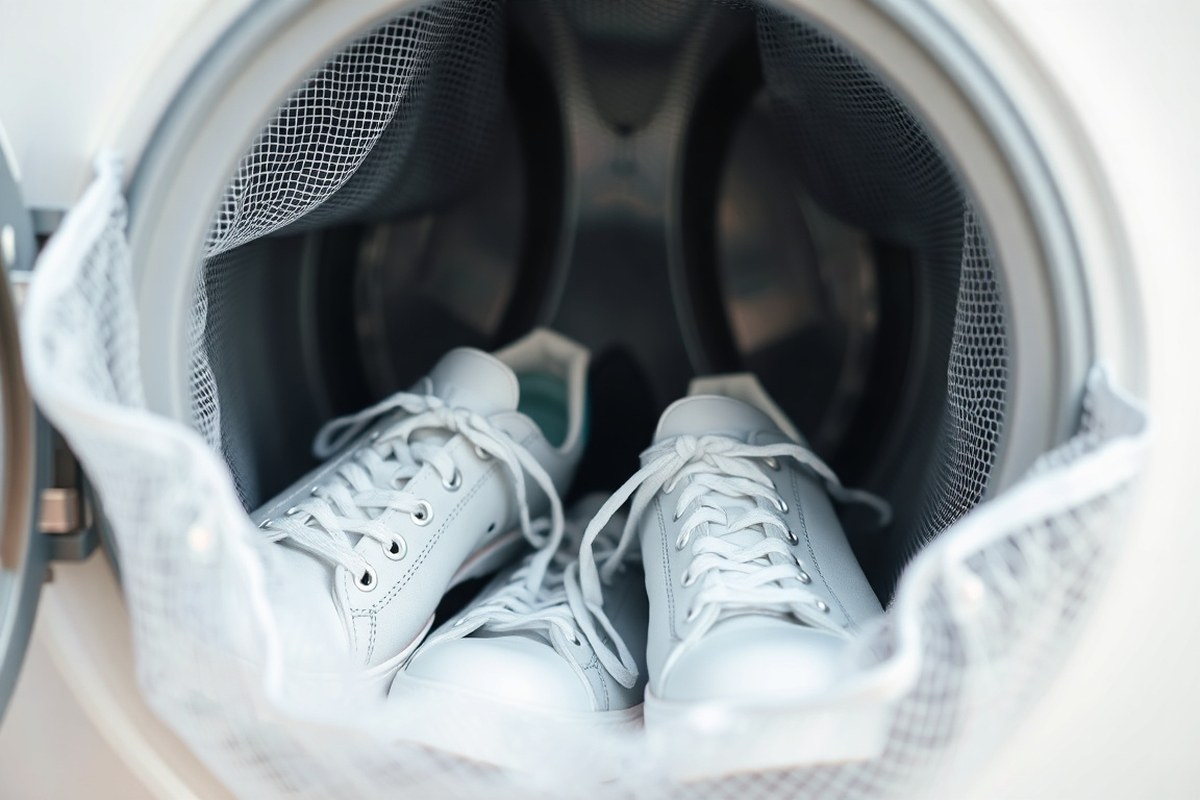
You can wash most tennis shoes in the washing machine safely when you follow certain guidelines. Shoes made from durable materials like canvas, polyester, nylon, or mesh usually tolerate machine washing without problems. Using a gentle cycle with cold water helps prevent damage. Placing your shoes in a protective mesh bag reduces tumbling impact, which protects both the shoes and your washing machine. Always air dry your shoes afterwards to avoid shrinking or glue failure that heat can cause. Checking the care label on your shoes first is essential since it tells you if machine washing is advised or not.
Machine washing may not be safe for tennis shoes with leather, suede, or other delicate materials. These materials can warp, discolor, or lose their texture when exposed to water and agitation. Shoes with cardboard in the sole or glued decorations also should not go in the washer. The cardboard can break down, and adhesives may weaken, causing the shoe to fall apart. In these cases, hand washing with specialized cleaners is a safer option.
Certain design features affect whether your tennis shoes should go in the machine. Lightweight shoes meant for performance often handle machine washing better because their materials are synthetic and less prone to damage. On the other hand, fashion sneakers with mixed materials or embellishments risk damage in the washing machine. Shoes used frequently in clay courts or indoor courts benefit most from regular washing every 4 to 6 weeks to maintain hygiene.
The main factors to consider before machine washing tennis shoes are material type, shoe construction, and manufacturer instructions. Match these with your washing machine settings and preparation methods for the best outcome. Avoiding hot water and heavy cycles reduces the risk of shrinkage and mechanical damage. Proper preparation and the choice of cycle ensure your shoes come out clean without losing shape or grip.
Which Tennis Shoe Materials and Parts Are Machine Wash Safe?

Understanding the materials your tennis shoes are made of is critical when deciding whether to machine wash them. Many tennis shoes combine several materials, each reacting differently to water, detergent, and the machine’s agitation. Identifying the main components, such as mesh, canvas, leather, suede, rubber, and synthetic fabrics, helps you protect your shoes and maintain their shape, performance, and appearance.
Most performance tennis shoes feature mesh or synthetic uppers that dry quickly and trap odors better than natural fibers. These materials tolerate machine washing well, especially on a gentle cycle with cold water. Canvas is also machine washable but requires attention to prevent dye bleeding, particularly with darker colors. Leather and suede parts, including accents and overlays, generally do not withstand machine washing; they may warp, crack, or lose protective coatings. Using a washer can severely damage these parts and reduce the life of your shoes.
Tennis shoe soles, mostly made of rubber, can usually withstand a machine wash if you place the shoes inside a laundry bag and include towels to even out the load. Laces should be taken out and washed by hand or wrapped in a mesh bag for machine washing. Cleaning insoles by hand is preferable since soaking them in water can lead to odor and misshaping.
| Tennis Shoe Material | Machine-Wash Safe? | Key Considerations | Best For |
|---|---|---|---|
| Mesh/Synthetic | Yes (gentle cycle) | Quick drying, traps odors well | Performance court shoes |
| Canvas | Yes (cold water) | Sturdy, but watch for dye bleed | All-white classics |
| Leather Accents | No (spot clean only) | Warps and cracks easily in machine | Premium hybrid shoes |
| Rubber Sole Only | Yes (with protection) | Grippy but adds weight; balance load | Trail-to-court versatile shoes |
| Suede/Nubuck | Avoid machine washing | Uneven water absorption ruins texture | Fashion-forward or casual tennis sneakers |
To identify materials on your shoes, check the product tag, inside the tongue, or manufacturer’s website. Some have mixed materials, like a mesh upper paired with leather trims. For those with leather accents, stick to spot cleaning with a suede or leather conditioner because water and agitation can cause permanent damage. For mesh and synthetic tennis shoes, prepare them by removing loose dirt first and placing them in a mesh laundry bag to reduce impact.
Remember that laces can get tangled and insoles may retain moisture, so it’s best to wash laces in a small bag or by hand and remove insoles to air out or spot clean. This prevents mildew and protects the shoe’s internal cushioning, which is sensitive to machine washing.
Practical tip: Avoid washing tennis shoes with suede or leather parts in the machine; instead, clean these areas gently by hand using a damp cloth and specialized cleaner to preserve your shoes’ look and function.
How to Prepare Tennis Shoes for the Washing Machine
Preparing your tennis shoes correctly before putting them in the washing machine improves cleaning results and protects the shoes from damage. Start by removing dirt and debris, then take out shoelaces and insoles to wash separately. Pre-treat stains and odors to ensure everything comes out fresh and clean.
Removing Dirt and Dust Safely
Getting rid of loose dirt and dust before washing prevents the washing machine from getting clogged and helps your shoes clean better. Avoid rinsing shoes under running water first, which can push dirt deeper into the fabric.
Use a soft brush or an old toothbrush to gently brush off dirt and dust. Tap the soles lightly to dislodge stuck-on debris. This step is quick and does not require any special tools, usually taking 5 to 10 minutes depending on how dirty the shoes are.
Handling Shoelaces and Insoles
Remove shoelaces and insoles before machine washing. Washing them separately prevents tangling and allows a more thorough clean for each part. Insoles can hold sweat and odor, so treating them apart helps neutralize smells more effectively.
Place shoelaces in a dedicated mesh laundry bag to keep them from wrapping around the agitator or other items. Insoles should be checked for washing compatibility; some may require hand washing only. Air dry insoles completely before putting them back into the shoes to avoid mold or mildew growth.
Pre-Treating Stubborn Stains and Odors
For tough stains or persistent odors, pre-treating the affected areas before washing boosts the cleaning power. This reduces the need for repeated cycles, saving time and energy.
Apply a small amount of mild detergent or a specialized stain remover directly onto spots such as grass, mud, or grease marks. Let it sit for 10 to 15 minutes at room temperature before putting the shoes in the washing machine. For odorous insoles, sprinkle baking soda on them and let it sit overnight to absorb smells, then brush off the powder before washing.
- Brush off loose dirt and debris from the shoes using a soft brush or old toothbrush.
- Tap soles gently to remove any stuck-on particles.
- Take out shoelaces and place them in a mesh laundry bag.
- Remove insoles and inspect their washing instructions; hand wash if needed.
- Pre-treat stains by applying mild detergent or stain remover and let sit for 10 to 15 minutes.
- Sprinkle baking soda on smelly insoles to neutralize odors; leave overnight if possible.
- Brush off baking soda before placing insoles back in the mesh bag or washing separately.
What Machine Settings Work Best for Washing Tennis Shoes?
To wash tennis shoes safely and effectively in a washing machine, select settings that gently clean without damaging materials or adhesives. Use a delicate or hand-wash cycle to keep wear and tear minimal. Avoid cycles with hot water and high spin speeds, since temperatures above 80°F can shrink synthetic fabrics and weaken glue bonds in the shoe’s toe box.
Cold or room-temperature water is the safest choice. It cleans without risking heat damage. The spin speed should be slow or on a low setting to reduce stress on the shoes. High spin speeds can deform shoe structure and worsen moisture retention after washing.
Adding towels to the load can provide cushioning and balance the drum during the wash, reducing noise and wear. Use a couple of clean bath towels with your tennis shoes inside a fine-weave mesh laundry bag. This method also prevents banging against the machine’s drum.
| Machine Setting | Recommended Option | Why It Matters |
|---|---|---|
| Wash Cycle | Delicate or Hand-Wash | Minimizes mechanical stress to protect shoe materials |
| Water Temperature | Cold or Room Temperature (around 70-80°F) | Prevents shrinking and glue loosening |
| Spin Speed | Low or Gentle Spin | Limits deformation and reduces moisture retention |
| Load Additions | 2 Bath Towels | Cushions shoes and balances machine load |
| Protection | Zip-Top Mesh Laundry Bag | Contains debris and reduces direct drum impact |
- Slip your tennis shoes into a fine-weave mesh laundry bag to prevent damage and protect the washer.
- Add two bath towels to cushion the shoes inside the drum and help balance the load.
- Set your washing machine to the delicate or hand-wash cycle. Choose cold or room-temperature water.
- Select a low or gentle spin speed to avoid stressing the shoes and minimize excess moisture retention.
- Start the cycle and wait for completion. Expect your shoes to be very wet due to the low spin speed.
Following these steps should result in tennis shoes that are clean and intact, avoiding shrinking or glue damage. High spin speeds or hot water tend to cause problems like misshapen shoes or loosening of glued parts. Cushioned loads with towels also prevent rattling that could damage either shoes or your washing machine.
How to Dry Tennis Shoes Properly After Machine Washing
Drying tennis shoes properly after machine washing is key to preserving their shape and performance. Avoid any heat-based drying methods as heat can shrink or warp the foam midsoles, which support your foot during play. Instead, use air drying approaches that maintain the shoe’s structure and speed up the drying process safely.
Air Drying Techniques Without Heat
Air drying is the safest way to dry tennis shoes after washing. Place them in a well-ventilated spot indoors or outdoors, but out of direct sunlight to prevent fading and material damage. To keep the shoes from warping, stuff the insides with dry socks or clean rags so they hold their shape as they dry. Here are effective steps to air dry tennis shoes:
- Remove the insoles and laces to dry separately.
- Stuff each shoe with dry, clean socks or rags to maintain shape.
- Set shoes on a wire rack or a towel to allow air circulation underneath.
- Keep shoes out of direct sunlight and away from heaters or vents.
- Rotate or flip shoes every 4 to 6 hours for even drying.
- Place shoes near a window or a fan for better airflow.
- Allow 12 to 24 hours for drying depending on humidity and temperature.
Drying time varies, but you’ll know your shoes are ready when they feel completely dry to the touch inside and out, without any dampness or odor.
Using Fans or Forced Air
Fans and other low-heat forced air sources can speed up drying without risking damage. Position a standard household fan a few feet away to keep air moving around the shoes. This helps moisture evaporate faster, especially in humid conditions. Avoid using a hair dryer or any heat source, since temperatures above 100°F (38°C) can start to deform midsoles and other parts. To safely use fans for drying tennis shoes:
- Place shoes on a breathable surface like a wire rack or mesh screen.
- Point the fan so air flows across and inside the shoe openings.
- Keep the fan on medium or low speed to avoid blowing debris into shoes.
- Remove insoles and dry them separately near the airflow.
- Check periodically and reposition shoes for uniform drying.
Fans can reduce drying time by several hours, making them a practical option indoors or on damp days.
Avoiding Common Drying Mistakes
Skipping heat-based dryers is essential since the tumbling and heat can cause foam midsoles to warp, lessening support and comfort. Direct sunlight or placing shoes near radiators or heating vents can dry out fabrics and adhesives, leading to cracking or shrinking. Avoid wrapping shoes in towels tightly or sealing them in plastic bags, as this traps moisture and promotes odor or mildew growth. Here are common drying pitfalls to avoid:
- Using a clothes dryer or high-heat source.
- Leaving shoes in direct sunlight for extended periods.
- Ignoring shoe shape by drying them without stuffing inside.
- Drying on surfaces with poor air circulation, like carpets or solid floors.
- Sealing shoes in non-breathable bags immediately after washing.
- Ignoring damp insoles or laces that can retain moisture.
Do not put your tennis shoes in the dryer; heat damages the midsoles and can cause shoes to lose their support and fit.
Common Washing Mistakes and How to Fix Them
Shrinking or deforming your tennis shoes in the washing machine often happens because of high water temperatures or using an aggressive cycle. Hot water and intense spinning can warp the shoe shape or shrink materials like synthetic leather and mesh. To prevent this, always wash shoes in cold water on a gentle or delicate cycle. Use low spin settings to reduce strain on glue and stitching. This approach minimizes damage and keeps your shoes fitting correctly after washing.
Improper loading can lead to damage both to your shoes and the washing machine drum. Throwing tennis shoes directly into the drum alone or with heavy or sharp items risks scuffing or tearing the shoe and denting the washer. Shoes banging around can also unbalance the machine, causing noisy operation and mechanical wear. A simple fix is to put your shoes inside a laundry bag made for delicate washing or an old pillowcase tied shut, which cushions the shoes and prevents direct contact with the drum. Add a few towels to balance the load and protect the machine further.
When your shoes come out damaged, like loose soles or broken eyelets, first verify the machine settings you used. Resetting to cold water and gentler cycles often helps prevent future issues. For minor glue failures, you can use shoe adhesive available at sports stores to reattach parts. If the shoes deform, reshape them immediately after washing by stuffing newspaper inside while they dry. Air drying away from direct heat keeps them from shrinking further or warping. Common washing mistakes include:
- Using hot water that shrinks or warps shoe materials
- Skipping protective laundry bags that prevent drum and shoe damage
- Washing shoes with heavy or sharp objects risking drum dents and tears
- Running aggressive or high-spin cycles increasing wear and deformation
- Ignoring weight balance inside the machine causing noisy, uneven washing
- Forgetting to reshape shoes right after wash before drying
- Drying shoes in direct sunlight or heat sources that cause shrinking
Protective barriers like laundry bags cost less than $10 and are reusable, making them worthwhile investments for shoe longevity. Adding towels to the load may slightly extend wash time but significantly reduces machine strain. Watching the machine during the cycle helps catch loud noises early, signaling unbalanced loads. Keeping these habits maintains both your tennis shoes and washing machine in good condition for the long term.
When Should You Hand Wash Instead of Using a Washing Machine?
You should hand wash tennis shoes when their materials or construction are too delicate for a washing machine or when stubborn stains require more careful treatment. Shoes with leather, suede, or special coatings often suffer damage in a washer. Hand washing lets you control the pressure, water temperature, and cleaning agents to protect your shoes and get them clean without risk.
Materials Unsuitable for Machine Washing
Leather and suede tennis shoes should never go in the washing machine. Machine washing can cause leather to crack, warp, or lose its finish, while suede often becomes stiff and discoloured. Shoes with glued components, such as glued-on soles or delicate overlays, are also risky because washing machines’ agitation and water can weaken the glue and cause parts to detach. Shoes with metal eyelets prone to rust or fabrics with special coatings, like waterproofing, are better off hand washed to preserve their quality and appearance.
On top of materials, consider the shoe’s overall condition. Older, worn-out shoes or those with loose stitching can come apart in the washer. The hand washing approach offers gentler cleaning suitable for shoes that need careful handling to avoid damage or shortening their life span.
Hand Washing Tools and Supplies
Gather a soft-bristled brush, mild detergent formulated for delicate fabrics or leather, a basin or bucket of lukewarm water (around 85°F to 95°F), and a microfiber cloth or towel. Avoid harsh detergents, bleach, or soaps with strong chemicals as these can strip essential oils and damage materials. Having a toothbrush or small brush helps clean seams, mesh areas, and eyelets more precisely without rough scrubbing. For stubborn stains, white vinegar diluted with water (1 part vinegar to 3 parts water) can be an effective and gentle spot treatment.
Also prepare a drying area away from direct heat or sunlight. Improper drying after hand washing can cause shrinkage, stiffening, or colour fading. A well-ventilated room with a fan for air circulation works best.
Hand Washing Step-by-Step Process
Start by removing laces and insoles, which should be cleaned separately. Brush off loose dirt and dust gently to avoid embedding particles deeper into the material. Fill the basin with lukewarm water and add about one tablespoon of mild detergent per gallon of water. Submerge the shoes and let them soak for 10 to 15 minutes to loosen grime without over-saturating sensitive materials.
Use the soft brush to work in circular motions over dirty areas, focusing on stains and soles. Be gentle around seams and sensitive spots, using a toothbrush for eyelets or small crevices. Rinse thoroughly with clean lukewarm water to remove soap residues, because leftover detergent can attract more dirt or cause staining.
Press excess water out without wringing or twisting to maintain the shoe’s shape. Pat the shoes with a microfiber towel to absorb moisture and stuff them loosely with paper towels or dry cloths to support structure during drying. Air dry at room temperature for 24 to 48 hours, turning occasionally to ensure even drying. Clean the laces by soaking them in soapy water, scrubbing lightly, rinsing, and air drying separately.
Maintaining Tennis Shoes Between Washes to Extend Cleanliness
Keeping your tennis shoes fresh and clean between washes helps reduce wear from frequent machine cleaning. Removing odor promptly and preventing heavy dirt buildup maintains the shoes’ appearance and prolongs their life.
To manage odor, sprinkle baking soda inside your shoes after each use. Let it sit overnight to absorb moisture and smells, then shake it out before wearing. Activated charcoal shoe inserts are another effective option; they absorb odor and moisture and can be reused for several weeks. For a quick freshen-up, use a shoe deodorizing spray designed for sports footwear. Avoid storing shoes in damp places as this encourages bacteria growth, leading to bad smells.
Regular care also involves brushing off dirt and debris after every wear. Use a soft brush or an old toothbrush to clean the outsole and mesh surfaces. This prevents dirt from settling into the shoe fibers and minimizes stains. Spot-clean any visible stains with a mild soap solution and a soft cloth instead of waiting to wash the entire shoe.
- Sprinkle 1-2 tablespoons of baking soda inside shoes after use
- Use activated charcoal inserts, replacing every 3-4 weeks
- Brush off dirt and mud after each wear with a soft brush
- Spot clean small stains promptly using mild soap and water
- Store shoes in a well-ventilated, dry area away from direct sunlight
- Use odor-neutralizing sprays once or twice a week if needed
- Alternate between two pairs of tennis shoes to let each pair dry fully
Specialized shoe cleaning kits often include a brush, cleaner, and odor remover formulated for athletic shoes. Prices range around $10 to $25 and can make upkeep easier by combining all steps in one. Using these products as recommended helps avoid harsh chemicals that may damage shoe materials.
Never seal damp tennis shoes in a plastic bag or tight container, as trapped moisture worsens odor and promotes mold growth.
Consistent care that targets odor and dirt spot cleaning delays the need for a full machine wash, keeping your tennis shoes in good condition longer. This approach saves time and protects shoe fabric and adhesives from unnecessary wear caused by repeated washing cycles.
Step-by-Step Action Plan for Washing Tennis Shoes in the Machine
Follow these clear steps to clean your tennis shoes safely in the washing machine while protecting their shape and materials.
- Before You Start: Remove laces and insoles, and brush off loose dirt to avoid clogging the machine and damaging the shoes.
- Pre-Wash Check: Confirm your tennis shoes are made of machine-wash-safe materials like mesh or synthetic fabric. If the shoes have leather or suede, plan for hand washing instead.
- Wash Day: Place shoes in a mesh laundry bag or pillowcase. Add towels for balance and select a cold, gentle cycle with a small amount of mild detergent. This prevents damage or shrinking.
- Immediately After Washing: Remove shoes from the machine right away to prevent odors or deforming. Stuff them lightly with dry paper towels to maintain shape.
- Drying Phase: Air-dry shoes indoors away from direct sunlight or heat sources. Replace paper towels once damp. Avoid using a dryer to prevent warping or material damage.
- After 1 Week: Inspect shoes for any residual stains or odors. Spot clean with a soft brush or cloth if needed to maintain freshness between washes.
- Ongoing Maintenance: Use shoe deodorizers and clean the soles regularly to extend the time between machine washes and keep shoes in good condition.
Frequently Asked Questions
What Is the 3 Shoe Rule?
The 3 shoe rule means rotating at least three pairs of tennis shoes to let each pair dry and recover between uses. This helps extend their lifespan and prevents overuse damage that frequent washing alone can’t fix.
Can I Use Dawn Dish Soap to Clean My Sneakers?
Dawn dish soap is too harsh for regular washing machine use on tennis shoes and may strip protective coatings. Stick to mild detergents designed for clothing or gentle cleansers to keep materials intact.
Is It Better to Wash Shoes in the Washer or Dishwasher?
Washing tennis shoes in a washing machine is safer because dishwashers use hot water and high heat that can damage shoes. A washer’s gentle cycle with cold water is designed to clean fabric and rubber without warping.
How Do You Wash Shoes in the Washing Machine Without a Mesh Bag?
Washing tennis shoes without a mesh bag is not recommended since it risks damage to both shoes and washer parts. A mesh bag cushions shoes from hard tumbling and prevents snagging or banging inside the drum.
How Do I Wash My Shoes in the Washing Machine?
Remove laces and insoles, use a mesh bag, select cold water and a gentle cycle, and use mild detergent. Air dry shoes away from heat to avoid shrinking and glue damage. This method balances cleanliness and shoe care.
Can Shoes Damage a Washing Machine?
Shoes can damage a washing machine if they’re not secured in a mesh bag or pillowcase before washing. Hard banging from tumbling shoes may break washer components or unbalance the drum, risking machine failure or poor cleaning results.
Wrapping Up
Washing your tennis shoes in the machine can be safe if you follow the right preparation, settings, and drying methods. Taking care to match your shoes’ materials with the proper cleaning routine helps avoid damage. Next, apply this plan the next time your tennis shoes need a thorough cleaning to keep them looking and performing their best.