
How to Wash Goose Down Comforter: Simple Steps for Safe Cleaning and Fluffing
To wash a goose down comforter safely at home, use a front-loading washer with gentle detergent, wash on a cold or warm cycle, and dry it thoroughly with low heat and dryer balls. Avoid harsh chemicals and high heat to protect the delicate down filling and maintain loft. This approach protects your comforter while giving it a fresh, fluffy feel.
This advice suits anyone who owns a goose down comforter and wants to clean it safely without damage. You will find clear, simple steps for washing, drying, and maintaining your comforter for long-lasting comfort and warmth.
Key Takeaways
- Wash a goose down comforter every 3 to 5 years if using a duvet cover, or every 1 to 2 years without one.
- Protect your comforter by using a duvet cover and cleaning it every 1 to 2 weeks; this helps cut down how often the comforter itself needs washing.
- Dry your comforter on low heat and check it every 30 minutes to shake and redistribute the filling evenly.
- Allow 3 to 6 hours for complete drying; your comforter must be 100% dry before storage or use.
- After washing outside, let your comforter air-dry in fresh air for around 2 hours before putting it in the dryer.
- Wash more frequently, every 3 to 6 months, if you don’t use a cover, have allergies, pets, or sweat heavily at night.
How to Wash a Goose Down Comforter Safely at Home

You can wash your goose down comforter at home if the care label allows it and your washing machine is large enough. A front-loading washer with a large capacity (usually over 4.5 cubic feet) is best because it lets the comforter move freely, avoiding damage to the feathers. Avoid using top-loading machines with agitators, as they can tear the fabric or clump the down. For smaller comforters or if you lack a large washer, hand washing in a bathtub can work but takes more time and care.
Choose a gentle detergent specifically formulated for down or mild, fragrance-free detergent to protect the delicate feathers. Avoid bleach, fabric softeners, or harsh chemicals as they can ruin the insulation and fabric. Wash with warm water around 90 to 105 °F (30 to 40 °C) to clean effectively without damaging the down. Use the gentle or delicate cycle and select a slow to medium spin speed to reduce stress on the comforter. Follow these steps to wash your goose down comforter safely:
- Check the care label: Confirm the comforter can be machine washed and note any specific instructions.
- Prepare your washer: Use a large-capacity front-loading machine or a high-efficiency top-loader without an agitator.
- Pre-treat stains: Spot clean any visible marks with a gentle stain remover or mild detergent and let it sit briefly.
- Load comforter loosely: Place the comforter in the washer without compressing it. It needs space to move.
- Add detergent: Measure and add a gentle down detergent or mild liquid detergent according to package directions, avoiding excess suds.
- Set wash cycle: Choose warm water and the delicate or gentle cycle with a slow to medium spin speed.
- Run an extra rinse cycle: This ensures all detergent is removed, preventing residue buildup on feathers.
- Remove promptly: Take the comforter out right after the cycle to prevent odors or mildew.
Best Practices for Drying Goose Down Comforters
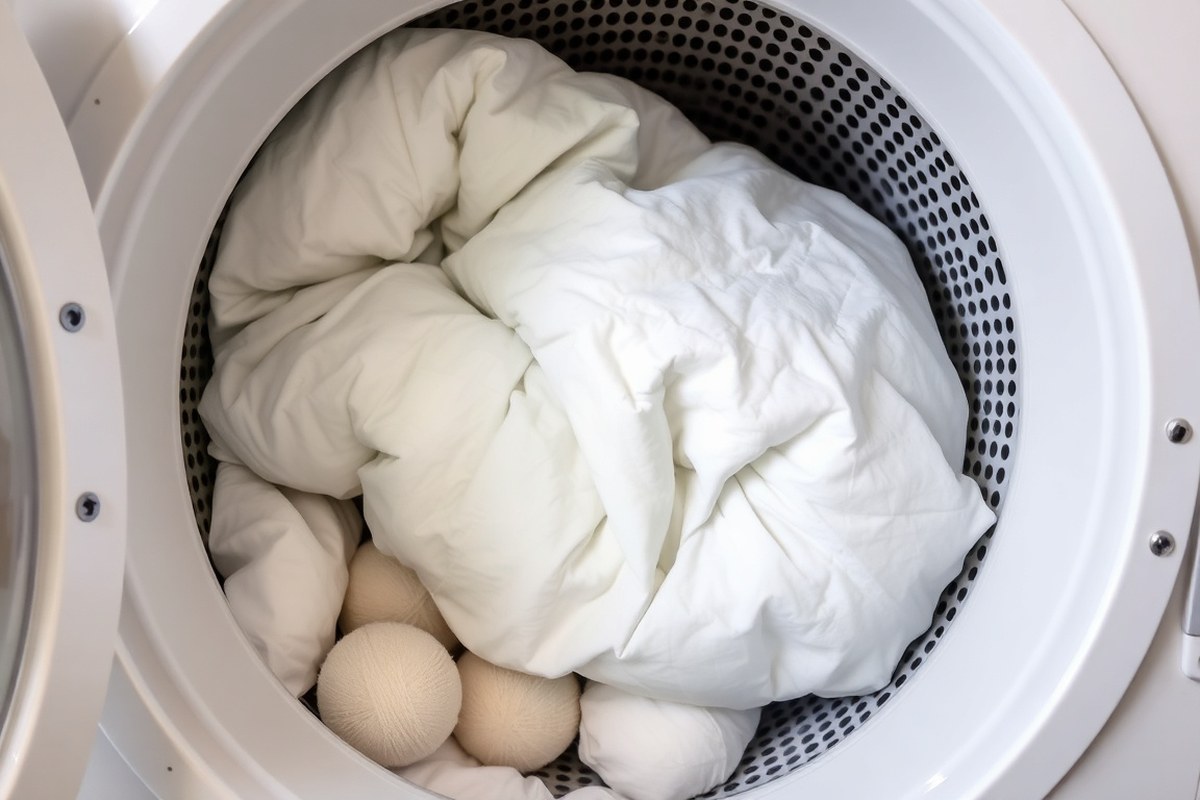
Drying a goose down comforter properly requires patience and the right settings to avoid damage, clumping, or mildew. It typically takes between 3 to 6 hours on low heat to dry fully. Preventing clumps involves regular fluffing during drying and using dryer balls to keep the down loose and evenly distributed.
Using a Dryer Safely
Set your dryer to low heat or the “air fluff” setting to protect the natural oils in the down and avoid scorching the fabric. High temperatures can damage the cotton shell and cause the down feathers to lose their insulating properties. Adding wool dryer balls or clean tennis balls helps separate down clusters and encourages even drying.
Because drying a large comforter takes several hours, maintain this gentle setting throughout the cycle. Dryer balls prevent down from settling and clumping, which would reduce loft and warmth.
Manual Fluffing During Drying
Every 30 minutes, pause the drying cycle to remove the comforter and fluff it by giving it a good shake. This breaks up any developing lumps, redistributes the filling, and promotes uniform drying. Failing to do this can lead to uneven drying and persistent damp patches that cause mildew.
Repeat this process multiple times over the 3 to 6 hours it can take for the comforter to dry fully. Regular fluffing also helps restore the loft and prevents the down from becoming flattened.
Air Drying Tips
Air drying is a gentle way to start drying your down comforter and can reduce dryer time. Hanging the comforter outside for 1 to 2 hours on a warm, dry day dries surface moisture and freshens the fabric. Make sure to shake it out occasionally while air drying to help prevent clumping.
Since air drying alone usually isn’t enough to dry the inside layers completely, follow it by tumble drying on low heat with dryer balls. Avoid air drying in humid conditions to prevent mildew growth.
Ensuring Thorough Dryness
Check multiple layers of your comforter and feel for any dampness inside folds or thick spots before using or storing it. Even small amounts of moisture can encourage mildew and odors. Using your hands to gently squeeze and feel through several sections helps confirm complete dryness.
Damp spots left after the first drying require extra low-heat dryer cycles using dryer balls, with pauses every 30 minutes to fluff the comforter. Do not store the comforter until it is fully dry to avoid mold and clumping. Follow these steps to dry your goose down comforter properly and keep it fluffy and fresh:
- Set your dryer to the low heat or “air fluff” setting to protect the down’s natural oils.
- Add 2 to 3 wool dryer balls or clean tennis balls to the dryer to help separate clumps.
- Start the drying cycle and run it for about 30 minutes.
- Pause the dryer every 30 minutes, remove the comforter, and fluff it thoroughly by shaking and patting.
- Return the comforter to the dryer and repeat the fluffing process every 30 minutes during drying.
- When weather allows, hang the comforter outside for 1 to 2 hours before or after drying to let it air out.
- Before removing the comforter for use or storage, check multiple layers by hand to ensure it’s completely dry.
- Run additional low-heat drying cycles if any dampness is detected in thick or folded areas.
Never skip fluffing the comforter every 30 minutes during drying; trapped moisture and clumped down can cause uneven drying and mildew.
How Often Should You Wash Your Goose Down Comforter?
Washing your goose down comforter depends largely on your lifestyle and bedding setup. Using a duvet cover means you usually only need to wash the comforter itself once every 1 to 3 years. The cover acts as a protective barrier against body oils, sweat, and spills, so washing the cover every 1 to 2 weeks helps maintain overall cleanliness without frequently exposing the down to water and detergent. Without a duvet cover, you should wash the comforter more often, usually every 1 to 2 years, to keep it fresh and hygienic.
Other factors affect washing frequency as well. Experiencing allergies, sleeping with pets, or sweating heavily at night calls for washing your comforter every 3 to 6 months. These conditions increase exposure to allergens, pet dander, and moisture, which can degrade the down fill and encourage bacteria or mold growth. Using a duvet cover will still help, but you might want to wash the entire comforter more often in such cases. Spot cleaning small stains can reduce the need for full washing, especially if the rest of the comforter looks clean and smells fresh.
Spot cleaning is a practical way to keep the comforter looking its best without the stress of constant washing. For minor stains, use lukewarm water and mild soap, applying it gently to the stained area while pulling the cover away from the fill. This prevents soap from saturating the down, which can cause clumping. For tougher stains, adding a small amount of white vinegar to the cleaning solution helps boost its effectiveness. After spot cleaning, allow the area to air dry completely to avoid mold. Spot cleaning works well for isolated issues between washes and can extend the comforter’s life.
Washing your goose down comforter too often risks breaking down the delicate feathers and reducing loft, which means losing warmth and comfort. Each wash exposes the fill to moisture and agitation that can clump the down or strip natural oils. That’s why many choose to rely on a duvet cover as the first line of defense and reserve full washes for every few years or when the comforter is noticeably soiled or smells musty. The cost and effort of washing a large comforter at home or professionally also make it sensible to wait until a full wash is genuinely needed.
Monitoring your comforter’s condition over time helps you decide the best washing schedule. Visible stains, a musty smell, or loss of fluffiness all signal it’s time to wash your comforter. Investing in a washable duvet cover and washing it regularly maximizes hygiene and keeps the down comforter cleaner for longer while reducing the total number of washes required. This approach balances maintaining a fresh sleeping environment with protecting the structure and warmth of your goose down comforter.
Common Mistakes to Avoid When Washing Goose Down Comforters
Using harsh detergents or chemicals like bleach and fabric softeners can seriously harm your goose down comforter. These substances break down the natural oils that keep the down clusters soft and lofty, causing the filling to become brittle or flat. This damage reduces the comforter’s insulating ability and shortens its lifespan. Instead, always choose a gentle, pH-neutral detergent, ideally one formulated for down or delicate fabrics.
High temperatures in the wash or drying process are another common mistake. Hot water can shrink both the outer fabric and the down filling. It also risks weakening the stitching that holds the comforter’s baffles together. Likewise, drying on high heat can melt synthetic fabrics or scorch the down clusters. Use warm water around 86°F to 104°F (30°C to 40°C) and dry on low or no heat settings to protect the materials.
Mechanical damage also happens when comforters are washed in standard top-load washers with agitators. The vigorous twisting action can cause the down to clump, tear the baffle stitching, or create uneven filling distribution. Front-load washers with gentle cycles reduce this risk significantly and are recommended whenever possible.
- Avoid bleach and fabric softeners to protect the down fill
- Use warm water, not hot or cold, during washing
- Choose gentle or down-specific detergent without enzymes or dyes
- Wash comforters in front-loading machines with a delicate cycle
- Dry on low heat or air dry thoroughly to prevent mildew
- Pause the dryer periodically to redistribute the filling evenly
Clumping and odor often result from incomplete drying, which leaves the down damp for extended periods. Damp down can develop mildew, causing musty smells and potential health risks. Never leave your comforter damp for more than a few hours. Thorough drying can take several hours, and using dryer balls or clean tennis balls helps break up clumps during the tumble. Regularly check the comforter’s progress by feeling for any cold or damp spots.
These precautions take some extra time and care but prevent costly damage and preserve your goose down comforter’s warmth and fluffiness for years. Always follow product labels and avoid shortcuts like harsh chemicals or high-heat cycles that seem faster but cause harm. The right approach helps you keep your comforter clean, comfortable, and durable without professional help.
Spot Cleaning and Pre-Treatment for Stains
Spot cleaning your goose down comforter is the first step to removing stains safely and effectively before washing. Targeting stains early with gentle treatment avoids damage to the delicate down and prevents staining from setting in. Proper pre-treatment also ensures the full washing step cleans well without excessive scrubbing or detergent use.
Identifying Stain Type
Different stains require different treatments. Oils from skin or body products are oil-based, while food, blood, or sweat create protein-based stains. Dirt and mud are particulate stains. Knowing the type guides you to the right stain remover and helps avoid ineffective or damaging attempts. For example, enzyme-free detergents handle oil-based stains well without harming down.
Protein stains such as sweat or blood need cool water and mild detergent to prevent setting, while dirt stains benefit from gentle brushing before wetting. Avoid harsh chemicals or bleach as they can damage down feathers and fabric.
Applying Stain Remover Safely
Choose mild detergent free of enzymes or specific stain removers designed for delicate fabrics. Apply sparingly to keep detergent buildup low, which can degrade the comforter’s stuffing. Using a soft cloth, sponge, or a gentle toothbrush, work the cleaner lightly into the fabric by rubbing the stained area against itself or using soft circular motions.
Avoid heavy scrubbing or twisting the fabric to protect the delicate down fill. Applying stain remover directly under the stained fabric layer prevents soaking the down unnecessarily, which can lead to clumping or uneven drying.
Soaking and Rinsing
After applying stain remover, allow the spot to soak for 15 to 30 minutes. This soaking time loosens tough stains gently without aggressive action. Keep the comforter flat and avoid wringing or twisting, which might break stitching or break down the down fill.
Once soaked, rinse the treated area lightly with cool water to remove detergent residue. Blot with a clean cloth to absorb moisture and help the fabric dry. Avoid letting the comforter soak entirely at this stage, as that step comes later with full washing.
- Locate the stain and lift fabric away from the down fill.
- Apply a small amount of enzyme-free mild detergent or a gentle stain remover to the stain only.
- Gently rub the stained fabric against itself or use a soft brush to work in the cleaner.
- Let the treated area soak for 15 to 30 minutes, keeping the comforter flat.
- Rinse the area gently with cool water, avoiding soaking the entire comforter.
- Blot with a clean towel to remove excess moisture from the spot.
- Allow the area to air dry out of direct sunlight before proceeding to full washing.
Use only a small amount of detergent to prevent buildup that can stiffen the comforter and reduce loft over time.
When to Choose Professional Cleaning
Professional cleaning becomes a wise choice when your goose down comforter’s care label specifically says “dry clean only,” or when the fabric and stitching are too delicate for home washing. Some comforters have covers that can shrink or degrade if soaked in water, making professional care essential. Choosing a laundry service that offers wet cleaning or specialized down laundering is preferable to traditional dry cleaning, which often uses harsh solvents unsuitable for down filling.
Traditional dry cleaning uses chemical solvents instead of water to clean fabrics. However, these solvents can strip natural oils from down feathers, reducing their loft and warmth. Look for a professional cleaner with experience handling down-filled items and who uses wet cleaning techniques. These services gently wash the comforter with water and mild detergents designed for delicate materials, better preserving the fluffiness and structure of the down.
Costs for professional down comforter cleaning usually range from $30 to $50 per item, depending on your location and the service level. Investing this amount is reasonable if your comforter is high-end or has stubborn odors or stains that home washing can’t remove. Persistent mildew or mold, which can linger even after washing at home, especially warrants professional treatment with expertise in sanitizing without damaging the down.
Choosing professional cleaning can restore down fill and fabric better than home methods when damage or heavy soiling occurs. A skilled cleaner can revive the loft by properly reconditioning the feathers during the cleaning process. Be aware that not all damage is fixable, particularly if the down has clumped severely or the outer fabric is torn. Always confirm with the cleaner that they offer down-specific services and ask about their process for handling delicate bedding items.
To decide whether to handle washing at home or seek professional help, check the comforter’s care label first. If it allows water washing and you feel confident in using gentle cycles at 30 to 40°C, home care is efficient and cost-effective. For delicate materials, persistent odors, or if your comforter is very expensive, professional wet cleaning provides superior protection and longer-lasting results.
How to Store Your Goose Down Comforter After Washing
Storing your goose down comforter correctly after cleaning is critical to keep it fresh, fluffy, and free from mildew or odors. The most important step is to ensure the comforter is completely dry before placing it in storage. Any leftover moisture can cause mildew and musty smells, which will damage the down and reduce its loft and insulating ability.
Avoid storing your comforter in plastic bags or vacuum-seal containers. Plastic traps moisture and compresses the down cluster and quill shafts, which can permanently damage the loft and the overall structure of the comforter. Instead, use breathable storage solutions like large cotton or linen bags, or acid-free fabric bags designed for textile storage. These allow air circulation and help maintain the natural loft of the down.
Choose a storage location that is cool, dry, and well-ventilated. Avoid damp basements, attics, or any area with fluctuating humidity or temperature, as those conditions promote mildew growth. It is also best to keep the comforter out of direct sunlight to prevent fabric deterioration and fading.
- Confirm the comforter is 100% dry, no cold or damp spots, before storage.
- Use cotton or linen storage bags, or acid-free fabric containers, but never plastic or vacuum-seal bags.
- Store in a cool, dry, and well-ventilated area away from direct sunlight.
- Fold the comforter loosely to avoid compressing the down clusters.
- Check periodically for signs of moisture or odors and air the comforter as needed.
Following these precautions will help preserve the loft and freshness of your goose down comforter over time. For example, a comforter stored in a breathable bag in a dry closet will maintain its insulating qualities and remain pleasant to use season after season. Failing to dry fully or using airtight plastic will almost always lead to musty smells or clumping down, which compromises comfort.
Troubleshooting Washing and Drying Issues
Clumped down, lingering odors, and incomplete drying are common issues when washing and drying your goose down comforter at home. Fixing these problems quickly helps preserve the comforter’s loft, freshness, and prevents mildew. You can resolve each with careful fluffing, proper drying, and targeted odor removal techniques.
Breaking Up Clumps After Drying
Clumping happens when the down inside your comforter sticks together, usually due to moisture or improper drying. To fix this, first give the comforter a good shake outdoors or in a spacious room. This manual fluffing helps break apart the clumps by redistributing the filling evenly.
Next, place the comforter back in the dryer on a low heat or air-only cycle with several dryer balls. These balls tumble with the comforter to physically break up clumps and force air into the down, restoring its loft. Run multiple short cycles if needed, checking between each to avoid overheating, which can damage the feathers. Thorough fluffing after drying prevents the down from staying compressed and reduces mildew risk.
Regularly fluff your comforter during and after drying to keep the down evenly distributed and soft.
Eliminating Odors
A musty or lingering odor means your comforter did not dry completely or quickly enough. Start by running another wash cycle if you notice any smell after washing. Ensure you use enough gentle detergent, but avoid fabric softener, which can trap odors in down.
For removing odors during drying, sprinkle a small amount of baking soda on the comforter before placing it in the dryer with dryer balls. Baking soda absorbs smells and keeps the down fresh. After drying cycles finish, hang your comforter outside in sunlight for a few hours. Sunlight and fresh air naturally reduce odors and help evaporate any remaining moisture, preventing stale smells.
When your comforter smells musty, do not store it until the odor disappears to prevent mildew growth.
Dealing with Mildew
Mildew forms when moisture remains trapped inside the comforter for too long. It has a distinct earthy or moldy smell and sometimes visible spots. When you suspect mildew, do not store the comforter and take action quickly. Spot treat any stained or shiny areas with a gentle solution made from equal parts white vinegar and water. Dab lightly and let the treated area air dry completely before putting the comforter back in the dryer.
After spot treating, hang the comforter outside on a dry, sunny day for several hours. Sunlight’s ultraviolet rays help kill mildew spores while the fresh air dries the comforter fully. A completely dry comforter, free of damp spots, stops mildew from growing back and safeguards long-term freshness.
Never store your goose down comforter while damp or smelling musty; mildew grows rapidly in these conditions.
Step-by-Step Action Plan for Washing Your Goose Down Comforter
Follow these clear steps to wash and care for your goose down comforter without damaging its loft and warmth.
- Before washing: Inspect the comforter for tears or loose stitching; repair any damage to prevent filling loss during washing.
- Day of washing: Use a front-loading washing machine with gentle detergent designed for down or delicate fabrics to avoid harsh chemicals. Wash on a gentle cycle with cold or warm water until clean.
- Right after washing: Gently press out excess water by hand without wringing to keep the down evenly distributed.
- Drying phase: Tumble dry on low heat with clean tennis balls or dryer balls to break up clumps and restore fluffiness. Check every 30 minutes to prevent overheating and ensure even drying.
- Post-drying check: Confirm no damp spots remain by feeling the comforter inside and out to avoid mold or odor buildup.
- Storage preparation: Store your comforter in a breathable cotton bag or pillowcase, keeping it in a cool, dry place to maintain loft and freshness.
- Regular maintenance: Spot clean minor stains promptly to reduce the frequency of full washes and preserve the comforter’s integrity.
Frequently Asked Questions
Can I Wash My Goose Down Comforter in a Top-Loader with an Agitator?
Avoid cleaning your goose down comforter in a top-load washer with an agitator because it risks harming the feathers and fabric. Choose a front-load washer with ample space to keep the comforter’s structure intact and avoid damage.
Is It Safe to Use Regular Laundry Detergent on a Goose Down Comforter?
Yes, regular mild laundry detergent works well for washing goose down comforters. Avoid bleach or harsh chemicals to protect the feathers and fabric.
How Can I Prevent My Goose Down Comforter from Clumping After Washing?
Use gentle washing cycles with mild detergent and dry your comforter thoroughly using low heat and dryer balls to maintain fluffiness and avoid lumps.
Why Should I Avoid Bleach When Washing a Goose Down Comforter?
Bleach can weaken down feathers and damage the fabric, reducing the comforter’s lifespan. Stick to mild detergents designed for delicate items.
Can I Wash a Goose Down Comforter If It Has a Sewn-In Label That Says Dry Clean Only?
It’s best to follow the care label instructions; if it says dry clean only, professional cleaning is safer to avoid damage.
What Is the Best Temperature to Wash a Goose Down Comforter?
Wash your comforter in warm water (around 30°C or 86°F) to clean effectively without harming the down filling.
Key Points to Remember
Cleaning your goose down comforter correctly keeps it comfortable and lasts longer. Handle it gently with proper products and drying methods to protect the delicate fill. Start by checking your comforter for any damage before the first wash, so you know it’s ready for care. This small step helps maintain your comforter’s quality and warmth season after season.