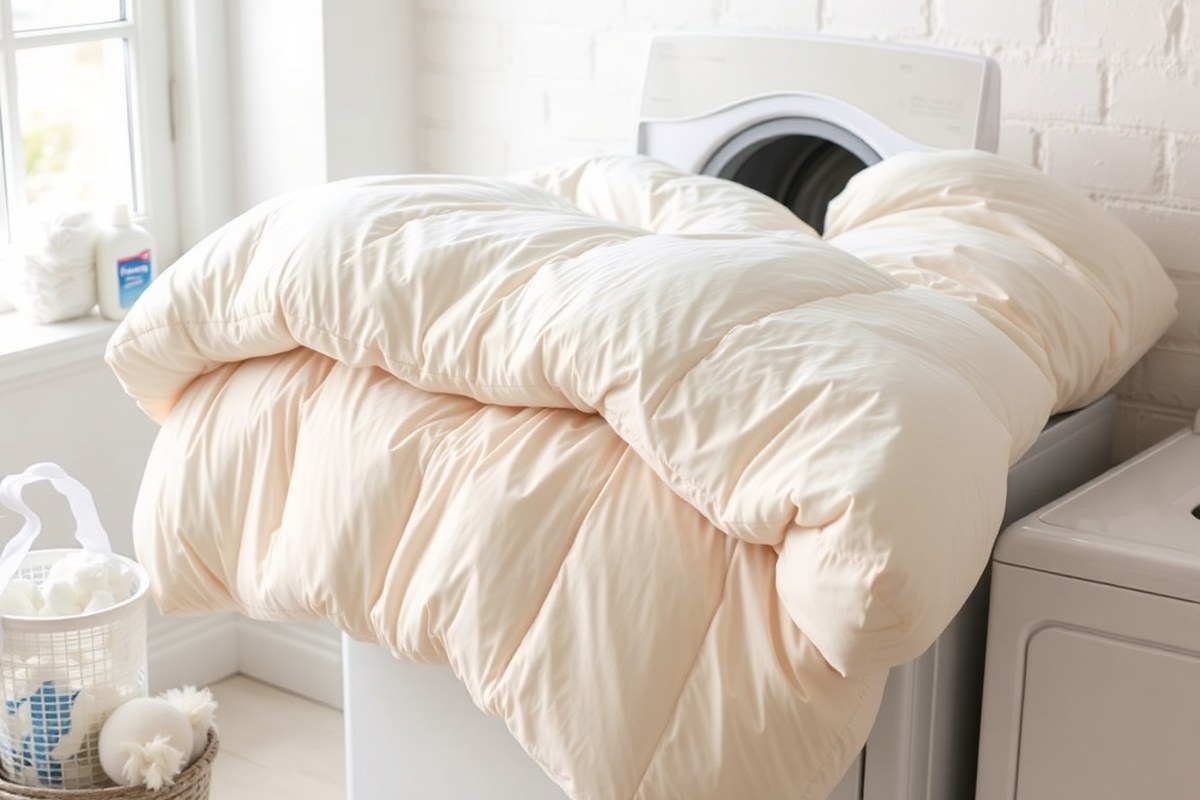
How to Launder a Down Comforter: Complete Steps for Safe, Fluffy Results
To launder a down comforter safely at home, wash it in cold water with a gentle detergent and dry it on low heat with wool dryer balls. Avoid hot water to prevent damage, and make sure to fluff and shake the comforter regularly during drying to keep the fill evenly distributed. Maintaining proper drying is key to preserving softness and loft. This advice is for anyone caring for their down comforter and wanting a clean, fluffy result without damage.
You will learn proven steps for washing, stain treatment, and drying techniques that protect your investment and extend your comforter’s life. The tips cover common mistakes and suggest when professional cleaning might be necessary to keep your down bedding in top condition.
Key Takeaways
- Wash your down comforter every 2 to 3 years to maintain freshness without overcleaning.
- Use cold water below 110°F to protect down oils and prevent fabric shrinking or warping.
- Pre-treat stains with spot cleaning before washing to avoid spreading or setting the stain further.
- Soak the comforter 15 to 30 minutes in detergent water for better cleaning results.
- Dry on low heat using 100% wool dryer balls to soften fabric and reduce static safely.
- Shake and pat the comforter every 20, 30 minutes during drying to prevent clumping and restore fluff.
How to Wash a Down Comforter Safely at Home

You can wash a down comforter at home safely by using the right tools and following detailed steps. A large-capacity front-loading washer, gentle detergent free from enzymes or fabric softeners, and cold or warm water will protect the comforter. Properly choosing the wash cycle and loading the comforter helps avoid harm to its filling and fabric.
Choosing the Right Washing Machine and Cycle
A large-capacity front-loading washer works best for washing down comforters because it offers enough space for the comforter to move freely during washing. Avoid top-loading machines with agitators, which can damage the down clusters and shell fabric. For king-size or very thick comforters, using a commercial washing machine at a laundromat with triple load capacity is a sensible option.
Select the wash cycle labeled as “bulky,” “bedding,” or “sheets” if your machine has those options. Otherwise, choose the gentlest cycle available, such as “delicates.” This approach reduces mechanical stress on the down clusters and fabric. Using the fastest spin speed helps remove excess water but should be balanced with the gentle cycle choice to avoid damage.
Selecting Detergent and Water Temperature
Use a mild detergent specially formulated for delicate fabrics or down products. Avoid detergents with enzymes or bleach, as they can weaken down feathers and strip natural oils essential for insulation. Do not use fabric softeners, which can leave residues that affect down loft.
Set the water temperature to cold or warm, never above 110°F. Temperatures higher than this can shrink the shell fabric and degrade the down’s insulating properties. Cold or warm water ensures the comforter gets clean without stripping moisture or causing shrinkage.
Loading and Washing Technique
Loading your comforter properly is critical to effective cleaning and avoiding damage. The comforter needs room to move freely to allow water and detergent to penetrate evenly. Compressing it too much in a small washer leads to uneven washing and can break down the down clusters. Follow these steps to wash your down comforter safely at home:
- Confirm the comforter’s care label permits machine washing.
- Inspect your washing machine to ensure it has a large drum capacity (usually at least 3.5 cubic feet) and front-loading design without an agitator.
- Place the comforter loosely in the washer drum to prevent tight packing.
- Add 1/4 to 1/3 cup of a mild, enzyme-free detergent for a regular-size load, adjusting amounts for larger comforters.
- Set the machine to a gentle or bulky bedding cycle with cold or warm water (maximum 110°F).
- Select the fastest recommended spin speed to remove as much water as possible without damaging the comforter.
- Start the wash cycle and monitor for unusual noises or imbalances.
- After washing, promptly transfer the comforter to drying (preferably a dryer with low heat and dryer balls) to maintain loft and prevent mildew.
Treating Stains and Spot Cleaning Before Washing

Treating stains and spot cleaning your down comforter before washing protects the delicate down fill and outer fabric from damage. Early and careful stain removal prevents marks from setting, especially since the heat from drying can make stains permanent. Use gentle stain removers, spot clean immediately, and avoid harsh scrubbing to maintain your comforter’s loft and fabric quality.
Common Stains and Suitable Treatments
Typical stains on down comforters include oils from skin or hair, sweat, food spills, and occasional ink or makeup. Each type requires a different approach for effective removal without harming the down or fabric. For oily stains, use a mild detergent-based spot cleaner to break down the grease without soaking the whole comforter. Protein stains like sweat or food benefit from an enzyme cleaner applied gently to the spot.
Ink or makeup stains can be trickier and usually respond best to a targeted stain remover or a solution made with diluted dish soap. Avoid using bleach or fabric softeners, as these can damage the down fill and shell fabric. Spot cleaning as soon as you notice the stain leads to easier removal and less likelihood it will embed permanently.
Safe Stain Removal Products for Down
Choose stain removers labeled safe for delicate fabrics or specifically for down and feather products. Mild liquid detergents diluted with water often work well for most stains because they clean without stripping natural oils from the down. Enzyme-based cleaners remove protein stains but should be tested first on a hidden area to avoid color fading.
Stay away from bleach, fabric softener, and harsh chemical cleaners, even if they claim stain removal power, as these can shrink the fabric by up to 8% or damage the filling’s insulating properties. Wool dryer balls help maintain fluffiness after washing but should not be part of stain treatment. Using rags or old, soft cotton T-shirts aids gentle rubbing to push stain remover into the fabric without abrasion.
Pre-Soaking and Spot Treatment Timing
After applying the stain remover, let the comforter soak in cool or lukewarm water for 15 to 30 minutes before washing. This allows the cleaning agents to break down the stain without risking fabric shrinkage or filling damage from hot water. Avoid soaking too long, as over-saturation can lead to clumping of down feathers.
Cleaning only stained areas and spot treating between full washes extends the life of your comforter by reducing wear. Multiple washes may be needed if stains persist; stains usually do not set until exposed to dryer heat, so you can treat stains again after washing without permanent damage. Follow these steps to treat stains on your down comforter safely:
- Identify the stain type (oil, protein, ink, or other) to select the right treatment.
- Use a clean rag or soft cotton cloth to apply a mild stain remover to the stained area.
- Gently pinch or rub the fabric sides together over the stain to work the cleaner in without aggressive scrubbing.
- Allow the treated area to soak in cool or lukewarm water for 15 to 30 minutes.
- Blot the spot with a clean rag to lift loosened stain residues before laundering.
- Wash the comforter overall following care instructions; consider repeating stain treatment if necessary post-wash.
Avoid using hot water or bleach during stain treatments as they can shrink the fabric and harm the down filling. Always test stain removers on a small concealed spot first.
Best Drying Practices to Maintain Fluffiness
Drying a down comforter properly takes patience and careful attention to keep the fill from clumping or becoming damaged. Using low heat, adding dryer balls, and fluffing the comforter every 20 to 30 minutes will help maintain its loft and softness. Expect the entire drying process to take around 2 to 3 hours.
Ideal Dryer Settings and Use of Dryer Balls
Set your dryer on a low heat or delicate cycle to prevent overheating, which can damage the natural oils in the down fill. High heat risks shrinking the fabric or causing the down to clump, diminishing the comforter’s fluffiness and insulation.
Include 3 to 4 wool dryer balls or clean tennis balls in the drum. These balls bounce around during tumbling and help break up down clusters, improving airflow and speeding up drying. The noise they create is normal and won’t harm your dryer.
Fluffing and Shaking Intervals
Remove the comforter from the dryer every 20 to 30 minutes during the cycle. Take it out, give it a gentle shake, and manually fluff the comforter to break loose any developing clumps of down. This step redistributes moisture and exposes damp spots to the dryer heat, ensuring even drying.
Fluffing prevents dense areas where the down might mat together, which reduces loft and comfort. Skipping this step can lead to a heavy, unevenly insulated comforter.
When to Stop and Check for Complete Dryness
Continue the cycle of drying on low heat with periodic fluffing for 2 to 3 hours total. Toward the end, thoroughly check the comforter’s thickest parts, especially in corners or seams, for any lingering dampness. Even slight moisture can cause mildew or mold growth.
After the dryer cycle finishes, remove the comforter and let it air dry flat in a clean space or hang it if you have room. This allows any remaining moisture inside to evaporate completely, securing softness and reducing odor risk. Follow these detailed steps for drying your down comforter:
- Set your dryer to low heat or delicate cycle to protect the down fill.
- Place the comforter inside with 3 to 4 wool dryer balls or clean tennis balls.
- Start the dryer and run it for 20 to 30 minutes.
- Stop the dryer, remove the comforter, and shake it out thoroughly to separate fill clumps.
- Manually fluff the comforter by gently pulling and spreading it out.
- Return the comforter and dryer balls to the dryer and repeat steps 3-5 until the comforter feels dry.
- Once the main drying cycle is complete, air dry the comforter flat or hang it until completely dry.
- Check all areas for any moisture during the process to avoid mildew.
When to Use Professional Cleaning Services
Choosing between washing your down comforter at home and using professional cleaning services depends mainly on your comforter’s size, your washing machine’s capacity, and the care label instructions. Most care labels say “dry clean only,” but this is often a liability warning rather than a strict cleaning requirement. Many down comforters can be safely washed at home if you have the right equipment and take care with delicate fabrics.
Start by checking the size of your washing machine. Most home washers are too small to clean a down comforter properly because down needs ample space to move freely during the wash cycle. A queen or king down comforter typically requires a washer with at least a 4.5 cubic feet capacity to allow sufficient agitation, rinsing, and spinning. Smaller machines can lead to uneven cleaning and may cause damage from excessive tumbling. In these cases, professional laundromats or cleaners with commercial machines are recommended. For example, Overlake Laundromat uses commercial washers with 40 to 80-pound capacity drums, about 3 to 4 times larger than home washers, which can handle comforters of any size effectively.
When your comforter has a “dry clean only” label but the fabric isn’t extremely delicate or treated with special coatings, you can wash it at home with extra care. Many older or hand-finished comforters that are truly “dry clean only” might benefit from professional cleaning, but traditional dry cleaning solvents can strip the natural oils from down feathers, reducing their resilience and loft. Washing a comforter labeled for dry clean only at home requires a gentle cycle, a specialty down detergent such as NikWax Down Wash Direct, and a thorough rinse and dry cycle to avoid clumping.
When stains resist home treatment and spot cleaning, or if your comforter has intricate detailing or delicate fabric that risks damage, professional cleaning is a safer choice. Experts have access to specialized stain removal techniques and water-based cleaning processes gentler on down feathers and safer for your health. Professional cleaning at places like Overlake costs around $45 regardless of comforter size, which can be a worthwhile investment to preserve your comforter’s longevity and quality, compared to potential damage from improper home washing.
Dry cleaning kits designed for home use usually only manage light spot and odor treatment. They won’t fully clean the heavy soiling often found on down comforters and are not a substitute for washing or professional cleaning.
Professional cleaning also offers convenience. Home drying of large down comforters can take several hours due to limited airflow in standard dryers. Professionals use high-capacity dryers that thoroughly dry and fluff the comforter in less time. Without proper drying, feathers can clump and cause mildew or odors. Large or king-size comforters especially benefit from professional drying equipment, which helps maintain fluffiness and comfort.
How Often Should You Wash a Down Comforter?
How often you wash your down comforter depends largely on whether you use a duvet cover and your sensitivity to allergens. If your comforter has a duvet cover and you use a flat sheet, you can wait about two to three years before washing the comforter itself. Duvet covers act as a protective layer, catching sweat, dust, and dirt, which means the comforter stays cleaner longer. Washing the duvet cover and sheets as you normally would, usually every one to two weeks for sheets and every couple of weeks for the cover, keeps the bedding fresh and reduces the need to launder the comforter frequently.
Without a duvet cover, your down comforter should be washed more often, generally every one to two years. This is because the comforter absorbs body oils, skin flakes, and dust mites more directly, which can lead to odor and allergen buildup. Regular washing prevents these problems but adds wear to the delicate down filling, so striking a balance is critical.
| Comforter Use | Washing Frequency |
|---|---|
| With duvet cover and flat sheet | Every 2 to 3 years |
| With duvet cover only | Every 3 to 5 years |
| Without duvet cover | Every 1 to 2 years |
Between washes, you should perform occasional maintenance to keep the comforter fresh and fluffy. This includes regular fluffing and airing out in sunlight when possible, which helps eliminate moisture and smells. Spot cleaning any stains promptly will prevent permanent spots and reduce the need for full washing. Fluffing once a week and airing out monthly can extend the cleanliness of your comforter.
Allergen-sensitive individuals may want to wash their comforter more frequently or consider using allergen-proof covers. Washing at higher temperatures over 130°F (around 54°C) helps kill dust mites, but most home washers do not reach this heat safely without risking damage to the down. In those cases, washing the duvet cover regularly and maintaining the comforter between washes is a safer choice.
Keep your duvet cover clean by washing it every two to three weeks to protect your down comforter and limit how often you need to wash the heavier bedding.
Common Mistakes When Washing Down Comforters
One common mistake when washing down comforters is using water that is too hot. Hot water strips the natural oils from the down fill, reducing its loft and insulation. It can also cause the outer fabric to shrink by up to 8%, ruining the fit of your comforter cover. Instead, use water between 86°F and 109°F to clean the comforter gently without damage.
Overloading the washing machine is another frequent error. Small top-loading washers with agitators can tear the baffles that hold the down in place and compress the fill unevenly. For best results, wash your comforter in a large front-loading machine at least 4.5 cubic feet or consider a commercial washer at a laundromat. These machines provide enough space for the comforter to move freely and get thoroughly cleaned.
- Use warm water (86, 109°F) instead of hot to protect fabric and down fill
- Avoid small washers with agitators; select large front-loading machines
- Include an extra rinse cycle to remove all detergent residues
- Do not use bleach or harsh chemicals, which degrade down feathers
- Ensure the comforter is fully dried before storing to prevent mildew
- Dry on medium to low heat, tumbling with dryer balls or clean tennis balls
- Do not remove the comforter from the dryer while still damp
Skipping an extra rinse can also cause problems. Detergent residue stiffens the down and reduces loft, making the comforter less comfortable and fluffy. Adding an additional rinse-only cycle removes leftover soap and helps maintain softness.
The drying process can harm down comforters if not done correctly. Removing the comforter when it is still wet might cause bunching, bad odors, and mold. Use a dryer set to low or medium heat and add dryer balls or clean tennis balls to break up clumps and restore fluffiness. Make sure the comforter is completely dry before storing it by pressing on several spots to detect any moisture or cool areas.
Harsh chemicals, including bleach and dry-cleaning solvents, can harm down feathers and leave residue. Dry cleaners often charge $40 to $80 or more, but their chemicals could reduce your comforter’s lifespan. For disinfection, running the dryer on hot for the first 20 minutes kills allergens like dust mites without bleach. Using gentle detergents without harsh additives is safer for your comforter and your skin.
How to Fluff and Maintain Your Down Comforter Between Washes
Fluffing your down comforter daily is key to keeping it lofted and comfortable without frequent washing. Just give it a good shake and fluff each morning when you make your bed. This simple action redistributes the down fill evenly throughout the comforter, preventing the feathers from clumping together and maintaining that soft, airy feel you want all night long.
Beyond daily fluffing, airing out your comforter regularly helps maintain freshness and reduce any musty odors. Take it outside on a sunny, dry day and hang or lay it flat in a well-ventilated spot for a few hours. Sunlight also acts as a natural disinfectant and helps reduce allergens. This airing process doesn’t need to happen after every use; doing it every few weeks should keep your comforter smelling fresh and light.
Spot cleaning is your best friend in between full washes. Use a clean, damp cloth with mild soap to gently dab any stains or spots as soon as you notice them. Avoid soaking the down, which can cause clumping. A quick spot clean can extend the time between washes significantly, saving you effort and protecting the down fill.
A protective cover is essential for preserving your down comforter’s cleanliness and longevity. A duvet cover that can be removed and washed regularly guards against sweat, body oils, dust mites, and general dirt. This simple barrier means you only need to wash the cover often, while the comforter itself stays cleaner for longer.
For storage, keep your down comforter in a breathable cotton storage bag rather than plastic. Plastic bags trap moisture and can promote mildew and odor buildup. Store the comforter loosely in a cool, dry place so the down fill doesn’t get crushed. Avoid tight compressions that flatten the fluff and degrade your comforter’s insulating power.
Adding clean dryer balls or tennis balls to your dryer cycle after washing helps break up any clumps and keeps the down filling evenly distributed. Tossing 2 to 4 balls in with your damp comforter and drying on low heat in 30-minute intervals, shaking it out each time, encourages the fill to regain its fluffiness. This technique is helpful after washing but can also be used lightly during airing if you use a tumble dryer option without heat.
To keep your down comforter fresh and fluffy over time, regularly fluff it each day, use a washable cover for protection, treat stains right away, let it air out under sunlight occasionally, and store it in a breathable space. These simple habits maintain softness and functionality, reducing the need for frequent washing or professional care.
Washing Different Types of Down and Feather Comforters
Washing feather and down comforters requires some attention to their specific fills, as goose down, duck down, and feather blends interact differently with water and heat. Goose down is generally lighter and fills larger clusters, offering more loft but often paired with more delicate casing fabrics. Duck down tends to be denser and may handle washing slightly better, though both require careful handling. Feather comforters usually have shafts and quills that can clump or poke through fabric, needing a gentler approach to avoid damage.
The fill type influences drying time and treatment because down clusters rely on air circulation and careful heat management to dry without clumping or shrinking. Feather blends take longer to dry since quills retain moisture in tight spaces. Goose down comforters may dry faster but often come in finer fabrics that increase the risk of damage under aggressive cycles. Below is a comparison of care tips for these common down and feather fills. This table summarizes their washing needs, drying considerations, and typical treatment concerns for home laundering:
| Fill Type | Washing Care | Drying Time (Low Heat) | Key Treatment Tips |
|---|---|---|---|
| Goose Down | Use gentle, cold water cycle with mild detergent; avoid strong agitation | 6, 8 hours with periodic fluffing | Handle delicate casing carefully; avoid overloading washer |
| Duck Down | Similar gentle wash; slightly more resilient; cold or lukewarm water | 7, 9 hours; fluff every 30 minutes | Check seams for quills; use tennis balls in dryer to maintain loft |
| Feather Blends | Mild detergent; very gentle cycle; avoid high water pressure | 8, 10 hours; fluffing essential to prevent clumping | Watch for poking quills; may require patch repair post-wash |
Goose down comforters, with their delicate outer materials, benefit most from taking extra time during washing and drying phases. Using cold water and a gentle cycle lowers risk of shrinking or damage. Keeping the comforter loose in the machine helps cleaning fluid reach all areas. Duck down’s robustness means you can use lukewarm water, but slow drying remains important to maintain fullness. Feather blends need the gentlest handling due to quill structure that can damage fabric or leave sharp edges after washing.
Resist the urge to rush drying by stuffing your comforter in the dryer; slow, low-heat cycles with regular fluffing preserve loft and prevent shrinking.
Patience and attention during washing set the stage for successful drying. Using tennis balls or dryer balls during the drying cycle helps break up clumps and redistribute fill evenly regardless of fill type. Avoid high heat which causes shrinking and can damage fabrics, especially on goose down comforters. Regularly check the comforter’s progress and fluff it every 30 minutes to keep the fill apart and airy. These tailored steps help protect your down or feather comforter’s lifespan and performance.
Step-by-Step Action Plan for Washing Your Down Comforter
Follow this plan to keep your down comforter clean and fluffy without damaging it. Each step helps you check the results before moving on.
- Before you start: Inspect the comforter for stains and treat them with a gentle stain remover designed for down. Check that the stains fade before washing.
- Day 1: Use a front-loading washing machine or large-capacity washer with cold water and a mild detergent meant for down or delicate fabrics. The comforter should feel clean but not stiff after the wash.
- Day 1, drying: Dry the comforter on low heat with a few clean tennis balls or dryer balls to maintain fluffiness. The comforter should be evenly dry and soft to the touch.
- Day 2: Fluff the comforter by shaking it and gently massaging the down clumps. You should notice the comforter regaining loft and an even fill distribution.
- Monthly: Spot clean small stains as soon as they appear and air out the comforter regularly to prevent odors. The comforter should smell fresh and look bright between full washes.
- Every 6 to 12 months: Wash the comforter following the same washing and drying steps unless the care label or usage implies more frequent cleaning.
- When heavily soiled or stained: Consider professional cleaning services to avoid harming the down fill or shell fabric. The professional cleaner will provide a label or certificate confirming safe treatment.
Frequently Asked Questions
Is It Okay to Put a Down Comforter in the Washing Machine?
You can clean a down comforter using a washing machine, provided it’s large enough to give the comforter room to move and minimize wear. Choose a gentle or bulky cycle that includes an extra rinse and a slow spin to protect the filling.
Is It Better to Dry Clean or Launder a Down Comforter?
Laundering at home is usually fine with proper care; dry cleaning is sometimes recommended for delicate finishes or labeled “dry clean only.” Professional laundering means washing in a commercial machine, not typical dry cleaning.
Should I Throw Away an Old Down Comforter?
Not necessarily; consider its condition first. A down comforter needs replacing when it develops lumps, emits odors, or starts leaking feathers. Otherwise, regular cleaning and fluffing can extend its life.
What Happens If I Machine Wash a Down Comforter That Says Dry Clean Only?
Machine washing a dry-clean-only comforter risks damaging the fabric or special treatments and voids warranties. Hand washing with care may be safer but follow label instructions or seek professional cleaning.
Can I Use Bleach or Fabric Softener on a Down Comforter?
No, avoid bleach and fabric softeners as they can damage down clusters and fabric coatings. Use mild detergent made for down or gentle soaps to preserve filling and cover.
How Do I Prevent Clumping When Drying a Down Comforter?
Use low heat and add dryer balls or clean tennis balls to bounce inside the dryer. This helps break up clumps and maintain loft without overheating the down.
Wrapping Up
Cleaning your down comforter at home is manageable with care and attention to detail. Maintaining its loft and durability starts with using the right products and drying techniques. Take a moment today to inspect your comforter and treat any visible stains before they set. This small step ensures your comforter stays fresh and comfy night after night.