How to Clean Deodorant Stains from Black Shirts: 8 Proven Methods That Work
Removing deodorant stains from black shirts is possible with the right cleaning methods. Use gentle pretreatments like liquid enzyme detergent or a paste of baking soda and hydrogen peroxide, then wash according to care labels. For fresh stains, quick rinsing and spot treatments work best, while set-in stains often need longer soaking in specialized solutions before washing.
This information helps anyone frustrated with visible deodorant marks on black shirts. You’ll learn specific cleaning approaches for different stain ages and fabric types, plus prevention tips to keep your shirts looking clean and fresh without damaging the material.
Key Takeaways
- Rinse fresh deodorant stains from the back under cold water before treating.
- Apply a paste of equal parts baking soda, 3% hydrogen peroxide, and water to tough stains and let sit for 30 minutes.
- Use liquid enzyme detergent to pretreat residue in the underarm area for 15 minutes before washing.
- Use the hottest water temperature safe for your black shirts, as indicated on their care label, after you’ve treated the stains.
- Submerge yellowed areas in a solution mixed equally from warm water, white vinegar, and hydrogen peroxide, letting it sit for 30 minutes.
- Use clear or gel-based deodorants to prevent visible stains on black fabric.
1. Effective Methods to Remove Deodorant Stains from Black Shirts

White deodorant stains are a common problem on black shirts, caused by ingredients like baking soda and powders in the deodorant. These stains appear as white marks or buildup, and removing them without fading the fabric requires the right products and techniques. Household items like baking soda, white vinegar, and hydrogen peroxide work well, but their use depends on the fabric type and stain age. Enzyme detergents designed to break down protein-based stains can also help lift deodorant residues when used with appropriate water temperatures.
A combination of baking soda and hydrogen peroxide is a popular homemade solution, but it should be used carefully on black fabrics to avoid bleaching spots. White vinegar acts as a natural fabric softener and helps dissolve deodorant buildup when dabbed on gently. Avoid using forceful scrubbing or chlorine bleach on black shirts, as these can damage or discolor the fabric. Baking soda alone, if left too long or not rinsed properly, might leave a powdery residue that can look like a new stain.
- Blot the stain with a dry cloth or a dryer sheet. This removes loose white powder quickly without spreading it further. Use gentle dabbing motions instead of rubbing to prevent pushing the stain deeper into the fabric.
- Dab the area with white vinegar using a clean cloth. Vinegar helps break down deodorant residue and softens the fabric fibers. Let it sit for about 5 minutes, then blot it dry to lift the stain carefully.
- Prepare a cleaning paste by mixing equal parts baking soda and water. Apply this paste gently to the stained area to absorb odor and loosen buildup. Leave it for 10 to 15 minutes before rinsing with cold water. Avoid using hot water, which can set stains.
- To tackle stubborn stains, combine equal amounts of 3% hydrogen peroxide, baking soda, and water. Always test this mix on a small, hidden area before use to ensure it won’t bleach the fabric. Use a soft brush or cloth to apply, allow it to work for 15 to 30 minutes, then rinse completely.
- Wash the shirt using an enzyme-based detergent. Follow the care label instructions, opting for cold or warm water depending on the fabric. Enzyme detergents break down stain proteins and deodorant oils without harsh chemicals.
- Avoid machine drying until the stain is gone. Heat can set deodorant stains permanently. Air drying after cleaning allows you to confirm if the stain is fully removed.
2. How to Treat Fresh Versus Set-In Deodorant Stains
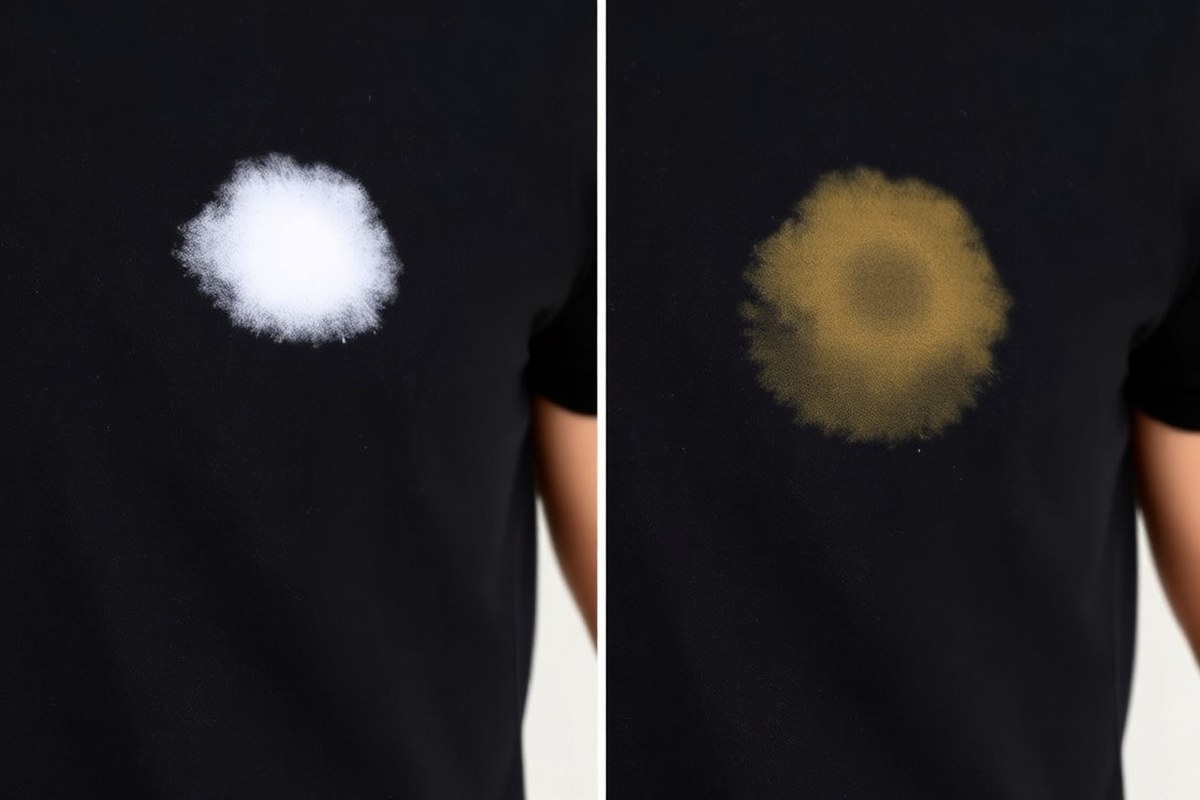
Fresh deodorant stains on black shirts usually appear as white marks or powdery residues. Because they sit on the fabric surface, you can often remove them quickly by gently rubbing a clean, dry cloth over the stain to lift off excess deodorant. Using fabric softeners or anti-stain sprays immediately after spotting a fresh stain can also help prevent residue from setting. Treatment at this stage typically takes just a few minutes and can greatly reduce the need for more intense cleaning later.
Older, set-in deodorant stains develop when body oils, sweat, and deodorant ingredients react chemically with the fabric, often causing yellowing or stubborn buildup. These stains penetrate deeper into the fibers, making them harder to remove. To treat set-in stains, you’ll need to use stronger methods, such as pretreating with vinegar or lemon juice before washing. Soaking the shirt in a solution of one cup white vinegar per gallon of water for 15 to 30 minutes can help break down residue prior to laundering. This process usually requires at least 30 minutes to an hour, plus washing time, and may need to be repeated for older or heavier stains.
The visibility of deodorant stains also matters. Fresh white marks contrast sharply with black fabric, so they stand out immediately. Set-in stains, however, might blend in as fabric dullness or slight discoloration, making detection and complete removal more challenging. When dealing with set-in perspiration stains, using a commercial stain remover designed to break down sweat and oils can provide better results, but be cautious with harsh chemicals that could affect fabric color.
While fresh deodorant stains tend to respond well to quick home remedies, older stains require more persistent care. Results vary depending on the fabric type, deodorant ingredients, and how long the stain has set. If you notice yellowing or repeated buildup, you might need to apply an advanced stain remover or seek professional treatment, especially for delicate black fabrics where fading or damage from repeated washing is a risk.
Do not apply more deodorant layers to cover stains; excess product increases buildup and makes removal harder.
Expect to spend just a few minutes on fresh stain removal but plan on at least an hour or more for set-in stains, including soaking and washing time. Though it’s possible to remove old deodorant stains from black fabric, patience and the right approach matter most. Using mild acids like vinegar or lemon juice is affordable and effective, costing just a few cents per treatment. Aggressive scrubbing or high heat should be avoided to prevent fabric damage and fading.
3. Fabric-Specific Guidelines for Cleaning Black Shirts
Cleaning deodorant stains from black shirts requires fabric-specific care to avoid dye fading and fabric damage. Using cold water and gentle, fabric-appropriate treatments helps preserve the shirt while effectively removing stains. Avoid bleach and high heat, which can weaken fibers and set stains.
Cotton and Cotton Blends
Cotton and blends handle most stain removal methods well, but hot water and bleach must be avoided to protect black dye. Pretreat deodorant stains with a 1:1:1 mix of liquid detergent, white vinegar, and water. Apply gently and let it sit 10 to 15 minutes before washing in cold water. This method breaks down residue without damaging fabric or fading color.
Cold water washing is key. Hot water risks setting the stain permanently, especially combined with heat from dryers. Use the gentlest cycle available. Treat stubborn buildup with repeated pretreatment instead of raising the water temperature or scrubbing hard, which can wear out the fabric over time.
Synthetic and Athletic Fabrics
Polyester, nylon, and similar synthetic fabrics found in workout clothes require gentle care. Pretreat with a solution of liquid detergent and white vinegar, using cold water to keep the fabric strong and stop stains from settling. Never use bleach, as it harms synthetic fibers and can fade colors.
For athletic or microfiber fabrics, wiping the underarm area regularly with a damp microfiber cloth helps reduce deodorant buildup between washes. This maintenance step prevents stains from becoming tough to remove. Always air-dry or tumble dry on low heat to protect stretch and durability.
Delicates and Sensitive Materials
Delicate fabrics such as silk or fine blends require the mildest treatments. Skip white vinegar or any acidic solutions that might weaken or discolor fabric. Instead, pretreat deodorant stains with a small amount of liquid detergent diluted in cold water and gently dab the area. Avoid rubbing or scrubbing.
Hand wash delicates in cold water with a gentle detergent, then lay flat to dry away from direct sunlight or heat. Machine washing runs the risk of agitation damage and dye fading, so hand cleaning combined with prompt stain treatment is safest here. The following table summarizes effective treatments by fabric type and highlights important do’s and don’ts for removing deodorant stains from black shirts safely.
| Fabric Type | Pretreatment Method | Water Temperature | Drying Method | Heat Use | Bleach Safe? |
|---|---|---|---|---|---|
| Cotton and Cotton Blends | Liquid detergent + white vinegar (1:1:1 ratio) | Cold | Air dry or low heat tumble dry | Avoid high temperatures | No |
| Synthetic and Athletic Fabrics | Liquid detergent + white vinegar | Cold | Air dry or low heat tumble dry | Avoid high temperatures | No |
| Delicates and Sensitive Materials | Diluted liquid detergent only | Cold | Lay flat to dry | Never use heat dryers | No |
Regular washing machines usually remove some deodorant buildup but won’t clear stubborn stains fully without pretreatment. Advanced machines combined with organic detergents improve stain removal while protecting fabric. Avoid relying on machine washing alone for tough deodorant marks, or the stains may set with repeated heat from drying cycles. Using cold water cycles and gentle detergents is the best practice across all fabric types.
4. Common Mistakes in Deodorant Stain Removal and How to Fix Them
One common mistake that makes deodorant stains worse is using hot water to wash your black shirt before pretreating the stain. Hot water can set the stain deeper into the fabric, making it harder to remove later. Instead, treating the stain first and then washing the shirt in cold water helps keep the fabric’s color intact and prevents the stain from bonding strongly. Use warm or hot water only when soaking with stain removers that specify it, such as a vinegar and hydrogen peroxide mix, but always follow the instructions carefully to avoid fading.
Another frequent error involves fabric softeners. They can leave a residue that traps deodorant particles and oils in the fabric, worsening the stain over time. Skipping fabric softeners when washing deodorant-stained black shirts reduces this risk. Focus on using a good detergent designed to cut oils rather than adding softeners. Here’s a checklist to avoid common mistakes when removing deodorant stains from black shirts:
- Always pretreat deodorant stains before washing to break down residue.
- Use cold water for regular washing to protect fabric color and prevent stain setting.
- Avoid fabric softeners on stained areas to reduce residue buildup.
- Follow the care label instructions, especially regarding water temperature and bleach use.
- Try a soak with equal parts vinegar, hydrogen peroxide, and water for tough stains.
- Rinse thoroughly to remove all residues that could trap deodorant particles.
- Test stain removal solutions on a small hidden area first to check fabric reaction.
Incorrect washing practices and product choices can lead to discoloration, fabric damage, or stain worsening. Washing in cold water after pretreatment keeps your black shirt looking fresh. Fabric softener residue adds another barrier to cleaning, so leaving it out helps your detergents work better against deodorant buildup. Using a vinegar and hydrogen peroxide soak for about 30 minutes can break down stubborn stains, but never mix these ingredients directly without dilution, and avoid frequent use as it can weaken fibers.
5. Preventing Deodorant Stains on Black Shirts Before They Form
To prevent deodorant stains on black shirts, choosing the right type of deodorant can make a big difference. Aerosol sprays and products labeled as “invisible” tend to leave fewer white marks compared to traditional stick or gel deodorants. These sprays and invisible formulas usually dry more quickly and avoid depositing the waxy buildup that can become stubborn on dark fabrics. However, gel and stick deodorants are not impossible to manage; they simply require more careful washing habits.
Applying deodorant correctly also plays a key role in preventing stains. Allow your deodorant to fully dry before putting on your shirt. This usually takes about one to two minutes for sprays and invisible sticks, and slightly longer for gels. Avoid applying thick layers, which increase residue buildup. Applying deodorant just before putting on your shirt increases the chance it will transfer to the fabric, leaving visible stains.
Washing frequency significantly impacts deodorant stain prevention. Regularly washing your black shirts, ideally after each wear or at least weekly, keeps deodorant residue from building up and becoming harder to remove. Laundering shirts inside out helps protect their outer surface and reduces visible fading. You should also treat fresh deodorant marks as soon as you notice them by spot-cleaning or pre-treating before a full wash. Waiting too long allows stains to set, especially with the white, waxy film that develops on dark clothes from stick or gel deodorants.
People prone to stains or with shirts they want to keep sharp benefit from specific laundry habits. Wash black shirts in cold water, which protects color and loosens deodorant deposits. Avoid bleach and fabric softeners that can worsen buildup or damage fibres. Instead, select detergents formulated for dark clothing or those with stain-lifting enzymes. Pre-treat the armpit area if you know deodorant stains are common, using a small amount of liquid detergent or a stain remover before washing.
For ongoing upkeep, consider incorporating a quick deodorant stain treatment into your routine. After applying deodorant and wearing the shirt, check for any white residue. Use a damp microfiber cloth to gently wipe that area before laundering. This extra step can save time and avoid stubborn stains. In cases where you use gel deodorant, which tends to absorb into fabric more, a prompt rinse or pre-soak can prevent deep-set marks.
Always let deodorant dry completely before dressing to reduce direct transfer and potential staining on dark clothes.
6. Quick Treatments for Deodorant Stains Without Washing
Quick treatments can effectively reduce deodorant stains on black shirts when you can’t wash them immediately. Simple rubbing or gentle spot cleaning can remove fresh marks, while brushing helps with waxy buildup. These methods work without water or machine washing and need only a few household items.
Using Damp Cloth or Makeup Sponge
For fresh white deodorant marks, gently rubbing with a damp cloth or makeup sponge lifts the stain without damaging the fabric. This method softens the remnants and blends them with the shirt color to reduce visibility. Use only a slightly damp cloth to avoid water rings or fading.
- Moisten a microfiber cloth or clean makeup sponge with cool water.
- Blot the stained area lightly, avoiding vigorous rubbing.
- Use small circular motions to lift the deodorant marks gently.
- Pat dry with a dry part of the cloth or another clean sock.
- Repeat if necessary until the stain lessens visibly.
Microfiber cloths are ideal due to their fine fibers, which trap particles without spreading them. This method is fastest for fresh stains and can be done discreetly in public.
Spot Cleaning with Vinegar or Detergent
When deodorant stains have started to set or leave a slight residue, gently cleaning the spot using diluted vinegar or liquid detergent can help dissolve the buildup. Vinegar’s mild acidity can dissolve mineral deposits, while detergent targets oils and waxes. Test on a hidden area first to avoid discoloration.
- Combine one portion of white vinegar with two portions of water, or dilute a small amount of liquid enzyme detergent in water for effective spot treatment.
- Dab the mixture onto the deodorant stain with a clean cotton swab or cloth.
- Let the solution sit for 5 minutes to break down residue.
- Blot gently to lift loosened particles, don’t rub hard.
- Rinse the spot lightly with water using another cloth, then pat dry.
This method works best when you can access water but not a full wash. It’s also handy at the office or while traveling. Avoid soaking the fabric, and let the shirt air dry.
Brushing Off Dried or Crusty Residues
Dried deodorant buildup often feels waxy or crusty and requires a different approach. Brushing off excess residue before any damp cleaning prevents grinding it into the fabric. Use a gentle brush with soft bristles, like a clean toothbrush or clothing brush.
- Hold the shirt taut to avoid stretching the fabric.
- Use a soft-bristle brush to gently sweep the crusty deodorant from the shirt surface.
- Brush away loose particles into a trash bin or paper towel.
- Should the residue prove tough to remove, apply liquid enzyme detergent to the shirt and let it sit for 15 minutes before washing it thoroughly.
- Avoid hard scraping to prevent fabric damage or fuzz formation.
Removing dry buildup quickly helps avoid longer-term stains. Brushing costs nothing and takes only a few minutes, but you’ll want to follow up with washing when possible to fully clear the stain and prevent fabric dulling.
7. When to Seek Professional Deodorant Stain Removal Help
Tackling stubborn deodorant stains at home usually works well with gentle scrubbing and proper stain removers left on for 10 to 15 minutes. However, if the stain remains after multiple careful treatments and washes, professional cleaning could be necessary to protect your black shirt. Professionals have access to specialized solvents and equipment that can break down the sweat and deodorant residue without damaging delicate fabrics or fading colors.
Some signs mean it’s time to stop at-home attempts and seek professional help. Fabric thinning, color loss, or increased stiffness after treatments indicate the material might be breaking down. Notice white or gray streaks or feeling of fabric weakness or roughness means further scrubbing might cause permanent damage. Professionals can assess the fabric’s condition to avoid worsening the damage.
Persistent deodorant stains after careful washing and gentle spot treatments call for reviewing your removal steps first. Avoid harsh scrubbing or using bleach and strong chemicals on black shirts, as these can cause fading or fabric wear. Trying different mild stain removers may help; some stains respond better to enzyme-based formulas or ones designed for deodorant and sweat. But after two or three gentle treatments fail to lift the stain, consult a dry cleaner experienced with stain removal on dark colors.
Professional stain removal usually costs between $10 and $30 per garment depending on location and stain severity. This can save a favorite black shirt from permanent discoloration. Dry cleaners often use steam, solvents, and specialized spotting techniques that are gentler than household bleach or vigorous scrubbing. They can also treat the shirt’s fabric safely, preserving its texture and color.
To decide when to seek help, try this rule of thumb: if after three gentle cleanings spaced a day apart the stain shows no significant improvement, and the fabric begins to look dull or weakened, stop home treatment and take the shirt to a professional cleaner. This approach limits your risk of damaging the fabric while giving you a chance to remove the stain yourself.
Communicate clearly with the professional cleaner about the stain’s history and what home treatments you’ve tried. Provide details on the deodorant brand or formula if possible, as some contain aluminum compounds that require specific cleaning methods. Professional help offers the best chance to restore your black shirt’s appearance without sacrificing fabric quality when home methods fall short.
8. How to Tell If Your Deodorant Stain Treatment Is Working
You’ll know your deodorant stain treatment is working when the stain visibly fades or disappears without damaging the fabric. Monitoring changes during and after treatment helps decide if you should continue or try a different method. Effective treatment balances stain removal with gentle care to avoid fabric harm.
Signs of Successful Treatment
Look for clear evidence the stain is lifting. The area should lighten without leaving white powdery residue or discoloration. The fabric texture should feel normal, not stiff or rough. Testing in natural light often shows results better than indoors with artificial illumination.
After applying a baking soda paste or another treatment, wait 15 to 30 minutes before rinsing or washing. Proper fading of the stain within this time frame usually means the product is working. Check again after washing; the stain should be significantly reduced or gone.
- Stain fades or disappears gradually after each treatment
- Fabric color remains uniform with no whitening or darkening
- The texture feels soft, not brittle or crusty
- No residue left on fabric surface after rinsing
- The treated area matches surrounding fabric after drying
- No spreading or smudging of the stain beyond treated spots
Failing to see these signs may mean the stain needs more time or a different approach. Avoid over-applying baking soda, which can leave chalky marks that look like new stains.
Use a gentle touch; overuse of baking soda can dry out fabric and create a powdery residue that mimics new stains.
Distinguishing Deodorant vs Sweat Stains
Deodorant stains often appear as white marks or chalky spots on black shirts. They come from active ingredients like aluminum compounds reacting with fabric or residue left by powder-based formulas. Sweat stains tend to be yellowish, caused by a mix of body salts, oils, and deodorant reacting together.
Understanding the difference helps pick the right treatment. Baking soda works well on deodorant residue but may not fully remove yellow sweat stains, which often need targeted enzymatic detergents or soaking. Deodorant stains also usually occur soon after product application, while sweat stains develop from prolonged exposure.
Next Steps If Stain Remains
If the deodorant stain persists after initial treatments, try spot-treating again with a fresh baking soda paste made from equal parts baking soda and water. Leave it on for 20 to 30 minutes before rinsing well with cold water. Avoid hot water, which can set stains.
For tougher or combined deodorant and sweat stains, using a mild detergent formulated for color-safe stain removal may be necessary. You can repeat the treatment up to three times safely before considering professional cleaning services.
Check for any fabric damage after repeated treatments. Discoloration or weakened fabric fibers suggest stopping home treatment to prevent worsened damage.
- Reapply baking soda paste for 20-30 minutes if needed
- Rinse with cold water, avoid heat until stain is gone
- Try a mild detergent designed for color protection
- Limit treatments to three attempts max at home
- Stop and seek professional cleaning if fabric shows damage
Step-by-Step Action Plan for Removing Deodorant Stains from Black Shirts
Follow these steps in order to effectively clear deodorant stains and keep your black shirts looking fresh. Check the fabric after each step to see if the stain has faded.
- Immediately after stain appears: Gently blot any excess deodorant with a clean, dry cloth to prevent it from setting. Avoid rubbing, which can spread the stain.
- Within 30 minutes: Dampen the stained area with cold water and apply a small amount of liquid laundry detergent. Rub gently and rinse. When the stain lightens, move on to the next step.
- Within 24 hours: Use a paste made from baking soda and water on the stain. Let it sit for 15 minutes, then rinse with cold water. Check if the stain fades. Repeat if necessary but avoid scrubbing hard on delicate fabrics.
- Next washing cycle: Wash the shirt inside out on a gentle cycle using cold water and a detergent safe for dark clothes. Air dry to avoid heat setting any remaining stain. Confirm the stain is gone before using a dryer.
- When the stain persists: Treat it with a fabric-safe stain remover made for dark colors. Follow product instructions and wash again as above.
- After several treatments: Inspect fabric for any damage or color fading. Should the shirt show wear, consider professional cleaning to prevent more damage.
- Ongoing prevention: Apply an antiperspirant or deodorant that claims to be stain-free, allow it to dry fully before dressing, and wash shirts promptly after wearing to reduce buildup.
Frequently Asked Questions
Does Baking Soda Remove Stains?
Baking soda can help remove deodorant stains by lifting residue from fabric fibers. Mix it with a bit of water to form a paste, apply it to the stain, let it sit, then rinse for good results on black shirts.
How to Remove White Stains on a Black Shirt?
White deodorant stains on black shirts come from ingredients like baking soda in the deodorant. Gently rubbing a damp cloth or using a mild detergent focused on the stain usually works to clear these marks.
Can Old Armpit Stains Be Removed?
Yes, older deodorant stains can be removed but may require stronger treatments like oxygen-based cleaners or soaking longer to break down residue without harming fabric color.
Does OxiClean Get Rid of Deodorant Stains?
OxiClean is effective on deodorant stains as it uses oxygen bleach to break down residue. Use it carefully on black shirts to avoid any fading by following product instructions.
Will Vinegar Damage Black Shirts During Stain Removal?
Vinegar can remove deodorant stains but may lighten black fabrics if left too long. Always dilute and rinse promptly to protect shirt color.
Is Rubbing Alcohol Safe for Deodorant Stains on All Fabric Types?
Rubbing alcohol can break down deodorant buildup but test on a hidden area first since it might affect some fabric dyes or finishes.
Wrapping Up
Removing deodorant stains from black shirts is manageable with quick, careful action. Check the fabric after each treatment to avoid damage and repeat the gentler methods before moving to stronger solutions. Your next step is to treat any recent stains on your black shirts tonight using cold water and gentle detergent, letting you keep your wardrobe stain-free and sharp looking.