How to Get White Clothes White Again: 7 Proven Methods That Work
To get white clothes white again, use proven methods like soaking in lemon juice or hydrogen peroxide, pretreating stains, and properly washing with suitable detergents. These steps remove discoloration, stains, and buildup that cause dullness. Following these reliable techniques helps you restore brightness without damaging your fabrics.
This advice benefits anyone tired of faded or stained white laundry. It offers practical solutions to revive your whites at home, covering cleaning methods matched to fabric types and stain types, so you can keep your white clothes bright and fresh longer.
Key Takeaways
- Soak white clothes for several hours in a lemon juice and warm water solution to brighten fabric naturally.
- Apply hydrogen peroxide directly on stains, let sit for 10 minutes, then wash to remove stubborn spots safely.
- Use a quarter cup of laundry detergent dissolved in warm water for a two-hour soak before washing whites.
- Treat low-pH stains like coffee or wine by soaking garments overnight in white vinegar plus liquid detergent solution.
- Check fabric care labels for the appropriate water temperature; hot water means 112 to 145°F for bleaching-safe fabrics.
- Presoak whites containing spandex with Clorox 2™ for Colors instead of regular bleach to avoid fabric damage.
1. Restore Whiteness: 8 Reliable Methods Explained

Restoring whiteness to your clothes can be done using several methods, including chemical bleaches, oxygen-based whitener, soaking in natural solutions, and controlling washing temperature. Effective whitening depends on the fabric, stain type, and timing. Soaking helps lift stains and dullness before washing, but know which method suits your fabric and how long to apply it to avoid damage.
Chlorine Bleach Soak Method
Chlorine bleach is a powerful whitener best used on bleach-safe cotton and polyester fabrics. It can remove tough yellowing and dinginess, but it must be diluted and carefully applied to prevent damage or color loss. It is not safe for delicate fabrics, blends with spandex, or certain synthetics that can yellow.
For safe soaking, dilute chlorine bleach according to the product label, typically about ¼ cup per gallon of water. Soak whites for no longer than 5 to 10 minutes to avoid weakening fibers or causing yellowing. Always test on a hidden area and check care tags before use.
- Fill a plastic tub with 1 gallon of cool or warm water (never hot with chlorine bleach).
- Add ¼ cup of chlorine bleach to the water and mix thoroughly.
- Submerge the white cotton or polyester clothing completely in the solution.
- Let soak for 5 to 10 minutes, checking for fabric yellowing or weakening.
- Remove clothes and rinse thoroughly under cold water to remove all bleach residue.
- Wash clothes immediately in the washing machine on the hottest water setting allowed.
- Dry as directed by the care label, avoid high heat if the fabric is delicate.
Oxygen-Based Bleach and Boosters
Oxygen bleach is a gentler alternative suitable for most white fabrics, including cotton, linen, polyester blends, and some activewear. It works by releasing oxygen molecules that break down stains and brighten fabric without harsh chemicals. Oxygen bleach is safe for regular use and less likely to cause yellowing or fabric damage.
Add about 1 cup of oxygen bleach powder or liquid to the washing machine drum before loading your clothes and starting the wash cycle. It is effective at removing yellowing and graying and can be combined with regular detergent. For heavier stains or dinginess, pre-soak clothes in a warm water solution of oxygen bleach for 2 to 4 hours before washing.
Natural Whitening Agents
Natural whiteners like baking soda, lemon juice, distilled white vinegar, and hydrogen peroxide offer fabric-safe alternatives to chemical bleaches. Each has a distinct method and duration for soaking or adding to wash cycles.
- Baking Soda Soak: Dissolve 2 tablespoons of baking soda in a basin of hot water. Soak whites for 2 hours to neutralize grey tones and brighten fabric.
- Lemon Juice Soak: Mix ½ cup lemon juice in 8 quarts of warm water and soak white clothes for 1 to several hours for natural bleaching.
- Hydrogen Peroxide Boost: Pour 1 cup of hydrogen peroxide into the empty washing machine drum before loading your clothes and starting the water cycle to help whiten safely.
- Baking Soda Laundry Additive: Add ½ cup of baking soda to the washing machine drum along with detergent and clothes.
Natural agents typically require longer soaking or multiple cycles for best results and work well on cotton, polyester, and blends. They are less likely to harm fabrics but might not be as strong as chlorine bleach against heavy stains.
Using Hot Water vs Cold Water
| Fabric Type | Recommended Water Temperature | Notes |
|---|---|---|
| Cotton Towels, Sheets, Underwear | Hot (if label allows) | Best for deep whitening with bleach or oxygen bleach |
| Cotton and Linen Dress Shirts | Warm to Hot | Pre-treat collars and cuffs before washing |
| Polyester and Blends | Warm | Oxygen bleach safe; chlorine bleach can cause yellowing |
| Nylon, Spandex, Activewear | Cold to Warm | Use oxygen bleach if allowed; avoid chlorine bleach |
| Silk and Delicates | Cold | Do not use bleach; spot clean or use mild detergents |
Hot water helps activate bleach and other whiteners, making them more effective. However, it can shrink or damage delicate fabrics, so check care labels first. Cold water is safer for synthetics and stretch fabrics but may require longer soaking or stronger whitener doses. Using the highest water temperature safe for the fabric gives the best whitening results.
2. Fabric Types and Whitening: What Works Best for Each

Select whitening methods based on the fabric type to avoid damage and achieve the best results. Natural fabrics like cotton and linen tolerate diluted chlorine bleach, while synthetics and blends respond better to oxygen bleach. Delicates such as silk or wool need gentle care with specific techniques that exclude harsh bleaches.
Natural Fabrics
Cotton and linen stand up well to bleaching when used properly. Use diluted chlorine bleach on these fabrics only if the care label permits it. Chlorine bleach can safely whiten washable, colourfast cotton and linen, and it also disinfects. For best results, wash these items using the hottest water temperature the label allows, typically between 112 and 145°F. Towels, sheets, and underwear, which are often cotton or linen, benefit from hot water to remove oils and soil thoroughly.
Wool is a natural fiber that requires special care and should avoid chlorine bleach to prevent damage and yellowing. Wool and similar fibers usually do better in cooler water to prevent shrinkage and maintain their integrity.
| Fabric Type | Bleach Type | Water Temperature | Care Tip |
|---|---|---|---|
| Cotton | Diluted chlorine bleach or oxygen bleach | Hot (up to 145°F if label allows) | Check colourfastness and label before using chlorine bleach |
| Linen | Diluted chlorine bleach or oxygen bleach | Hot | Wash separately from synthetic fabrics |
| Wool | Avoid chlorine bleach, use mild detergents | Cold or cool water | Prevent shrinkage, wash gently |
Always perform a patch test with chlorine bleach on cotton or linen to confirm colourfastness before full treatment.
Sorting whites by fabric type helps avoid issues like yellowing or fabric damage. Keeping sturdy natural fibers apart from delicates and synthetics ensures that each gets the right care without risk of heat or chemicals harming them.
Synthetic Fabrics and Blends
Polyester, nylon, and other synthetic fabrics respond better to oxygen bleach rather than chlorine bleach. Oxygen bleach works well on synthetics and blends without causing yellowing or damage. Use warm rather than hot water settings to protect the synthetic fibers’ longevity and maintain whiteness. Always consult the care label and match the water temperature accordingly.
Because synthetic fibers can be sensitive to high heat, avoid hot water that exceeds the label’s recommendation. Instead, use a medium heat cycle with oxygen bleach dissolved in water. This method brightens white synthetics effectively while preserving fabric strength.
| Fabric Type | Preferred Bleach | Water Temperature | Additional Care |
|---|---|---|---|
| Polyester | Oxygen bleach | Warm water | Use mild detergent, avoid chlorine bleach |
| Blends (polyester/cotton) | Oxygen bleach | Warm water | Separate from natural fibers when washing |
| Permanent press | Diluted chlorine bleach (colourfast only) | Warm to hot (label dependent) | Check label carefully to avoid Lycra |
Never use chlorine bleach on fabrics containing Lycra or spandex; it will degrade the fibres quickly.
Sorting synthetic whites away from natural fibers prevents incompatible bleach types or water temperatures from causing fabric damage or discolouration. Oxygen bleach paired with the right water temperature is the safest option for synthetic whites.
Delicates and Special Fabrics
Silk, wool, and fabrics containing spandex or elastane require gentle treatment. Avoid all chlorine and oxygen bleach on these fabrics because these agents can cause permanent damage. Instead, hand-wash delicates with cold water and a mild detergent formulated for delicate fabrics.
For gentle whitening, soak these items in a solution of cool water and a small amount of non-chlorine detergent, then rinse thoroughly. Avoid wringing or twisting. Alternatively, use sunlight to naturally brighten whites by drying them outside on a mild day but never directly on silk to avoid weakening the fibers.
| Fabric Type | Safe Whitening Method | Water Temperature | Care Instructions |
|---|---|---|---|
| Silk | Mild detergent, soak, air dry | Cold | Hand wash only, avoid bleach and heat |
| Wool | Mild detergent, cool water | Cold to cool | Hand wash or machine wash on wool cycle |
| Spandex/Elastane blends | Detergents without bleach | Cold to warm (label-dependent) | Hand wash preferred, avoid chemicals |
Handle delicates gently to avoid stretching, tearing, or loss of finish from harsh chemicals or heat.
Remember to always examine fabric care labels closely before choosing a whitening method for delicates. These fabrics demand patience and gentle products to keep their texture and colour intact while improving whiteness.
3. Pretreating and Removing Stains on White Clothes
Pretreating stains on white clothes helps prevent them from setting permanently and keeps whites looking bright. Different stains require specific cleaning agents to break down the stain material before you wash the garment. Soaking or spot-treating directly depends on the stain type and fabric. Acting quickly and choosing the right treatment agent maximizes your chances of restoring whites.
Treating Acidic Stains (Coffee, Wine, Fruit)
Acidic stains like coffee, wine, and fruit juices are best treated with mild acids or alkaline substances to neutralize and lift the stain. White vinegar, lemon juice, and baking soda are effective, affordable agents that work well without damaging most white fabrics. Soaking or applying a paste before washing prevents the stain from bonding to fibers.
- Mix one part white vinegar with four parts warm water and add 1 tablespoon of liquid laundry detergent.
- Submerge the stained area in this solution and soak for 30 minutes to overnight for tough stains.
- Alternatively, make a paste by mixing baking soda and water; apply it directly onto the stain and let it sit for 30 to 60 minutes.
- For fresh stains, spray a lemon juice and water mixture onto the stain and let it dry in the sun to boost whitening.
- After soaking or paste treatment, wash the garment in the warmest water safe for the fabric using your usual detergent.
- Repeat treatment if the stain persists before drying, as heat can set stains permanently.
Removing Protein-Based Stains (Blood, Sweat)
Protein stains such as blood and sweat respond well to oxidizing agents and enzyme-based detergents that break down protein molecules. Hydrogen peroxide is common for whites, as it whitens and disinfects while lifting stains. Pretreating collars or cuffs with a direct application followed by washing cleans stubborn sweat marks. Always test peroxide on a hidden area first for fabric safety.
- Pour a small amount of hydrogen peroxide directly on the stained spot, letting it soak for about 10 minutes.
- Blot excess liquid gently with a clean cloth to avoid spreading the stain further.
- Apply an enzyme-based detergent to the same area, rubbing it in gently with fingers or a soft brush.
- Allow the detergent to work for 15 to 30 minutes before laundering on a normal cycle with warm water.
- Check the stain after washing and avoid drying if any mark remains since heat sets stains.
- Use a second peroxide treatment if fatigue stains linger, following the same procedure carefully.
Dealing with Oil and Grease Spots
Oil and grease stains require breaking down the oily residue with surfactants found in dish soap or liquid laundry detergent before washing. Remove excess grease by gently scraping with a blunt tool. Pretreatment can involve soaking or spot application, but immediate action yields better results for fresh stains. Avoid hot water initially, as it may set greasy stains quicker.
- Scrape off any solid grease or residue using a dull knife or spoon, being careful not to rub it deeper into the fabric.
- Apply a small amount of dish soap or liquid laundry detergent directly onto the stain, massaging it in lightly.
- Let the garment sit for 10 to 15 minutes to allow the soap to break down oils without drying out.
- For tough stains, soak the entire garment in warm water mixed with detergent for 30 minutes to an hour.
- Wash the clothes on a normal cycle using the warmest water temperature safe for the fabric.
- Before drying, inspect the stain and repeat treatment if residue remains; drying can set the grease permanently.
4. Avoiding and Fixing Common Whitening Mistakes
White clothes often turn yellow or gray after washing due to common mistakes like using the wrong detergent, washing with other colors, or buildup of detergent and dryer sheet residues. Yellowing usually results from residue left on fabric, exposure to heat, or even mildew. Gray whites can indicate too little detergent, an overloaded washing machine drum, or dye transfer from other clothes.
If your whites have turned yellow or gray because of detergent mistakes or water issues, you can fix them by rewashing correctly. Soak the discolored clothes in water mixed with bleach (use a ratio of 1 part bleach to 10 parts water) or a color-safe alternative like OxiClean, following the product’s label directions. Let the clothes soak for an hour, then wash them on a Whites cycle or with hot water if the fabric allows. Adding 1 cup of white vinegar to the rinse cycle helps break down residues causing dullness. Vinegar also kills mildew odors if those have developed due to moisture.
Pink stains usually mean color ran from another garment during washing. To fix white clothes that have turned pink, soak them in a solution of warm water and color-safe bleach or oxygen-based stain remover for up to an hour, then launder separately using a detergent designed for whites. Avoid using chlorine bleach on colored fabrics or delicate materials, as this can cause damage.
- Use the correct detergent and measure it carefully to avoid buildup
- Wash white clothes separately from vibrant or dark colors to prevent dye transfer
- Run regular maintenance cycles on your washer, such as hot water with 2 cups of white vinegar
- Soak yellow or gray whites before washing in bleach or oxygen-based whitener
- Add 1 cup of vinegar to the rinse cycle to remove residues and odors
- Use hot water for load types that can handle it to boost stain removal
- Air dry whites to minimize heat damage and maintain brightness
Overloading your washing machine can hinder detergent and water flow, making whites look dull. Always keep loads moderate in size for better rinsing. Applying these corrections helps restore whiteness without damaging fabrics. Avoid frequent use of chlorine bleach on delicate fabrics to prevent weakening fibers. Proper washing and treatment lead to brighter whites without fading or discoloration, saving clothes from early replacement.
5. Preventing Discoloration: Washing and Drying Best Practices
Washing white clothes separately prevents color transfer from darker garments that can cause graying or dulling. Use the hottest water safe for the fabric, typically between 112 and 145°F, to remove oils and soils that fade whiteness. Sturdy fabrics like cotton towels, sheets, and underwear hold up well under hot water. For more delicate whites, warm water (87 to 111°F) is a safer choice to avoid damage.
Choose a regular or heavy-duty cycle for heavily soiled whites, and a gentle cycle for delicate items. Adding an oxygen-based bleach or a whitening detergent can help maintain brightness without harsh chemicals. Always pre-treat stains before washing to avoid setting them in, and check clothes after washing to ensure stains are gone before drying.
- Wash whites separately on the hottest water temperature allowed by the care label.
- Use a regular or heavy-duty cycle for cottons; gentle cycle for delicate whites.
- Pre-treat stains with a stain remover before washing.
- Add oxygen bleach or whitening detergent to the wash.
- Check stains after washing; rewash if they persist before drying.
- Dry white clothes outside in the hot sun to naturally whiten without fading.
- Keep your washing machine clean by running a hot water cycle with 2 cups of hydrogen peroxide monthly.
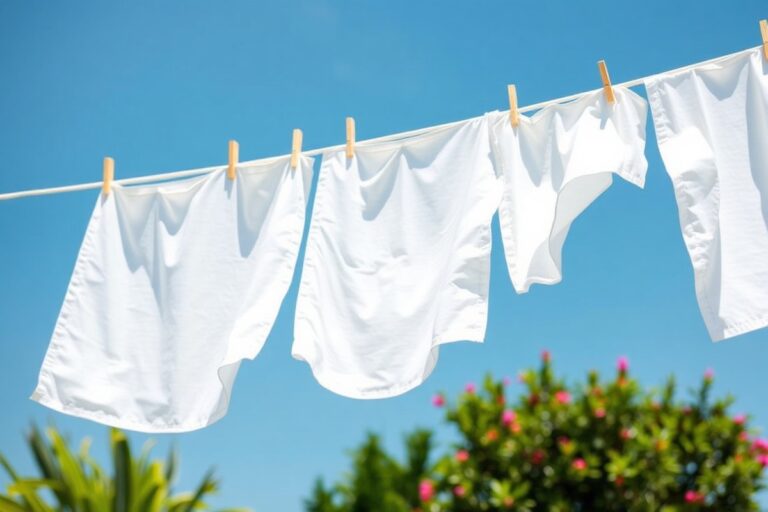
Drying white clothes in direct sunlight naturally brightens them due to the sun’s bleaching effect. Avoid over-drying or leaving clothes exposed too long, as UV rays can eventually weaken fibers or cause yellowing. For indoor drying, use air drying or tumble dry low to preserve fabric strength and shape.
Always check that stains are completely removed before drying white clothes, since heat can set stains permanently.
6. Removing Odors and Detergent Build-Up That Dull Whites
Vinegar and baking soda can be effective tools for removing odors and detergent buildup that make white clothes look dull. Adding 1/2 to 1 cup of distilled white vinegar during the last rinse cycle helps strip away detergent residue and neutralize smells such as mildew. To do this, pour the vinegar directly into the fabric softener compartment or add it manually during the rinse. Using vinegar regularly can keep whites smelling fresh and looking brighter because detergent buildup often traps odors and dulls fabric fibers.
Baking soda works well either as a boost in the wash or as a targeted treatment. Adding up to 1/2 cup of baking soda directly into the washing machine drum before starting a cycle can help balance pH and improve detergent performance. For yellow underarm stains or persistent odors, make a paste by mixing baking soda with a little water and gently rub it into the affected areas before washing. Baking soda’s mild abrasiveness also lifts dirt and residue without damaging fabric.
Routine washing machine maintenance improves how well your clothes clean and smell. Mildew smells or leftover residue inside the machine can transfer to clothes, so running a cleaning cycle each month is advisable. Use 1 to 2 cups of white vinegar or a commercial washing machine cleaner in the drum and run the hottest, longest cycle available. For machines that allow it, add 1/4 cup of baking soda directly to the drum at the start of the cleaning cycle to improve deodorizing and residue removal. Regular maintenance prevents buildup and keeps your whites brighter over time.
It’s important not to mix vinegar with bleach or ammonia when laundering white clothes, as harmful fumes can result. Also, avoid overusing vinegar or baking soda to prevent fabric wear; moderate use based on the level of residue or odor works best. When tackling tougher smells like mildew, multiple vinegar rinse cycles or a pre-soak in a solution of 1 part vinegar to 4 parts water for 30 minutes can help. Always test a small hidden area first to ensure your fabric reacts well.
These simple, low-cost methods, vinegar usually costs less than $1 per use and baking soda just cents, offer practical ways to maintain and restore whiteness. Using them regularly along with proper washing habits turns back the clock on white clothes dulled by accumulated detergent and odors. Clean machines plus vinegar and baking soda treatments produce whites that look fresh and smell clean without harsh chemicals.
7. When Professional Cleaning Is Needed for White Clothes
When white clothes show stains or discoloration that home methods can’t fix, professional cleaning may be the best option. Stains that are deeply set, like ink, dye transfer, or rust, often resist household treatments. Also, if the fabric is fragile, such as vintage linens, silk blends, or lace whites, professional cleaners have specialized solvents and techniques that avoid damage while restoring whiteness.
Deciding if you need a professional cleaner involves a quick checklist: Is the stain still visible after pretreating and washing? Does the fabric label warn against home washing or bleaching? Is the fabric delicate or heavily soiled in multiple areas? If you answer yes to any of these, professional services can save your garment. These cleaners use industrial-strength detergents, precise temperature control, and skills in stain identification to target the problem safely.
Expect professional whitening to involve a fabric assessment first. This step determines the safest chemicals and methods, oxygen-based bleach for cotton or gentle solvents for silk, for example. Many cleaners offer whitening treatments that include stain removal and overall brightening. Prices typically range from $10 to $30 per garment, depending on fabric type and stain severity. Dry cleaning alone may cost less but may not remove severe discoloration.
Good results mean your white clothes look evenly brightened without fabric damage or residual odors. Some delicate garments may need spot cleaning or hand finishing to avoid shrinkage or distortion. Beware of cleaners who use harsh bleach indiscriminately, as this can weaken fibers or cause yellowing over time. You can expect to leave your clothes at the cleaner for 1 to 3 days, depending on treatment complexity.
Professional cleaning matters because some stains chemically bond with fibers and require stronger solutions than home products provide. Fragile fabrics also benefit from gentle handling that machines and harsh bleaches can’t deliver. Leaving seriously stained white clothes untreated often leads to permanent marks or fabric degradation, shortening the garment’s life.
Prioritize professional help when your efforts don’t remove persistent stains, when white clothes have sentimental or high replacement value, or when the care label prohibits bleach and machine washing. This approach balances restoring your favorite whites with protecting delicate fabrics from damage caused by improper home care. Always choose cleaners with good reviews for whiteness restoration and fabric care.
Step-by-Step Action Plan to Restore and Maintain White Clothes
Follow these straightforward steps to bring your white clothes back to life and keep them bright for the long term.
- Before You Start: Sort your whites by fabric type to choose the safest whitening method. Check results by inspecting for any fabric damage after a test wash.
- Day 1: Pretreat visible stains with a stain remover designed for whites. Use lukewarm water and allow it to sit 10, 15 minutes. Success is clear stain fading before washing.
- Day 2: Wash whites separately using your preferred method, oxygen bleach works well for most fabrics. Confirm improved brightness after the cycle finishes.
- Day 3: Dry whites in the sun if possible, as natural light helps prevent yellowing. Check for even drying without spots.
- Weekly Care: Use detergent formulated for whites and add a whitening booster occasionally to prevent dullness. Notice any stubborn graying and adjust accordingly.
- Monthly: Remove odors and detergent build-up with an enzyme cleaner or a vinegar rinse. Confirm freshness and restored whiteness.
- As Needed: Bring delicate or severely discolored items to a professional cleaner. Watch for improved fabric condition and whiteness post-service.
Frequently Asked Questions
Can Baking Soda Whiten Clothes?
Yes, baking soda can whiten clothes by adding ½ cup directly to your washer to brighten whites. For stubborn stains, soak clothes in warm water with one cup of baking soda up to eight hours before washing.
Does Oxiclean Really Whiten Clothes?
Oxiclean works well to brighten white clothes by breaking down stains with oxygen bleach. Using it as a soak or wash additive can restore whiteness effectively.
How Can I Get My Dingy White Clothes White Again?
To restore dull whites, prep clothes by soaking them in oxygen bleach, baking soda, or hydrogen peroxide before laundering. Pouring 1 cup of hydrogen peroxide directly into the washing machine drum can noticeably boost whiteness.
Can Yellowed Cotton Be Whitened?
Yes, yellowed cotton can be whitened by soaking in an oxygen bleach solution or washing with hydrogen peroxide. Treat yellow underarm stains with a baking soda paste before washing.
Is It Safe to Bleach White Clothes Regularly?
Frequent bleaching can weaken fabric fibers and cause yellowing over time; use oxygen bleach as a gentler alternative.
Can Vinegar Help Restore Whiteness to Clothes?
Vinegar can help remove residues that dull whites but is less effective as a whitening agent compared to oxygen bleach.
The Bottom Line
Restoring white clothes to their original brightness takes careful attention at every step, from treating stains to correct washing and drying. Regular maintenance keeps fabrics from dulling or yellowing over time. Start with one white garment today using the safest method for your fabric, and watch the difference it makes in your wardrobe.