How to Clean White Fabric Shoes: A Complete Guide with Proven Steps
To clean white fabric shoes effectively, use gentle household ingredients like baking soda, vinegar, or toothpaste for stain removal, and let them air dry overnight. Avoid harsh scrubbing or excessive bleach to prevent yellowing and fabric damage.
This advice suits anyone owning white fabric shoes who wants practical, low-cost methods to keep them bright and fresh. You’ll find clear steps for cleaning, whitening soles and laces, stain removal, drying tips, and how to maintain your shoes’ look longer.
Key Takeaways
- Use a mix of baking soda and vinegar to clean fabric shoes, allowing the fizzing reaction to lift dirt effectively.
- Work toothpaste gently into fabric for 10 minutes to remove stains and brighten white laces safely.
- Bleach can whiten white fabric shoes but only in small amounts to avoid unwanted yellowing.
- Let your shoes dry naturally for 2-3 hours, preferably overnight, before wearing to prevent damage.
- Clean your shoes every 4 weeks or whenever they lose brightness for consistent fresh appearance.
- Avoid excessive scrubbing which can harm fabric fibers and cause discoloration on white shoes.
How to Clean White Fabric Shoes Step by Step
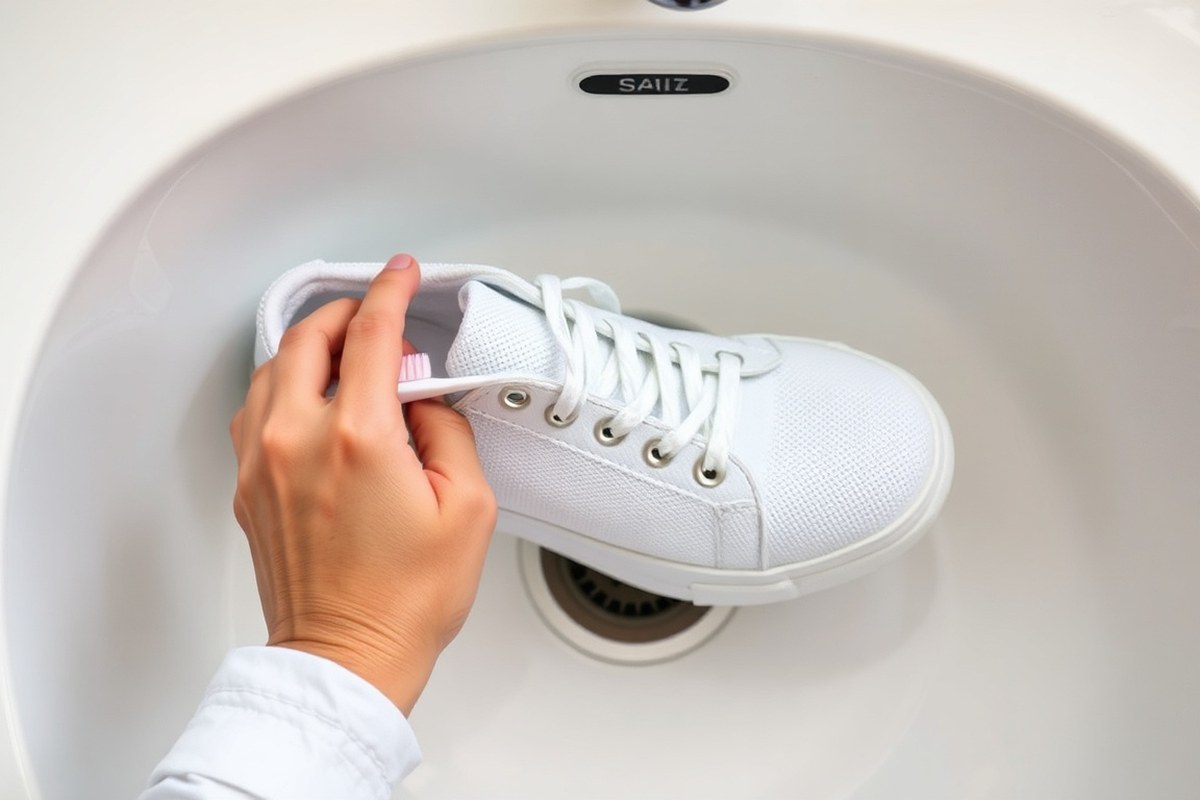
Cleaning white fabric shoes requires a careful process to avoid damage while removing dirt and stains effectively. Start by preparing your shoes so they’re ready for cleaning, followed by mixing gentle cleaning solutions, and finally applying those solutions with care. This approach helps maintain the fabric’s brightness and prevents fading or shrinking.
Removing Dirt and Debris First
Begin by taking off the shoelaces to avoid trapping dirt during cleaning. Use a soft brush or dry cloth to brush away loose dirt and dust from the fabric surface. This step prevents scratching or pushing dirt deeper into the material when applying liquid cleaners.
Loosened dirt can accumulate around seams and soles, so pay special attention to those areas. Avoid using hard or stiff brushes that could roughen or fray the fabric.
Mixing Safe Cleaning Solutions
Use gentle laundry detergent combined with warm water to create a safe cleaning solution. Mixing about one teaspoon of detergent into one cup of warm water works well to break down dirt without harming the fabric fibers. Prepare this in a small bowl for easy dipping or application.
A second option for tough stains involves a half vinegar and half water solution, which can remove grass stains and other discolorations safely. Always test any solution on a small, hidden patch first to check for colorfastness.
Applying Cleaning Solution to Fabric
Apply the cleaning solution carefully with a soft cloth, sponge, or soft-bristle brush. Avoid soaking the fabric; instead, gently work the solution into the stained or dirty areas. Use a circular motion to lift dirt while preserving the fabric texture.
After cleaning, use a clean damp cloth to blot and remove excess soap. Do not rub hard as it may damage or fade the fabric. Air drying on a flat surface away from direct sunlight helps prevent shrinking or yellowing.
- Remove shoelaces and set aside for separate cleaning.
- Brush off loose dirt using a soft brush or dry cloth.
- Prepare a cleaning solution by mixing 1 teaspoon gentle laundry detergent with 1 cup warm water.
- Dip a soft cloth or sponge into the solution and gently apply it to the fabric surface.
- Work in small circular motions on stained or dirty areas without soaking the fabric.
- Blot the cleaned area with a separate damp cloth to remove soap residue.
- Let shoes dry flat in a shaded, well-ventilated area to preserve shape and color.
Cleaning and Whitening the Soles of White Fabric Shoes

Cleaning and whitening the soles of white fabric shoes involves using gentle yet effective agents to tackle dirt, grime, and yellowing. Baking soda and mild detergents provide natural whitening, while careful use of diluted bleach can restore brightness without damage. Avoid harsh scrubbing or strong bleach solutions that may lead to discoloration or sole deterioration.
Best Cleaning Agents for Rubber Soles
Baking soda serves as a powerful natural whitener for rubber soles, particularly on white shoes featuring canvas and rubber sections. It removes stains gently without harming the material. Using mild dish soap combined with warm water effectively cleans dirt and buildup. To achieve a stronger whitening effect, diluted bleach can bring back the bright white, but only apply it carefully and in limited amounts.
To prepare a basic cleaning paste, mix two tablespoons of baking soda with one tablespoon of water. For a mild soap solution, add a few drops of dish soap to a cup of warm water. For bleach use, dilute one part bleach with five parts water to avoid yellowing or damage.
How to Scrub Soles Safely and Effectively
Use a soft to medium-bristle toothbrush or a dedicated shoe cleaning brush to scrub the soles. Apply the chosen cleaning agent, then scrub in circular motions focusing on stained or yellowed areas. Avoid hard scrubbing that can roughen or discolor the rubber surface.
Rinse with clean water and wipe the soles with a soft cloth or sponge to remove residue. For stubborn stains on the rubber edges, repeat the application but limit exposure time to a few minutes with bleach-based solutions to reduce the risk of damage.
Proper Use of Bleach on Rubber Soles
Bleach is powerful for whitening but must be diluted and used carefully. Straight bleach can cause yellowing or weaken the rubber, so mix one part bleach to five parts water before applying. Test this solution on a small, hidden area first to check for adverse effects.
Apply the diluted bleach with a cotton swab or toothbrush, leave for 2 to 5 minutes, then rinse thoroughly with water. Do not leave bleach on soles longer than necessary and avoid frequent use to prevent deterioration of the rubber.
Additional Tips for Whitening and Maintenance
Regular cleaning every 3 to 4 weeks helps prevent build-up of grime and yellowing. You can maintain whiteness by wiping soles promptly after exposure to mud or dirt. After cleaning, dry soles naturally at room temperature away from direct sunlight to avoid color fading.
- Use baking soda paste for regular cleaning and whitening
- Employ gentle scrubbing tools to protect rubber texture
- Dilute bleach properly before use, and test in a small area first
- Rinse thoroughly to remove all cleaning agents from soles
- Dry shoes naturally without direct heat or sun exposure
These steps help restore soles to bright white without risk of damage or yellowing, keeping your white fabric shoes looking their best.
To avoid bleach damage, never apply it undiluted on rubber soles and always rinse thoroughly after use.
How to Clean and Brighten Shoe Laces Safely
To clean and brighten white fabric shoe laces safely, soak them in a solution of baking soda and white vinegar for about four hours, then hand wash thoroughly. This process lifts stains and yellowing gently without damaging the fabric. Air drying the laces flat or hanging them will help avoid wrinkles and odor.
Soaking Laces Using Baking Soda and Vinegar
A soaking solution of baking soda and white vinegar works well for white fabric laces. Baking soda gently lifts dirt and whiten yellowed fabric, while vinegar acts as a mild disinfectant that breaks down stains. The mixture will bubble due to the chemical reaction, which is normal and helps the cleaning process.
Soaking laces for about four hours allows enough time for the whiteners to act effectively. Less soaking may not fully remove yellowing; more than 6 hours usually offers no added benefit and might risk fabric weakening if very delicate.
The best soaking method is using about one tablespoon each of baking soda and white vinegar in one cup (8 ounces) of warm water. Fully submerge the laces so all areas contact the solution.
- Fill a clean bowl with 1 cup of warm water.
- Add 1 tablespoon of baking soda and 1 tablespoon of white vinegar to the water.
- Stir gently to start the fizzing reaction.
- Place the laces in the solution, ensuring they are fully submerged.
- Let the laces soak for about 4 hours at room temperature.
- Remove the laces from the soak before hand washing.
Hand Scrubbing Laces Thoroughly
Hand washing offers better control over cleaning white fabric laces compared to machine washing. It reduces the risk of tangling or fabric damage and lets you target remaining stains.
Use warm water and mild dish soap or laundry detergent to scrub. A soft toothbrush or your fingers can help remove dirt gently. Rinse well afterward to remove all soap residue, which could cause yellowing if left on.
- Fill a sink or bowl with warm water and add a few drops of mild detergent.
- Dip the soaked laces into the soapy water.
- Gently scrub the laces with a soft brush or between your fingers to remove dirt.
- Rinse thoroughly under running water to flush out soap and loosened dirt.
- Squeeze out excess water carefully, avoiding twisting or wringing harshly.
Best Drying Practices to Prevent Odor
Drying your white fabric laces properly after cleaning is important to keep them bright and odor-free. Avoid drying them in direct sunlight, which can cause yellowing or fabric degradation over time.
Lay the laces flat on a clean towel or hang them up in a well-ventilated area. This shape helps maintain their form and speeds up drying without creases. Complete drying typically takes a few hours to overnight, depending on humidity and air circulation.
Removing Stubborn Stains from White Fabric Shoes
Identifying stains on white fabric shoes helps you choose the right treatment and avoid fabric damage. Grass stains appear as greenish marks from chlorophyll, while grease leaves darker, oily spots. Ink stains usually soak deep, showing as sharp, dark lines. Mud and dirt tend to be brown or gray and can often be gently brushed off.
To tackle grass stains, mix equal parts white vinegar and water. Dab the solution onto the stained area with a clean cloth, then gently scrub with a soft toothbrush. Avoid harsh scrubbing to prevent fabric wear. For grease stains, sprinkle baking soda or cornstarch on the affected spot and let it sit for 15 to 20 minutes to absorb oil. Then brush off the powder before applying a mild soap solution to cleanse residues.
Ink stains require careful handling since stronger chemicals can spread the stain or damage fabric. Dab rubbing alcohol on a cotton swab, apply it only to the stain edges, and blot toward the center to lift the ink. Avoid soaking the fabric to prevent the stain from spreading. Toothpaste, plain white, non-gel, is effective for general tough spots by working it into the fabric with an old toothbrush. Allow toothpaste to sit 10 minutes before rinsing.
- Grass stains: white vinegar and water mix, gentle scrubbing
- Grease stains: baking soda or cornstarch absorption, mild soap wash
- Ink stains: careful rubbing alcohol application, blot gently
- Mud/dirt: brush off dry first, then mild soap and water spot clean
- Use white non-gel toothpaste for general tough stains
- Avoid strong bleach on fabric unless stains are severe, to prevent weakening
- Test any solution on a hidden area to check for colorfastness
Spot cleaning requires delicate touch. Use a soft-bristled brush or cloth to avoid fraying fabric fibers. Harsh chemicals like concentrated bleach can cause yellowing or fabric breakdown unless highly diluted and carefully monitored. Quick action improves chances of complete removal; stains left to set are harder to erase. Allow treated areas to air dry away from direct heat sources to keep fabric bright and intact.
How to Dry White Fabric Shoes Without Damage or Yellowing
After cleaning white fabric shoes, drying them properly is essential to keep their shape, prevent yellowing, and avoid shrinkage or mildew. The best method is air drying in a well-ventilated indoor space away from direct heat sources and sunlight. Direct sunlight can cause the fabric to yellow, particularly if any soap residue remains. Heat from dryers or radiators risks shrinking the fabric and melting glue that holds the shoe together.
Place your shoes on a drying rack or stuff them lightly with crumpled white paper towels to help maintain their shape and absorb moisture inside. Avoid using newspaper as the ink may transfer. Set the shoes in a cool, dry room with moderate airflow and low humidity to speed drying without damage. Rooms with high humidity slow the evaporation process and increase mildew risk.
Let your shoes dry for at least 2 to 3 hours before attempting to wear them. For thorough drying, especially after a deep clean or heavy moisture, overnight air drying works well. Check that fabric inside and out feels completely dry to the touch before wearing. Wearing them too soon while damp can deform the shape and promote odors.
Keep away from direct sunlight throughout the drying phase to avoid fabric discoloration. Indirect natural light or shaded areas are best. Do not put the shoes in a clothes dryer or near heaters; temperatures above 90°F may cause irreversible damage to the fabric and adhesives. These heat sources speed up drying but at a high risk to shoe integrity and appearance.
After drying, your white fabric shoes should feel crisp and retain their original shape without warped soles or stiffened fabric. If you notice yellowing, it often results from leftover cleaning agents trapped during drying. Rinse thoroughly during cleaning to prevent this. Mild yellowing can sometimes be lightened by repeating the cleaning process using a stain-specific product made for white fabric without bleach.
Air dry your white fabric shoes in a shaded, well-ventilated area and avoid dryers or direct sunlight to preserve their color and structure.
Common Mistakes to Avoid When Cleaning White Fabric Shoes
Yellowing and fabric degradation often happen when white fabric shoes face harsh treatment during cleaning. Using strong bleach or chemicals can break down fibers and cause discoloration. Avoid cleaners with harsh abrasives or high pH levels, as these can weaken the fabric and fade the bright white color, shortening the shoe’s life.
Over-wetting shoes during cleaning is another common problem. Saturating the fabric can lead to water stains, mold growth, and fabric stretching. It also makes drying take much longer, which increases the chance of yellowing. Instead, use a damp cloth or a soft brush with just enough water to lift dirt without soaking through to the shoe lining or sole.
Drying shoes improperly, such as exposing them to direct sunlight or high heat, tends to cause damage too. Sunlight can bleach or yellow white shoes unevenly, while heat from dryers or heaters may shrink or warp the fabric. Air dry shoes indoors in a well-ventilated area at room temperature, stuffing them with paper towels to keep shape and absorb moisture.
- Don’t use bleach; opt for mild soap or detergent formulated for delicate fabrics.
- Apply water sparingly; clean with a damp cloth or sponge rather than soaking.
- Avoid drying shoes in direct sunlight or near heaters; air dry indoors.
- Remove shoe laces before cleaning to prevent uneven color fading.
- Test any new cleaner on a small hidden area first to check for adverse effects.
- If stains are tough, repeat gentle cleaning instead of using stronger chemicals.
Following the tips above helps you prevent yellowing and fabric wear while cleaning. Using water-repellent sprays regularly also shields the fabric from deep stains and moisture. Protecting shoes throughout cleaning and drying preserves brightness and fabric strength, reducing the effort and cost of repairs or replacements over time.
Protecting and Maintaining White Fabric Shoes After Cleaning
Using a protective spray on white fabric shoes creates a barrier that repels water, dirt, and stains, helping your shoes stay clean longer. Look for sprays specifically designed for fabric or canvas shoes, as these preserve breathability and fabric texture without causing discoloration. Premium options like those containing fluoropolymer or silicone-based ingredients provide stronger and longer-lasting protection. Sprays for suede require special formulas to maintain the nap and prevent damage.
Apply the protective spray only after your shoes are fully clean and dry. Hold the can about 6 to 8 inches away from the surface and spray evenly in a light layer. Avoid saturating the fabric, which can cause uneven spots or drying issues. Allow the shoes to dry for at least 12 to 24 hours before wearing or exposing them to moisture. For best results, reapply the protective spray every 4 to 6 weeks, or more often if you wear the shoes frequently or in wet, dirty conditions.
- Clean and dry shoes completely before applying any protective spray
- Spray from 6 to 8 inches away in steady, light strokes
- Wait 12 to 24 hours to let the spray set before use
- Reapply every 4 to 6 weeks for ongoing protection
- Avoid spraying indoors to reduce inhalation risk of chemicals
- Store shoes in a cool, dry place when not in use to prevent moisture damage
- Use a soft brush weekly to remove surface dirt and prevent buildup
Beyond sprays, adopting simple cleaning habits lowers the need for deep cleans. After each use, gently brush off dirt or dust with a soft brush to prevent particles from settling deep into the fabric. Avoid wearing white fabric shoes in muddy or rainy conditions whenever possible. If you encounter smudges, spot-clean with a damp cloth and mild detergent immediately rather than waiting for stains to set. Make sure to air them out and dry thoroughly after use to keep odors and mold away.
Routine maintenance costs are generally low. Protective sprays usually range from $8 to $20 per can, and one application can cover several pairs of shoes. Soft-bristle brushes for fabric shoes cost about $5 to $15. Spending a small amount regularly to maintain your shoes will extend their fresh, white appearance and reduce replacement frequency. Poor maintenance leads to yellowing, embedded stains, and fabric wear, which no cleaning method can fully reverse.
When to Seek Professional Shoe Cleaning Services
Knowing when to take your white fabric shoes to a professional cleaner can save you time and protect expensive or delicate footwear from damage. Professional cleaning is advisable when stains are deep, cover a large area, or resist household cleaning methods. Shoes made of delicate fabrics like silk blends, canvas with intricate embroidery, or those combining several materials require expert care. Expensive shoes that have sentimental value or limited replacement options also benefit from professional attention to avoid costly mistakes.
Professionals use specialized cleaning agents and techniques suited to fabric type and shoe construction, reducing the risk of fading or deformation. This is especially important for white shoes since any discoloration stands out more clearly than on darker footwear. If your shoes have structural concerns like loose stitching or fragile soles, expert cleaners can address these during the process.
Costs for professional shoe cleaning vary widely, typically ranging from $30 to $80 per pair, depending on the service complexity, fabric type, and location. While this is more expensive than home cleaning, it may prevent expensive repairs or the need to replace shoes prematurely. The benefits include thorough stain removal, fabric-safe methods, and often, minor repairs or conditioning treatments. The downside is cost and the time it may take to drop off and pick up your shoes, sometimes several days.
Decision rules to help determine if professional cleaning is needed: If your shoes are valued above $100 and have stains that home remedies haven’t removed after two cleaning attempts, consider a professional. For shoes with mixed materials, delicate fabric, or structural issues, handle them as you would a fragile artifact, professional cleaning is safer. For casual, inexpensive white fabric shoes with minor stains, home care usually suffices.
Finding a reliable shoe cleaning service means checking reviews, asking about their experience with white fabric shoes, and confirming they use gentle, fabric-appropriate cleaners. Look for businesses that specialize in shoe care rather than general dry cleaners. Request details on turnaround time and pricing upfront to avoid surprises. Some services may offer a consultation or evaluation before starting work, which can help set expectations.
Choose a professional cleaner who guarantees their work and offers a damage protection policy to avoid costly mishaps with your white fabric shoes.
Step-by-Step Action Plan for Cleaning Your White Fabric Shoes
This plan guides you through cleaning and maintaining your white fabric shoes to keep them looking fresh and bright.
- Before you start: Remove shoe laces and brush off loose dirt. Your shoes will be ready for a deeper clean.
- Day 1: Mix mild detergent with water and gently scrub the fabric with a soft brush. Check that dirt and stains start to lift.
- Day 2: Soak shoe laces in warm soapy water, then rinse and air dry. They should look cleaner and feel softer.
- Day 3: Apply a paste of baking soda and water to stubborn stains and let sit 30 minutes before scrubbing. Stains should lighten noticeably.
- Day 4: Clean the soles with a magic eraser or baking soda paste. Soles will appear brighter and free of grime.
- Day 5: Air dry your shoes outside but out of direct sunlight. No yellowing or warping should occur after drying.
- Week 2: Spray shoes with a fabric protector to reduce future stains. The surface should repel water better.
- Every 2 weeks: Repeat light cleaning and lace washing to maintain brightness and prevent buildup.
Frequently Asked Questions
Can I Use Baking Soda and White Vinegar to Clean White Fabric Shoes?
Yes, baking soda and white vinegar effectively clean canvas or fabric shoes by removing dirt and odors. Mix them into a paste, apply gently, then rinse and air dry for best results.
Is It Safe to Put White Fabric Shoes in the Washing Machine?
Machine washing can clean white fabric shoes but may damage delicate materials or adhesives. Use a gentle cycle with cold water and place shoes in a mesh bag to protect them.
How Often Should I Clean My White Fabric Shoes to Keep Them Bright?
Clean your white fabric shoes every few weeks or when visibly dirty to maintain brightness. Regular light cleaning prevents buildup and keeps fabric looking fresh longer.
Can Toothpaste Whiten White Fabric Shoes and Laces?
Yes, white non-gel toothpaste helps remove stains from fabric and brightens shoe laces. Apply with a soft brush, scrub gently, then rinse thoroughly to avoid residue.
What Is the Best Way to Dry White Fabric Shoes Without Yellowing?
Air dry your shoes away from direct sunlight and heat sources to avoid yellowing. Stuff shoes with paper towels to maintain shape and absorb moisture faster.
Are Certain Detergents Better for Cleaning White Fabric Shoes?
Use mild liquid detergents without bleach or dyes to prevent fabric damage and discoloration. Harsh chemicals can weaken material and cause yellowing over time.
Wrapping Up
Cleaning white fabric shoes thoroughly requires care but pays off with long-lasting brightness. Following simple steps protects the fabric and prevents damage like yellowing. Start by treating stains right after they appear to keep your shoes looking their best. Taking action today will help your shoes stay fresh and ready to wear.