
Can You Wash a Comforter? Complete Guide with Easy Steps and Tips
You can wash a comforter at home safely if you follow proper steps and use the right products. Most comforters, including down-filled ones, can be cleaned at home with care, though some require professional services. This article helps homeowners and renters maintain their comforters by sharing easy washing, drying, and care techniques.
Learn how often to wash your comforter for best hygiene, prepare it to avoid damage, dry it correctly to prevent clumping and mold, and when to consider professional cleaning. Plus, discover tips to extend the time between washes and common mistakes to avoid for longer-lasting bedding.
Key Takeaways
- Wash your comforter every 3 to 6 months depending on use and material for best hygiene.
- Use a detergent designed for down if your comforter contains down feathers to protect the filling.
- Put a comforter protector on your bed to reduce direct soiling and extend time between washes.
- Dry your comforter in a large dryer, redistributing it every 20 to 30 minutes to prevent clumping.
- For quick freshness, tumble dry on low heat with clean tennis balls for 20 to 30 minutes.
- Professional cleaning is recommended every 6 months for down-filled comforters to maintain quality.
Can You Safely Wash a Comforter at Home?
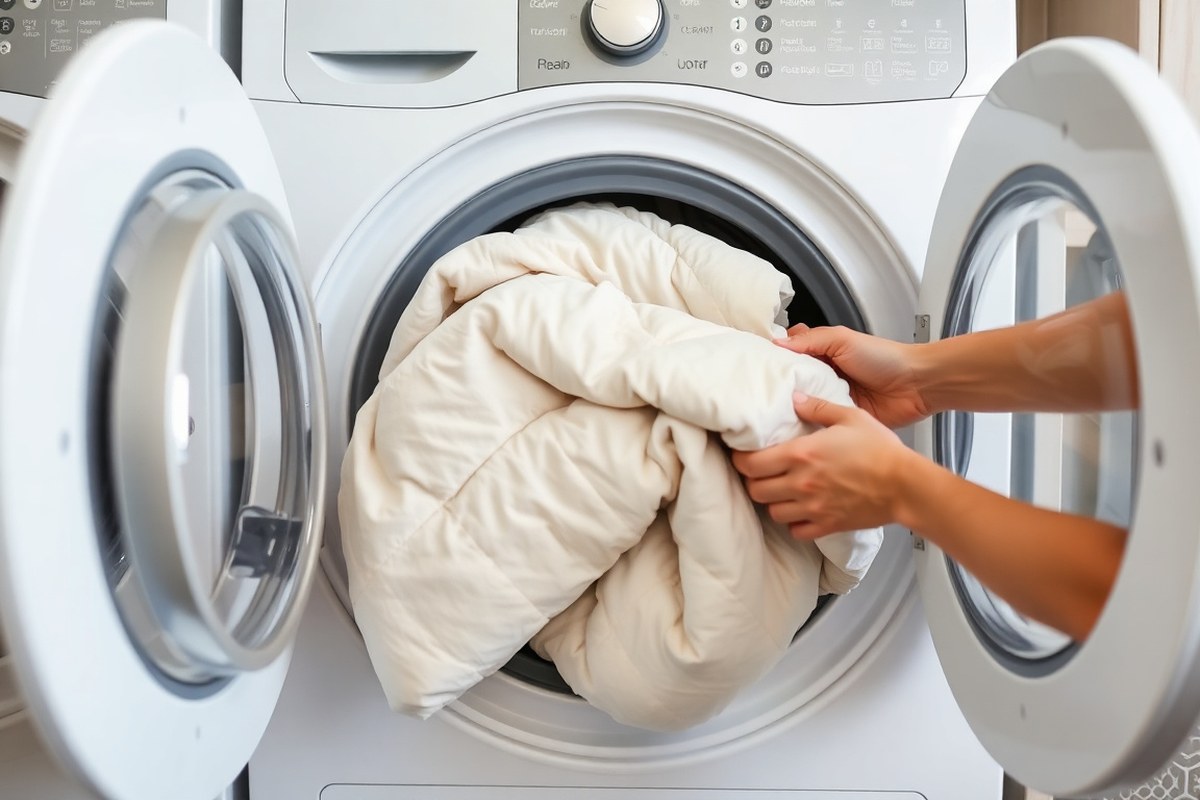
You can safely wash most comforters at home if you have the right equipment and follow label instructions carefully. The key is a high-capacity washing machine that allows the comforter to move freely during the wash. Without enough space, the comforter may not wash or rinse evenly, risking damage to both your bedding and appliance.
Different comforter fillings demand different care. Down and feather comforters usually require special detergents and gentle cycles to protect the delicate filling, while synthetic comforters are generally more forgiving and machine washable with regular detergent. Wool comforters tend to be less machine friendly, often needing hand washing or professional cleaning to preserve their texture and warmth.
| Comforter Type | Machine Washable? | Special Instructions | Washing Machine Size |
|---|---|---|---|
| Down or Feather | Yes | Use down-specific detergent; gentle cycle; two rinse cycles recommended | High-capacity washer with enough space for free movement |
| Synthetic | Yes | Regular detergent; gentle or normal cycle depending on fabric | High-capacity washer preferred; check comforter fits loosely |
| Wool | Usually no | Hand wash or professional cleaning to avoid shrinking or felting | N/A for home machines |
Check the care label on your comforter before washing. The label shows whether machine washing is allowed and what settings to use. Also, confirm the size of your washing machine drum. You want to see if the comforter fits without being overly packed. Tossing a bulky queen or king-size comforter into a standard home washer often won’t work well, and the better option might be large machines at a laundromat.
For king or queen comforters, or when your machine is borderline in size, use a laundromat’s industrial washers that can handle the load without excessive strain. These machines also speed up drying and help avoid clumping. When washing at home, using two rinse cycles flushes out soap effectively. Avoid mixing comforter washing with other laundry; the load is heavy and needs full attention.
How Often Should You Wash Your Comforter for Best Hygiene

The ideal frequency for washing a comforter varies based on how you use it, the presence of protective covers, and the material it’s made from. Generally, washing your comforter every one to two months works if it’s used regularly without a cover. Adding a duvet cover or using a top sheet lowers the need for frequent washing, often reducing it to just a few times yearly.
Effect of Duvet Covers and Top Sheets on Washing Frequency
Using a duvet cover greatly decreases how often you need to wash the comforter itself. The cover acts like a barrier between your body and the comforter, catching most dust, sweat, and skin oils. You can wash the duvet cover as often as you would a regular sheet, about every one to two weeks, while the comforter inside needs cleaning only a few times per year.
Adding a top sheet beneath the duvet further reduces soiling. When you use both a top sheet and a duvet cover, the comforter can stay cleaner longer because it avoids direct contact with skin. This setup allows you to wash the comforter at the change of seasons or every few months, saving time and wear on the bedding.
Material and Environmental Factors Influencing How Often to Wash
The material your comforter is made from impacts how frequently washing is needed. Natural fillings like down or feather may need less frequent washing if well protected, but synthetic fills can absorb body oils and odors more quickly, requiring more frequent cleaning. The outer fabric also matters; breathable cotton covers can handle less frequent washing than less breathable polyester blends.
Environmental conditions play a key role. Living in a humid climate or having a bedroom with poor ventilation leads to moisture buildup, which means washing more often to stop mold and mildew. Allergies or sensitivities to dust mites and pet dander also mean washing the comforter more often to maintain hygiene.
Usage Patterns That Affect Washing Intervals
Comforters used every night will generally require more frequent washing than those used occasionally or as guest bedding. Pets sharing the bed or sleeping without pajamas usually means you need to wash your comforter more frequently. Also, people prone to night sweating or who have sensitive skin may need to wash bedding more regularly to stay comfortable and healthy.
Recommended Washing Frequencies by Comforter Type and Use
| Comforter Setup | Typical Washing Interval |
|---|---|
| Comforter without cover, daily use | Every 1 to 2 months |
| Comforter with duvet cover, daily use, with top sheet | Every 3 to 6 months (seasonal) |
| Comforter used occasionally (guest bedding) | Twice a year or as needed |
| Duvet cover only | Every 1 to 2 weeks |
Key Factors to Consider When Scheduling Comforter Washes
Several personal and environmental factors determine the best washing schedule. Here are the most important ones to keep in mind:
- Using a duvet cover or a top sheet influences how often your comforter should be cleaned.
- Type of filling and outer fabric of the comforter
- Frequency of use and who uses the bed
- The bedroom’s humidity and air circulation
- Presence of pets and allergies in the household
- Signs of soiling like odors or visible stains
Adjust washing frequency based on these factors to balance cleanliness with preserving the comforter’s quality.
Washing your duvet cover regularly lets you keep your comforter fresh with fewer full washes, saving time and reducing wear on the bedding.
How to Prepare and Wash Your Comforter Without Damage
Preparing and washing your comforter without causing damage requires a clear plan. Correct stain treatment, detergent choice, water settings, and steps to protect the filling all matter. Following these instructions can keep your comforter clean, fluffy, and intact.
Pre-Treating Stains Safely
Address stains on your comforter as soon as possible to prevent them from setting in. Identify the stain type to choose the right treatment. For most stains, gently blot the area with a clean cloth to remove excess residue. Avoid scrubbing because it can damage the fabric or push the stain deeper.
Use a mild stain remover or a diluted solution of detergent and warm water. Test the stain treatment on a hidden area first to ensure it won’t harm the colors or material. Allow the pre-treatment to work for about 10 to 15 minutes before washing.
Choosing Detergent and Washer Settings
Select a gentle, mild detergent suited for the comforter’s filling. For down or feather fillings, use detergent labeled safe for down or delicate fabrics, often free of bleach and enzymes. For polyester fills, regular mild detergent works fine. Avoid fabric softeners as they can coat the filling and reduce loft.
Select water temperature according to your comforter’s care instructions. Use cold water for down-filled comforters, while polyester options can handle warm water but avoid hot water to prevent fiber damage. Use a gentle or delicate washing cycle and ensure your washer is roomy enough for the comforter to move without being squished or torn. For queen or king sizes, commercial washers usually offer the necessary space.
Protecting the Comforter Filling
The filling inside the comforter can clump or break down if washed or dried improperly. To prevent clumping, wash the comforter alone in a large-capacity washer so it tumbles freely. During drying, use dryer balls or clean tennis balls to keep the filling evenly distributed and fluffy. Redistribute the comforter every 20 to 30 minutes in the dryer to avoid cold or damp spots.
Check for loose seams before washing and repair any damage to stop filling from escaping. Avoid high heat when drying since it can degrade the filling and fabric. Dry on a low or medium heat setting and continue until the inside filling is completely dry to prevent mold.
- Check the care label to confirm washing instructions and filling type.
- Inspect the comforter for stains and apply a gentle pre-treatment to any spotted areas.
- Examine seams and repair loose stitching to protect the filling.
- Choose a mild detergent appropriate for the filling type; avoid bleach and fabric softeners.
- Load the comforter into a washing machine large enough for it to move freely without bunching, ideally a commercial washer for large sizes.
- Select cold or warm water and a gentle cycle following the care label guidelines.
- Transfer the comforter to a large-capacity dryer with dryer balls or tennis balls added to prevent clumping.
- Dry on low to medium heat, pausing every 20 to 30 minutes to redistribute the filling until fully dry inside and out.
Drying Your Comforter: Techniques to Avoid Clumping and Mold
Drying your comforter properly keeps it fluffy and prevents mildew or damage. Use dryer balls or tennis balls to redistribute the filling evenly during drying. Check and fluff the comforter every 20 to 30 minutes to avoid clumps and speed up drying time.
Using Dryer Balls or Tennis Balls
Dryer balls and tennis balls both help separate the filling inside your comforter while it tumbles in the dryer. This keeps the material from bunching up and allows air to circulate better, reducing drying time and maintaining fluffiness. Dryer balls made from wool or rubber are reusable and designed specifically to soften fabrics, while tennis balls are a low-cost alternative commonly used for this purpose.
When using tennis balls, make sure they are clean to avoid staining your comforter. Typically, adding 2 to 3 balls to the dryer provides enough agitation to redistribute the filling. Dryer balls work best with natural-fill comforters like down or wool. Both options reduce clumping by moving the filling around during the drying cycle, ensuring even drying and loft.
Setting Dryer Temperature and Cycle
Choose a low-heat or air-dry setting to protect your comforter’s fabric and filling. Higher heat can damage delicate fibers or cause the filling to become brittle. Use the dryer on a temperature between 120°F to 140°F for synthetic-filled comforters, and choose a lower setting for down or wool, as specified on the care label.
Use the tumble dry or air-dry cycle without heat if you want to avoid shrinking or overheating. Drying time varies depending on the comforter’s weight and thickness but expect 60 to 90 minutes or longer. Some dryers have a specific ‘bedding’ or ‘delicate’ cycle that works well. Avoid overloading the dryer; your comforter needs enough space to tumble freely for even drying.
Fluffing and Checking Progress
Check your comforter every 20 to 30 minutes during the drying process. Open the dryer and remove the comforter to manually fluff and shake it, redistributing the filling. This prevents the filling from settling or clumping in one area, which can cause cold spots and uneven drying.
Repeat the fluffing process multiple times until the comforter feels dry to the touch throughout the thickness. Most comforters require 2 to 3 fluffing sessions during drying. Proper dryness avoids mildew growth, especially in thicker down comforters, which can stay damp inside if rushed. The total drying time is typically around 1.5 to 2 hours in a standard dryer with periodic fluffing.
- Place the clean, washed comforter loosely into a large-capacity dryer.
- Place 2 to 3 clean tennis balls or wool dryer balls into the dryer along with the comforter to keep it fluffy.
- Set the dryer to a low heat or air-dry cycle according to the comforter’s care instructions.
- Start the dryer and run for 20 to 30 minutes.
- Pause the dryer and remove the comforter to fluff and shake it, redistributing the filling.
- Reload the comforter and continue drying, checking and fluffing every 20 to 30 minutes.
- Repeat this process until the comforter is fully dry, soft, and evenly fluffed inside and out.
When to Choose Professional or Laundromat Cleaning Instead
Choosing between home washing, laundromat cleaning, and professional services depends on your comforter’s size, material, and care instructions. Comforters made of delicate materials like silk or wool typically require dry cleaning to avoid damage. When your comforter is bulky or barely fits in your home washer, using a laundromat with large-capacity machines provides better cleaning by letting the comforter move freely, which helps avoid clumping or uneven washing.
Professional cleaning becomes necessary for comforters labeled as “dry clean only,” for down or feather comforters that benefit from thorough care every six months, and when stain removal or deep cleaning is beyond what a washing machine or laundromat can provide. Expect to pay between $20 and $50 for professional cleaning, depending on your comforter’s size and materials.
| Aspect | Home Washing | Laundromat | Professional Cleaning |
|---|---|---|---|
| Cost | Typically free or low cost (detergent only) | $5, $15 per load per wash and dry cycle | $20, $50 per comforter |
| Best For | Small or machine-washable comforters | Large comforters that just fit or exceed home washer size | Silk, wool, down, feather comforters, or dry clean only |
| Equipment | Standard home washer and dryer | Large-capacity washers and dryers | Professional-grade cleaning machines and solvents |
| Cleaning Quality | Good if properly sized and cared for | Better agitation and drying, prevents clumping | Thorough stain removal and fabric protection |
| Time and Effort | More effort to handle bulkiness, risk of damage | Less risk of damage, quick cycles | Minimal effort, requires drop-off/pick-up |
Determine the method by first checking the comforter’s care label. Marked “dry clean only,” professional cleaning remains the safest option. For washable comforters too large for your home machine, a laundromat’s large-capacity washer prevents machine strain and ensures thorough cleaning. Use laundromat services especially when your home’s washer restricts freedom of movement, reducing clumping and improving rinse cycles.
For regular maintenance of cotton or synthetic comforters that fit at home, washing at home saves money and time. Take your comforter to a professional cleaner if you notice persistent stains, odors, or if it contains down or feathers needing careful handling to maintain loft and hygiene. Professional services also help preserve delicate fabrics and prolong the comforter’s life.
Tip: Never force a comforter into a washer that is too small, as this can prevent proper cleaning and damage both the comforter and your machine.
Tips to Extend Time Between Comforter Washes Safely
Using a duvet cover is one of the most effective ways to reduce how often you need to wash your comforter. The cover acts as a barrier against dirt, dust, spills, and body oils, keeping the comforter itself cleaner for a longer time. Wash your duvet cover about once a month, which is easier and less risky for your bedding than frequent full comforter washes.
Refreshing your comforter between washes can save wear and extend its life. Airing it out regularly by hanging it outside for a few hours, ideally on a dry, sunny day, helps reduce moisture and odors. Spot cleaning small stains or spills promptly with a mild detergent and a damp cloth prevents the need for a full wash. Vacuuming your comforter with a handheld or upholstery attachment removes dust and pet hair, which accumulate especially if you share your bed with animals.
Pets and allergy sufferers need extra attention to keep comforters fresh. Pet hair often sticks to bedding and can trigger allergies. Use washable mattress protectors and waterproof comforter covers underneath your duvet cover to block allergens. Frequent vacuuming and keeping pets off the bed when possible also help. For allergy relief, consider an allergen-proof encasement and washing bedding during a hot cycle recommended for dust mite removal.
- Use a duvet cover and wash it monthly to shield the comforter
- Air out the comforter outside for 2 to 3 hours on dry, sunny days
- Spot clean stains immediately with mild detergent and water
- Vacuum comforter regularly to remove dust, dander, and pet hair
- Employ a washable mattress protector and waterproof cover under the comforter
- Keep pets off the bed or clean pet hair daily with a lint roller or brush
- Choose allergen-proof covers and wash bedding in hot water if allergies are a concern
Minimal maintenance routines like these reduce the buildup of allergens and grime, meaning you can safely space out comforter washes to every two or three months. Such practices cost little beyond the investment in covers and occasional detergent yet protect your bedding’s integrity and comfort. Neglecting these steps may lead to more frequent washes and faster wear or lingering odors, diminishing your sleeping environment’s quality.
Common Washing Mistakes and How to Fix Them
Washing a comforter improperly often leads to damage or uneven results. One frequent mistake is overloading the washing machine. Comforters, especially king-sized or thick ones, need room to move freely for effective cleaning and rinsing. Overstuffing your machine can cause the comforter to be unevenly washed and may strain or break the washing machine’s parts. Choose a washer that fits the comforter’s size or consider a laundromat with commercial machines if your home washer is too small.
Another common error happens with drying. Comforters tend to clump when the filling shifts during the drying cycle. This issue happens if the comforter isn’t periodically redistributed or if your dryer is too small for the bulky item. Use the dryer on a medium to low heat setting and take the comforter out every 20 to 30 minutes to shake it and spread the filling evenly. This process can take one to two hours depending on the dryer capacity and comforter thickness.
Comforter filling escaping through an open seam or small tears worsens during washing and drying. Check your comforter carefully before washing, and repair any damage with needle and thread or fabric tape designed for bedding. Washing a damaged comforter often leads to more filling loss and may ruin the entire comforter.
- Avoid overloading the washing machine, use one that fits your comforter’s size
- Wash on gentle or delicate cycle to protect the filling, especially with down comforters
- Check and repair seams or tears before washing to prevent filling loss
- Redistribute the comforter every 20 to 30 minutes in the dryer to prevent clumping
- Use medium or low dryer heat to protect filling and fabric integrity
- Use tennis balls or dryer balls to help fluff the comforter during drying
- When filling escapes, hand pick and redistribute it as best as you can before drying
Adjusting these steps can save you the cost of a damaged comforter, which can range from $50 for smaller synthetic models to several hundred dollars for down-filled or specialty comforters. Proper washing and drying techniques take longer and require more careful attention, but they extend the life of your comforter and keep it comfortable. Limited drying or washing space means waiting for more time or a bigger machine helps avoid common issues like uneven cleaning or mold formation
How to Store a Comforter Properly After Washing
Washing your comforter before storing is important to keep it fresh and prevent mildew. Make sure the comforter is completely dry to avoid any moisture that could lead to mold growth or unpleasant odors. Even a slight dampness under storage conditions invites bacteria and mildew, so thorough drying is a must.
Choose a storage space that is cool and dry, away from direct sunlight and humidity. Avoid storing your comforter in plastic bags that trap moisture; instead, use breathable or antimicrobial storage bags designed specifically for bedding. These containers help keep air flowing while protecting against dust and pests.
- Wash your comforter following the label instructions to maintain fabric quality
- Dry the comforter fully in a dryer on a low setting or air dry in a well-ventilated area
- Select a storage bag that is breathable or antimicrobial
- Store in a cool, dry environment with stable temperature and low humidity
- Avoid plastic bags that do not allow airflow
- Check your comforter periodically for any signs of moisture or odors
If your space is humid, consider using a dehumidifier or moisture absorber packets near your storage area. Storing a comforter in a reusable storage bag like those returned by professional cleaners can keep it fresh until use. Regular washing, ideally every few months or when switching seasons, complements proper storage to extend your comforter’s lifespan and maintain hygiene.
Do not store your comforter until it is 100% dry, as trapped moisture will cause mold and mildew to develop quickly.
Step-by-Step Action Plan for Washing Your Comforter
Follow these steps to clean your comforter safely while keeping it fluffy and fresh.
- Before you start: Check the care label for washing instructions and weight limits of your home washer to avoid damage.
- Day 1: Spot clean any stains with a gentle cleaner to prevent setting during the full wash.
- Day 2: Use a large capacity washing machine with warm water and mild detergent designed for delicates; ensure the comforter moves freely.
- Immediately after washing: Gently squeeze out excess water without wringing and place the comforter evenly in a dryer.
- Dryer setting: Use a low heat or air fluff cycle and add clean tennis balls or dryer balls to prevent clumping.
- After drying: Check for damp spots and, if needed, air dry further in a well-ventilated area to avoid mold buildup.
- Weekly care: Air out your comforter for a few hours to keep it fresh and reduce the need for frequent washing.
- Seasonal storage: Store in a breathable cotton bag in a cool, dry place when not in use to maintain loft and cleanliness.
Frequently Asked Questions
What’s the Best Way to Wash a Comforter?
Use a high-capacity washer with gentle, cold water and a mild detergent. For down comforters, a special down wash detergent works best to protect the filling.
Why Are People No Longer Using Top Sheets?
Many skip top sheets because they find them unnecessary or uncomfortable. Using a top sheet means you wash your comforter less often since it stays cleaner.
Should I Throw Away Old Down Comforter?
Keep it if it’s still in good shape; down comforters can last years with proper care. Replace it only if it’s torn, excessively worn, or no longer insulating well.
Can I Dry a Comforter in My Dryer?
Yes, but use a large-capacity dryer on low heat with dryer balls to prevent clumping. Check and redistribute the comforter every 20-30 minutes until fully dry.
How Often Should I Wash My Comforter?
Wash your comforter every 3 to 6 months or more often if you have allergies or sweat a lot at night.
Can Washing Damage My Comforter’s Filling?
Yes, frequent washing or high heat can damage the filling, so wash gently and dry on low heat.
Before You Go
You can safely wash your comforter at home with proper preparation and care, helping it last longer and stay comfortable. Start by checking the care label and choose a washing method that fits your machine’s capacity. Taking these steps now ensures your comforter remains clean without damage from washing or drying. Consider airing your comforter regularly to keep it fresh between washes.