Can You Machine Wash Silk? A Complete Guide with Safe Care Tips
You can machine wash silk safely if you use the gentlest cycle and keep the water temperature around 30°C (86°F). This approach minimizes damage and helps maintain silk’s delicate texture and vibrant appearance. Avoid hot water and harsh agitation to prevent shrinking or weakening the fabric.
This information suits anyone who owns silk garments and wants to care for them at home without risking damage. The guidance covers preparation, machine settings, drying, ironing, and common mistakes to help you keep your silk looking its best after machine washing.
Key Takeaways
- Always wash silk in lukewarm water at or below 30°C (86°F) to protect fibers from heat damage.
- Select your machine’s delicate or gentle cycle with a short wash time to reduce fabric stress.
- Use a detergent designed specifically for silk or mild, pH-neutral formulas with 2-3 pumps per load.
- Pre-soak very dirty silk for up to 30 minutes in lukewarm water to help release dirt before washing.
- Hang silk garments in a hot, steamy bathroom for about 15 minutes to naturally remove wrinkles.
- Iron silk on the lowest setting or use a steamer held 6 inches away to avoid heat damage.
Can You Machine Wash Silk Without Damage?
Machine washing silk is possible but only under specific conditions to avoid damage. The key is to check the garment’s care label first, as it is the most reliable guide. Some silk items are safe for gentle machine wash, while others require hand washing or professional dry cleaning. For example, simpler silk garments and items like silk bedding can often withstand a delicate cycle, whereas fine silk blouses with embroidery or delicate finishes usually cannot.
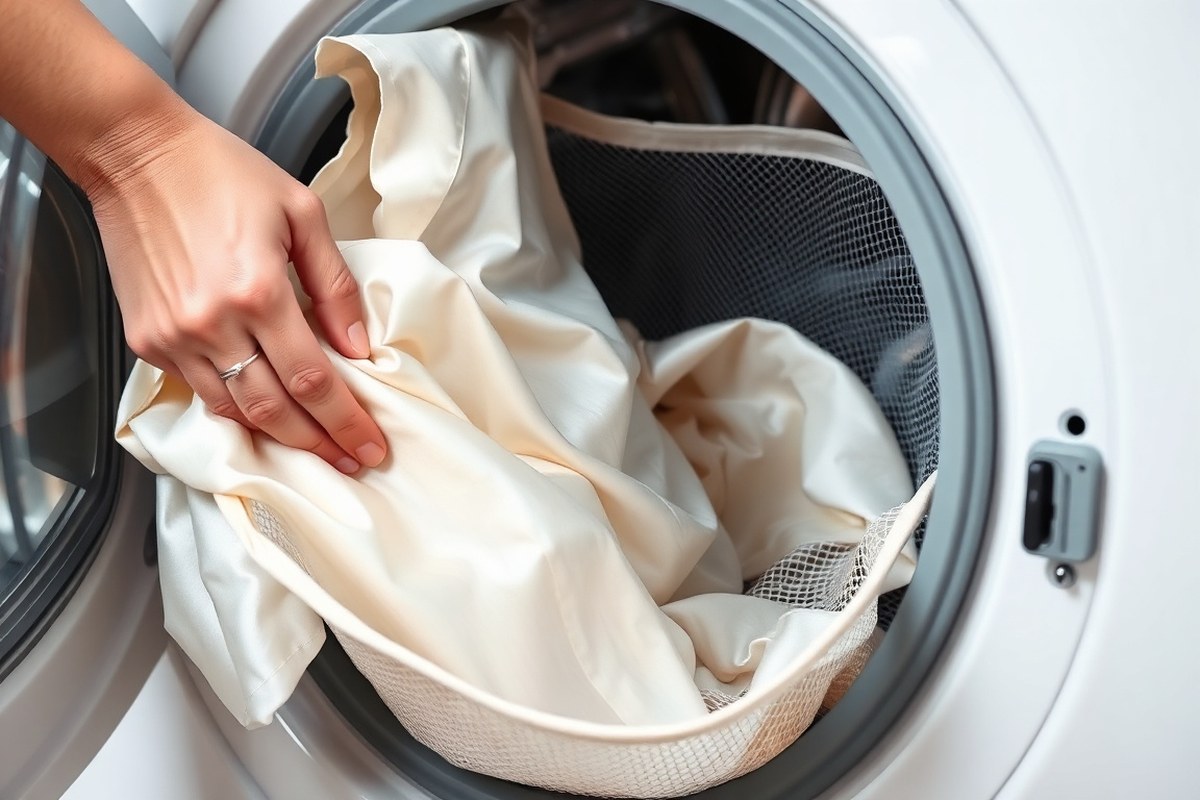
When the label indicates machine washing is allowed, use lukewarm water around 86°F (30°C) on the gentlest cycle. Avoid washing silk with heavier fabrics to prevent abrasion. Washing one item at a time or with similarly delicate items reduces the chance of dye bleeding or fabric damage. Using a mesh laundry bag adds protection against snags and tears by preventing direct contact with the machine drum or zippers.
Silk types also matter. Mulberry silk and charmeuse silks generally tolerate machine washing better than specialized silks like tussah or habotai, which may be more fragile. For silk blends, the blend percentage can influence tolerance to machine washing, but the care label still takes priority.
A good decision rule is to start with the care label instructions and only machine wash silk if it explicitly allows gentle machine cycles or “hand wash” settings. Always avoid higher temperatures over 86°F (30°C), strong detergents, and agitation cycles that are too rough. Using a mild silk detergent formulated without harsh chemicals helps maintain fabric integrity.
Silk that must be dry cleaned according to the label should not be machine washed as this risks shrinking, color loss, or texture change. If the label says “dry clean recommended” but you choose to machine wash, proceed with caution and expect possible wear over time.
Trying to machine wash silk without these safeguards can lead to shrinking, stretching, loss of sheen, or even holes forming. Avoid putting silk in the dryer; air drying is essential to preserve shape and finish. For fragile or expensive silk, hand washing remains the best method to maintain quality and longevity.
How to Prepare Silk Garments for Machine Washing

Preparing your silk garments properly before machine washing helps maintain their delicate fibers and vibrant colors. Follow precise steps to check labels, test for running dyes, separate your silk loads, and protect items with the right laundry bags. Taking these precautions reduces the chance of damage and keeps your silk looking its best.
Reading the Care Label Correctly
Always start by examining the care label inside your silk garment. The label instructs whether machine washing is safe, what water temperature to use, and if any special handling is needed. Ignoring the label risks shrinking, color loss, or fabric damage.
Look specifically for a washing symbol with a tub icon. A hand or machine wash symbol with a temperature indicates safe washing. When the label says “dry clean only,” avoid machine washing your silk garment. The label may also suggest using a silk or delicate cycle and low spin speed.
Testing for dye bleeding prevents unexpected color transfers. Rub a damp white cloth on a hidden seam or hem. When color bleeds, wash the item separately or choose dry cleaning instead.
Selecting a Suitable Mesh Laundry Bag
Use a mesh laundry bag to protect silk from snagging during the wash. The bag acts as a barrier between your delicate fabric and rougher machine parts or zippers. It also helps keep the silk from twisting or stretching.
Choose a lightweight mesh bag sized just big enough for the garment, around 12 by 15 inches works well for most tops or scarves. For larger items like silk dresses, pick a bag about 18 by 24 inches. Avoid stuffing the bag; fill it no more than halfway to allow water and detergent to circulate.
Wash silk separately or with other smooth, delicate fabrics inside the mesh bag. Do not combine with coarse items like denim or towels that could cause abrasion inside the machine.
Pre-Treating Stains Safely
Address stains before placing your silk garment in the washing machine to improve cleaning results and prevent permanent marks. Use mild pH-neutral detergents designed for silk or delicate fabrics.
Gently blot fresh stains with a white cloth to absorb excess dirt or oil. For tougher stains, apply a small amount of diluted detergent or a specialized silk stain remover on a hidden area to check for colorfastness. Let it sit briefly, then rinse with cold water.
Avoid rubbing or scrubbing the fabric, which can damage silk fibers. Do not use bleach, harsh chemicals, or hot water on stains as these can discolor or degrade the silk.
- Check the garment’s care label to confirm machine washing is allowed and note any temperature or cycle restrictions.
- Test a hidden section of the silk for dye bleeding by applying a damp white cloth and observing any color transfer.
- Sort your laundry by color and fabric type, washing silk apart from heavy or abrasive materials.
- Prepare a mesh laundry bag sized appropriately for your silk item, ensuring it is lightweight and breathable.
- Pre-treat any stains with a gentle, pH-neutral detergent, testing a concealed area first and avoiding vigorous rubbing.
- Place the silk garment inside the mesh bag, filling it no more than halfway to allow for proper water flow.
- Load the washing machine drum no more than halfway to reduce friction and tangling during the cycle.
- Choose a delicate or silk cycle with cold water and low spin speed according to your machine’s options.
Always test for dye bleeding on a hidden seam before washing; failing to do so can cause irreversible staining to other clothes during the wash.
Choosing the Right Detergent and Water Temperature
Use a detergent made specifically for silk or delicate fabrics and wash in cold or lukewarm water around 86°F (30°C). Avoid standard detergents, bleach, or anything abrasive, since they damage silk’s delicate fibers. Detergents designed for wool may sometimes be gentle enough, but many are still too harsh for silk.
Why Use a Silk-Specific Detergent?
Silk is a natural protein fiber that requires a gentle, pH-neutral detergent to maintain its shine and strength. Silk-specific detergents, like Blissy Wash or Steamery’s Delicate Laundry Detergent, are formulated without enzymes or harsh chemicals that can break down silk fibers over time. Using one of these detergents helps keep colors bright and textures smooth after repeated washing.
Standard detergents often contain enzymes designed to break down stains on cotton or synthetic fabrics, which can weaken silk strands. They also tend to have a higher pH, making them harsher. Choosing a detergent explicitly labelled safe for silk, even if marketed as “delicate”, is important. It dissolves gently in water and cleans without stripping natural proteins or weakening the fabric.
Water Temperature Guidelines for Silk
Lukewarm water at about 86°F (30°C) is ideal for washing silk. At this temperature, the fibers stay strong and the colorfastness is maintained. Water that is too hot, such as above 104°F (40°C), can cause silk to shrink, lose brightness, or weaken. Cold water works well too but does not dissolve detergent as easily, so mixing and dissolving detergent thoroughly before adding silk helps.
For machine washing silk, ensure the water temperature setting does not exceed 86°F (30°C). Most modern machines offer a “cold” or “delicate” cycle that matches this temperature range. Following the detergent manufacturer’s instructions on water temperature improves results and prevents damage to your silk garments.
Avoiding Harsh Additives and Bleach
Adding bleach or detergents with enzymes or optical brighteners harms silk fibers significantly. Bleach causes the fine silk protein to break down, leading to holes, fading, and a rough texture. Even some wool detergents include enzymes or chemicals too strong for silk, so check to confirm any detergent’s suitability before using it.
Vinegar is sometimes suggested as a natural fabric softener or to set colors, but it should be used cautiously with silk. Adding a small amount of white vinegar (around 1/4 cup per load) to the rinse cycle can help restore pH balance and maintain shine, but avoid soaking silk in vinegar solutions as it may weaken fibers. Always test with a small section or a less visible area before applying vinegar broadly.
Selecting the Best Machine Settings for Washing Silk
The best machine settings for washing silk prioritize gentle handling to avoid damaging the delicate fibers. Choose the “delicate” or “hand wash” cycle, which uses slow agitation and is specifically designed to protect fragile fabrics like silk. This cycle typically lasts between 15 and 30 minutes, which is short enough to clean the garment without overexposure to water and mechanical stress.
Set the spin speed to the lowest possible setting or select no spin if your machine offers that option. High spin speeds can stretch or distort silk, causing permanent texture changes or weakening. A slow spin helps remove excess water without wrinkling or damaging the fabric. Cold water should be used exclusively, as higher temperatures increase the risk of shrinking and color bleeding. Lukewarm water is not recommended because it can harm the natural protein structure of silk and fade dyes.
While some machines have a “delicate” cycle, the “hand wash” cycle is often gentler and better suited for silk garments. The hand wash cycle mimics the careful movements of washing by hand, reducing agitation to protect the fabric’s integrity. This cycle is especially useful if your silk garment has intricate details or delicate embellishments. Use cold water on either cycle, never warm or hot, to maintain the fabric’s appearance and feel. To adjust for different situations, consider these tips:
- For lightly soiled silk, use the shortest cycle available, around 15 minutes, to avoid unnecessary wear.
- When washing heavily soiled items, extend to 30 minutes but still keep the cycle gentle and cold.
- Skip the spin cycle entirely if possible, or keep it at the absolute minimum speed (usually under 400 RPM) to lower mechanical stress.
- If your washer has a silk or wool option, it can often substitute the hand wash cycle safely.
- Place silk garments in a mesh laundry bag to prevent them from rubbing against other clothes and reduce friction damage.
- Always remove the silk promptly after the cycle ends to prevent water spots and wrinkles.
These settings cost no more than selecting the proper cycle and adjusting spin speed, but they save you the expense and hassle of garment replacement. Lower agitation, cold water, brief cycles, and minimal spinning all contribute to silk lasting longer while maintaining its softness and sheen. Ignoring these instructions risks silk becoming dull, stretched, or discolored, especially with repeated machine washing.
How to Dry Silk After Machine Washing
Silk requires gentle care during drying to keep its texture and shape intact. Avoid tumble drying because the heat and tumbling action can shrink or damage the delicate fibers. Instead, air drying provides the best results, preserving silk’s natural sheen and softness. Handling wet silk with care helps prevent wrinkles and distortion of the fabric structure.
Leaving wet silk to drip dry without proper handling can cause water spots and uneven stretching. It’s important not to wring out the garment, which can stretch and damage the fabric. Hanging silk properly or laying it flat helps maintain its form and prevents misshaping. Drying silk away from direct sunlight or heat sources reduces the risk of fiber weakening or fading caused by UV rays or high temperatures. Follow these steps to dry your machine-washed silk safely:
- Remove the garment promptly: Take the silk out of the washing machine as soon as the cycle ends to avoid prolonged exposure to moisture and agitation.
- Handle gently: Lay the silk flat on a clean, absorbent towel. Roll the towel and press lightly to remove excess water, do not wring or twist the fabric.
- Reshape the garment: While damp, adjust silk to its natural shape to avoid permanent stretching or creasing.
- Choose a drying location: Air dry in a shaded area away from direct sunlight or heaters to protect silk’s color and fibers.
- Use appropriate hangers: Hang the garment on a padded hanger to support the shoulders and prevent marks or stretching.
- Allow sufficient drying time: Depending on the humidity and thickness of the silk, drying can take several hours to a full day.
- Avoid heat sources: Do not place silk near radiators or in a tumble dryer, as this can cause shrinkage and fiber damage.
Never wring out silk after washing, as this can distort the fabric and shorten the lifespan of the garment.
Ironing and De-Wrinkling Machine Washed Silk Garments
Set your iron to the lowest heat setting, often labeled as “silk.” Some irons offer a dedicated silk setting, which is best for avoiding damage. Using too much heat can scorch or dull silk fibers, so keeping it cool matters. Ironing with the garment slightly damp or placing a pressing cloth between the iron and silk reduces direct contact, protecting the fabric further.
Using steam is a safe and effective way to remove wrinkles from machine-washed silk without risking shine or marks from an iron. You can either use a handheld steamer or the steam function on your iron. Hold the steamer a few inches away from the fabric and allow the steam to relax the wrinkles. Do not press the steamer directly onto the silk to avoid water spots and stretching.
Ironing is not always necessary after washing. Instead, hanging the silk garment on a padded hanger in a steamy bathroom can smooth out minor wrinkles. Alternatively, laying the silk flat to air dry can help the fabric retain its shape and reduce creases. Follow these steps for safe ironing and de-wrinkling of machine-washed silk:
- Check your iron’s settings and select the lowest heat or “silk” option.
- If ironing, slightly dampen the silk garment or use a pressing cloth over it.
- Place the garment on a clean, flat surface or ironing board.
- Gently press the iron without sliding it back and forth to avoid stretching the fabric.
- For steaming, hang the silk item and hold the steamer 4 to 6 inches away from the fabric.
- Move the steamer slowly over wrinkled areas, allowing steam to penetrate.
- Let the silk air dry fully before storing or wearing to maintain smoothness.
- Store in a cool, dry place away from direct sunlight to preserve fabric quality.
Common Mistakes to Avoid When Washing Silk in a Machine
One common mistake that leads to silk shrinkage or damage during machine washing is using hot water or a high heat setting. Silk fibers react poorly to heat and agitation, causing them to contract and lose their softness. Always use cold water (around 68°F/20°C or below) and a gentle cycle to reduce stress on the fabric. Avoid tumble drying, as the heat can cause irreversible shrinking and fiber breakdown.
Color bleeding or fading happens when silk is washed with harsh detergents or in water that’s too warm. The natural dyes in silk can run or dull if exposed to strong chemicals or improper handling. Using a detergent formulated for delicate fabrics or a specialized silk wash helps preserve color. Separate dark and light silks to prevent transfer of color during the wash.
- Use cold water and a delicate cycle to protect silk fibers
- Choose a silk-friendly detergent to prevent color fading
- Never put silk in the dryer; always air dry away from sunlight
- Place silk garments in a mesh laundry bag to avoid tangling
- Do not overload the washing machine to reduce friction and damage
- Check and fasten buttons or hooks before washing to prevent snags
- Separate silk from rough or heavy fabrics to avoid abrasion
Tangled silk is more prone to stretching and wrinkling. Prevent this by placing your silk garment inside a mesh laundry bag before washing. This limits movement and rubbing against the drum or other clothing. When your silk gets tangled, gently untwist it by hand while it’s still damp. Avoid pulling hard or wringing, as this can distort the shape.
Silk showing signs of damage or unwanted creases after washing should be re-wet with cold water and reshaped carefully on a flat surface. Dry it away from direct sunlight or heat sources to prevent further deterioration. For mild stains or dullness, you can soak the silk briefly in cold water with a silk-specific detergent before a gentle rinse. For stubborn damage, professional dry cleaning might be the safest solution, especially if the care label specifies “Dry-Cleaning Only.”
When to Choose Professional Dry Cleaning over Machine Washing Silk
Professional dry cleaning is the safest choice for certain silk items that carry high risk of damage from home washing. Knowing when to skip the machine or hand wash depends on the type of silk, care label instructions, and the garment’s condition. Choosing dry cleaning avoids shrinkage, color loss, and fabric weakening that can happen with home methods.
Types of Silk Requiring Dry Cleaning
Silk fabrics blended with other delicate fibers or heavily embellished silks usually need professional dry cleaning to preserve their texture and appearance. For example, silk charmeuse, silk satin, or silk items with sequins, beads, or metallic threads are prone to damage through agitation or water exposure. Silk upholstery, heavy silk scarves, or structured silk garments like suits often react poorly to water-based cleaning due to shrinkage or distortion.
Items with a lining or complex construction, such as jackets or dresses with underlining, also benefit from dry cleaning to prevent the lining from bleeding color or puckering. Dry cleaning uses solvents that dissolve oils and dirt without swelling the silk fibers, maintaining the integrity and shine of the fabric better than water washing.
Indicators on Care Labels
Always check the care label before deciding on washing methods. The label clearly indicates if dry cleaning is required by stating “Dry Clean Only” or displaying a circle symbol with or without instruction letters. Following care labels reduces the risk of fabric damage and voiding manufacturer warranties.
If the label suggests avoiding water, heat, or agitation, professional cleaning is a safer bet. Some silk labels may permit hand washing at low temperatures (under 86°F or 30°C) but still recommend dry cleaning for the best maintenance over time. The presence of warnings against steam or tumble drying also signals that a professional cleaner should handle or prepare the garment.
Evaluating Fabric Condition for Home Washing
Before attempting any washing at home, inspect your silk closely for wear and fragility. Thin areas, fraying seams, or discoloration warn against machine washing risks. Silk that feels stiff or rough likely has lost its natural oils and is more prone to damage from water or detergent. Home washing may cause such silk to become brittle or lose luster.
New silk garments or items recently dry cleaned retain adequate fiber strength, so occasional gentle machine washing or hand washing is usually safe if allowed on the label. Avoid washing any silk with stains that need special solvent treatment or odors better removed by professional equipment.
Test a small inconspicuous area with water and detergent first; if the fabric changes color or texture, skip home washing and get it professionally cleaned.
Frequency of Professional Cleaning
Silk does not require frequent dry cleaning; most experts recommend professional cleaning only every few months or after noticeable soiling. Frequent dry cleaning can expose silk to harsh chemicals that may weaken fibers over time. Spot cleaning and airing out can extend the time between dry cleanings while maintaining freshness.
Proper storage and minimal wear also reduce the need for professional cleaning. When worn regularly or exposed to sweat, oils, or perfumes, plan a dry cleaning session at least once or twice per season. For occasional silk items, annual or biannual dry cleaning suffices to maintain fabric quality and appearance.
Step-by-Step Action Plan for Machine Washing Silk Safely
Follow these steps to machine wash your silk garments without risking damage, keeping them soft and vibrant.
- Before washing: Check the care label on your silk piece to confirm it’s safe for machine wash; look for “hand wash” or “dry clean only” tags, which mean skip the machine.
- Preparation: Before washing, flip the garment inside out and put it inside a mesh laundry bag. This shields the fabric strands from getting caught or rubbed too harshly while washing.
- Detergent choice: Use a mild detergent specifically made for delicates or silk with a pH near neutral; avoid bleach and fabric softeners to keep the silk’s natural sheen.
- Machine settings: Select the gentle or delicate cycle with cold water, usually 68°F (20°C) or cooler; this limits agitation and heat that can break down silk fibers.
- After wash: Remove the garment immediately to prevent wrinkles; do not wring out, gently press out excess water while still in the mesh bag or roll in a clean towel.
- Drying: Lay the silk flat on a dry towel away from direct sunlight and heat sources; air dry until completely dry to maintain shape and texture.
- Ironing: If needed, iron on a low heat setting while the fabric is still slightly damp or use a cloth between the iron and silk to avoid scorching.
- Regular checks: After drying and ironing, examine your garment’s texture and color for any damage signs such as stiffness, dullness, or shrinkage to adjust future care.
Frequently Asked Questions
Can You Use Vinegar to Clean Silk?
Vinegar can be used to remove stains on silk, but dilute it carefully with water to avoid damage. Test on a small area first to ensure no discoloration occurs.
Does Silk Shrink If You Wash It?
Silk can shrink if exposed to hot water or aggressive washing. Use lukewarm water and a gentle cycle to minimize shrinking.
How Do You Iron Silk?
Iron silk on the lowest heat setting with a cloth between the iron and fabric to avoid burns. Iron while the fabric is slightly damp for best results.
How to Make Silk Soft Again?
Soak silk in lukewarm water with a gentle silk-specific detergent to restore softness. Avoid harsh chemicals or rough handling.
Is It Safe to Tumble Dry Silk?
No, tumble drying can damage silk fibers and cause shrinkage. Air dry silk flat or hang it away from direct sunlight.
Can You Machine Wash Silk with Other Fabrics?
It’s best to wash silk separately or with similar delicate items to prevent damage and color transfer.
Before You Go
You can machine wash silk safely by following proper preparation and gentle settings tailored to preserve the fabric’s delicate nature. Always handle silk with care to maintain its smoothness and color. Start by testing on a less valuable piece or small section before machine washing your favorite silk item. Taking one step at a time builds confidence in caring for your silk wardrobe at home.