
Top 12 Best Carburetor Cleaner Spray That Boosts Performance
Many who work on engines know the frustration when a carburetor cleaner spray leaves behind residue or fails to dissolve stubborn gunk. Using the best carburetor cleaner spray helps avoid these problems by breaking down deposits quickly without damaging metal parts. A spray that is too weak can result in poor engine performance, while one that is too harsh might corrode sensitive components over time.
A good carburetor cleaner spray typically contains powerful solvents like acetone or toluene and can dissolve varnish and carbon buildup effectively. The size of the can matters for multiple uses, with common volumes ranging from 10 to 14 ounces.
An effective spray nozzle that reaches tight spaces around jets and passages helps improve cleaning efficiency. Also, safer formulations minimize the risk of inhaling toxic fumes during use. Ease of rinsing off the cleaner with minimal scrubbing reduces maintenance time.
Need a Quick Check?
| Image | Product | Price |
|---|---|---|
Our Top Picks 1  | Gumout Jet Spray | Check Price |
Our Top Picks 2  | CRC Carburetor Cleaner | Check Price |
Our Top Picks 3  | Johnsens VOC Cleaner | Check Price |
Our Selected Top 12 Carburetor Cleaner Spray for Every Budget
This list features a variety of carburetor cleaner sprays suitable for different budgets and needs. Each review covers the product’s effectiveness, ideal user type, and its main advantages and disadvantages to help you find the best fit for your maintenance tasks.
1. Gumout Carb & Choke Jet Spray
Feels like a quick and effective fix whenever the engine starts acting up. Ideal for those dealing with carburetor issues or anyone wanting to keep their engine running smooth.
The strongest point is how it blasts away tough grime without leaving residue behind.
Using it involves simply spraying directly onto carburetor parts or other unpainted metal surfaces like brake rotors. The aerosol form makes it easy to target hard-to-reach spots, and it dries fast so you don’t have to wait long before reassembling.
Because it’s residue-free and unscented, handling it doesn’t leave a mess or strong odors.
It tackles gum, varnish, and other stubborn buildup impressively well, improving engine function noticeably. The product is designed specifically for carbs, linkages, and controls, which shows in how thorough it cleans.
Reviews praise its powerful spray and no-residue clean, though some wish it tackled painted surfaces too. The metal parts cleaner is a nice bonus.
Strong spray power clears out gum and carbon quickly, making engines run smoother. Complaints mostly focus on its inability to safely clean painted parts, limiting use to metal areas. It dries quickly and leaves no residue, which users find very convenient for maintenance routines.
People needing a focused carburetor cleaner or a metal parts cleanser will be satisfied. Those looking for a cleaner safe on all surfaces or with gentler application might want to consider alternatives better suited for delicate finishes.
Pros
- Powerful jet spray removes tough buildup fast
- Cleans all unpainted metal parts efficiently
- Leaves no residue after drying
- Unscented, so it avoids harsh chemical smells
Cons
- Not designed for painted surfaces
- Might require multiple sprays on heavy deposits
| Specification | Details |
|---|---|
| Item Form | Aerosol |
| Scent | Unscented |
| Specific Uses For Product | Carb/Choke |
| Special Features | Residue Free |
2. CRC Clean-R-Carb Carburetor Cleaner
CRC Clean-R-Carb Carburetor Cleaner suits anyone looking for a reliable spray that quickly clears carburetor deposits while being safe on sensitive engine parts. Its biggest strength is how it dissolves buildup instantly without harming catalytic converters or oxygen sensors, making it ideal for regular maintenance and fuel system care.
Usage is straightforward: spray the liquid directly onto the carburetor parts like venturi, linkages, butterflies, and PCV systems. The alcohol-based formula works fast to break down deposits, so repeated application isn’t usually necessary.
Its almond scent is milder compared to harsher chemical cleaners, which helps during indoor use or in a garage. Being compliant with 50-state VOC regulations means it’s safe for use anywhere in the U.S.
Performance-wise, it effectively restores carburetor function by cleaning stubborn buildup, improving fuel delivery and overall engine behavior. The formula focuses on protecting components while delivering solid cleaning power.
Users frequently praise its effectiveness and the fact it won’t damage delicate sensors, though some mention it can require multiple sprays for heavy grime. The liquid form allows precise application but might be less convenient than aerosol sprays for some.
Users appreciate how well it cleans without damaging oxygen sensors or catalytic converters, keeping their engines safe. The most common complaint is needing extra applications when dealing with heavy buildup, making it less convenient for very dirty carburetors.
Anyone wanting a dependable cleaner that protects engine parts should be pleased with this product. Those looking for a quick, aerosol spray delivery or needing heavy-duty immediate removal might want to consider alternatives.
Pros
- Quickly dissolves carburetor deposits
- Safe on catalytic converters and sensors
- Alcohol-based for effective cleaning
- Meets all state and federal VOC rules
Cons
- May need multiple applications for tough grime
- Liquid form can be harder to control than sprays
| Specification | Details |
|---|---|
| Item Form | Liquid |
| Scent | Almond |
| Specific Uses For Product | All Purpose |
| Surface Recommendation | Acrylic |
| Special Features | Alcohol Based |
| VOC Regulation | 50-State Formula |
3. Johnsens VOC Compliant Carburetor Cleaner
Crafted as a low-odor spray cleaner, Johnsens VOC Compliant Carburetor Cleaner suits those looking for a practical solution to dissolve tough buildups like varnish and sludge on carburetors and linkage. Its main strength lies in tackling deposits efficiently while remaining safe for stainless steel surfaces without adding a strong scent.
Using the product daily involves simply spraying the affected parts such as the carburetor, PCV valves, or automatic choke. The spray delivers a controlled amount, making it easy to spot-treat problematic areas. Its unscented formulation keeps the workspace more comfortable, and the low weight makes it convenient to handle during maintenance tasks on industrial machinery.
Performance-wise, it cleans deposits effectively, restoring critical components without damaging metal surfaces. The build as a low VOC spray means it meets standards in some regions but is limited to areas without VOC regulations.
Praise often highlights its cleaning power and low odor, while some users note that it cannot be used in all geographic areas due to compliance restrictions.
Cleaning power combined with a low odor is frequently praised, making it a pleasant choice during work. However, the inability to purchase or use it in regulated regions restricts accessibility for many. The product balances effective cleaning with legal compliance but only within specific geographic limits.
Those working in areas without VOC restrictions and needing a reliable, low-odor carburetor cleaner will find it useful. Users in regions with strict regulations should look for alternative products meeting those standards to avoid compliance issues.
Pros
- Removes varnish and sludge effectively
- Low odor formula for comfortable use
- Suitable for stainless steel parts
- Compliant with VOC regulations in some areas
Cons
- Not for sale in VOC-regulated areas
- Limited use due to regional regulation restrictions
| Specification | Details |
|---|---|
| Item Form | Spray |
| Scent | Unscented |
| Special Features | Low Odor |
| Surface Recommendation | Stainless Steel |
| Item Package Weight | 0.8400000000000001 Pounds |
4. Gumout Carb/Choke Carburetor Cleaner Spray

Easy to use and quick drying, Gumout Carb/Choke Carburetor Cleaner Spray suits anyone dealing with engine issues like rough idling or stalling. Its main strength lies in efficiently removing deposits from both inside and outside the carburetor, helping restore engine performance and better fuel economy.
Spraying straight from the aerosol can makes setup straightforward, whether working on carburetors or choke valves. The cleaner targets gum, varnish, and dirt buildup on unpainted metal parts without leaving residue, and it dries fast so you can get back to work quickly.
It’s unscented, so no strong smells linger during use.
Effectiveness at cleaning tough carbon deposits and improving engine function stands out. Built as a concentrated formula, it suits both routine maintenance and heavier cleaning tasks.
People appreciate how it tackles hard starting and exhaust issues. Some mention it requires repeated application for very clogged parts, but overall, it gets the job done well.
Strong cleaning power helps overcome hard starting and rough idling, though very clogged carburetors sometimes need several applications to clear. Its quick drying and unscented nature make it practical for frequent use without discomfort.
Those maintaining engines with stainless steel parts will find it reliable and effective. Users handling heavily coated or painted parts, or looking for single-application fixes, might want to consider different options.
Pros
- Quick drying and cleans both inside and outside
- Removes gum, varnish, and dirt effectively
- Unscented, no strong fumes during use
- Concentrated formula for tough cleaning
Cons
- May require multiple sprays for heavy buildup
- Only suitable for unpainted metal parts
| Specification | Details |
|---|---|
| Item Form | Aerosol |
| Scent | Unscented |
| Specific Uses For Product | Engine |
| Surface Recommendation | Stainless Steel |
| Special Features | Concentrated |
| Recommended Uses For Product | Fleet and plant maintenance. |
5. Gumout Carb/Choke Carburetor Cleaner Spray

Carburetor issues like hard starting or rough idling demand a cleaner that works well without strong fumes. Designed for engine metal surfaces, this spray stands out for tackling common carb problems while staying low odor and VOC compliant, making it a solid choice for fleet and plant maintenance settings.
Using the aerosol form makes application straightforward on engines, where the unscented formula helps keep the workspace comfortable. It’s suitable for frequent maintenance, especially on metal carburetor parts, without worrying about heavy fumes. Setup involves just spraying directly onto the carburetor or choke, making it simple to address stalling or high exhaust emissions on the go.
The cleaner performs reliably by loosening deposits that cause engine troubles like rough idling or stalling. It’s built as a low-odor solution, which users appreciate for indoor or frequent use. While many note it effectively improves engine response, some feel a stronger scent might confirm stronger cleaning power.
Its focus remains on cleaning without overwhelming chemicals.
Users appreciate its ability to improve engine issues like rough idling and stalling while keeping fumes minimal thanks to its low-odor and unscented design. A common critique is that the lack of a noticeable scent leaves some unsure about the strength of cleaning action.
This cleaner suits anyone needing regular carburetor maintenance in low-fume environments, especially fleets and plants. Those seeking a more aggressive chemical smell as reassurance might prefer another product.
Pros
- Low odor keeps work areas comfortable
- Effective on metal carburetor parts
- VOC compliant formula
- Simple aerosol application
Cons
- Some expect stronger scent for cleaning power
- Not designed for non-metal surfaces
| Specification | Details |
|---|---|
| Item Form | Aerosol |
| Scent | Unscented |
| Specific Uses For Product | Engine |
| Surface Recommendation | Metal |
| Special Features | Low Odor |
| Recommended Uses For Product | Fleet and plant maintenance |
6. Valvoline Carb, Choke & Throttle Body Cleaner

Clogged carburetors and throttle bodies slow down engines and ruin performance. Valvoline Carb, Choke & Throttle Body Cleaner suits anyone looking to blast away carbon and varnish buildup quickly.
Its extra strength formula is its strongest feature, designed to restore smooth and reliable engine operation efficiently.
Using the spray is straightforward for everyday engine maintenance. Simply direct the aerosol on unpainted metal parts like the carburetor or throttle body to dissolve stubborn deposits.
Its unscented formula avoids harsh smells, and the cleaner targets critical components without damaging surfaces when applied properly. Regular treatment helps improve engine starting and keeps fuel flow steady.
The cleaner breaks down grimy carbon, gum, and varnish effectively, improving airflow and ignition over time. Built as an aerosol, it delivers consistent sprays and easy application. Positive feedback highlights its power in restoring hard starts, though some mention that stubborn buildup may require repeated use or more thorough manual cleaning for best results.
One key strength is its ability to restore engine starting performance by clearing tough carbon deposits effectively. The most frequent drawback is that heavy buildup sometimes requires several sprays or additional manual cleaning to get results.
This cleaner fits well for those needing a powerful spray for metal engine parts needing quick cleaning and starting help. Users wanting a gentler formula or spray safe for painted surfaces might prefer a different product.
Pros
- Strong solvent action on carbon and varnish
- Works well on unpainted metal parts
- Unscented for less harsh smell
- Helps improve hard starting engines
Cons
- May need multiple applications for heavy deposits
- Not suitable for painted surfaces
| Specification | Details |
|---|---|
| Item Form | Aerosol |
| Scent | Unscented |
| Specific Uses For Product | Automotive Exterior |
| Surface Recommendation | Metal |
7. WD-40 Specialist Carb/Throttle Body & Parts Cleaner

Breaking up tough, baked-on carbon deposits without harming sensors stands out as the main strength here. Suited for people dealing with carburetors, throttle bodies, or any unpainted metal parts on vehicles and equipment, it handles old and new machines alike with one all-in-one formula.
Spraying from an aerosol can makes it easy to apply directly where needed, saving time during cleaning jobs. Its dual-action system works by first loosening stubborn grime with a solvent, then blasting it away with a powerful spray. That fresh scent doesn’t leave any unpleasant odors while leaving no residue behind.
It does a solid job at getting engines to start quickly and run smoothly at all RPM levels. The formula won’t harm oxygen sensors or catalytic converters, even if contacted by accident.
Reviews mention great cleaning power and quick improvement in idle consistency. Some note that the spray nozzle could be more precise for hard-to-reach spots.
Users appreciate the strong cleaning action that makes engines start faster and idle more smoothly. A typical complaint revolves around the spray nozzle’s lack of directional accuracy, which can make it tricky to reach tight areas. The fresh scent and residue-free finish also get positive mentions.
Those working with multiple types of gas-powered equipment will find it very handy. People needing detailed cleaning in confined spaces or those dealing with painted parts should look for alternatives better suited for precise application or different surfaces.
Pros
- All-in-one cleaner for carburetor and metal parts
- Does not harm oxygen sensors or catalytic converters
- Residue-free formula with fresh scent
- Effective on old and new vehicles
Cons
- Nozzle spray precision could be better
- Limited to unpainted metal surfaces only
| Specification | Details |
|---|---|
| Item Form | Spray |
| Scent | Fresh |
| Specific Uses For Product | Automotive Exterior |
| Surface Recommendation | Metal |
| Special Features | Residue Free |
| Container Type | Aerosol Can |
8. Holley Carburetor and Throttle Body Cleaner
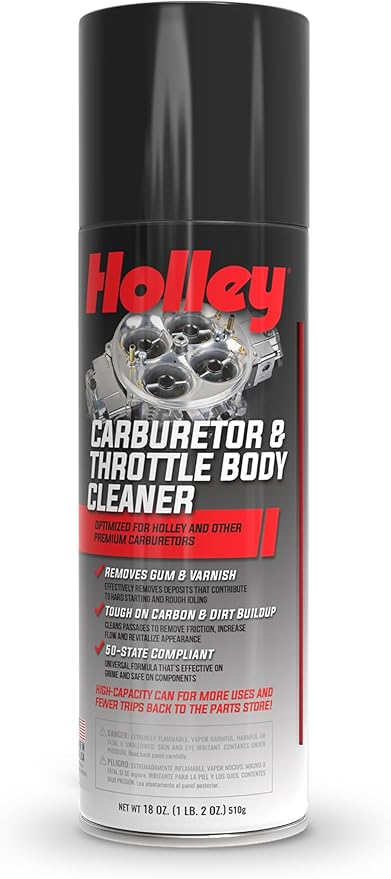
Carburetor and throttle body cleaning fits right in with anyone who works on older engines or wants to keep their vehicle running smoothly. Holley’s cleaner stands out because it tackles carbon buildup and grime without needing to tear down the parts, saving time and effort.
Applying the spray is straightforward, thanks to its jet aerosol form that gets into hard-to-reach spots. Most users find they can shoot it on metal parts like carburetors, choke valves, and EGR systems without taking everything apart. It doesn’t have a strong smell, which is a relief when you’re spraying around the engine bay.
It performs well at cutting through gum, varnish, and other deposits that slow down throttle response or cause rough starts. The formula being safe for oxygen sensors and electronics adds an extra layer of confidence.
The most praised aspect is the cleaner’s effective removal of buildup, though some mention the spray can runs out faster than expected during heavier jobs.
The strongest praise highlights how well it removes tough buildup without dismantling parts, keeping engines responsive and easy to start. The common complaint centers on the spray not lasting long during more extensive cleaning jobs, which might require multiple cans.
People who want a powerful, no-fuss spray for routine carburetor and throttle body cleaning will appreciate this product. Those tackling heavy grime on non-metal surfaces or needing longer-lasting sprays might want to look for other options.
Pros
- Targets carbon, gum, and varnish effectively
- No tear-down usually required
- Safe for oxygen sensors and electronics
- Low odor formula
Cons
- Spray can empties quickly with heavy use
- Only for metal surfaces
| Specification | Details |
|---|---|
| Item Form | Aerosol |
| Scent | Unscented |
| Specific Uses For Product | Carburetor |
| Surface Recommendation | Metal |
| Special Features | Low Odor |
9. Berryman B-12 Chemtool Carburetor Cleaner

Known for its 100% high-energy solvent technology, Berryman B-12 Chemtool Carburetor Cleaner is a solid choice for anyone needing to quickly remove stubborn deposits from carburetors and related parts. It suits those looking for a thorough clean that supports better vehicle drivability and fuel economy.
Applying the aerosol spray is simple and straightforward. The spray quickly attacks gum, varnish, fuel residue, and carbon buildup on carburetors, linkages, choke, PCV valves, and throttle bodies.
Using it regularly contributes to smoother engine performance, and it’s easy to reach tricky spots thanks to the spray form. Works well within emission regulations across the US.
The cleaner performs strongly in dissolving tough deposits, helping restore proper function without excessive scrubbing. Its aerosol form feels durable and convenient for targeted application. Praises frequently mention visible improvements in engine responsiveness, while some note the spray nozzle could be a bit more precise for small parts.
Users appreciate how effectively the cleaner removes buildup to improve engine response. The most common issue is the spray nozzle’s lack of precision, which can make targeting small areas challenging.
Anyone performing maintenance on older engines or carbureted systems will find this cleaner useful. Those needing extra fine control over application might want to look at alternatives with more precise spray mechanisms.
Pros
- Quickly dissolves gum and fuel residue
- Effective on multiple engine parts
- Helps improve fuel economy
- VOC compliant nationwide
Cons
- Nozzle spray precision could improve
- Some residues may require repeated applications
| Specification | Details |
|---|---|
| Item Form | Aerosol |
| Technology | 100% high-energy solvent |
| VOC Compliance | All 50 states |
| Uses | Carburetors, linkages, choke, PCV valve, throttle body |
10. Berryman B-12 Carburetor Cleaner

Berryman B-12 Carburetor Cleaner works deeply to clear out gum, varnish, and carbon buildup in carburetors and throttle bodies. Ideal for anyone looking to restore engine airflow and smooth out rough idling in their vehicle.
Its biggest strength lies in quickly improving cold starts and acceleration by cleaning critical engine parts.
Using the spray is straightforward: just apply it directly onto metal carburetor surfaces and throttle components. It’s designed with a non-chlorinated formula, so it won’t harm oxygen sensors or catalytic converters, making it a safe choice for modern cars. The low odor also makes it a bit easier to use without overwhelming fumes during maintenance.
It does a solid job removing stubborn deposits that can cause stalling and hesitation. The cleaner’s careful balance of strength and engine safety stands out, especially since it’s tough on grime but gentle where it counts.
Some users note a preference for stronger scents as the low odor can make it feel less obvious when it’s working.
The cleaner is praised for being tough on grime while protecting sensitive engine parts like oxygen sensors. People often note that the low odor can sometimes make it feel less obvious during use.
Those needing a safe and effective carburetor cleaner for modern engines will be satisfied here. Users looking for a stronger scent or use on non-metal surfaces might want to explore other options.
Pros
- Effectively removes gum, varnish, and sludge
- Safe for oxygen sensors and catalytic converters
- Improves cold starts and reduces stalling
- Low odor formula for easier use
Cons
- Low odor may feel less powerful to some users
- Only recommended for metal surfaces
| Specification | Details |
|---|---|
| Item Form | Carburetor |
| Scent | Not Aplicable |
| Specific Uses For Product | Automotive Exterior |
| Surface Recommendation | Metal |
| Special Features | Low Odor |
11. Berryman B-12 Chemtool Carburetor Cleaner

Carburetor cleaning feels straightforward and quick with a product that tackles buildup aggressively yet safely for most engines. Perfect for anyone wanting to clean not just the carburetor but also throttle bodies and linkages without fuss. Its main strength lies in dissolving gum and varnish effectively, improving overall engine performance.
Use involves spraying directly onto metal parts like carburettors and throttle bodies, where it quickly breaks down stubborn residues thanks to its high-energy solvent formula. The universal fit means it works with a range of vehicle types and components. Pleasantly, it carries a gum scent rather than harsh chemical odors, making it more tolerable during use.
The cleaning power is strong enough to handle carbon deposits and fuel residues, which helps with smoother drivability and better fuel economy. Built as a carburetor-specific spray, it’s VOC compliant across all 50 states, so it meets environmental regulations.
While most praise how thoroughly it cleans, some find the spray pattern less precise, occasionally leading to overspray.
Many people find the product cleans carburetors and related parts thoroughly, removing tough buildups and making the engine run smoother. A frequent complaint is the spray nozzle’s lack of precision, which occasionally results in product waste or mess.
This spray suits those looking for a versatile, strong solvent for various metal parts in the fuel system. Those requiring more targeted application or use on non-metal surfaces might want to consider alternatives.
Pros
- Dissolves gum and varnish rapidly
- Universal fit for many carburetor types
- Improves vehicle drivability and fuel economy
- Gum scent is less harsh than typical cleaners
Cons
- Spray pattern can cause occasional overspray
- Only suitable for metal surfaces
| Specification | Details |
|---|---|
| Contains | 100% High-Energy Solvent Technology |
| Fit type | Universal Fit |
| Item Form | Carburetor |
| Scent | Gum |
| Surface Recommendation | Metal |
| VOC Compliance | All 50 States |
12. Berryman B-12 Chemtool Carburetor Cleaner

Strong cleaning power makes this carburetor cleaner a solid choice for anyone tackling tough engine deposits. It’s especially suitable for those who want a high-performance spray that also respects environmental rules. Its greatest strength lies in quickly breaking down gum and carbon buildup to keep engines running smoothly.
Using the spray is straightforward thanks to the 16 oz. aerosol can paired with a precision nozzle, which lets you target hard-to-reach spots inside carburetors and throttle bodies without mess. The formula meets 45% VOC compliance, allowing use without major environmental concerns, while remaining strong enough to handle sticky varnish and residue.
It tackles carbon and varnish deposits effectively, improving engine power by clearing blockages that cause hesitation or stalling. The spray is safe on chokes, intake valves, and throttle bodies, providing confidence in its use across various engine parts.
While praised for its strength, some mention the can’s weight of nearly 15 pounds makes handling a bit cumbersome.
Strong cleaning ability receives regular praise for improving engine performance and clearing deposits efficiently. Common complaints focus on the can’s substantial weight, which can make it awkward to handle during extended use.
Those needing a professional-strength cleaner that complies with environmental standards will appreciate this product. Users seeking a lightweight or smaller-sized can for quick, light cleaning sessions might want to explore other options.
Pros
- Quickly dissolves gum and carbon deposits
- Precision nozzle for targeted cleaning
- Safe on multiple engine components
- Meets 45% VOC environmental standards
Cons
- Heavy can weighs almost 15 pounds
- Can size may feel bulky for small tasks
| Specification | Details |
|---|---|
| Manufacturer | Berryman Products |
| Brand | Berryman |
| Item Weight | 14.97 pounds |
| Item Model Number | 0117-45 |
| Package Dimensions | 10.75 x 10 x 8.75 inches |
| Manufacturer Part Number | 0117-45 |
Comparison of the Best Carburetor Cleaner Sprays
| Product | Item Form | Scent | Specific Uses For Product | Special Features |
|---|---|---|---|---|
| Gumout Jet Spray | Aerosol | Unscented | Carb/Choke | Residue Free |
| CRC Carburetor Cleaner | Liquid | Almond | All Purpose | Alcohol Based |
| Johnsens VOC Cleaner | Spray | Unscented | Industrial Machinery | Low Odor |
| Gumout Carb Cleaner | Aerosol | Unscented | Engine | Concentrated |
| Gumout Choke Cleaner | Aerosol | Unscented | Engine | Low Odor |
| Valvoline Throttle Cleaner | Aerosol | Unscented | Automotive Exterior | – |
| WD-40 Specialist Cleaner | Spray | Fresh | Automotive Exterior | Residue Free |
| Holley Carb Cleaner | Aerosol | Unscented | Carburetor | Low Odor |
| Berryman B-12 Chemtool | Aerosol | – | – | – |
| Berryman B-12 Classic | Carburetor | Not Applicable | Automotive Exterior | Low Odor |
| Berryman Chemtool Cleaner | Carburetor | Gum | – | – |
| Berryman B-12 Spray | – | – | – | – |
- Item FormAerosol
- ScentUnscented
- Specific Uses For ProductCarb/Choke
- Special FeaturesResidue Free
- Item FormLiquid
- ScentAlmond
- Specific Uses For ProductAll Purpose
- Special FeaturesAlcohol Based
- Item FormSpray
- ScentUnscented
- Specific Uses For ProductIndustrial Machinery
- Special FeaturesLow Odor
- Item FormAerosol
- ScentUnscented
- Specific Uses For ProductEngine
- Special FeaturesConcentrated
- Item FormAerosol
- ScentUnscented
- Specific Uses For ProductEngine
- Special FeaturesLow Odor
- Item FormAerosol
- ScentUnscented
- Specific Uses For ProductAutomotive Exterior
- Special Features–
- Item FormSpray
- ScentFresh
- Specific Uses For ProductAutomotive Exterior
- Special FeaturesResidue Free
- Item FormAerosol
- ScentUnscented
- Specific Uses For ProductCarburetor
- Special FeaturesLow Odor
- Item FormAerosol
- Scent–
- Specific Uses For Product–
- Special Features–
- Item FormCarburetor
- ScentNot Applicable
- Specific Uses For ProductAutomotive Exterior
- Special FeaturesLow Odor
- Item FormCarburetor
- ScentGum
- Specific Uses For Product–
- Special Features–
- Item Form–
- Scent–
- Specific Uses For Product–
- Special Features–
How to Choose the Right Carburetor Cleaner Spray
Effective carburetor cleaner sprays prioritize strong cleaning power, compatibility with various materials, and quick evaporation to prevent residue. Choosing the right one ensures thorough removal of deposits, extends engine life, and saves money by reducing repairs and maintenance time.
Cleaning Power and Formula
Carburetors often fail because of stubborn varnish, gum, and fuel deposits that build up over time, disrupting fuel flow. A cleaner that’s strong in dissolving these residues makes a noticeable difference during maintenance.
In daily use, products with effective solvents break down deposits quickly, saving time and preventing repeated cleanings.
Compatibility with materials like aluminum, brass, and plastic parts is critical. Some chemicals can cause corrosion or damage delicate components.
Look for formulations that include corrosion inhibitors and leave behind no sticky residue, since leftover deposits can cause clogging later on. This balance ensures the carburetor stays clean and in good condition longer.
Spray Mechanism and Reach
The spray mechanism defines how easily the cleaner reaches tight spots, like jets and small passages inside the carburetor. A good can should offer precise control, allowing you to target sprays without wasting product. Many solutions include a narrow straw or nozzle extension, which helps access deep, tricky areas without disassembling the whole unit.
Spray pressure matters too. Too much pressure creates overspray and waste, while too little means poor coverage. A moderate pressure system usually works best for these cleaners.
Proper spray control reduces mess and ensures the right amount of product reaches the impure surfaces where it’s needed most.
Safety and Chemical Composition
Chemical safety comes up every time you handle engine cleaners. Some contain harsh, flammable solvents that irritate skin and eyes or produce strong fumes, which are unpleasant and potentially harmful to breathe.
Products with less toxic, nonflammable ingredients make extended work sessions safer and less uncomfortable.
Pay attention to the label for safety data and mention of compliance with environmental rules, such as VOC limits. This impacts indoor use and disposal too.
Wearing gloves and working in a well-ventilated area goes hand in hand with choosing a formula that’s better for both you and the environment.
Container Size and Portability
The volume of the container plays a bigger role than expected, especially for those who clean carburetors regularly or service multiple engines. Small cans (around 10-12 ounces) are easy to handle and store but may run out quickly on larger jobs, while larger containers provide more uses but can be bulky and heavier.
Look for durable cans without dents or weak seams since leaks cause product loss and a potential mess. A container size that balances convenience and volume reduces waste and storage hassle.
Some sprays come in lighter, plastic bottles that are easier to grip but might not last as long in tough conditions.
Storage Stability and Shelf Life
Long-term storage can be tricky as some formulas evaporate or dry out over time, losing their effectiveness. A stable product preserves its cleaning power for months, even after opening. This reliability matters for occasional users who might only clean their carburetor once or twice a year.
Labels that clearly state shelf life or expiration dates help avoid wasted purchases. Containers that seal tightly and resist air leaks prevent drying.
For practical daily use, a cleaner that stays potent through multiple seasons saves money and hassle.
How to Properly Use Carburetor Cleaner Spray for Optimal Results
Start by locating the carburetor air intake while the engine is off and cool to prevent burns or accidents. Before spraying, remove any visible dirt or debris around the carburetor to avoid pushing contaminants deeper inside. Aim the cleaner directly at the throttle plate and jets to dissolve varnish and deposits affecting performance.
Use short bursts and allow the solvent to soak in for a few minutes. Repeating the process may be necessary on heavily soiled parts. Avoid flooding the carburetor since excessive solvent can damage gaskets or seals.
After spraying, gently manipulate the throttle linkage to help the cleaner reach all internal surfaces. Always allow the carburetor to dry before restarting the engine to prevent stalling or misfires.
Wear gloves and eye protection during the entire process and work in a well-ventilated area.
Common Mistakes to Avoid When Cleaning Your Carburetor
Applying carburetor cleaner without first disconnecting the fuel line is a common error that can lead to dangerous spills or fires. Spraying cleaner while the engine is running often wastes the product, as it passes quickly through the combustion chamber without thoroughly cleaning internal parts. Another mistake is neglecting to remove the air filter before cleaning, which restricts proper access and can damage it. Using too much cleaner can also cause damage to rubber components or carburetor gaskets, so following product instructions is crucial.
Avoid ignoring buildup around screws and jets, since leaving deposits behind will compromise engine efficiency. Engage the throttle manually during cleaning to permit better solvent penetration, and remember not to rush the drying process before starting the engine again.
Comparing Carburetor Cleaner Sprays to Alternative Cleaning Methods
Compared to soaking the carburetor in a cleaning bath, spray cleaners offer a quicker and more convenient way to dissolve grime without full disassembly. A spray can reach tiny orifices with less effort, which helps especially when the carburetor is still installed on the engine. However, deep cleaning via immersion solvents can remove stubborn varnish that sprays may not fully address.
Ultrasonic cleaning is another method that delivers thorough results but requires specialized equipment usually inaccessible to casual users. Brake cleaner is sometimes used as a carburetor solvent substitute, but it can be harsh on plastics and may degrade seals faster. Sprays strike a practical balance between convenience and effectiveness for routine maintenance, though severe buildup might need additional methods.
People Also Asked
How Do I Use Carburetor Cleaner Spray Safely Without Damage?
Spray in a well-ventilated area and avoid contact with skin or eyes. Use gloves and goggles for protection. Test on a small part first to check compatibility, and never spray on a hot engine to prevent damage.
What Size Carburetor Cleaner Spray Do I Need for Maintenance?
A 10 to 15-ounce can usually covers several cleanings and routine maintenance. This size is enough for most carburetors and allows for targeted application without needing multiple cans.
Will Carburetor Cleaner Spray Harm Rubber or Plastic Parts?
Many carburetor cleaners can damage rubber and plastic parts. Look for products labeled safe for these materials or avoid direct spray contact by masking sensitive areas during cleaning.
How Long Does Carburetor Cleaner Spray Effectiveness Typically Last?
The cleaning effect typically lasts until deposits build up again, often several months depending on engine use. Regular use can help maintain performance and reduce the need for more intensive repairs.
What Common Issues Happen After Using Carburetor Cleaner Spray?
Some carburetor cleaners can cause gum or varnish buildup if not fully rinsed or left to dry properly. It’s also common to see rough idling right after cleaning as deposits break loose inside the carburetor.
Conclusion
Choosing the right carburetor cleaner spray mainly depends on how effectively it removes deposits, the ease of use in tight spots, and whether it leaves any residue behind. Also important is how fast it works and whether it affects other parts like rubber or plastic.
These points help ensure the cleaner does its job without causing further issues.
Consider how often you’ll need to clean your equipment and match the spray size and price to your usage. Keeping it stored in your garage or workshop where you do maintenance makes sense.
Check the comparison table above to review which options fit your needs and budget before making a final choice.