
Top 12 Best Carb Cleaner Spray That Will Blow Your Mind!
Carburetor cleaning is one of those chores where the wrong spray can make all the difference. A cheap or poorly chosen cleaner often leaves residue or doesn’t cut through grime properly, causing the engine to run rough or stall. The best carb cleaner spray dissolves varnish and deposits quickly, helping restore smooth performance without leaving sticky buildup behind.
Key to a good carb cleaner spray is its solvent strength and material compatibility. Most effective formulas use a mix of strong yet safe solvents that break down gum and carbon without harming rubber, plastic, or metal parts. A spray nozzle that delivers a steady, controlled stream also helps target hard-to-reach areas without overspray.
Containers around 12 to 16 ounces offer a balance of volume for multiple uses without being bulky or wasteful.
Need a Quick Check?
| Image | Product | Price |
|---|---|---|
Our Top Picks 1  | Gumout Jet Spray | Check Price |
Our Top Picks 2  | Gumout Carb Cleaner | Check Price |
Our Top Picks 3  | Gumout Carb Spray | Check Price |
Our Selected Top 12 Carb Cleaner Spray Worth Buying
This selection includes a variety of carb cleaner sprays suitable for different engines and cleaning needs. Each review explains how well the product performs, highlights ideal users, and covers key advantages and potential drawbacks to help you make an informed decision.
1. Gumout Carb & Choke Jet Spray Carburetor Cleaner
Great for anyone tackling tough carburetor grime, this cleaner stands out with its powerful jet spray that cuts through gum, varnish, and dirt quickly. It’s ideal for those wanting a strong, residue-free solution that also covers various metal parts beyond just the carb.
Using it daily involves spraying directly onto dirty carb parts or other unpainted metal surfaces like brake rotors. The aerosol format allows for targeted blasts that dry fast without leaving behind residue.
It suits situations where quick, effective cleaning is critical for better engine performance.
The powerful solvents work thoroughly to remove everything from carbon buildup to grease. It’s built as a versatile aerosol that handles multiple automotive components with ease.
Most praise highlights how it clears tough deposits well, while some find the spray direction tricky to control occasionally.
This cleaner is praised for its ability to quickly and effectively strip away tough carbon and gum without leaving residue. However, the challenge of aiming the spray nozzle precisely is the most common complaint encountered during use.
People seeking a strong, fast-drying carb cleaner that also tackles other metal parts will find it very useful. Those wanting a more user-friendly spray pattern or a scented option may consider different products.
Pros
- Quickly removes gum, varnish, and carbon buildup
- Suitable for all unpainted metal parts cleaning
- Powerful jet spray reaches tight carburetor areas
- Leaves no residue after drying
Cons
- Spray nozzle can be difficult to aim precisely
- Unscented formula might feel less fresh during use
| Specification | Details |
|---|---|
| Item Form | Aerosol |
| Scent | Unscented |
| Specific Uses For Product | Carb/Choke |
| Special Features | Residue Free |
2. Gumout Carb/Choke Carburetor Cleaner Spray
Hard starting, rough idling, and stalling are some of the engine troubles that often drag your day down. Designed for metal carburetors, this spray suits fleet and plant maintenance, with its biggest strength lying in cleaning carburetors effectively without strong chemical odors.
Using the aerosol spray is straightforward, especially for day-to-day maintenance sessions. Its low odor and unscented formula keep the workspace comfortable. Since it tackles deposits on metal surfaces, you can simply spray it on carburetors during engine care routines.
It also complies with the 50 state VOC regulations, meaning it’s safer for both the user and environment.
Performance-wise, it tackles hard starts and rough idling well, improving engine response after application. The build as an aerosol spray makes it easy to apply exactly where needed without fuss. A strong point mentioned is its low odor, which makes working with it less unpleasant.
Some users note that it may not completely remove the heaviest buildups in one go, requiring repeated applications.
The strongest praise focuses on the product’s low odor, making it less intrusive during use. The most common complaint is that tough buildup does not always clear fully after one treatment, which means spraying multiple times might be needed.
Anyone looking for a reliable, user-friendly carb cleaner for regular maintenance will find this spray suits their needs well. Those wanting instant heavy-duty cleaning for extreme buildup could consider other, more aggressive options instead.
Pros
- Low odor formula for better comfort
- Compliant with 50 state VOC regulations
- Effective on metal carburetor surfaces
- Easy aerosol application
Cons
- May require multiple applications for heavy deposits
- Not scented, so some might find it plain
| Specification | Details |
|---|---|
| Item Form | Aerosol |
| Scent | Unscented |
| Specific Uses For Product | Engine |
| Surface Recommendation | Metal |
| Special Features | Low Odor |
| Recommended Uses For Product | Fleet and plant maintenance |
3. Gumout Carb/Choke Carburetor Cleaner Spray
Quickly removes deposits from both the inside and outside of carburetors, making it ideal for anyone dealing with rough idling, hard starting, or stalling issues. Perfect for use on unpainted metal carburetor parts, this concentrated spray helps improve engine performance and fuel economy without leaving behind residue.
Spray directly onto the carburetor or choke valves to dissolve gum, varnish, and dirt buildup. It comes in an aerosol form that dries quickly, so you don’t have to worry about lingering wetness or oily film.
Since it’s unscented, it won’t leave a strong chemical smell, which is a plus when working in confined spaces. Ideal for both small engines and fleet maintenance tasks.
Effectiveness shines through with its ability to clear clogs and buildup that cause poor engine function. The concentrated formula works fast, cleaning critical components and helping engines run smoother and cleaner.
Reviews highlight its powerful cleaning ability but mention occasional difficulty reaching every tight spot inside some complex carburetors.
The most common feedback praises how well it clears deposits and improves engine running, but some users find it challenging to clean every nook inside complicated carburetor designs fully. It’s reliable in cutting through tough buildup fast, though the spray may not reach every spot evenly.
Mechanics and fleet maintenance teams will appreciate its power and quick action on common carburetor issues. Those needing a detailed deep clean on very complex engines might want to use supplementary tools or cleaners. It fits best for routine maintenance and overcoming typical carb problems rather than every detailed restoration job.
Pros
- Rapidly removes gum and varnish buildup
- Concentrated formula for tough cleaning jobs
- Quick drying without residue left behind
- Safe on unpainted metal carburetor parts
Cons
- Can struggle to reach tight, intricate carburetor areas
- Unscented, but strong chemical smell during use
| Specification | Details |
|---|---|
| Item Form | Aerosol |
| Scent | Unscented |
| Specific Uses For Product | Engine |
| Surface Recommendation | Stainless Steel |
| Special Features | Concentrated |
| Recommended Uses For Product | Fleet and plant maintenance |
4. WD-40 Specialist Carb/Throttle Body Cleaner

People who work on various gas-powered engines like cars, motorcycles, or lawn equipment will find this spray very useful. It cleans carburetors, throttle bodies, and unpainted metal parts effectively.
Its strongest feature is the dual-action system that breaks down carbon build-up and blasts it away for smoother engine performance.
Using the spray is straightforward with an aerosol can that lets you aim directly at the dirty parts. The solvent formula loosens tough, baked-on deposits, while the spray action removes them without leaving residue.
It is safe to use on both old and new engines and won’t harm oxygen sensors or catalytic converters if it splashes on them by accident.
It performs well by helping engines start easily and maintain a smooth idle, especially at high RPMs. The spray nozzle ensures the cleaner reaches tight spaces.
Most praise highlights how much it improves engine responsiveness and reduces stalling. A common complaint relates to the spray’s scent, which some find strong despite being described as “fresh.”
Many find the cleaning power outstanding, with engines starting smoothly and running with fewer stalls. The strongest issue noted is the spray’s strong scent, which some users find unpleasant even though it is labeled as “fresh.
Anyone needing a versatile carb and throttle body cleaner for various gas-powered equipment will appreciate this spray. Those sensitive to strong odors or needing a cleaner safe for painted parts might want to consider alternatives.
Pros
- Breaks down tough carbon effectively
- Residue-free formula for clean results
- Safe for use on oxygen sensors and catalytic converters
- Aerosol can for easy application
Cons
- Strong scent despite “fresh” label
- Only for unpainted metal parts
| Specification | Details |
|---|---|
| Item Form | Spray |
| Scent | Fresh |
| Surface Recommendation | Metal |
| Special Features | Residue Free |
| Container Type | Aerosol Can |
5. Valvoline Carb, Choke & Throttle Body Cleaner

Valvoline Carb, Choke & Throttle Body Cleaner works well for anyone wanting a powerful spray that targets tough engine deposits. Its strongest feature is the intense cleaning power that cuts through carbon, gum, and varnish buildup, making it suited for stubborn residues on metal engine parts.
People dealing with rough starts or sluggish throttle response will find it helpful.
Using the cleaner is straightforward thanks to its aerosol form that sprays directly on metal surfaces like carburetors, chokes, and throttle bodies. The unscented formula avoids strong odors, which makes handling less irritating during use. Since it’s designed especially for automotive exteriors and unpainted metal, you can safely apply it to critical engine components without worrying about damage.
It’s quick to apply and works right away on problem areas.
The cleaner does a solid job breaking down tough deposits to improve starting performance and smoother airflow. Its formula is clearly built to restore engine operation reliability. Most praise comes from its effectiveness in clearing hard carbon deposits.
A common complaint involves the necessity of repeated applications for very stubborn buildup, but that’s typical with tough grime. It performs well and is durable enough for multiple uses.
Its strongest praise highlights the powerful cleaning ability that noticeably improves engine smoothness and ignition. The most frequent complaint notes the need for several sprays to clear extremely stubborn residues.
Those dealing with typical buildup and wanting to improve engine start and throttle response will appreciate the product. Users with painted parts or minimal deposits might want to explore alternatives better suited to delicate finishes or lighter cleaning needs.
Pros
- Extra strength solvents break down tough deposits
- Unscented formula for comfortable use
- Works on carburetors and throttle bodies
- Restores starting performance effectively
Cons
- May require multiple applications on heavy buildup
- Limited to unpainted metal surfaces only
| Specification | Details |
|---|---|
| Item Form | Aerosol |
| Scent | Unscented |
| Specific Uses For Product | Automotive Exterior |
| Surface Recommendation | Metal |
6. Berryman Chemtool Carburetor, Choke & Throttle Body Cleaner

Berryman Chemtool Carburetor, Choke & Throttle Body Cleaner works well for anyone dealing with motor parts clogged by residue. Its best feature is quickly dissolving carbon deposits and varnish, which helps improve drivability and fuel economy. Suitable for carburettors, linkages, choke, PCV valves, and throttle bodies, it targets the common build-up issues.
Using the aerosol spray is straightforward and convenient when cleaning in tight engine spaces. The 100% high-energy solvent technology means it penetrates grime fast without needing multiple applications.
You just spray it on the affected parts, wait a short while, then wipe or run the engine to clear out loosened debris. It’s handy for regular maintenance or troubleshooting performance problems.
Cleaning power is impressive, easily tackling gum, varnish, and fuel residue that tend to reduce engine efficiency. Built as a VOC-compliant product for use everywhere in the US, it keeps chemical standards in check. The most common complaint is that the spray nozzle can sometimes clog after repeated use.
Many users praise how much smoother their engines run after treatment.
The product receives strong praise for how much it improves engine smoothness after cleaning stubborn carbon build-up. Commonly noted issue is the spray nozzle clogging which can hinder application if not maintained. Daily use usually involves quick sprays followed by engine runs to flush debris.
Ideal for those wanting a carb cleaner that handles multiple parts effectively and meets VOC standards. Not the best choice for someone needing a nozzle designed for very heavy or constant use without occasional maintenance.
Pros
- Dissolves tough carbon and gum residue quickly
- Works well on multiple engine parts
- Improves fuel economy and drivability noticeably
- VOC compliant for legal use nationwide
Cons
- Spray nozzle can clog with frequent use
- Requires careful use to avoid over-application
| Specification | Details |
|---|---|
| Item Form | Aerosol |
| Solvent Technology | 100% high-energy |
| Cleans | Carburettors, linkages, choke, PCV valve, throttle body |
| VOC Compliance | All 50 states |
7. Holley Carburetor and Throttle Body Cleaner
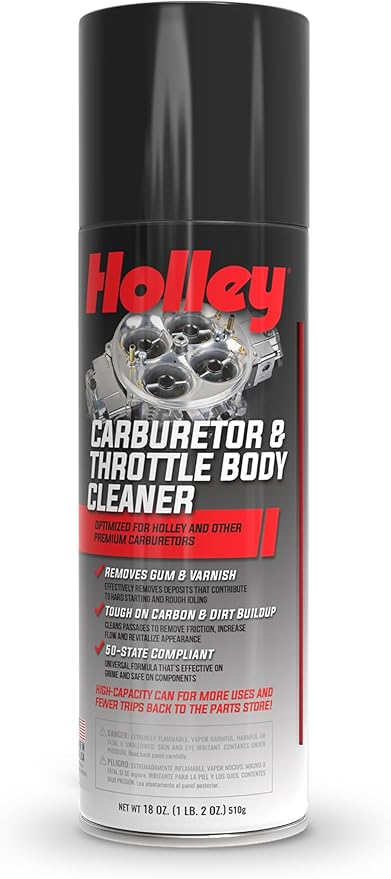
Using a carb cleaner that tackles carbon buildup without fuss makes maintenance feel straightforward. Ideal for anyone who wants to keep carburetors and throttle bodies free of grime. Its main strength lies in powerful cleaning without needing to dismantle parts, saving time and effort during upkeep.
The aerosol format sprays directly onto metal surfaces like carburetors, throttle bodies, and EGR systems, dissolving grease and varnish quickly. Its low odor formula means it’s easier to work with in tight spaces.
The product doesn’t require tear-downs often, letting you maintain engine parts in place. Suitability for oxygen sensors adds reassurance when cleaning sensitive engine components.
It removes carbon buildup effectively, improving cold starts and throttle response over time. The formula is safe on electronic parts and metal surfaces, so it won’t cause damage during use. Users appreciate how the spray cuts grime without harsh smells, though some mention it could be stronger on really stubborn deposits.
The can is sturdy and easy to handle while spraying.
Spray dissolves grease and carbon buildup well, often avoiding the need to take parts apart, which many find convenient. Some users feel it’s not quite strong enough on thick, caked-on deposits and that the odor, while low, is still noticeable.
Those needing regular cleaning to maintain smooth throttle and cold starts will appreciate this formula and spray can design. People dealing with heavy carbon might want a more powerful alternative or a simpler method for serious buildup removal.
Pros
- Effective on carbon, gum, and varnish buildup
- No teardown needed for most cleanings
- Safe for oxygen sensors and electronics
- Low odor for easier indoor use
Cons
- May struggle with very heavy deposits
- Unscented but not completely odorless
| Specification | Details |
|---|---|
| Item Form | Aerosol |
| Scent | Unscented |
| Specific Uses For Product | Carburetor |
| Surface Recommendation | Metal |
| Special Features | Low Odor |
8. Cyclo Carb Clean

Cyclo Carb Clean is a straightforward and powerful spray for clearing carburettors of stubborn carbon, dirt, and varnish. Ideal for those who want a product safe on oxygen sensors and fuel injector throttle plates, it’s especially useful where VOC regulations matter. Its biggest strength is handling tough grime without damaging sensitive engine parts.
Using the spray involves just aiming it onto metal carburettor surfaces, where it breaks down build-up efficiently. The citrus scent is a nice touch, making the process less harsh-smelling.
The spray form allows easy control during application. It meets VOC requirements for OTC states, which adds a layer of safety for store and home use.
Cleaning performance stands out because it loosens hardened deposits well without harming delicate components. The build feels solid for a spray can, but it’s flammable, so caution is necessary around heat. Many reviews note the excellent cleaning power, though some mention the flammability as the main downside.
It works best as a general-purpose cleaner on metal parts.
Many users appreciate how well the spray removes stubborn carbon deposits without damaging sensitive parts like oxygen sensors. The biggest complaint centers on its flammability, which demands extra care when using around engines or hot surfaces.
People needing a reliable carb cleaner that won’t harm electronic sensors will find it a good fit. Those looking for a product safe on plastic or non-metal parts could consider alternatives better suited for those surfaces.
Pros
- Powerful solvent for tough varnish and carbon removal
- Safe on oxygen sensors and fuel caps
- Complies with OTC state VOC rules
- Has a pleasant citrus scent
Cons
- Flammable, requires careful handling
- Only recommended for metal surfaces
| Specification | Details |
|---|---|
| Item Form | Spray |
| Scent | Citrus |
| Specific Uses For Product | Carburettor |
| Surface Recommendation | Metal |
| Special Features | All Purpose |
| Safe for Oxygen Sensors and Fuel Injector Throttle Plates | Yes |
9. CRC Clean-R-Carb Carburetor Cleaner

A spray designed with a fast-acting formula cleans carburetors, chokes, and unpainted metal parts effectively. Ideal for anyone needing to restore engine performance and improve fuel efficiency, it suits both personal use and busy workshop environments.
Its biggest strength lies in powerful cleaning that complies with strict VOC regulations.
Using the spray is straightforward, just apply it directly onto the dirty carburetor or choke components. Because it’s safe on alloy steel and unpainted metals, there’s no worry about damage during cleaning. The unscented, all-purpose formula targets gum, varnish, and carbon deposits without extra fumes.
Having it available in a 12-pack is handy for places with frequent engine upkeep.
Cleaning performance stands out, often improving engine starting and idling noticeably after use. The product is formulated to act fast and restore carburetor function with minimal effort. It is praised for strong cleaning power while meeting environmental standards.
Some users mention it can run out quickly during heavy jobs, but most appreciate its balanced formula and effectiveness.
Strong cleaning power is the product’s main highlight, effective at removing gum and carbon to improve engine running. The most common critique revolves around the product’s volume draining fast during intense or repeated cleaning sessions. Users also note the no-fragrance design, which keeps it neutral but not always pleasant.
Those needing reliable carburetor cleaning for routine maintenance or workshop tasks will find this spray practical and efficient. Individuals seeking a fresh-smelling cleaner or who require larger quantities per application might consider other options better suited for those preferences.
Pros
- Fast-acting formula restores carburetor performance quickly
- Safe for chokes and unpainted metal parts
- Complies with strict VOC regulations
- Available in convenient 12-pack for frequent use
Cons
- May empty quickly under heavy cleaning demands
- Unscented formula lacks fresh fragrance some prefer
| Specification | Details |
|---|---|
| Item Form | Spray |
| Scent | Unscented |
| Specific Uses For Product | All Purpose |
| Surface Recommendation | Alloy Steel |
| Special Features | All Purpose |
10. CRC Clean-R-Carb Carburetor Cleaner

CRC Clean-R-Carb Carburetor Cleaner stands out for its powerful cleaning ability that suits anyone needing to clear stubborn deposits from carburetors. Its specialized formula targets the unique challenges carburetors face, making it an optimal choice for keeping engines running smoothly.
Using the spray is straightforward with direct application to the carburetor and surrounding parts. It penetrates deep without the need for complex disassembly.
Daily use involves spraying on affected areas and allowing the formula to break down varnish and gum deposits, helping to maintain engine performance without extra effort.
The cleaner performs reliably to dissolve grime and buildup, effectively restoring components to near-new condition. It’s made with a formula that balances strength with safety for common materials found in carburetors. Some users find the spray nozzle a bit tricky to handle, but the cleaning power consistently earns high marks for tackling tough residues.
Cleaning effectiveness receives consistent praise for breaking down heavy grime, while the spray nozzle sometimes causes frustration due to less precise control. Users appreciate how the cleaner reaches hard spots without extensive disassembly.
The cleaner works well for those maintaining carbureted engines with typical buildup issues, especially where ease of use and power are priorities. Those seeking a gentler spray or needing very fine directional control might look at other options.
Pros
- Strong cleaning action for carburetor deposits
- Easy spray application
- Formulated specifically for carburetor materials
- Trusted global brand
Cons
- Nozzle can be difficult to control
- Some residue requires multiple applications
| Specification | Details |
|---|---|
| Specialized formulates | Designed for carburetor needs |
| Application | Spray |
| Target areas | Carburetor and related parts |
| Manufacturer | CRC Industries, Inc. |
11. GUNK Chlorinated Carburetor Parts Cleaner

Great for anyone working on marine personal crafts, this carb cleaner spray really stands out because it cleans and lubricates in one go. Its unscented formula makes it practical for those sensitive to strong smells, focusing fully on efficient carburetor cleaning without extra fuss.
Using it tends to be straightforward since it’s a liquid designed specifically for automotive surfaces. The compact size fits well in tight spots and won’t weigh you down.
Regular application helps keep carburetor parts free of grime, simplifying maintenance and extending engine life during everyday use on watercrafts.
Performance-wise, it tackles carbon buildup effectively while also providing a bit of lubrication, which helps parts move smoother. Built in a size that’s easy to handle, it fits within small spaces comfortably. The strongest praise highlights its cleaning power and lubrication, but some mention the packaging could be sturdier.
Strong cleaning power combined with lubrication is its standout feature, but packaging is noted as less durable by some. The liquid form and unscented nature make it easy to work with without lingering smells.
Those maintaining marine personal crafts who want reliable cleaning and lubrication will appreciate this product. Users who need a carb cleaner for other vehicle types or prefer a stronger packaging design should consider alternatives.
Pros
- Effective carburetor cleaning and lubrication
- Unscented formula avoids overpowering odors
- Compact size fits well in small areas
- Designed for marine personal craft use
Cons
- Packaging durability could be improved
- Limited to marine personal craft compatibility
| Specification | Details |
|---|---|
| Item Form | Liquid |
| Scent | Unscented |
| Compatible Vehicle Type | Marine-personal-craft |
| Special Features | Cleans and lubricates |
| Package Length | 6.604 centimeters |
| Package Height | 19.812 centimeters |
12. Johnsens Non-VOC Carburetor Cleaner

Carburetor gunk and deposits can really mess with your engine’s performance, and Johnsens Non-VOC Carburetor Cleaner targets that problem without using harsh chemicals. Great for those who want a cleaner that’s effective yet less aggressive, it stands out for being a spray form that’s easy to handle during maintenance.
Using it is straightforward because it comes in a spray can, so you just need to apply it directly to the carburetor parts you want clean. The non-VOC formulation means it’s a bit safer to work with in enclosed spaces or inside a garage without strong fumes. It doesn’t require any complicated setup, just spray, let it dissolve the grime, then wipe or rinse as needed.
It works well to dissolve buildup and carbon residue, breaking apart tough grime without the harsh smell common in other carb cleaners. The spray nozzle delivers the cleaner precisely where it’s needed, reducing overspray. However, a few users mention it might take a couple of applications for heavy deposits and prefer a stronger scent to feel it’s really working.
Many users appreciate the gentler, low-fume formula that still manages to clean carburetors effectively. One common issue is it sometimes needs a few rounds to fully remove stubborn grime. The spray design helps with precise application and easier cleanup.
Anyone wanting a safer, less pungent carb cleaner will find this product suitable, especially for regular maintenance. Those needing a very powerful or fast-acting cleaner might look for something stronger with a more intense formula.
Pros
- Non-VOC formulation reduces harsh chemical fumes
- Easy-to-use spray application
- Effectively breaks down carbon buildup
Cons
- May require multiple sprays for heavy deposits
- Lacks a strong scent, making effectiveness less noticeable
| Specification | Details |
|---|---|
| Item Form | Spray |
Best Carburetor Cleaner Sprays Comparison Table
| Product | Item Form | Specific Uses For Product | Special Features | Surface Recommendation |
|---|---|---|---|---|
| Gumout Jet Spray | Aerosol | Carb/Choke | Residue Free | – |
| Gumout Carb Cleaner | Aerosol | Engine | Low Odor | Metal |
| Gumout Carb Spray | Aerosol | Engine | Concentrated | Stainless Steel |
| WD-40 Throttle Cleaner | Spray | Automotive Exterior | Residue Free | Metal |
| Valvoline Carb Cleaner | Aerosol | Automotive Exterior | – | Metal |
| Berryman Chemtool Cleaner | Aerosol | – | – | – |
| Holley Carb Cleaner | Aerosol | Carburetor | Low Odor | Metal |
| Cyclo Carb Clean | Spray | Carburettor | All Purpose | Metal |
| CRC Clean-R-Carb | Spray | All Purpose | All Purpose | Alloy Steel |
| CRC Clean-R-Carb Pro | – | Specialized Formulas | – | – |
| GUNK Chlorinated Cleaner | Liquid | Carburetor Cleaning | Cleans and lubricates | Automotive |
| Johnsens Non-VOC Cleaner | Spray | – | – | – |
- Item FormAerosol
- Specific Uses For ProductCarb/Choke
- Special FeaturesResidue Free
- Surface Recommendation–
- Item FormAerosol
- Specific Uses For ProductEngine
- Special FeaturesLow Odor
- Surface RecommendationMetal
- Item FormAerosol
- Specific Uses For ProductEngine
- Special FeaturesConcentrated
- Surface RecommendationStainless Steel
- Item FormSpray
- Specific Uses For ProductAutomotive Exterior
- Special FeaturesResidue Free
- Surface RecommendationMetal
- Item FormAerosol
- Specific Uses For ProductAutomotive Exterior
- Special Features–
- Surface RecommendationMetal
- Item FormAerosol
- Specific Uses For Product–
- Special Features–
- Surface Recommendation–
- Item FormAerosol
- Specific Uses For ProductCarburetor
- Special FeaturesLow Odor
- Surface RecommendationMetal
- Item FormSpray
- Specific Uses For ProductCarburettor
- Special FeaturesAll Purpose
- Surface RecommendationMetal
- Item FormSpray
- Specific Uses For ProductAll Purpose
- Special FeaturesAll Purpose
- Surface RecommendationAlloy Steel
- Item Form–
- Specific Uses For ProductSpecialized Formulas
- Special Features–
- Surface Recommendation–
- Item FormLiquid
- Specific Uses For ProductCarburetor Cleaning
- Special FeaturesCleans and lubricates
- Surface RecommendationAutomotive
- Item FormSpray
- Specific Uses For Product–
- Special Features–
- Surface Recommendation–
How to Choose the Best Carb Cleaner Spray
The most important factors when choosing a carb cleaner spray are its effectiveness at removing deposits, compatibility with your engine parts, and ease of use. Selecting the right cleaner ensures thorough maintenance, preventing damage and costly repairs while saving time and effort during cleaning.
Cleaning Effectiveness
Some carburetor cleaners struggle to break down stubborn carbon buildup or grease, leaving parts looking only half-clean and affecting engine performance. Effective products cut through grime fast and work well on various carburetor types and engine components, from older metal parts to plastic fittings. The formulation needs strength to tackle deposits but must not harm sensitive surfaces like gaskets or paint.
Sprays with balanced solvents often provide this. Look for products labeled safe for metals and plastics, avoiding overly harsh chemicals that can crack seals.
A cleaner that dries quickly while lifting deposits usually means less elbow grease during use. Generally, the best sprays bring noticeable results within a couple of minutes, making routine maintenance less of a chore.
Chemical Composition and Safety
Some sprays on the market use harsh, corrosive ingredients that can eat into metal or leave dangerous fumes. Others rely on safer, noncorrosive formulas that reduce the risk of damage and health hazards. Paying attention to the label for non-toxic components and lower VOCs can make a difference in daily use, especially in enclosed spaces.
Many effective cleaners still contain flammable solvents, so handling instructions should be followed carefully, ventilation and keeping away from sparks are important. Compliance with environmental standards matters too, so choosing brands that note disposal guidelines can simplify cleanup and reduce ecological impact.
Ease of Application
Spray nozzle design significantly impacts how well the product covers tight spots without wasting cleaner. Triggers that offer control over spray intensity make it easier to get just enough on target without overspray. Some nozzles include extension tubes to reach inside narrow carburetor passages, which proves handy during detailed cleaning.
Containers come in various sizes, and those compatible with refills help reduce waste. Comfortable trigger placement means less hand fatigue when working through several parts. A well-designed applicator prevents drips and uneven spraying, which can save time and mess.
Drying Time and Residue
Drying speed matters because some cleaners leave behind residues that gum up moving parts if not fully evaporated. Fast-evaporating sprays remove grime without accumulating leftover film, which could require extra wiping or rinsing. Slow drying can delay reassembly and affect engine startup.
Clear formulas tend to leave less residue, while thicker versions may necessitate a brief wipe down. Choosing a cleaner that doesn’t require secondary cleaning steps speeds up maintenance and reduces frustration.
Packaging and Size Options
Smaller cans suit occasional use, fitting easily into a garage drawer or toolbox, while larger bottles benefit those treating multiple machines or performing regular upkeep. Packaging that resists dents and has a secure cap prevents leaks during storage and transport.
Spray cans with durable plastic nozzles and airtight seals avoid clogging after sitting unused. Portability plays a role when working outside or away from a fixed workspace.
Practical size options and sturdy packaging help keep the cleaner ready whenever needed without mess or waste.
Effective Techniques for Applying Carb Cleaner Spray for Optimal Results
Carb cleaner spray works best when applied directly to cool engine parts, as heat can cause the solvent to evaporate too quickly. Target the throttle body and carburetor jets first for thorough cleaning. Use short bursts rather than continuous spraying to prevent oversaturation and dripping.
Allow the spray to sit for a few minutes to loosen deposits before wiping or scrubbing with a brush.
For better results, follow these steps:
- Remove the air filter to access the carburetor fully.
- Spray the cleaner into the air intake while the engine is running at idle.
- Use a toothbrush or a soft brush to remove stubborn grime.
- Repeat spraying and wiping to ensure all residues are cleared out.
Proper application ensures the carb cleaner gets into hard-to-reach spots, breaking down varnish and buildup that impair engine performance.
Common Mistakes to Avoid When Using Carb Cleaner Spray
One frequent mistake is spraying carb cleaner on a hot engine, which can cause the solvent to evaporate before it dissolves dirt effectively. Avoid flooding the carburetor, as too much cleaner can disrupt fuel mixture balance and cause running issues.
Applying the spray without protective gloves or eye protection increases exposure to harsh chemicals.
Other common errors include:
- Not allowing enough dwell time for the cleaner to work before wiping.
- Skipping the removal of the air filter, which limits access to tight spots.
- Ignoring manufacturer instructions on product compatibility and safety precautions.
These mistakes reduce cleaning efficiency and can potentially damage engine components or create safety hazards.
Comparing Carb Cleaner Sprays with Alternative Engine Cleaning Products
Carb cleaner sprays specifically target deposits inside carburetors and throttle bodies, providing quick cleaning without disassembly. In comparison, fuel additives work gradually by cleaning fuel systems over time but may be less effective on heavy buildup. Brake cleaner is sometimes used for parts cleaning, but it often contains harsher solvents that can damage rubber seals in carburetors.
Choosing between cleaning options depends on:
- The level of contamination, carb cleaner spray removes varnish and gum more aggressively.
- Convenience, sprays allow spot treatments, whereas fuel additives require running the engine.
- Component sensitivity, some solvents risk damaging seals if not used properly.
Carb cleaner spray remains a practical solution for targeted maintenance, while alternatives serve broader or milder cleaning needs.
People Also Asked
How Do I Properly Use Carb Cleaner Spray on My Engine?
Spray the cleaner directly onto the carburetor’s dirty surfaces and jets while the engine is off. Avoid oversaturating to prevent excess liquid dripping into the intake. Use a brush or a cloth to loosen grime after spraying for better cleaning results.
Is Carb Cleaner Spray Safe for Use on Rubber Parts?
Most carb cleaner sprays are not safe for rubber parts because the solvents can cause them to dry out and crack. Test on a small area first or cover these parts before spraying to protect rubber hoses or seals around the carburetor.
How Long Does Carb Cleaner Spray Remain Effective After Opening?
Carb cleaner spray generally remains effective for about a year once opened, but the propellant may weaken over time. Store the can in a cool, dry place and check the spray pattern before use to ensure it still sprays consistently.
Will Carb Cleaner Spray Work on Small and Large Carburetors Alike?
Carb cleaner spray works on both small and large carburetors since it dissolves varnish and deposits in fuel passages. Larger carburetors may require more spraying and additional manual scrubbing to reach all internal parts effectively.
What Common Problems Can Occur from Using Carb Cleaner Spray Incorrectly?
Over-spraying can flood the carburetor, causing poor engine performance or damage to seals. Using it on hot engines might create harmful fumes or fire hazards. Always follow the instructions and work in a well-ventilated area to avoid these issues.
Conclusion
Choosing a carb cleaner spray mainly comes down to how well it removes buildup, how safe it is for your engine components, and how easy it is to use. A good spray will clean effectively without leaving residue or causing damage.
Also, look at the drying time and whether the spray can be used repeatedly or for spot cleaning.
Pick a cleaner that fits your workshop or garage size and your budget, especially if you plan to use it often. Smaller cans might work fine for occasional jobs, but larger sprays offer more value for frequent use.
Check the comparison table and detailed picks above to find the spray that matches your needs and setup best.