
Top 12 Best Whole House Water Filter for Lead Removal Now
Water that still tastes metallic or leaves stains after installing the best whole house water filter for lead removal quickly shows the cost of choosing the wrong system. Many filters fail to catch lead particles effectively because their filtration media lacks the right chemical composition or is too coarse. Problems like pressure drops or leaks also crop up if the system isn’t designed for whole-house use, turning what should be a simple improvement into a constant annoyance.
A reliable whole house lead filter typically uses a combination of activated carbon and specialized media like KDF to bind and remove heavy metals. The system must handle flow rates around 10 to 15 gallons per minute without losing pressure to serve an entire home. Proper sizing based on household water usage and easy access for media replacement also make a big difference, as lead removal requires consistent maintenance and periodic media changes to keep the water safe.
Need a Quick Check?
| Image | Product | Price |
|---|---|---|
Our Top Picks 1 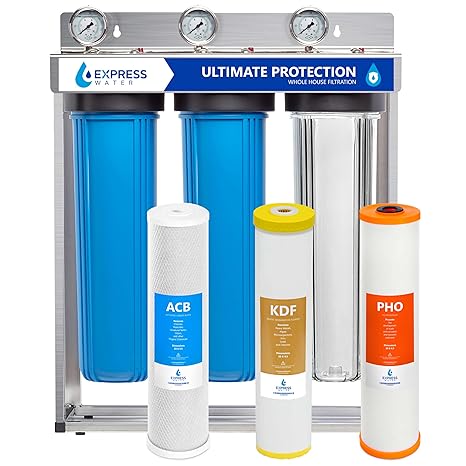 | Express Water Filter System | Check Price |
Our Top Picks 2  | iSpring Heavy Metals Filter | Check Price |
Our Top Picks 3  | Waterdrop Whole House Filter | Check Price |
Our Selected Top 12 Whole House Water Filter for Lead Removal Worth Your Money
This list features carefully evaluated whole house water filters designed to effectively reduce lead levels in your water supply. Each review covers how well the filter performs, its ideal users, and highlights both advantages and potential drawbacks to help you make an informed decision.
1. Express Water Whole House Water Filter System
Having a whole house water filter that tackles lead makes a noticeable difference in water quality throughout the home. Ideal for households concerned about heavy metals and scale buildup, its biggest strength is comprehensive filtration that also protects plumbing and appliances.
Setting up the system is straightforward with its freestanding design and heavy-duty stainless steel bracket. The pressure release buttons and gauges allow easy monitoring and filter changes without guesswork. It runs manually without needing power, so daily use involves minimal attention beyond routine filter replacement every six months.
Performance-wise, it effectively reduces chlorine, lead, arsenic, and chromium, improving water safety and taste. Its build feels solid and durable with premium materials. Most commend its reliability in filtering and protecting pipes.
On the downside, some find the unit bulky, and the filter lifespan means replacing cartridges twice a year.
Users praise the system’s effectiveness at improving water quality and protecting plumbing from scale, aided by clear pressure gauges for easy maintenance. Common issues include the physical size of the unit and needing to change filters twice a year to keep it running smoothly.
Those with concerns about heavy metals and comprehensive home water protection will appreciate this setup. Homes with limited space or a preference for less frequent filter changes might consider alternative options.
Pros
- Significantly reduces lead and other heavy metals
- Includes pressure gauges for easy system monitoring
- Heavy-duty stainless steel bracket and frame
- Prevents scale buildup in pipes and appliances
Cons
- Unit size can be bulky in smaller spaces
- Filters require replacement every six months
| Specification | Details |
|---|---|
| Purification Method | Activated Carbon, KDF, Polyphosphate |
| Filter Life Cycle | 6 months |
| Maximum Flow Rate | 17 gpm |
| Operating Pressure Range | 20-80 psi |
| Upper Temperature Rating | 100 °F |
2. iSpring Heavy Metals Whole House Water Filter System
Ideal for those serious about removing lead and other heavy metals, this whole house filter system shines in cleaning water across the entire home. Its standout feature is the multi-stage filtration that targets not only lead but also chlorine, PFAS, and other harmful substances, making it especially suitable for households dealing with heavy contamination.
Installation involves mounting it on a wall and swapping out three different filters over time. The first stage captures sediment down to 5 microns to protect the other filters from clogging. The second stage uses a granular activated carbon and KDF filter that tackles heavy metals and chemical contaminants.
The final filter removes residual chlorine and any remaining odors, keeping the water tasting clean every day. The system operates under normal home water pressure and requires a six-month filter replacement schedule.
The filter excels at removing a wide range of contaminants including lead and harmful chemicals, making water safer and better tasting throughout the house. Its heavy-duty build and wall-mounted design ensure reliable long-term use. Many users appreciate its thorough purification, although the filter life requires regular attention every six months to maintain performance.
A few find the installation setup could be more straightforward.
Users praise how effectively the system reduces multiple contaminants, improving water taste and safety everywhere in the home. Common feedback mentions that keeping up with the six-month filter change schedule is essential to avoid reduced filtration efficiency.
Homes with heavy contamination issues or concerns about lead will find this filter system helpful. Those looking for a simpler installation or longer filter intervals might want to explore other options better suited to their needs.
Pros
- Removes lead, chlorine, PFAS, and other toxins
- High-performance sediment filter prevents clogs
- Good flow rate supports whole house use
- Six-month filter lifespan is easy to track
Cons
- Requires regular filter changes to maintain quality
- Installation can be complex for beginners
| Specification | Details |
|---|---|
| Maximum Flow Rate | 12 gpm |
| Operating Pressure Range | 25-80 psi |
| Filter Life Cycle | 6 months |
| Purification Method | Granular Activated Carbon |
| Installation Type | Wall Mount |
3. Waterdrop Whole House Water Filter System
Built with a 5-stage filtration system and activated carbon filters, this whole house water filter is a solid choice for anyone looking to reduce lead and other contaminants. It works well for households that want cleaner, better-tasting water straight from every tap.
Its best feature is the effective removal of lead alongside chlorine and sediment.
Setting up involves connecting it to the main water line, and no power source is needed, which keeps things simple. The filter uses a 10” x 4.5” PP filter combined with a natural coconut shell GAC filter that handles particles larger than 5 microns. Day-to-day, it runs quietly and maintains a flow rate up to 15 gallons per minute, so you won’t notice a slowdown in water pressure.
The filter does a good job at cutting down on unwanted chemicals, odors, and heavy metals like lead, giving you water that tastes noticeably cleaner. The build feels sturdy, housed in a box designed for whole house installation.
Most reviews praise the water’s improved taste and clarity. Some mention that the filter life is about six months, so preparing for regular replacements is needed.
The system is praised for noticeably improving water taste and reducing lead and odors, providing cleaner water throughout the house. The most common complaint is the need to replace filters every six months, which can be a recurring upkeep task.
Anyone wanting lead removal with steady water pressure and improved taste will appreciate this filter. Those needing a system that operates across a wider pressure range or with longer filter life should look for alternatives.
Pros
- Removes lead, chlorine, and sediment efficiently
- Uses natural coconut shell GAC for better taste
- No external power source required
- High flow rate up to 15 gallons per minute
Cons
- Filter replacement needed every 6 months
- Operates at a fixed pressure of 25 psi
| Specification | Details |
|---|---|
| Purification Method | Activated Carbon |
| Maximum Flow Rate | 15 gpm |
| Operating Pressure Range | 25 psi |
| Filter Life Cycle | 6 months |
| Upper Temperature Rating | 100 °F |
4. iSpring Ultimate PFAS Whole House Water Filter

The iSpring Ultimate PFAS Whole House Water Filter delivers heavy-duty filtration that stands out, making it a great choice for homes worried about PFAS contaminants. Ideal for those with both city and well water, it shines most in reducing harmful chemicals like PFOA and PFOS for safer tap water throughout the house.
Setting up involves wall-mounting the system and connecting the included WSP50J jumbo sediment filter, which traps large particles before the main filter stages. Daily water flow feels solid without pressure drops thanks to this pre-filter stage.
Maintenance involves changing the filter about once a year, keeping the system running smoothly and preserving water quality in every faucet.
Performance-wise, it removes up to 99% of PFAS according to testing, which is impressive for a whole house setup. The sturdy carbon block and sediment filtration combo tackles heavy metals and reduces scale effectively.
The strongest point heard often is safe, great-tasting water house-wide; the main downside is the annual filter change that some find a bit time-consuming and costly.
The filter’s ability to deliver safe and great-tasting water throughout the entire house gets singled out most often as a major benefit. The yearly filter change requirement is the frequent complaint, particularly because some find it time-consuming and a regular expense.
Homes dealing with PFAS or heavy metals in water will appreciate the setup’s thorough filtration and reliable pressure maintenance. Those unwilling to maintain or replace the filter annually might consider simpler or different whole house systems instead.
Pros
- Removes up to 99% of PFAS contaminants
- Includes jumbo sediment pre-filter for protection
- Maintains strong water pressure in various water sources
- Reduces heavy metals and scale efficiently
Cons
- Filter replacement recommended every 12 months
- Installation requires wall mounting and plumbing knowledge
| Specification | Details |
|---|---|
| Filter Life Cycle | 12 months |
| Operating Pressure Range | 25-80 psi |
| Lower Temperature Range | 40 °F |
| Upper Temperature Rating | 100 °F |
| Purification Method | Carbon Block, Sedimentation |
5. PUREPLUS Whole House Water Filter 3 Pack

Ideal for anyone serious about removing lead and other heavy metals from every tap, the PUREPLUS Whole House Water Filter 3 Pack stands out because of its blend of activated carbon and KDF media. It suits homes looking for a reliable way to reduce chlorine taste and odor alongside heavy metals without frequent filter changes.
Setting up each cartridge is straightforward, designed to fit specific filter housings like GXWH40L and BB10. Day-to-day use requires minimal attention since the composite cartridge naturally handles multiple contaminants, so you get cleaner, safer water flowing throughout your home without needing constant adjustments or replacements.
Its main job of removing heavy metals like lead, mercury, and arsenic is well handled by a blend of activated carbon and KDF via adsorption and redox processes. The build feels solid, using coconut shell activated carbon, which is a preferred natural material. The most praised aspect is its effective filtration, while some mention it fits only certain filter models as a limitation.
The product is praised for its strong capability to take out heavy metals and improve water taste across the house. On the downside, it fits only certain filtration systems, which can be a drawback for some users looking for a universal fit. Installation and replacement are user-friendly but must match the specified models.
People who have compatible filter housings and want broad protection from contaminants will appreciate this set. Those needing universal fits or who want to avoid frequent replacements might want to consider other options. Its focus on heavy metal removal makes it especially suitable for homes concerned about lead and similar contaminants.
Pros
- Effectively removes heavy metals including lead and mercury
- Reduces chlorine taste and unpleasant odors
- Comes in a convenient 3-pack for multiple replacements
- Made with NSF/ANSI 42 certified materials
Cons
- Compatible only with select filter housings
- May require periodic replacement depending on water usage
| Specification | Details |
|---|---|
| Model Number | CTO10BB-KDF |
| Material | NSF/ANSI 42 KDF and Coconut Shell Activated Carbon |
| Number of Packs | 3 |
| Fits Models | GXWH40L, GXWH35F, BB10 |
| Item Type Name | Natural coconut shell activated carbon and KDF composite cartridge |
6. VEVOR Whole House Water Filter System

Hard water with lead and other impurities can cause damage to your pipes and appliances while making your water taste off. A system like the VEVOR Whole House Water Filter System fits well for homeowners wanting cleaner water throughout the house. Its biggest strength is the 3-stage filtration process that removes heavy metals like lead along with other common contaminants.
Setting up the filter is straightforward, thanks to a painted iron frame that lets you mount it on the wall or place it on the floor. The system uses gravity feed, so no electricity is needed. Changing the filters every six months keeps it running smoothly.
You get three stages: a sediment filter for rust and sand, a KDF filter to tackle chlorine and lead, and an activated carbon filter to clean odors and impurities.
It does a solid job removing lead, arsenic, and other heavy metals while also protecting plumbing and appliances from damage. The iron frame feels sturdy and built to last. Some users mention the size is a bit bulky, which might require decent space for installation.
Leakage does not seem to be an issue, as the system features a leak-proof design.
This filter reliably clears heavy metals like lead while protecting household plumbing. A common complaint is its bulky size, which demands adequate space and careful installation planning.
People who want dependable whole house filtration without connecting to power will appreciate this system. Those with limited space or looking for longer-lasting filters might explore other options.
Pros
- Three-stage filtration removes heavy metals effectively
- Leak-proof design prevents water damage
- Multiple installation options: wall mount or floor standing
- Does not require electricity to operate
Cons
- Bulky size needs ample mounting space
- Filters require replacement every six months
| Specification | Details |
|---|---|
| Installation Type | Wall Mount |
| Purification Method | Activated Carbon, KDF, Sediment |
| Maximum Flow Rate | 15 gpm |
| Filter Life Cycle | 6 months |
| Supported Water TDS Level Maximum (PPM) | 300 |
| Power Source | Gravity Fed |
7. A. O. Smith Whole House Water Filter System

Reducing 96.9% of chlorine taste and odor, the A. O. Smith Whole House Water Filter System suits homes with four or more people looking for clean water from every tap. Its main strength lies in delivering healthy, great tasting water without wasting water or requiring a drain.
Setting up relies on your home’s water pressure, with no back flushing or drainage needed. Day-to-day use means filtered water throughout the house for drinking, cooking, showering, and bathing. The system works quietly and requires a filter change every six years, making it low-maintenance while improving skin, hair, and air quality by reducing chlorine exposure.
The activated carbon filter performs well to remove chlorine without reducing TDS, sulfur, or iron. The build is sturdy, tank-style, fitting a wide range of water pressures between 20 and 100 psi.
Many appreciate the simple setup and long filter life, while some note it doesn’t handle other contaminants like iron or soften water.
A. O. Smith whole house water filter system reduces chlorine taste and odor effectively, improving water quality for drinking, cooking, and bathing. It does not soften water or remove elements like iron or sulfur, focusing mainly on chlorine reduction. No drainage or back flushing is needed, making it easy to maintain.
Homes with four or more people looking to reduce chlorine in water and air will benefit from this system. Those needing removal of lead, heavy metals, or water softening should consider other filters designed for those specific contaminants. This unit is not intended for comprehensive water purification.
Pros
- Long filter life of 6 years
- Reduces chlorine taste and odor by 96.9%
- No water waste, drainage, or back flushing
- Improves skin, hair, and indoor air quality
Cons
- Does not reduce TDS, sulfur, or iron
- Not a water softening system
| Specification | Details |
|---|---|
| Chlorine Reduction | 96.9% |
| Filter Life Cycle | 6 years |
| Maximum Flow Rate | 7 gpm |
| Operating Pressure Range | 20-100 psi |
| Purification Method | Activated Carbon |
| Certification | NSF/ANSI 42 Certified |
8. ICEPURE Whole House Water Filter Replacement Filters 4 Pack

People with older homes or worries about lead in their water will find these filters suitable. The biggest strength lies in the blend of carbon block and MetSorb HMRP‑50 media, which effectively targets heavy metals and improves water quality throughout the house.
Installation is straightforward since the filters fit standard whole-house systems and come in a 4-pack, making replacements easy to manage. The sintered carbon block traps fine particles while the infused media works on heavy metals, chlorine, and odors.
Maintaining water pressure remains stable, so it doesn’t cause plumbing slowdowns or frequent filter changes.
Performance-wise, it reliably cuts out lead, mercury, and other heavy metals, while also handling sediment and unpleasant tastes. The build uses advanced sintering technology combined with high metal-adsorption capacity, ensuring consistent filtration.
Most praise highlights cleaner and better-tasting water, but a few mention occasional pressure dips as a complaint.
This filter’s strongest point is its consistent removal of heavy metals and improvement of water taste. Common complaints include occasional drops in water pressure, which might affect some setups more than others.
Those living in older homes with aging pipes and concerns about lead contamination will appreciate these filters. People requiring guaranteed pressure stability or who prefer original MetSorb-manufactured products might want to explore alternatives.
Pros
- Targets heavy metals including lead and mercury
- Maintains stable water pressure
- Four-pack simplifies regular filter replacement
- Improves taste by cutting odors and chlorine
Cons
- Occasional pressure drops reported
- Independent brand, not manufactured by MetSorb
| Specification | Details |
|---|---|
| Model Number | CTO10-CQB |
| Number of Packs | 4 |
| Brand Name | ICEPURE |
| Removes | Lead, cysts, chlorine, rust, odors |
| Manufacturer Warranty | Amazon’s 30-Day Return Plus 6-month warranty |
| Unit Count | 4 Count |
9. Waterdrop 3-Stage Whole House Water Filter System

Combining three filtration stages, the Waterdrop 3-Stage Whole House Water Filter System stands out for its ability to cut chlorine by up to 98% while tackling lead, sediment, odors, and other impurities. It’s a solid choice for anyone looking to protect home plumbing and enjoy better-tasting water throughout the house.
Installation involves setting it up as a whole house water tank filter, which runs best in temperatures from 40 to 100℉. The system filters water as it flows, handling up to 15 gallons per minute, so you won’t notice a drop in pressure during daily use.
Replacing the filter every 90 days keeps it working efficiently, using both activated carbon and ion exchange methods for purification.
The system handles chlorine and heavy metals like lead very well, improving water quality noticeably. It’s built with lead-free, NSF/ANSI/CAN 372 certified materials, ensuring safety and reliability. Many users appreciate the water taste improvement, though some mention needing regular maintenance or filter changes as a downside.
The strongest praise centers on noticeably better water taste and reliable removal of chlorine and lead, thanks to its triple filtration stages. A common complaint highlights the need for frequent filter changes and limitations on operating temperatures.
Anyone wanting consistent whole house water improvement with manageable maintenance will find this effective. Those needing a system for colder environments or longer filter intervals may want to consider other options.
Pros
- Reduces chlorine up to 98%
- Handles heavy metals including lead
- Certified lead-free materials
- Supports high flow rate, 15 gpm
Cons
- Requires filter replacement every 90 days
- Not for use below 40℉
| Specification | Details |
|---|---|
| Maximum Flow Rate | 15 gpm |
| Filter Life Cycle | 90 days |
| Working Temperature | 4~38℃/40~100℉ |
| Purification Method | Activated Carbon, Ion Exchange |
| Certification | NSF/ANSI 372 Lead-Free Materials |
10. iSpring WGB32B-PB Lead-Reducing Whole House Water Filter System

iSpring WGB32B-PB Lead-Reducing Whole House Water Filter System specializes in cutting down lead in water for the entire home. Perfect for anyone concerned about lead contamination, its standout feature is a high capacity filter that handles up to 150,000 gallons while maintaining water flow.
Installing the system feels approachable since it comes with clear manuals and YouTube videos for guidance. The 1” NPT inlet/outlet sizing fits most standard plumbing setups. With a maximum flow rate of 15 gallons per minute, the water pressure stays steady, and the large filter cartridges mean fewer replacements and less frequent maintenance.
Performance-wise, it does well removing lead and other contaminants, helped by multi-stage filtration and an activated carbon process. Build quality seems solid, using rust-resistant parts and a polypropylene sediment filter for fine debris down to 5 microns.
The main praise highlights its effective filtration capacity, while some mention that replacing cartridges requires effort due to size.
The system gets a lot of credit for reliably filtering lead at high capacity while keeping water pressure steady. On the flip side, some find the filter cartridges large, making replacements less convenient. Clear installation resources help offset this.
Great for households who want a long-lasting, whole house solution focused on lead reduction. Those with limited space around plumbing or looking for less bulky filters might prefer a different model.
Pros
- Removes lead up to 150,000 gallons capacity
- Easy DIY installation with detailed instructions
- Maintains water flow up to 15 gallons per minute
- Rust-resistant housing and quality filters
Cons
- Filter cartridges can be bulky and hard to handle
- Replacement frequency tied to one-year filter life cycle
| Specification | Details |
|---|---|
| Maximum Flow Rate | 15 gpm |
| Filter Life Cycle | 1 years |
| Purification Method | Activated Carbon |
| Lower Temperature Range | 40 °F |
| Upper Temperature Rating | 100 °F |
11. iSpring WGB21B-CPB 2-Stage Whole House Water Filter System

Quiet and efficient, the iSpring WGB21B-CPB 2-Stage Whole House Water Filter keeps every tap in your home tasting clean and safe. Perfect for anyone concerned about lead in their water, its standout feature is the second-stage filter that tackles lead levels up to 99% with a long-lasting capacity of 50,000 gallons.
Installation is straightforward because the system comes pre-assembled on a mounting bracket, which saves time and effort. The first stage rid the water of sediment particles down to 5 microns, which protects the second filter and keeps water flowing smoothly.
Changing filters once a year feels manageable given the clear manual process, and it operates manually so it doesn’t rely on electricity.
The build feels solid with durable housings, designed for long-term use under the sink or whole house setups. Performance is strong, removing lead along with arsenic, cadmium, and mercury. The most frequent drawback mentioned points to the need for an annual filter replacement that might feel frequent to some.
The filter system consistently removes lead effectively with a capacity of 50,000 gallons before needing replacement. Users find the annual filter change to be the most common inconvenience, though installation and daily operation remain straightforward and reliable.
Those looking for a durable, manual, and easy-to-maintain whole house filter that handles lead, arsenic, and more will find this a great fit. Those needing filters lasting longer than a year or dealing with very high TDS levels should consider other options.
Pros
- Reduces up to 99% of lead in water
- Pre-assembled for easier DIY installation
- High capacity sediment filter protects lead filter
- Manual operation, no electricity needed
Cons
- Filter needs replacing every year
- Limited to 300 ppm of water TDS
| Specification | Details |
|---|---|
| Lead Filtration Capacity | Up to 50,000 gallons |
| Sediment Filtration | 5 micron polypropylene (PP) filter |
| Filter Life Cycle | 1 year |
| Operating Pressure Range | 1.7-5.5 bar |
| Supported Water TDS Level Maximum (PPM) | 300 |
| Power Source | Manual Operation |
12. iSpring WGB32B-CPB Lead Removal Whole House Water Filter System

Ideal for any home worried about lead in their water, the iSpring WGB32B-CPB removes up to 99% of lead with tested reliability. It suits households looking for a whole house system that focuses on safety and water quality without sacrificing flow rate.
Setting up the unit involves attaching it directly to the main water line, so every tap benefits. The initial sediment filter captures fine particles down to 5 microns and helps keep the other filters lasting longer. A second-stage carbon block filter takes care of chlorine and odors, making the water cleaner and more pleasant.
The third filter specializes in removing lead with a tested media that assures safer water throughout the home.
Performance-wise, the system handles 15 gallons per minute, keeping good pressure without slowing down water flow. The build feels solid with a whole-house tank design, and routine maintenance comes every 12 months with filter replacements.
Most praise highlights the precise lead removal and improved water taste. A common complaint found in reviews concerns occasional setup complexity for some users who are not familiar with plumbing installations.
The precise removal of lead and the clear improvement in water taste stand out as key strengths. However, installing the system may be tricky for those without plumbing experience, which is the most common concern in reviews.
Households focused on safety and consistent water quality will appreciate this filter system. Those looking for a simpler or more DIY-friendly option might want to consider alternatives that are easier to install.
Pros
- Removes up to 99% of lead from water
- Captures particles as small as 5 microns
- Eliminates chlorine and odors effectively
- Supports high flow rate of 15 gpm
Cons
- Installation can be challenging for beginners
- Filters require replacement every 12 months
| Specification | Details |
|---|---|
| Maximum Flow Rate | 15 gpm |
| Filter Life Cycle | 12 months |
| Purification Method | Carbon Block |
| Installation Type | Whole House Water Tank |
| Special Features | Lead reduction |
Best Whole House Water Filters for Lead Removal Comparison
| Product | Installation Type | Purification Method | Maximum Flow Rate | Lead Removal |
|---|---|---|---|---|
| Express Water Filter System | Freestanding | Activated Carbon, KDF, Polyphosphate | 17 gpm | – |
| iSpring Heavy Metals Filter | Wall Mount | Granular Activated Carbon | 12 gpm | – |
| Waterdrop Whole House Filter | Whole House Water Tank | Activated Carbon | 15 gpm | – |
| iSpring Ultimate PFAS Filter | Wall Mount | Carbon Block, Sedimentation | – | Removes Heavy Metals |
| PUREPLUS Filter 3 Pack | – | – | – | Removes Heavy Metals |
| VEVOR Whole House Filter | Wall Mount | Activated Carbon | 15 gpm | – |
| A.O. Smith Filter System | Whole House | Activated Carbon | 7 gpm | – |
| ICEPURE Replacement Filters | – | – | – | Removes lead |
| Waterdrop 3-Stage Filter | Whole House Water Tank | Activated Carbon, Ion Exchange | 15 gpm | – |
| iSpring WGB32B-PB Filter | Whole House | Activated Carbon | 15 gpm | – |
| iSpring WGB21B-CPB Filter | Under Sink | Carbon Block, Sedimentation | – | Reduces Lead |
| iSpring WGB32B-CPB Filter | Whole House Water Tank | Carbon Block | 15 gpm | Lead reduction |
- Installation TypeFreestanding
- Purification MethodActivated Carbon, KDF, Polyphosphate
- Maximum Flow Rate17 gpm
- Lead Removal–
- Installation TypeWall Mount
- Purification MethodGranular Activated Carbon
- Maximum Flow Rate12 gpm
- Lead Removal–
- Installation TypeWhole House Water Tank
- Purification MethodActivated Carbon
- Maximum Flow Rate15 gpm
- Lead Removal–
- Installation TypeWall Mount
- Purification MethodCarbon Block, Sedimentation
- Maximum Flow Rate–
- Lead RemovalRemoves Heavy Metals
- Installation Type–
- Purification Method–
- Maximum Flow Rate–
- Lead RemovalRemoves Heavy Metals
- Installation TypeWall Mount
- Purification MethodActivated Carbon
- Maximum Flow Rate15 gpm
- Lead Removal–
- Installation TypeWhole House
- Purification MethodActivated Carbon
- Maximum Flow Rate7 gpm
- Lead Removal–
- Installation Type–
- Purification Method–
- Maximum Flow Rate–
- Lead RemovalRemoves lead
- Installation TypeWhole House Water Tank
- Purification MethodActivated Carbon, Ion Exchange
- Maximum Flow Rate15 gpm
- Lead Removal–
- Installation TypeWhole House
- Purification MethodActivated Carbon
- Maximum Flow Rate15 gpm
- Lead Removal–
- Installation TypeUnder Sink
- Purification MethodCarbon Block, Sedimentation
- Maximum Flow Rate–
- Lead RemovalReduces Lead
- Installation TypeWhole House Water Tank
- Purification MethodCarbon Block
- Maximum Flow Rate15 gpm
- Lead RemovalLead reduction
How to Choose the Best Lead Water Filter
Focus on a filter’s lead removal effectiveness, certification, and lifespan to ensure safe water and fewer replacements. Choosing durable materials and easy maintenance features helps avoid costly repairs and hassle, providing cleaner water reliably while saving money over time.
Lead Removal Efficiency
Lead removal depends heavily on the filtration media inside the system. Activated carbon filters alone often miss dissolved lead ions, while media like KDF (Kinetic Degradation Fluxion) or specialized ion exchange resins capture lead more effectively. Systems with a mix of these elements tend to perform better.
Certifications such as NSF/ANSI Standard 53 ensure the filter was tested specifically for lead reduction. Without this verification, the claimed removal rates can be unreliable.
Capacity and flow rate also play a big role in efficiency. Higher flow rates can reduce contact time between water and media, which lowers lead extraction.
Effective units balance flow to maintain at least a 5 gallons per minute rate while keeping the filter’s rated capacity suitable for the home’s water use. This balance ensures lead is consistently removed without sacrificing water pressure or filter lifespan.
System Capacity and Flow Rate
Cartridge capacity defines how many gallons can be treated before replacement. Systems typically range from 50,000 to 100,000 gallons per cartridge.
Overusing a filter past its capacity decreases lead removal and may release trapped contaminants back into the water. Matching the capacity with household consumption avoids this risk.
Flow rate impacts whole house water pressure. A system with flow rates below the household’s peak demand causes noticeable pressure drops. Homes of 4 or more people generally require filters sustaining at least 6 to 10 gallons per minute.
Smaller units might suit single-person households or low usage but can slow down water flow for showers or faucets during simultaneous use.
Installation and Compatibility
Connecting the system to existing plumbing can be straightforward or complex depending on pipe size and layout. Most filters fit standard 1-inch or 3/4-inch fittings, common in residential lines.
A tight space near the main water entry can limit installation options, so checking dimensions beforehand prevents surprises.
Electrical requirements are rare but sometimes necessary for systems with electronic monitors or UV sterilizers paired with the filter. Maintenance needs mostly involve occasional filter changes and occasional flushing.
Systems that require special tools or professional installation add cost and complexity.
Filter Longevity and Maintenance
Filter replacements usually happen every 6 to 12 months depending on water quality and usage volume. Some models make swapping cartridges quick with a simple twist-off design, while others need tools. Easy access definitely reduces frustration during maintenance.
Replacement cartridges vary widely in price and availability. Some brands have widely stocked filters at general hardware stores or online, while others require ordering directly from manufacturers, which can delay replacements.
Look for units offering filter status indicators or alerts that signal when performance is dropping to avoid unnoticed degradation.
Material Safety and Build Quality
Faceplates, housings, and internal components must be made from NSF/ANSI certified materials safe for drinking water. Cheap plastics or metals can leach contaminants or degrade faster.
Filters with stainless steel or high-grade polymer parts tend to last longer and resist corrosion, especially in areas with hard or acidic water.
The design should minimize stagnant water zones and include smooth interior surfaces to prevent bacterial buildup. Systems that have sanitary seals and replaceable media cartridges reduce contamination risk compared to sealed, non-serviceable units.
Proper build quality means the system not only filters lead but maintains water hygiene over time.
Effective Maintenance Practices to Prolong the Life of Whole House Lead Filters
Proper maintenance directly affects how long a whole house lead filter lasts and how well it performs. Most filters have cartridges that need changing regularly based on manufacturer guidelines or water usage to avoid clogging and reduced filtration efficiency.
Key maintenance practices include:
- Monitoring water flow rate. A decrease can indicate filter blockage and the need for a cartridge change.
- Flushing the system as recommended to remove trapped particles and prevent bacterial buildup.
- Inspecting seals and connections. Leaks can compromise system performance and allow untreated water through.
- Testing filtered water periodically for lead levels to confirm the system is working as expected.
Ignoring maintenance leads to poor water quality and could damage the system, so staying on schedule is important to keep your household’s water safe from lead.
Common Installation Mistakes to Avoid When Setting up Lead Removal Systems
Incorrect installation of a whole house lead removal system can reduce filter effectiveness or cause damage to plumbing. Avoid common errors to ensure your system functions correctly.
Key installation mistakes to avoid include:
- Installing the filter in the wrong position. These filters belong at the main water line before any branch lines to treat all water entering the home.
- Ignoring flow direction markings. Reversed flow can damage filter media and prevent proper lead removal.
- Failing to install pressure regulators or bypass valves as recommended. Sudden pressure changes can harm the filter.
- Not flushing the system before use. This step removes debris and prevents contaminant buildup in the new filter.
Careful adherence to manufacturer instructions is crucial for effective lead removal and to prevent costly repairs.
Comparing Whole House Filters with Point-of-Use Filters for Lead Contamination Removal
Whole house filters treat all water entering the home, while point-of-use filters only clean water from specific taps. This difference matters when targeting lead contamination.
Considerations when choosing between the two:
- Whole house filters protect showers, laundry, and outdoor faucets, reducing lead exposure everywhere water is used.
- Point-of-use filters are often less expensive and easier to install but only purify water from selected outlets like kitchen sinks.
- Maintenance and cartridge changes tend to be simpler and cheaper for point-of-use filters, but you sacrifice comprehensive coverage.
- Whole house systems usually require more upfront cost and space but ensure consistent lead removal throughout the property.
Selecting the right filter depends on your budget, plumbing setup, and where you want the lead removal to happen.
People Also Asked
How Do I Know What Size Whole House Filter I Need?
Choose a filter size based on your home’s water flow rate, typically measured in gallons per minute. Checking your plumbing system’s flow or consulting a professional can help match the filter’s capacity to your needs.
Can Whole House Filters Effectively Reduce Lead in Drinking Water?
Whole house filters with activated carbon or specific lead-removal media can reduce lead but must be certified for lead reduction. Confirm product certification to ensure it targets lead effectively.
How Often Should a Whole House Lead Filter Be Replaced?
Replacement frequency depends on water quality and filter capacity; many recommend changing cartridges every 6 to 12 months. Keeping track of water usage helps avoid filter clogging and ensures ongoing lead removal.
Are Whole House Lead Filters Safe for Home Plumbing Systems?
Properly installed whole house lead filters do not harm plumbing and can even protect pipes by removing corrosive lead. Using authorized installation instructions prevents pressure problems or leaks.
What Common Problems Occur with Whole House Lead Water Filters?
Common issues include reduced water pressure after filter clogs and improper installation causing leaks. Monitoring filter condition and following maintenance steps reduces those problems.
Conclusion
Choosing a whole house water filter to remove lead depends mainly on how well it reduces lead levels, the filter lifespan, and the flow rate that works with your plumbing. It’s important that the filter media is certified for lead removal and fits your household’s water usage without slowing water pressure too much.
Consider the space where you will install the filter and your budget, as larger or more advanced systems can be costly and require regular maintenance. Take a look at the comparison table and the product details shared earlier to find the option that balances these factors with your daily needs.