
Top 12 Best Water Softener for Small Spaces You Need Now
Hard water buildup in tight laundry rooms or small apartments is a common frustration that a good water softener is meant to solve, but the best water softener for small spaces avoids common pitfalls like bulky tanks and inefficient salt use. A poorly chosen softener can take up too much space and still leave mineral stains on dishes or cause scaling in pipes.
Space constraints make size and installation options as important as water treatment capability in these cases.
Compact dimensions and a streamlined design make the best water softener for small spaces practical. Typically, smaller units treat between 15,000 to 30,000 grains of hardness before salt refill is required.
Ease of cleaning and maintenance is crucial, units that use standard resin beads and simple brine tanks reduce hassle. Efficient power use and reliable valve mechanisms also keep energy costs low and operation smooth in confined areas.
Need a Quick Check?
| Image | Product | Price |
|---|---|---|
Our Top Picks 1  | Aquasure Harmony Softener | Check Price |
Our Top Picks 2  | EcoPure EPS110 Softener | Check Price |
Our Top Picks 3  | On The Go VM Portable | Check Price |
Our Selected Top 12 Water Softener for Small Spaces for Different Needs
This list features compact water softeners designed for limited spaces, catering to various household needs. Each review explains the product’s performance, suitability for different users, and highlights its advantages and disadvantages to help you make an informed choice.
1. Aquasure Harmony Series Whole House Water Softener
Hard water struggles can be really frustrating, especially in smaller homes with limited space. Aquasure Harmony Series handles water softening well for 3-4 bathrooms while fitting nicely without taking up too much area. Its biggest appeal is combining water softening with effective filtration, offering noticeably better water quality throughout the house.
Installation is straightforward for a whole-house system and the automatic digital metered control head makes managing the softener easy day to day. The pre-filter captures sediments and contaminants like chlorine and rust, which means cleaner water for showers, washing, and drinking. Controls are user-friendly, so adjusting settings or checking status doesn’t require a manual deep dive.
The 40,000-grain capacity efficiently removes hardness minerals like calcium and magnesium, improving water feel and protecting skin from irritation. The build feels solid with reliable dispenser design, yet the upper temperature rating of 100 °F requires attention in hotter environments.
Most appreciate how it softens water and removes odors, though some mention it’s a bit large to fit very tight spaces.
This water softener receives praise for effectively reducing hard minerals and eliminating unpleasant tastes and odors, leading to noticeably softer water. Complaints mostly focus on its size being somewhat bulky for the smallest installation areas and the 100 °F temperature limit that could restrict use in warmer climates.
Those with moderately sized homes and 3-4 bathrooms will find this system a solid fit offering both softening and filtration. Homes with extremely tight spaces or higher temperature water conditions might want to consider alternatives better suited to those specific constraints.
Pros
- Handles water hardness for up to 4 bathrooms
- Triple-purpose pre-filter removes many contaminants
- Automatic digital metered control for easy management
- Improves water taste, odor, and skin feel
Cons
- Upper temperature rating limited to 100 °F
- Unit size may challenge very limited spaces
| Specification | Details |
|---|---|
| Capacity | 40,000 Grains |
| Bathrooms Supported | 3-4 |
| Purification Method | Reverse Osmosis |
| Upper Temperature Rating | 100 °F |
| Maximum Supported Water TDS | 2500 PPM |
| Control Type | Automatic Digital Metered Head |
2. EcoPure EPS110 Whole House Water Softener
EcoPure EPS110 is a straightforward whole house water softener designed for small households with 1–2 people and up to 2 bathrooms. Its biggest strength lies in using advanced AI technology to save salt without sacrificing soft water quality, making it a solid choice for anyone tight on space and wanting to save on operating costs.
Installation is simple enough for small setups, and the system automatically adjusts its regeneration based on actual demand. It runs on electric power and features a resin tank that treats water using ion exchange.
You don’t have to mess around with complicated grain capacity numbers, and the programmable settings let you customize water softness and regeneration schedules without hassle.
Performance is solid, softening water efficiently while cutting down salt use by up to 40%. Its build centers on durability with a corded electric setup and smart controls to reduce waste of salt, water, and electricity.
Reviews mention reliable soft water supply as a plus, while occasional complaints focus on the need for regular maintenance checks to keep it running smoothly.
This water softener consistently delivers soft water while cutting salt consumption thanks to its AutoSense AI technology. It is frequently noted how much salt it saves compared to other systems. However, regular maintenance is necessary to keep the unit performing well and prevent any downtime.
EcoPure EPS110 suits individuals or couples with small spaces and low water demand perfectly. Those with bigger households or higher water use should consider a larger capacity system to avoid frequent refills or performance dips.
Pros
- Uses up to 40% less salt with AI regeneration
- Easy setup for small households
- Programmable for personalized regeneration
- Reduces water and electricity usage
Cons
- Requires regular maintenance to avoid issues
- Limited capacity for larger families
| Specification | Details |
|---|---|
| AutoSense AI Salt Efficiency | Advanced demand-based regeneration |
| Designed For | 1–2 people, 1–2 bathrooms |
| Purification Method | Ion Exchange |
| Power Source | Corded Electric |
| Container Type | Resin Tank |
| Programmable | Yes |
3. On the Go OTG4-VM-DBLSOFT Portable Water Softener
Durable plastic construction designed specifically for RV use makes it ideal for those with limited space. It suits people who need a portable water softener, not for fixed home installations. Its biggest strength lies in its compact size that fits RV plumbing setups perfectly.
Setting up involves connecting it directly to your RV water supply, and it doesn’t require complicated plumbing changes. Day-to-day use is straightforward, as it works on demand and only when water is flowing. Portability means it can be moved or stored away easily, although it’s not designed for under-sink or apartment use, which keeps things simple for its intended environment.
Water softening performance is reliable once installed properly, delivering softer water suitable for RV showers and appliances. Built to handle the rigors of travel, the unit is sturdy but weighs 33.7 pounds, which might be a consideration for some. Users frequently appreciate how well it softens water but often mention that it won’t fit inside typical home tight spaces as a limitation.
The unit consistently delivers softened water for RV users and handles travel conditions well. The main drawback is its size and weight, making it impractical for fixed small home spaces or apartments due to fit limitations.
People who live or travel in RVs and want better water quality will find it useful and reliable. Those looking for a compact softener for under the kitchen sink or in a condo should consider other models designed for indoor use.
Pros
- Compact size for easy RV installation
- Sturdy build suitable for travel
- Simple setup with direct water supply connection
- Effective water softening for RV needs
Cons
- Too large for apartment or under-sink use
- Heavier than some portable alternatives
| Specification | Details |
|---|---|
| Manufacturer | On The Go |
| Brand | On The Go |
| Item Weight | 33.7 pounds |
| Product Dimensions | 10 x 10 x 24 inches |
| Usage | RV water systems only |
4. On the Go OTG4-DBLSOFT Portable RV Water Softener

Perfect for tight spaces, the On The Go OTG4-DBLSOFT Portable RV Water Softener is designed for RV and marine use. Its biggest strength is handling more water, around 40% more than other portable models, making it ideal for small space setups needing efficient soft water supply.
Setup is straightforward since it uses just two boxes of standard table salt to regenerate in under 30 minutes. Its compact design fits into cramped corners without sacrificing flow rate or pressure. Day-to-day, it delivers soft water continuously for about 1600 gallons or up to 40 days before needing another regeneration.
The main job of softening water is done reliably thanks to its 16,000-grain capacity. The build focuses on portability while allowing high flow with little pressure drop. Strong points in reviews highlight its compactness and capacity, though some mention it takes a bit of space compared to smaller single models.
Soft water supply stands out, lasting up to 1600 gallons or 40 days on a single regeneration cycle. The compact size fits well in cramped spaces, yet takes up more room than the smallest models. Quick regeneration with common salt makes maintenance simple, though some might find the salt refilling necessary.
Those with limited space but needing extended soft water supply will appreciate this softener’s balance of capacity and size. For users wanting the smallest possible unit or completely hands-off operation, a different model might suit better.
Pros
- Compact design fits tight RV and marine spaces
- Regenerates quickly using common table salt
- Provides about 40% more soft water than standard units
- Maintains high flow rates with low pressure drop
Cons
- Larger footprint than some smaller single-unit softeners
- Regeneration requires manual salt addition
| Specification | Details |
|---|---|
| Item Form | RV water softener, portable water softener |
| Grain Capacity | 16,000 grains |
| Regeneration Salt | Common table salt, 2 boxes |
| Soft Water Supply | Approx. 1600 gallons or 40 days |
| Manufacturer | On The Go |
5. Kenmore 350 Whole House Water Softener System

Perfect for homes with limited space, this water softener suits 1 to 4 people and stands out because its IntelliSoft technology only regenerates when necessary, saving salt and water. It’s a solid choice for anyone aiming to cut down on running costs without sacrificing soft water quality.
Setup is straightforward thanks to its freestanding design, making it easier to position in small areas. The programmable system tracks your household water use, so you don’t have to worry about timing the regeneration cycles yourself. Using ion exchange purification without relying on electricity keeps daily operation simple and efficient.
It handles softening at a steady 7.2 gallons per minute, comfortably fitting the needs of a small household. The build feels sturdy, and it’s NSF certified, which gives confidence in safety and performance. The strongest point is how well it conserves salt and water.
Some users note the flow rate may drop if household demands surpass the rated capacity.
The system’s ability to save salt and water stands out as its greatest advantage. However, its flow rate can be a drawback in homes with more than four residents or higher water use, limiting its efficiency.
Anyone living in a small household who wants to reduce water softener maintenance and resource waste will find it very suitable. Larger families or those requiring greater flow might need a different model with higher capacity and flow rates.
Pros
- IntelliSoft tech regenerates only when needed
- Compact freestanding design for small spaces
- Programmed to track real water usage
- NSF certified for safety and reliability
Cons
- Maximum capacity suited only up to 4 people
- Flow rate may lag under heavy demand
| Specification | Details |
|---|---|
| Grain Capacity | 32,000 for 1-4 People |
| Power Source | Manual/Gravity-fed |
| Maximum Flow Rate | 7.2 gpm |
| Operating Pressure Range | 20 – 125 psi |
| Temperature Range | 40 °F to 120 °F |
| Supported Water TDS Level Maximum | 250 PPM |
6. Aquasana SimplySoft WH-SF40-BASE Water Softener

Hard water can cause annoying buildup on dishes and damage your plumbing over time, especially in homes with limited space for large systems. Designed for households with up to five people and multiple bathrooms, this water softener fits well in small areas while effectively reducing water hardness throughout your home.
Setup involves installing a compact tank and cabinet system where space is tight. It runs on standard electric power and uses ion exchange technology, which gently removes minerals causing hard water. With programmable settings and water saver technology, it adapts to your household’s needs without wasting water, making daily use straightforward and efficient.
The softener provides reliable scale reduction that protects pipes and appliances. Its build feels solid and includes a whole-house tank designed for durability. Reviews praise its effectiveness in softening water consistently, but some note the installation process can be involved, requiring professional help for best results.
The strongest praise is for its consistent performance in delivering soft water that protects plumbing and appliances from scale buildup. The most common complaint focuses on the installation process, which some find complicated and better suited for professional installers.
Those living in small homes with limited space and multiple bathrooms will appreciate this system’s compact design and effectiveness. People looking for a water softener that is easy to install without assistance might consider other options that are simpler to set up.
Pros
- Compact size fits well in small spaces
- Effective at reducing water hardness
- Programmable with water saving features
- 5/10-Year Limited Warranty included
Cons
- Installation can be complex without professional help
- Requires electric power to operate properly
| Specification | Details |
|---|---|
| Grain Capacity | 40,000 |
| Maximum Flow Rate | 15.5 gpm |
| Operating Pressure Range | 20-125 psi |
| Operating Temperature Range | 40 °F – 100 °F |
| Power Source | Corded Electric |
| Purification Method | Ion Exchange |
7. Portable RV Water Softener 16,000 Grain

Instant soft water in minutes makes this portable water softener perfect for small spaces and occasional use. Its ability to regenerate with table salt within half an hour stands out, delivering noticeably softer water quickly.
Compact and lightweight, it’s designed for RVs and similar tight areas where a full-size system won’t fit.
Setup takes just seconds and doesn’t require electricity since it’s manually powered. Being freestanding means it fits easily in small corners or under sinks.
Using the ion exchange method, it handles water with TDS levels up to 350 PPM, replacing hard minerals effectively. The regeneration process is straightforward with everyday table salt, and it’s back in operation within minutes after salt use.
The softener provides water that is about 40% softer, improving issues caused by hard water in cooking and cleaning. Its sturdy vessel and base contribute to durability, while the resin inside meets NSF certification for safety and quality.
The strongest praise is for how quickly it regenerates; the most common complaint revolves around limited water capacity due to its size.
The quick regeneration time is praised for keeping the softener ready without long delays, while many note the limited water capacity makes it less suited for heavy or continuous use. The unit’s durable build and easy installation are reliable for small-scale needs.
Someone seeking a compact softener that’s easy to move and handle will benefit from this product. Larger households or those requiring soft water constantly may want to look at bigger systems with more capacity and automatic operation.
Pros
- Regenerates using table salt in 30 minutes
- Provides 40% softer water quickly
- Compact freestanding design fits small spaces
- Made with NSF certified food-grade resin
Cons
- Limited capacity due to small container size
- Manual power requires some user effort
| Specification | Details |
|---|---|
| Purification Method | Ion Exchange |
| Power Source | manual |
| Supported Water TDS Level Maximum (PPM) | 350 |
| Installation Type | Freestanding |
| Container Type | Bottle |
| Grain Capacity | 16,000 |
8. Tier1 32,000 Grain Compact Water Softener System

People living in apartments or homes with limited space will appreciate this compact water softener. Its biggest strength is fitting comfortably into tight spots while still delivering reliable water softening for the entire house.
Setup is straightforward, fitting easily in a small corner due to its compact design. The ion exchange purification method works quietly and steadily, while the ceramic valve technology means there’s less maintenance involved. You just need to periodically use the Tier1 Water Softener Cleanser every few months to keep it running smoothly.
The system effectively reduces water hardness with a maximum flow rate of 18 gpm, handling up to 180 ppm TDS. The tanks are sturdy, backed by a 10-year warranty, which provides confidence in durability.
Users praise its low-maintenance ceramic valve but mention the limited operating temperature range may require attention in colder environments.
The ceramic valve technology earns praise for requiring no seals or rebuild kits, which simplifies maintenance over time. A frequent drawback is the need to use a special cleanser every three months to keep the warranty active, which might feel like a chore.
This unit suits those in small homes or apartments needing whole-house softening with minimal upkeep. People living in colder areas or who prefer a more hands-off approach may want to consider alternatives without strict maintenance requirements.
Pros
- Compact design fits small spaces well
- Durable fiberglass resin and brine tanks
- Ceramic valve resists wear and corrosion
- Extended warranty with regular cleanser use
Cons
- Lower temperature rating limits cold climate use
- Requires quarterly cleanser to maintain warranty
| Specification | Details |
|---|---|
| Maximum Flow Rate | 18 gpm |
| Operating Pressure Range | 20 – 87 psi |
| Purification Method | Ion Exchange |
| Supported Water TDS Level Maximum | 180 ppm |
| Lower Temperature Range | 40 °F |
| Upper Temperature Rating | 120 °F |
9. ABCwaters SS8-BLK Fleck 5600sxt Water Softener

Compact design makes the ABCwaters SS8-BLK Fleck 5600sxt ideal for small spaces, fitting easily without sacrificing capacity. Best suited for households of 2 to 5, its biggest strength lies in its pre-programmed 5600 SXT valve that simplifies operation right out of the box.
Setup comes with everything needed, including silicone lubricant and a hardness test kit, easing installation in tight areas. The on-demand metered valve adjusts water softening based on actual consumption, which helps in saving salt and water. Daily maintenance is minimal thanks to the freestanding tank system and clear installation guide provided.
It softens water efficiently with a 48,000 grain high capacity resin, using 8% premium resin for durability. Made in the USA with an imported polyglass tank, the system is reliable and sturdy. Positive reviews praise its easy programming and water quality improvement, though some mention that flow rates near the 12 GPM maximum can feel slightly restricted.
Users consistently appreciate how the pre-programmed valve removes guesswork and makes daily operation simple. However, a frequent downside is that water flow can feel limited when approaching the system’s 12 GPM maximum capacity.
This unit works well for small to mid-sized families needing a reliable, space-saving water softener with moderate flow. Larger households or those requiring higher flow rates might consider more powerful alternatives.
Pros
- Pre-programmed valve for easy setup
- High capacity resin lasts long
- Complete installation kit included
- Compact footprint suits small spaces
Cons
- Flow rate may slow near 12 GPM max
- Requires corded electric power source
| Specification | Details |
|---|---|
| Maximum Flow Rate | 12 gpm |
| Resin Capacity | 48,000 grain, premium 8% resin |
| Power Source | Corded Electric |
| Installation Type | Freestanding |
| Supported Water TDS Level Maximum (PPM) | 15 |
10. On the Go Portable 16,000 Grain Water Softener

On The Go Portable 16,000 Grain Water Softener is made for RVs, campers, and small mobile living spaces where soft water is essential. Its compact size and double softening system shine in efficiently removing hard water minerals while fitting where space is tight.
Setting it up took very little time thanks to its small footprint, just 10 x 10 x 22 inches, which fits easily in RV storage spots designed for plumbing. The installation was straightforward with the standard IN/OUT head, and the lightweight design of 32 pounds made it easy to handle without much effort. Day-to-day, it consistently provides clean, softened water for showering, drinking, and appliance use.
Performance lives up to expectations with its double softening system reliably taking care of water hardness. The tank’s durable construction, made in the USA, makes it sturdy for travel and repeated use. The most common praise is how well it softens despite its small size, though some find that it’s specifically built for RVs and not suited for kitchen under-sink installation, limiting its home use.
The double softening system does a great job removing hard minerals, making water noticeably softer, even on the road. The most frequent drawback is that it’s intended specifically for RV use, so it doesn’t fit or work well in typical home kitchen spaces.
People living in RVs or mobile homes will appreciate the compact size and reliable softening. Those looking for a water softener to install under a kitchen sink at home should consider other options better suited to indoor plumbing setups.
Pros
- Compact for tight RV spaces
- Double softening system for better mineral removal
- Durable tank made in the USA
- Easy to install with standard IN/OUT head
Cons
- Not designed for under-sink kitchen use
- Limited to mobile and RV applications
| Specification | Details |
|---|---|
| Grain Capacity | 16,000 |
| Dimensions | 10 x 10 x 22 inches |
| Weight | 32 pounds |
| Model | On The Go Base Double Softener (OTG-BASESOFTENER) |
| Manufacturer | On The Go |
11. Fleck 5600 SXT Metered Cabinet Water Softener
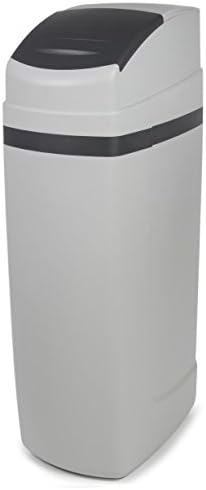
Space-saving design makes it ideal for small areas while handling hard water effectively. It suits homes needing a reliable water softener without taking up much room.
The biggest strength lies in its compact cabinet and easy installation with the resin already inside.
Setup is straightforward, aided by a helpful installation video sent after purchase. The pre-loaded resin means you don’t have to deal with a messy fill.
Everyday use is smooth thanks to the metered control valve that softens water on demand, so it only runs when necessary, saving salt and water. The cabinet’s size fits well in tight spots like utility closets or small basements.
Performance is solid with its 32,000-grain capacity, effectively handling typical household water hardness. The build includes a durable 10 x 35-inch mineral tank and a battery-powered system, which keeps things simple. Reviews mention it works reliably without much maintenance, while the most common complaint is about the bypass size, which defaults to 3/4 and may need adjusting for some plumbing setups.
The unit is praised for its efficient metered valve and compact cabinet, making it very convenient in small areas. Common issues come from the bypass size, which defaults to 3/4″ and can be a hassle if your plumbing needs 1″.
People with smaller spaces and standard plumbing will likely be happy with the setup and space-saving design. Those with larger pipes or more complicated plumbing setups should check bypass sizing before deciding.
Pros
- Compact design fits tight spaces
- Resin comes pre-loaded for easy setup
- Metered control valve saves salt and water
- Battery powered for reliable operation
Cons
- Default bypass size may not fit all plumbing
- Installation may require professional help
| Specification | Details |
|---|---|
| Dimensions of Cabinet | H 45″ x W 14″ x L 21″ |
| Grain Capacity | 32,000 Grains |
| Mineral Tank Size | 10 x 35 Inch |
| Control Valve | Fleck 5600 SXT Metered On Demand |
| Power Source | Battery Powered |
| Bypass Size | 3/4″ Default (1″ optional on request) |
12. GoBluTech Portable Stainless Steel RV Water Softener

Great for small spaces like RVs, this water softener makes pure water simple without needing power. Its compact design and easy setup are ideal for anyone needing softened water on the go.
Setup is straightforward thanks to stainless steel garden hose quick connects that fit right onto most water sources. No electricity is required, which is perfect for camping or traveling.
It handles up to 1,000 gallons or about 30 days of softened water, so refilling or maintenance happens about once a month.
It uses ion exchange to soften water effectively, working well with water up to 500 ppm TDS. The stainless steel tank feels sturdy and durable, built to last up to 5 years. Most praise points to its portability and quick connect system, while common complaints mention that it’s only suited for smaller water needs, not heavy household use.
The compact design with stainless steel connectors makes hookup fast and easy, praised for travel convenience. A common complaint is its limited capacity and support for water with 500 ppm TDS max, making it too small for larger households.
Ideal for people with RVs or anyone who needs a portable softener that fits in tight spaces. Not a good choice when heavy water use or very hard water is expected, where bigger systems would work better.
Pros
- Compact size fits tight spaces easily
- Stainless steel quick connects speed setup
- No electricity needed for operation
- NSF certified media assures safe water
Cons
- Only suitable for water up to 500 ppm TDS
- Capacity limits use beyond about 30 days
| Specification | Details |
|---|---|
| Purification Method | Ion Exchange |
| Filter Life Cycle | 5 years |
| Maximum Supported Water TDS Level (PPM) | 500 |
| Grain Capacity | 10,000 grains |
| Installation Type | Freestanding |
Best Water Softeners for Small Spaces Comparison
| Product | Capacity (Grains) | Installation Type | Weight | Power Source |
|---|---|---|---|---|
| Aquasure Harmony Softener | 40,000 | Whole-House System | – | – |
| EcoPure EPS110 Softener | – | Whole House Water Tank | – | Corded Electric |
| On The Go VM Portable | – | Portable | 33.7 lbs | – |
| On The Go RV Portable | 16,000 | Portable | – | – |
| Kenmore 350 Softener System | – | Freestanding | – | Manual/Gravity-fed |
| Aquasana SimplySoft Softener | – | Whole House Water Tank | – | Corded Electric |
| Portable 16K Grain Softener | – | Freestanding | – | Manual |
| Tier1 32K Compact Softener | 32,000 | Whole House Water Tank | – | – |
| ABCwaters Fleck 5600sxt Softener | – | Freestanding | – | Corded Electric |
| On The Go 16K Portable | 16,000 | Portable | 32 lbs | – |
| Fleck 5600 SXT Cabinet Softener | – | Plumbed | – | Battery Powered |
| GoBluTech Stainless RV Softener | – | Freestanding | – | – |
- Capacity (Grains)40,000
- Installation TypeWhole-House System
- Weight–
- Power Source–
- Capacity (Grains)–
- Installation TypeWhole House Water Tank
- Weight–
- Power SourceCorded Electric
- Capacity (Grains)–
- Installation TypePortable
- Weight33.7 lbs
- Power Source–
- Capacity (Grains)16,000
- Installation TypePortable
- Weight–
- Power Source–
- Capacity (Grains)–
- Installation TypeFreestanding
- Weight–
- Power SourceManual/Gravity-fed
- Capacity (Grains)–
- Installation TypeWhole House Water Tank
- Weight–
- Power SourceCorded Electric
- Capacity (Grains)–
- Installation TypeFreestanding
- Weight–
- Power SourceManual
- Capacity (Grains)32,000
- Installation TypeWhole House Water Tank
- Weight–
- Power Source–
- Capacity (Grains)–
- Installation TypeFreestanding
- Weight–
- Power SourceCorded Electric
- Capacity (Grains)16,000
- Installation TypePortable
- Weight32 lbs
- Power Source–
- Capacity (Grains)–
- Installation TypePlumbed
- Weight–
- Power SourceBattery Powered
- Capacity (Grains)–
- Installation TypeFreestanding
- Weight–
- Power Source–
How to Choose the Right Water Softener
Size and capacity are crucial to ensure the water softener fits your space and meets your household’s needs without waste. Energy efficiency and regeneration type affect running costs and maintenance frequency, helping you avoid unexpected expenses and hassle over time.
Size and Space Efficiency
Many homes have a tight corner or a small closet set aside for water treatment equipment. Measuring that space before ordering is crucial because an oversized unit can cause installation headaches or block access to other utilities. A narrow vertical design often fits better in cramped laundry rooms or basements, while horizontal models might slide under sinks where height is limited.
Balancing compactness with a sufficient resin tank size matters too. A too-small unit won’t handle the daily water hardness and will regenerate too often, wasting salt and time. A resin tank with a 24,000 to 32,000-grain capacity usually fits small spaces without compromising performance.
Look for units under 20 inches wide and around 48 inches tall for most tight setups.
Water Softening Capacity
Matching grain capacity to your household’s water consumption is key for steady softening. For a family of two to three, a model rated around 24,000 grains often works well.
Units with smaller capacities require more frequent regeneration, which means periods of hard water and additional salt refills.
Always consider the flow rate rating to avoid a drop in water pressure. Small units often deliver 5 to 8 gallons per minute, which fits typical household plumbing but check the specs to make sure it aligns with your peak water demand and pipe size, ensuring you don’t lose flow during showers or dishwashing.
Installation and Maintenance Ease
Installing water treatment gear in a confined spot is tricky without clear instructions and easy-to-reach components. Models designed for tight areas often come with quick-connect fittings and removable covers. Those features speed up installation and simplify routine tasks like cleaning or swapping out the resin.
Good manuals with step-by-step photos are a time saver for do-it-yourself setups. Units that require salt additions or maintenance only every few weeks reduce fuss. Avoid complex electronics or parts buried behind panels in small units to save frustration in tight quarters.
Power and Energy Efficiency
Electricity use varies widely between models. Systems that consume under 50 watts keep power bills low, especially if the softener runs continuously. Some offer battery backups, which can maintain operation during outages and prevent water hardness issues from sudden stops.
Smart timers or demand-initiated regeneration allow the unit to soften water only when needed, cutting energy waste. This feature helps balance performance with efficiency and is especially valuable if the softener is installed in a place where electricity conservation matters.
Durability and Safety Features
Materials that resist corrosion, like high-grade polypropylene tanks and stainless steel valves, ensure the unit stands up to constant exposure to water and salt. Longevity matters more in small areas where removing and replacing units is difficult.
Look for certifications such as NSF/ANSI standards to ensure safety and proper plumbing compatibility. Built-in safeguards against leaks, pressure build-up, and electrical faults help avoid water damage and hazards in compact installations where a minor leak can cause major issues quickly.
Effective Maintenance Practices to Extend Your Water Softener’s Lifespan
Regular salt refilling is critical for water softener performance and longevity. Check the brine tank every few weeks to keep salt levels above the water line, avoiding salt bridges that block regeneration.
Cleaning the brine tank once or twice a year removes sediment buildup, preventing clogs and corrosion.
Replace the resin bed after several years of use, as worn resin beads reduce efficiency. Many systems allow you to backwash the resin to extend its life between replacements.
Also, inspect the resin tank for cracks or leaks during routine checks.
Other maintenance tips:
- Use high-quality salt to minimize impurities that can clog the system.
- Monitor water usage and adjust settings to prevent excessive salt and water consumption.
- Check valve seals and moving parts annually to avoid leaks and failures.
Sticking to these simple tasks keeps the softener running efficiently without needing major repairs or early replacement.
Common Installation Mistakes to Avoid in Small Space Water Softeners
Clear access is often overlooked when installing water softeners in small spaces. Tight spots restrict airflow and make future maintenance difficult.
Leave enough room to open the brine tank lid and service valves without strain.
Incorrect plumbing connections, like reversing the inlet and outlet, lead to poor softening and potential system damage. Double-check the pipe labels and follow manufacturer diagrams carefully before sealing fittings.
Additional installation pitfalls to avoid:
- Failing to install a bypass valve, which is essential for maintenance or emergencies.
- Ignoring local water pressure requirements, risking malfunction or damage.
- Placing the system too close to electrical sources or heat, which may shorten component life.
Proper planning and careful following of instructions prevent these common mistakes that compromise performance in limited spaces.
Comparing Compact Water Softeners with Alternative Water Treatment Solutions
Compact water softeners work well for small households by fitting into tight areas without compromising basic functions. They use less salt and resin, making them easier and cheaper to maintain.
However, they usually have smaller capacity and require more frequent regeneration.
Ion exchange softeners differ from alternative options like potassium chloride systems or salt-free conditioners. Potassium systems mirror traditional softeners but replace sodium with potassium, which some prefer for landscaping or dietary reasons. Salt-free conditioners do not remove minerals but alter crystal forms to reduce scaling, requiring less maintenance but offering less effective softening.
Key distinctions include:
- Compact softeners physically remove hardness minerals through ion exchange.
- Salt-free conditioners condition water without regenerating or using salt.
- Potassium chloride softeners operate similarly to standard softeners but may cost more.
Choosing the right solution depends on space, budget, water hardness levels, and personal preferences regarding salt use and maintenance frequency.
People Also Asked
How Do I Measure Space for a Small Water Softener?
Measure the height, width, and depth of the space where you plan to install the water softener, including clearance for connecting pipes and servicing. Check if there’s room for the unit’s refill salt container or brine tank, and also consider access space for adding salt or maintenance.
What Maintenance Does a Small Water Softener Require?
Regular maintenance usually involves adding salt to the brine tank and occasionally cleaning the resin tank, depending on water hardness and usage. It helps to check system settings and ensure there’s no salt bridging or clogs that might reduce efficiency.
Are Small Water Softeners Safe for Household Plumbing?
Small water softeners are generally safe for household plumbing as they prevent scale buildup, which protects pipes and appliances. Avoid oversizing the unit to prevent excessive salt use or flow rate changes, which might stress some plumbing components.
How Long Does a Compact Water Softener Typically Last?
Compact water softeners typically last around 10 to 15 years with proper maintenance, including timely salt refills and resin cleaning. Avoid letting salt run out for long periods, as this can reduce resin performance and shorten lifespan.
Can a Small Water Softener Work with My Existing Water System?
Most small water softeners can be integrated with existing water systems if flow rates and pipe sizes match. It helps to check compatibility with your plumbing and water pressure, and sometimes a bypass valve is needed to connect smoothly.
Conclusion
Choosing the right water softener for a small space mainly depends on the unit’s size, capacity, and the ease of installation. It’s important to find a model that fits where you plan to put it without crowding your area.
Consider how much water you use daily to ensure the softener can handle your household’s needs.
Think about how often you want to recharge the system; some require more frequent maintenance than others. Matching the softener to your available space and budget will save headaches later. Check the comparison table and the detailed reviews above to find an option that fits your setup and daily use habits.