
Top 12 Best True HEPA Air Purifier That Will Shock You!
Dust and allergens often linger in the air, especially in homes with pets or high pollen levels. A poorly chosen or cheap air purifier barely moves particles, leaving the air stale and full of irritants.
A best true hepa air purifier captures at least 99.97 percent of particles down to 0.3 microns, which is crucial for reducing dust, pollen, smoke, and pet dander effectively.
Key factors that separate a good true HEPA purifier include the filter size and fit, the airflow rate, and how easy it is to maintain. A large filter with a tight seal prevents air from bypassing, while a higher CADR (Clean Air Delivery Rate) means it refreshes room air quickly.
Practical upkeep like replacing filters without tools and straightforward cleaning can make a real difference in daily use and long-term performance.
Need a Quick Check?
| Image | Product | Price |
|---|---|---|
Our Top Picks 1  | Winix 5510 Purifier | Check Price |
Our Top Picks 2  | PuroAir 240 HEPA Duo | Check Price |
Our Top Picks 3  | LG PuriCare 360 | Check Price |
Our Selected Top 12 True Hepa Air Purifier for Different Needs
This list features carefully chosen true HEPA air purifiers designed to meet various needs and spaces. Each review explains how the purifier performs, highlights its strengths and weaknesses, and identifies the types of users or environments it suits best.
1. WINIX 5510 Air Purifier
Great for large rooms, this air purifier suits anyone needing reliable allergen and odor removal. Its standout feature is the true HEPA filter that captures 99.99% of airborne allergens down to 0.01 microns, which makes it especially helpful for allergy sufferers and people with pets.
Setup is straightforward with touch controls and compatibility with Alexa and Google Assistant adds convenience. The washable pre-filter handles larger particles before they reach the main HEPA filter, helping extend its life. Running quietly at 27 dB allows it to operate without disturbing your daily routine.
The purifier effectively cleans areas up to 1881 sq ft in one hour. It is powered by 65 watts and includes a carbon filter that works on odors from pets and cooking.
Constructed with solid materials, it feels durable, but some users mention the filter replacement cost as a downside.
The HEPA filter’s ability to trap tiny particles and allergens is the most praised feature, making it highly effective for improving air quality. On the downside, several find the cost of replacing filters adds up over time.
People looking for a powerful purifier that covers large spaces quietly will appreciate this model. Those seeking a unit with lower power consumption or less filter maintenance might look at other options.
Pros
- Captures 99.99% of allergens as small as 0.01 microns
- Quiet operation at just 27 dB
- WiFi and voice assistant control options
- Washable pre-filter reduces main filter load
Cons
- Filter replacements can be costly
- Consumes 65 watts of power
| Specification | Details |
|---|---|
| Floor Area | 1881 square_feet |
| Noise Level | 27 db |
| Particle Retention Size | 0.01 micrometer |
| Filter Type | HEPA |
| Power Source | Electric |
| Controller Type | Amazon Alexa, Button Control, Google Assistant |
2. PuroAir 240 HEPA Air Purifier 2-Pack
Solidly built with a 3-layer filtration system and designed for large spaces, this air purifier is ideal for anyone needing to clear up to 1,000 square feet. Its most notable feature is the ability to filter 99.9% of pollutants, making it efficient for allergy relief and removing common indoor air irritants.
Setup mainly involves plugging it into an AC outlet and using the simple push-button controls. It runs quietly at 22 decibels, so it won’t disturb your day or night.
The unit has an automatic air quality sensor that adjusts performance based on the room’s condition, making it easy to use without constant manual tweaking.
Performance is strong, effectively handling cigarette smoke, pet dander, dust, and VOCs within an hour in medium to large rooms. Its construction feels durable and well-made, though some find the buttons less responsive at times.
Most praise its quiet operation and effective filtration, while the common complaint concerns occasional unresponsive controls.
Highly praised for its quiet operation and thorough filtering of smoke, dust, and allergens, it consistently clears air in large rooms within an hour. The main drawback reported involves the push-button controls occasionally not responding smoothly, which requires extra presses to set or change modes.
Ideal for those with allergies or pets living in large indoor spaces needing clean air without noise disruption. Someone looking for portable or battery-operated options might want to consider an alternative that offers more mobility and responsive controls.
Pros
- Filters 99.9% of common indoor pollutants
- Quiet operation at just 22 decibels
- Automatic air quality sensor adjusts performance
- Large room coverage up to 1,000 sq ft
Cons
- Push buttons can be unresponsive at times
- Powered only through AC outlet, no battery option
| Specification | Details |
|---|---|
| Floor Area | 1000 square_feet |
| Noise Level | 22 db |
| Filter Type | HEPA |
| Particle Retention Size | 0.1 micron |
| Control Method | Push Button |
| Wattage | 22 watts |
3. LG PuriCare 360 Air Purifier
Quiet operation stands out with the LG PuriCare 360 Air Purifier, making it great for bedrooms or offices. Suited for large rooms up to 2059 square feet, its strongest feature is the NanoFiber True HEPA filter that traps 99.97% of particles as small as 0.3 microns, helping keep the air clean and fresh.
Setup involves plugging it in and using the button controls or the LG ThinQ app to manage settings. The micro particle PM 1.0 sensor actively adjusts filtration based on detected air quality. Daily use is smooth thanks to a removable pre-filter and an activated carbon filter that catch larger debris and odors, giving you continuous clean air without much upkeep.
It handles air purification exceptionally well across wide spaces, supported by a comprehensive three-layer filtration system that works on all angles with 360-degree air intake. It’s solidly built and operates quietly at just 23 decibels.
Most appreciate the low noise; common complaints mention occasional difficulty with the app or control interface.
Quiet and reliable air cleaning is the main praise, with the NanoFiber True HEPA filter capturing fine dust and allergens effectively. Some users find that the app controls aren’t always intuitive, which can interrupt ease of use.
Anyone in need of a silent purifier for large rooms will find it valuable. Those prioritizing simple manual operation or lower maintenance costs might want to look at other options.
Pros
- Extremely quiet operation at only 23 db
- Captures 99.97% of 0.3 micron particles
- Large coverage area of 2059 square feet
- Smart app controls and real-time air quality monitoring
Cons
- Occasional difficulties with app or button controls
- Filter replacements can be costly over time
| Specification | Details |
|---|---|
| Floor Area | 2059 square_feet |
| Noise Level | 23 db |
| Particle Retention Size | 0.3 micrometer |
| Filter Type | HEPA |
| Control Method | App |
4. HATHASPACE HSP001 Air Purifier

Perfect for bedrooms up to 700 square feet, the HATHASPACE HSP001 offers a true HEPA filter that captures 99.9% of particles down to 0.3 microns. It stands out for its quiet operation and smart sensor, making it a solid choice for anyone needing reliable air purification without a noisy distraction.
Setup is straightforward thanks to its lightweight design and remote control, making it easy to move around and operate. The touch-screen display shows real-time air quality, so adjusting settings is intuitive. It also features sleep mode for quiet overnight use, making it convenient to maintain fresh air in living spaces without hassle.
Performance-wise, the multiple filter stages handle dust, pet dander, smoke, and odors effectively. The build feels sturdy and compact, ideal for bedroom or living room use. Most praise centers on its silent running and efficient filtration, while some mention the 100-watt power usage as a point to consider for energy-conscious users.
The silent operation at 43 dB is frequently praised for bedroom use, ensuring minimal disturbance. On the other hand, some users note the 100-watt power draw can feel high for continuous running. The real-time air quality display helps keep track of changes easily throughout the day.
Anyone looking for a quiet, effective unit for medium-sized rooms will appreciate this purifier. Those needing coverage for larger areas or seeking a lower power consumption model might want to explore other options better suited to those needs.
Pros
- Quiet operation at just 43 dB
- Smart air quality sensor with display
- Captures 99.9% of small particles
- Lightweight and portable design
Cons
- Consumes 100 watts during operation
- May be less efficient in very large spaces
| Specification | Details |
|---|---|
| Floor Area | 700 square_feet |
| Noise Level | 43 db |
| Particle Retention Size | 0.3 microns |
| Power Source | AC |
| Wattage | 100 watts |
| Control Method | Remote Control |
5. Levoit Air Purifier
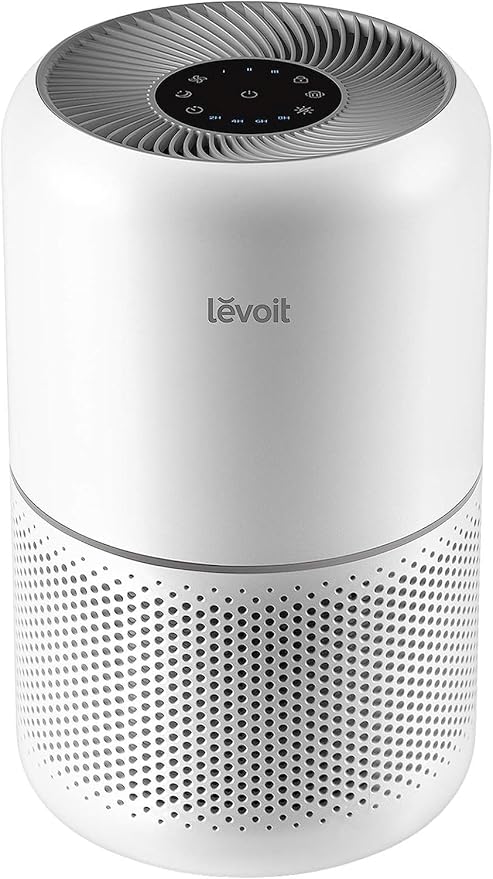
Indoor air can get heavy with smoke, dust, or pet dander, especially in bigger rooms. Perfect for spaces up to 1073 square feet, the Levoit Air Purifier handles these issues with its strong HEPA-grade filtration. Its biggest strength lies in reliable performance backed by the AHAM VERIFIDE seal, ensuring real air cleaning quality.
Setting up is straightforward with a touch control panel that responds easily. It runs quietly at just 24 dB, making it suitable for bedrooms or offices without distraction.
You’ll see the filter change indicator when it’s time for maintenance. The built-in timer and portability mean you can adjust its use across different rooms without fuss.
It cleans air fast, driven by a 56W motor delivering 143 CFM CADR, efficiently removing fine particles down to 0.3 microns, including smoke and VOCs. The 3-in-1 filter setup holds up well through daily use. Most praise focuses on its quiet operation and air quality improvement, though some mention the touch controls can be sensitive or hard to use.
Many enjoy the quiet operation and noticeable air quality improvement from the HEPA-grade filtration, but handling the touch controls takes some getting used to due to their sensitivity. The extensive filtration tackles smoke, dust, and odors well.
Ideal for anyone needing reliable purification in larger areas who doesn’t mind staying near power outlets. Those seeking fully cordless options or simpler controls might want to explore other models.
Pros
- Works quietly at just 24 decibels
- Effective for large rooms up to 1073 square feet
- Filter change indicator simplifies maintenance
- Removes a wide range of contaminants including smoke
Cons
- Touch controls can be overly sensitive
- Requires AC power, limiting some portable use
| Specification | Details |
|---|---|
| Floor Area | 1073 square_feet |
| Noise Level | 24 db |
| Power Source | ac |
| Wattage | 56 watts |
| Contaminant Filtration Capability | Cigarette Smoke, Dust, Odors, Pet Dander, Pet Hair, Pollen, VOCs, Wildfire Smoke |
6. Home Large Room True HEPA Air Purifier

Capable of purifying air twice per hour in large spaces up to 2400 ft², this air purifier suits families needing thorough allergen and smoke removal. Its biggest strength is capturing 99.97% of airborne particles, making indoor air cleaner and more breathable for everyone at home.
Setup involves placing it centrally in a large room and plugging into any 100-240V outlet. Touch controls provide easy operation, and the intelligent PM 2.5 display shows real-time air quality.
Automatic fan speed adjustments respond to detected smoke, dust, or odors. Features like aromatherapy and a quiet 22 dB sleep mode make daily use comfortable and unobtrusive.
The main job of filtering cigarette smoke, pet dander, pollen, and VOCs is handled effectively thanks to true HEPA filtration and 2X power filtration. It feels solidly built with a 360° air outlet for even distribution. Most people appreciate the quiet operation and automatic adjustments.
Noise level during sleep mode rarely rises above 22 dB, but some find the touch controls a bit sensitive.
Many appreciate how quietly it runs during the night while still maintaining clean air. Some users mention that the touch control panel can be tricky to manage because of its sensitivity. The intelligent air quality display keeps the air monitoring transparent and easy to follow.
People living in large spaces with allergy or smoke concerns will benefit most. Those wanting a simpler interface or detailed software support might want to consider other models.
Pros
- Captures 99.97% of airborne particles
- Quiet 22 dB sleep mode
- Real-time air quality PM2.5 display
- Auto adjusts fan speed based on air sensor
Cons
- Touch controls can be overly sensitive
- No information on software updates
| Specification | Details |
|---|---|
| Floor Area | 2400 square_feet |
| Filter Type | HEPA |
| Noise Level | 22 db |
| Power Source | dc_100-240V |
| Wattage | 24 watts |
7. Home Large Room HEPA Washable Filter Air Purifier

People with large living spaces or pets will appreciate this air purifier for its ability to cover up to 2600 square feet. Its biggest strength lies in the triple air intake system that speeds up airflow and ensures thorough room-wide purification.
Setting up takes just plugging it in and turning it on with touch controls. The washable HEPA filter saves on replacements, and the display shows real-time PM2.5 levels so tracking air quality is easy.
It runs quietly at 22 decibels, making it suitable for continuous use without disturbing daily activities.
Cleaning the air of pet hair, smoke, and dust happens quickly thanks to a high-efficiency HEPA filter catching particles as small as 0.3 microns. The unit feels solid and well-built, but some users mention the size can be bulky for smaller rooms. Its most praised feature is the real-time air quality sensor, with common complaints about occasional difficulty handling very fine dust.
The real-time PM2.5 sensor is highly appreciated for providing constant feedback on air quality. Many find the washable HEPA filter convenient and cost-effective. On the other hand, its size can be an issue in cramped spaces and some notice it isn’t flawless at filtering ultra-fine dust.
Perfect for those with pets and large rooms, this purifier offers reliable cleaning and operates quietly. Those living in smaller apartments or concerned with very fine dust might want to consider a more compact or specialized model.
Pros
- Captures 99.97% of airborne particles
- Washable filter reduces replacement costs
- Real-time air quality display
- Quiet operation at 22 decibels
Cons
- Bulky size may not suit smaller rooms
- Struggles with very fine dust particles
| Specification | Details |
|---|---|
| Floor Area | 2600 square_feet |
| Filter Type | HEPA |
| Particle Retention Size | 0.3 micron |
| Noise Level | 22 db |
| Power Source | Corded Electric |
| Wattage | 24 |
8. HAP602 Large Room Air Purifier

Designed for large rooms up to 2400 square feet, this air purifier stands out with its built-in PM2.5 sensor and real-time air quality display. It’s perfect for those who want clear, constant feedback on indoor air and automatic adjustments to keep their environment clean without guessing.
Setting it up is simple, with touch controls easily accessible on top. It quietly runs throughout the day, automatically speeding up when it detects pollutants through its smart sensor.
The 360° air intake and outlet design help circulate fresh air evenly, while the auto eco mode adjusts fan speed to save energy when air quality improves.
Cleaning the air is effective even for small particles down to 0.3 microns, capturing dust, pet hair, smoke, and VOCs thanks to a true HEPA filter with a three-stage system. The unit operates quietly at 20 dB, making it suitable for sleeping environments.
Reviews highlight excellent filtration performance, but some users mention its size as a drawback in smaller rooms.
Air quality feedback and automatic fan speed adjustment provide reassurance and efficiency in maintaining clean air. Its main drawback is the physical size, which makes it less convenient for small spaces or easy relocation.
People with large living areas and concerns about varied pollutants will find it suitable. Those with smaller rooms or who need portability should consider more compact options.
Pros
- Real-time PM2.5 air quality display
- Quiet operation at 20 dB
- Effective 3-stage true HEPA filtration
- 360° air intake and outlet for full room coverage
Cons
- Large size not ideal for small rooms
- Power source limited to AC only
| Specification | Details |
|---|---|
| Floor Area | 2400 square_feet |
| Noise Level | 20 db |
| Filter Type | 3-Stage Filter |
| Particle Retention Size | 0.3 micron |
| Control Method | Touch |
| Power Source | AC |
9. Home Bedroom Large Room Air Purifier

AirHub Home Bedroom Large Room Air Purifier is designed for those who need clean air in medium to large spaces with minimal noise. Its biggest strength lies in the true HEPA filtration paired with pet-friendly tech that handles common pollutants effectively, making it perfect for allergy sufferers and people with pets.
Setup is straightforward with touch controls and a hand controller for easy adjustments. It runs quietly at just 20 dB, so it won’t disturb daily activities or sleep. Dual-sided air intake and two complete 3-stage filtration systems ensure thorough coverage, while the unit is certified by multiple organizations for safety and performance.
The purifier handles cigarette smoke, dust, pollen, and odors effectively, sustaining clean air in rooms up to 2200 square feet. Build quality feels solid, designed for long-term use with a low power draw of 24 watts.
The common praise lies in its quiet operation and solid filtration; some users find the initial cost higher than other models.
The quiet operation combined with powerful dual 3-stage filtration is the most praised aspect, showing reliable handling of various indoor pollutants. However, the price and lack of clear information on software updates are common concerns among users. It runs quietly enough in bedrooms and living spaces without causing distractions.
People living with pets and those sensitive to pollen and smoke will appreciate the purification power at low noise levels. It suits those who want coverage in larger rooms but might not be preferred by buyers on a tight budget or anyone wanting frequent software updates.
Pros
- Very quiet operation at 20 dB
- Effective 3-stage HEPA filtration
- Suitable for large rooms up to 2200 sq ft
- Certified by AHAM, CARB, ETL, FCC
Cons
- Higher initial purchase price
- Software update support details unknown
| Specification | Details |
|---|---|
| Filter Type | HEPA H13 |
| Floor Area Coverage | 2200 square feet |
| Noise Level | 20 dB |
| Power Consumption | 24 watts |
| Contaminants Removed | Cigarette Smoke, Dust, Odors, Pollen, Wildfire Smoke |
| Control Method | Touch and Hand Control |
10. Pure Enrichment PureZone Air Purifier

Breathing cleaner air at home feels noticeably refreshing with this purifier. It suits medium to large rooms, making it a solid choice for bedrooms, living spaces, or nurseries.
Its biggest strength lies in the combination of a True HEPA filter and UV-C light that targets a wide range of allergens and airborne germs.
Setup is straightforward with simple button controls and a touch interface that’s easy to get used to. The washable pre-filter helps cut down on maintenance costs, while quiet operation at 30 dB means it won’t disrupt your daily activities. The unit covers up to 200 square feet efficiently, handling smoke, dust, and odors without fuss.
The 4-stage filtration system, including an activated carbon filter and H13 True HEPA filter, captures 99.97% of pollutants as small as 0.3 microns. The built-in UV-C light targets viruses and bacteria, adding an extra layer of air cleaning.
It’s well built to fit into most home environments, but some users note that it uses 60 watts, which might be a consideration in energy use.
Many users appreciate how well this purifier cleans the air, especially removing allergens and germs due to its multi-stage filtration and UV-C light. The most common drawback mentioned is its power consumption, which is higher than some other compact air purifiers.
A great fit for those wanting reliable air cleaning for medium-sized rooms, especially if quiet operation and detailed filtration matter. Anyone needing coverage beyond 200 square feet or lower energy draw may want to explore alternatives.
Pros
- Captures 99.97% of dust and allergens
- Includes UV-C light to kill viruses and bacteria
- Quiet operation at 30 dB
- Washable pre-filter for easy maintenance
Cons
- Consumes 60 watts of power
- Maximum coverage limited to 200 square feet
| Specification | Details |
|---|---|
| Power Source | AC |
| Floor Area | 200 square_feet |
| Noise Level | 30 db |
| Wattage | 60 watts |
| Particle Retention Size | 0.3 micrometer |
11. Honeywell AllergenPlus HEPA Air Purifier HPA304

Great for large rooms, the Honeywell AllergenPlus HEPA Air Purifier HPA304 handles up to 465 square feet with solid filtration power. It suits anyone wanting stronger air cleaning in bedrooms or living spaces, thanks to its ability to filter air nearly five times an hour.
Setup is straightforward with a corded electric power source and simple button controls. Running it day-to-day involves replacing genuine Honeywell HEPA filters to maintain peak performance. The touch control method keeps operation easy, while the unit’s size makes it best suited for extra-large rooms rather than smaller spaces.
Filtering down to 0.3 microns, it captures dust, pet dander, pollen, and smoke effectively. The air purifier runs on 80 watts, offering solid power without being too energy-intensive.
Build quality feels durable, but the manual controls can feel less modern. Positive feedback highlights its strong air cleaning, while some mention the filter replacements add to maintenance costs.
Many praise how well it cleans air in large rooms, filtering out allergens and smoke reliably. The most common complaint revolves around the ongoing cost and necessity of using only genuine Honeywell replacement filters to maintain performance.
Those looking to improve air quality in bedrooms or big living spaces will appreciate its strength and simplicity. Anyone wanting smaller, quieter, or more technologically advanced options might consider different models better suited to compact areas or smart controls.
Pros
- Effective in large rooms up to 465 square feet
- HEPA filter captures tiny particles down to 0.3 micron
- Runs on moderate power at 80 watts
- Simple touch and button controls
Cons
- Needs genuine Honeywell filters for full efficiency
- Manual controls might feel outdated
| Specification | Details |
|---|---|
| Floor Area | 465 square_feet |
| Control Method | Touch |
| Filter Type | HEPA |
| Wattage | 80 watts |
| Particle Retention Size | 0.3 micron |
| Contaminant Filtration | Dust, Pet Dander, Pollen, dust mite debris, smoke |
12. Winix 9800 Air Purifier

Constructed with a washable fine mesh pre-filter and a True HEPA filter, it’s ideal for rooms up to 500 square feet. Its biggest advantage lies in the comprehensive filtration system combined with smart technology, helping anyone looking to improve indoor air quality with real-time control.
Setup involves plugging it into an AC outlet and using the touchscreen controls or the Winix Smart App for remote access. The WiFi feature makes it easy to monitor and adjust settings from anywhere.
It quietly runs around 26.2 dB, so daily use won’t disturb your routine or sleeping hours.
It cleans air effectively at a particle retention size of 0.3 micron. The build is solid and meant to last, with added activated carbon to handle odors and VOCs. Most users praise its quiet operation and smart controls while common complaints mention its relatively high power consumption at 95 watts.
The purifier receives strong praise for its quiet operation and remote control features, allowing easy management of indoor air quality. The common complaint revolves around its 95 watts of power consumption, which some find high compared to other units.
Those who want smart, quiet air purification in medium-sized rooms will like this model. Larger spaces or those prioritizing lower energy use might want to consider alternatives with lower wattage or bigger coverage.
Pros
- Effective filtration down to 0.3 micron particles
- WiFi control through dedicated app
- Handles odors with activated carbon filter
- Quiet operation at 26.2 dB
Cons
- Consumes 95 watts, relatively high power use
- Best suited for rooms up to 500 sq ft only
| Specification | Details |
|---|---|
| Floor Area | 500 square feet |
| Filter Type | HEPA |
| Noise Level | 26.2 db |
| Power Source | ac |
| Control Method | Touch, Amazon Alexa, Android, iOS |
| Wattage | 95 watts |
Best True HEPA Air Purifiers Comparison Table
| Product | Floor Area | Noise Level | Particle Retention Size | Wattage |
|---|---|---|---|---|
| Winix 5510 Purifier | 1881 sq ft | 27 db | 0.01 micrometer | 65 watts |
| PuroAir 240 HEPA Duo | 1000 sq ft | 22 db | 0.1 micron | 22 watts |
| LG PuriCare 360 | 2059 sq ft | 23 db | 0.3 micrometer | – |
| Hathaspace HSP001 | 700 sq ft | 43 db | 0.3 | 100 watts |
| Levoit Air Purifier | 1073 sq ft | 24 db | 0.3 micron | 56 watts |
| Home Large HEPA Purifier | 2400 sq ft | 22 db | 0.3 | 24 watts |
| Home Washable HEPA Purifier | 2600 sq ft | 22 db | 0.3 micron | 24 watts |
| HAP602 Large Purifier | 2400 sq ft | 20 db | 0.3 micron | – |
| Home Bedroom Purifier | 2200 sq ft | 20 db | 0.3 micrometer | 24 watts |
| Pure Enrichment PureZone | 200 sq ft | 30 db | 0.3 micrometer | 60 watts |
| Honeywell HPA304 HEPA | 465 sq ft | – | 0.3 micron | 80 watts |
| Winix 9800 Purifier | 500 sq ft | 26.2 db | 0.3 micron | 95 watts |
- Floor Area1881 sq ft
- Noise Level27 db
- Particle Retention Size0.01 micrometer
- Wattage65 watts
- Floor Area1000 sq ft
- Noise Level22 db
- Particle Retention Size0.1 micron
- Wattage22 watts
- Floor Area2059 sq ft
- Noise Level23 db
- Particle Retention Size0.3 micrometer
- Wattage–
- Floor Area700 sq ft
- Noise Level43 db
- Particle Retention Size0.3
- Wattage100 watts
- Floor Area1073 sq ft
- Noise Level24 db
- Particle Retention Size0.3 micron
- Wattage56 watts
- Floor Area2400 sq ft
- Noise Level22 db
- Particle Retention Size0.3
- Wattage24 watts
- Floor Area2600 sq ft
- Noise Level22 db
- Particle Retention Size0.3 micron
- Wattage24 watts
- Floor Area2400 sq ft
- Noise Level20 db
- Particle Retention Size0.3 micron
- Wattage–
- Floor Area2200 sq ft
- Noise Level20 db
- Particle Retention Size0.3 micrometer
- Wattage24 watts
- Floor Area200 sq ft
- Noise Level30 db
- Particle Retention Size0.3 micrometer
- Wattage60 watts
- Floor Area465 sq ft
- Noise Level–
- Particle Retention Size0.3 micron
- Wattage80 watts
- Floor Area500 sq ft
- Noise Level26.2 db
- Particle Retention Size0.3 micron
- Wattage95 watts
How to Choose the Right True HEPA Air Purifier
Key factors include filter efficiency, room size coverage, and noise level, as these directly impact air quality and comfort. Choosing the right specifications ensures effective purification and avoids frequent replacements or performance issues, ultimately saving money and hassle over time.
Filtration Efficiency
Homes with pets or people sensitive to allergens quickly reveal the limits of ordinary air cleaners. Many models claim to clean air but fall short of true HEPA certification, meaning they don’t filter 99.97% of particles down to 0.3 microns.
A reliable purifier traps fine dust, pollen, smoke, and even ultrafine particles that carry viruses. Alongside the HEPA filter, prefilters capture larger debris like hair, which helps keep the main filter effective longer. Activated carbon layers reduce odors and volatile organic compounds (VOCs), which often come from paints or cooking fumes.
The difference in daily life is noticeable: rooms feel fresher, fewer allergy symptoms flare up, and there is less lingering smoke smell. Always check for clear HEPA certification and look for models with a multi-stage filtration system including an activated carbon filter.
This combo handles a wider range of pollutants, especially if you live with pets or in areas with higher pollution.
Room Coverage and Size
Using a purifier designed for small rooms in a large living area can leave you frustrated by constant dust and allergens. Purifier capacity is often measured in square feet or cubic feet per minute, and the air changes per hour (ACH) indicate how frequently the air gets filtered.
For a bedroom around 200 square feet, aim for a device with at least 4 ACH to keep the air clean throughout the night.
Physical size matters too. Larger machines often provide higher capacity but require space and may limit where you can place them.
Slim, taller designs offer more placement flexibility but sometimes at a tradeoff in coverage. Measuring your room and comparing it to the purifier’s listed coverage ensures you get a product that can effectively cleanse your space.
Noise Levels
High fan speeds quickly reduce airborne particles but can produce distracting noise. While many purifiers list noise in decibels (dB), real-life experience shows that anything over 50 dB becomes intrusive in quiet rooms like bedrooms or offices.
Models offering multiple fan speeds let you balance noise and performance. Typical operation noise ranges from 20 dB on the lowest setting, almost silent, to 60 dB or more on high.
For night use, look for purifiers with a sleep mode or very low noise output. Quiet operation means you can run the device all night without disturbing sleep, making it suitable for noise-sensitive environments.
Understanding sound ratings helps avoid devices that sound like background chatter or a small fan.
Maintenance and Filter Replacement
Changing filters is a hassle when it involves removing screws or complicated disassembly, often leading to poor maintenance or skipped replacements. Models designed with easy access panels let you swap filters in minutes, usually without tools. Since filters usually require replacement every 6 to 12 months, ease of replacement affects ongoing usability.
Filter costs vary; high-quality HEPA and activated carbon combos tend to run $40 to $80 or more per set. Indicator lights or alerts that notify you when it’s time to change filters help prevent running the machine with dirty filters that reduce effectiveness. Managing maintenance smoothly keeps your purifier performing well long-term.
Energy Efficiency and Operating Costs
Continuous use of air purifiers can increase electricity bills noticeably, especially if running on high fan speeds. Typical power consumption ranges from 20 watts on low to about 60 watts on high for mid-sized models. Features like auto mode adjust fan speed based on air quality, reducing power use when fewer particles are present, and timers help ensure the unit runs only when needed.
Considering energy efficiency when choosing a model impacts running costs over years. Checking product specifications for watts usage and choosing settings smartly keeps bills manageable. A unit with smart controls and low power draw provides steady cleaning without excessive electricity expenses.
Optimizing Placement for Maximum Air Purification Efficiency
Positioning an air purifier properly makes a big difference in how effectively it cleans the air. Place the unit in a central location within the room to allow for better circulation and coverage. Avoid placing it in corners or behind furniture where airflow can get restricted.
Keep it off the floor if possible, placing it on a table or stand about 2-3 feet above the ground to maximize the intake of airborne particles.
Other placement tips include:
- Keep the air purifier away from walls by at least a few inches to prevent blocked vents.
- Run it continuously in the room you use most to maintain cleaner air.
- Close windows and doors during operation to prevent outside pollutants from entering.
Following these steps helps the purifier process the air more efficiently and can improve the overall indoor air quality.
Essential Maintenance Practices to Prolong Your HEPA Air Purifier’s Lifespan
Regular upkeep is key to maintaining the performance of a HEPA air purifier. The filters trap tiny particles, so over time they get clogged. Check the manufacturer’s recommendations for how often to replace the HEPA filter; generally every 6 to 12 months based on usage.
Practical maintenance tips include:
- Vacuum pre-filters weekly if your model has them to reduce dust buildup.
- Wipe down the exterior vents and casing with a dry or slightly damp cloth to prevent dust from re-entering the air.
- Restart the unit after filter changes to reset any indicator lights and ensure the system recognizes the new filter.
Consistent maintenance not only improves air quality but also extends the purifier’s operational lifespan.
Comparing True HEPA Air Purifiers with Other Filtration Technologies
True HEPA filters capture at least 99.97% of particles as small as 0.3 microns, which includes pollen, pet dander, and many dust particles. This makes them highly effective for improving indoor air quality, particularly for allergy sufferers or those sensitive to airborne irritants.
Other common filtration types include:
- Activated carbon filters, which target odors and some gases but do not trap fine particles.
- Electrostatic filters, which use static electricity to capture particles but may need frequent cleaning to stay effective.
- UV light filters, which focus on killing bacteria and viruses rather than particle removal.
Choosing a true HEPA purifier generally ensures broader particle filtration compared to these alternatives, especially for airborne allergens and fine dust.
People Also Asked
How Often Should I Change the Filter in a True HEPA Air Purifier?
Filters in true HEPA air purifiers usually need changing every 6 to 12 months. The exact timing depends on usage and air quality; some models have indicator lights to signal filter replacement. Regular changing keeps the purifier working well without wasting energy.
What Size Air Purifier Do I Need for a Large Room?
For a large room, choose an air purifier rated for the room’s square footage or volume. Look for a Clean Air Delivery Rate (CADR) that matches or exceeds the size. A purifier too small will cycle constantly without clearing the air efficiently.
Are True HEPA Air Purifiers Safe for Pets and Children?
True HEPA air purifiers are safe around pets and children as they trap particles without releasing harmful substances. Make sure the unit is placed out of reach to prevent accidents or tampering. Some people with pets notice a clear reduction in pet dander when using purifiers.
Can True HEPA Filters Remove Smoke and Odors Effectively?
True HEPA filters trap fine particles, including smoke, but they do not remove odors alone. Pairing the HEPA filter with an activated carbon filter helps reduce smoke smells more effectively. Without carbon, the air might still feel smoky even if particles are caught.
What Common Problems Occur with True HEPA Air Purifiers?
Common problems include noisy operation, clogged filters, or reduced airflow over time. Regular cleaning of pre-filters and timely filter replacement often prevents these issues. Some units also develop electrical faults, so check warranty and support options before buying.
Conclusion
Choosing a true HEPA air purifier comes down to three main factors: how well it cleans the air in your specific room size, the ease of filter replacement, and the noise level during operation. These points affect daily use and determine if the purifier fits your needs without extra hassle.
Consider the size of the room where you’ll place the purifier and pick one that matches to avoid underperformance or wasted energy. Also, think about your budget and how often you want to change filters. Check the comparison table and detailed picks above to find the model that suits your space and routine best.