
Top 12 Best Pressure Side Pool Cleaner That Will Blow Minds!
Many people with pools have dealt with the frustration of cleaners that clog easily or leave debris behind, especially cheaper models that just can’t keep up. The best pressure side pool cleaner can handle larger leaves and debris without frequent stops, making pool maintenance less of a hassle. Poorly chosen cleaners often struggle with suction or get stuck around steps and corners, which means more manual work and wasted time.
A reliable pressure side cleaner depends heavily on the power of your pool’s return jets, typically needing at least 30-40 PSI to operate efficiently. The size and design of the debris bag matter too, a bigger bag holds more leaves, so you don’t empty it multiple times per cleaning session.
Durable construction, like thick plastics and reinforced hoses, helps these units resist wear from rough pool surfaces and harsh weather. Easy access to the debris bag and quick hose adjustments also make maintaining the cleaner practical over time.
Need a Quick Check?
| Image | Product | Price |
|---|---|---|
Our Top Picks 1  | Polaris Vac-Sweep 280 | Check Price |
Our Top Picks 2  | Upgrade Pool Sweeper | Check Price |
Our Top Picks 3 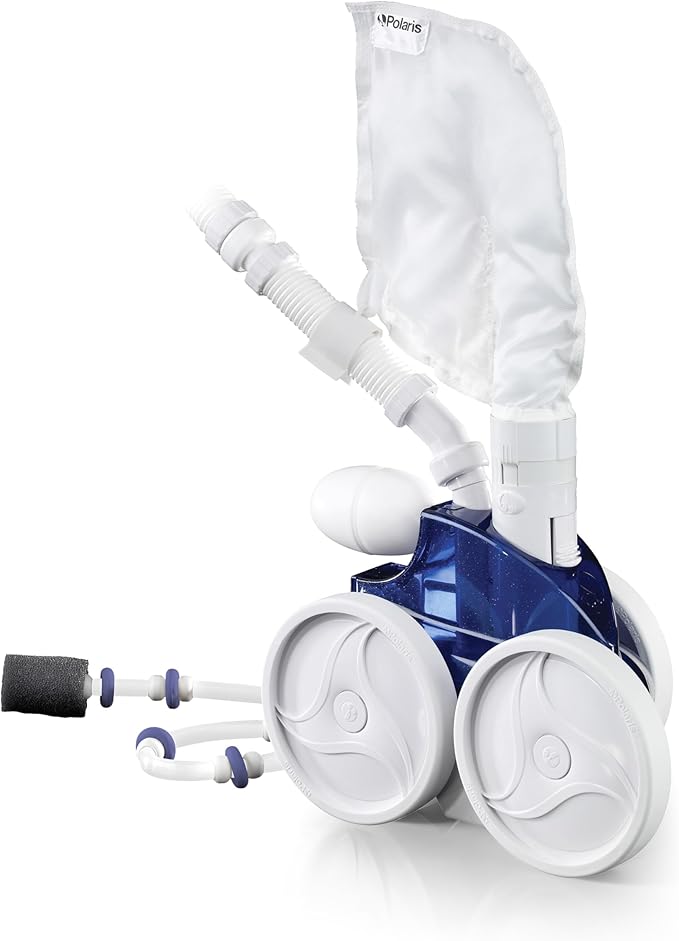 | Polaris Vac-Sweep 360 | Check Price |
Our Selected Top 12 Pressure Side Pool Cleaner Picks for Every Need
This list features carefully chosen pressure side pool cleaners suitable for various pool types and sizes. Each review highlights performance, ideal users, advantages, and potential drawbacks, helping you understand which cleaner matches your specific cleaning needs and preferences.
1. Polaris Vac-Sweep 280 Pressure-Side Pool Cleaner
Constructed with durable materials designed for in-ground pools, the Polaris Vac-Sweep 280 uses a booster pump to create strong vacuum power. Most suitable for people with pools looking for reliable cleaning of large debris, its standout feature is the large 2.25 inlet that handles tough messes efficiently.
Setting up involves connecting the cleaner to a separate Polaris booster pump, which powers the dual venturi jets. It works quietly while you enjoy your day, sweeping and scrubbing both floors and walls with smooth, fluid motion. Daily use feels easy as the single chamber filter bag attracts everything from leaves to pebbles, so you spend less time concerned about clogs or missed spots.
Performance shines in its ability to clean any in-ground pool within three hours, including various pool surfaces like vinyl and tile. The build quality is solid, with components made to last indoors without damage. Most people praise the quick cleaning and large debris pickup, while some note that reliance on an additional booster pump can be a drawback.
Cleaning happens thoroughly in about three hours, and the device’s large inlet reliably picks up bulky debris. The main complaint revolves around the need for a separate booster pump, which may add to cost and installation complexity.
People with in-ground pools of varying shapes and surfaces who want deep cleaning of tough debris will appreciate its capabilities. Those without access to a booster pump or AC power should consider alternative options to avoid extra setup challenges.
Pros
- Strong vacuum for large debris
- Works on all in-ground pool surfaces
- Completes cleaning in 3 hours
- Single chamber bag for easy debris capture
Cons
- Requires separate Polaris booster pump
- Limited to pools with AC power source
| Specification | Details |
|---|---|
| Power Source | AC |
| Inlet Size | 2.25 inches |
| Cleaning Time | 3 hours |
| Capacity | 5 pounds |
| Control Method | Touch |
| Batteries | Lithium Ion required |
2. Upgrade Pool Pressure Side Sweeper
Quiet operation and sturdy construction make this pool pressure side sweeper a great pick for anyone wanting reliable cleaning without fuss. It works best with pools that have the right booster pump and inlet fittings to ensure steady pressure for effective debris pickup.
Getting it ready takes a bit of attention to the 1.5-inch female thread connections on your booster pump and pool water inlet, as these are essential for proper function. The plastic parts feel solid and the unit is portable, making it easy to handle when moving it in or out of the pool. Controls are responsive to touch, giving straightforward operation once hooked up.
It’s engineered to run using hydraulic power, cleaning debris from pool surfaces efficiently when pressure requirements are met. The housing and hose improvements boost durability noticeably over older models. Main praise focuses on how well it holds up to frequent use, while frequent complaints involve needing exactly 4 Bar pressure and proper thread size for setup compatibility, which can limit usability in some setups.
Durability and effective debris cleaning stand out in daily use when pressure conditions are met. Setup can be frustrating without the proper 1.5-inch hose connection and consistent 4 Bar water pressure.
Those with compatible booster pumps and fittings will appreciate this cleaner as a solid choice for maintenance. Those lacking the specified pressure or thread size should look for alternatives offering wider compatibility.
Pros
- Durable plastic components for long-lasting use
- Portable design eases handling and storage
- Smooth touch control for easy operation
- Strong cleaning power with correct pressure
Cons
- Requires exact 1.5-inch thread and 4 Bar pressure
- Not compatible with all booster pumps
| Specification | Details |
|---|---|
| Power Source | hydraulic_powered |
| Control Method | Touch |
| Load Capacity | 8.19 kg |
| Connection Requirement | 1.5-inch female thread |
| Pressure Requirement | 4 Bar water pressure |
3. Polaris Vac-Sweep 360 Pressure-Side Pool Cleaner
Choosing a pressure-side pool cleaner that runs without a booster pump makes a big difference, and this model suits anyone with an in-ground pool looking for efficient debris removal. Its biggest strength lies in using water pressure directly from the pool’s return line, avoiding extra equipment or power sources.
Setting it up involves attaching it to a dedicated cleaner return line, or retrofitting a standard return line using an available kit to ensure proper propulsion. Weather resistance means it handles outdoor conditions well, and with no external power source, operation stays simple.
Its touch control method makes it easy to manage during daily pool maintenance.
Performance on pool debris is solid, covering all pool shapes and surface types safely. The build feels durable enough to last through regular use. Reviews praise its reliable cleaning ability and weather resistance, while the main complaint centers on needing the right pool setup or extra parts for optimal operation.
Cleaning power is consistent thanks to the direct water pressure drive, and the unit handles various pool surfaces safely. Most users find the need for a dedicated or modified return line necessary for proper functioning, which can complicate installation.
Anyone with an in-ground pool and a ready return line setup will find this cleaner effective and low-maintenance. Pools without suitable plumbing might prefer a model that doesn’t rely on the return line or requires less reconfiguration.
Pros
- Works without booster pump
- Compatible with all pool surfaces
- Weather resistant construction
- Easy touch control method
Cons
- Requires dedicated or retrofit return line
- Proper setup may need extra parts
| Specification | Details |
|---|---|
| Power Source | No Power Source |
| Load Capacity | 2 Liters |
| Control Method | Touch |
| Compatible Pools | In-ground, all shapes and surfaces |
| Special Features | Weather Resistant |
4. Polaris Vac-Sweep 380 Pressure-Side Pool Cleaner
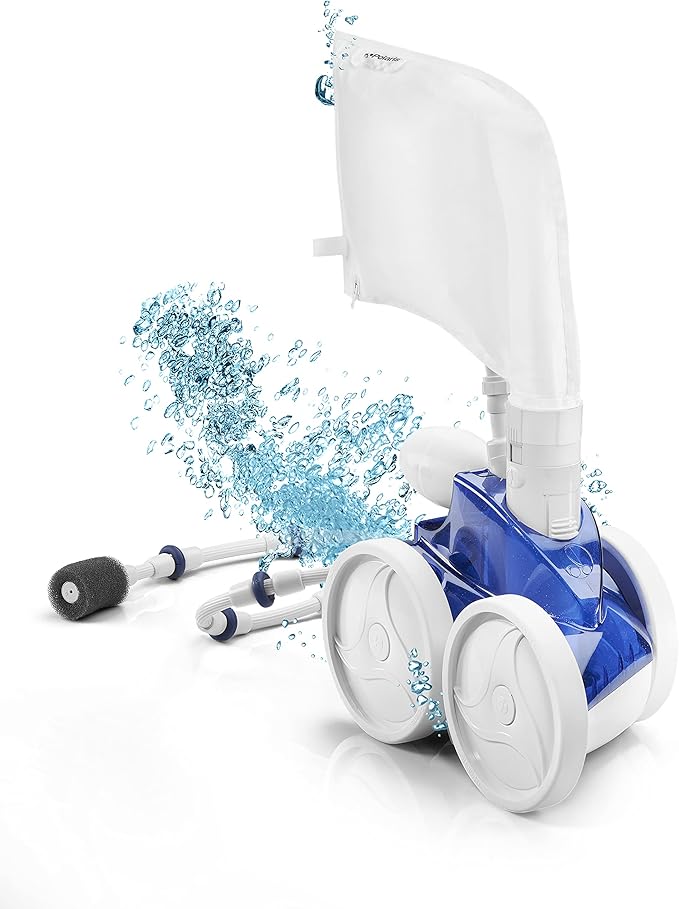
Keeping an inground pool clean can be time-consuming, especially when dealing with leaves and larger debris. Designed for a variety of pool surfaces and shapes, this pressure-side cleaner stands out for its quick cleaning power. It’s best suited for those looking to clean their pool thoroughly in under three hours.
Setting it up requires a separate booster pump that powers three venturi jets to create strong suction. Day-to-day use focuses on its ability to move smoothly along floors and walls, with a large 2.25 inlet that handles big debris. The single chamber filter bag collects everything from small bits to leaves and acorns, reducing manual cleaning efforts.
The cleaning performance impresses by covering the entire pool surface efficiently and picking up debris others miss. Constructed to be weather resistant, it works well over time.
The strongest praise is for its thorough vacuum power, while the common gripe mentions the need for that extra booster pump, which adds to installation complexity and cost.
Strong vacuum power combined with a large inlet allows it to clean thoroughly, picking up debris other cleaners might miss. The need for a separate booster pump often leads to added installation effort and expenses.
This unit is perfect for people with pools who need fast, deep cleaning on different surfaces without having to manually clean often. Those unwilling to invest in an additional pump or preferring simpler setups might look for alternatives.
Pros
- Completes cleaning in 3 hours or less
- Handles all inground pool surfaces safely
- Large inlet captures big debris effectively
- Weather resistant for long-term use
Cons
- Requires separate Polaris booster pump
- Installation can be more complex and costly
| Specification | Details |
|---|---|
| Power Source | Dual Fuel |
| Cleaning Time | 3 hours |
| Inlet Size | 2.25 inches |
| Load Capacity | 5 liters |
| Control Method | Touch |
| Special Features | Weather Resistant |
5. Polaris Vac-Sweep 3900 Sport Pressure-Side Pool Cleaner
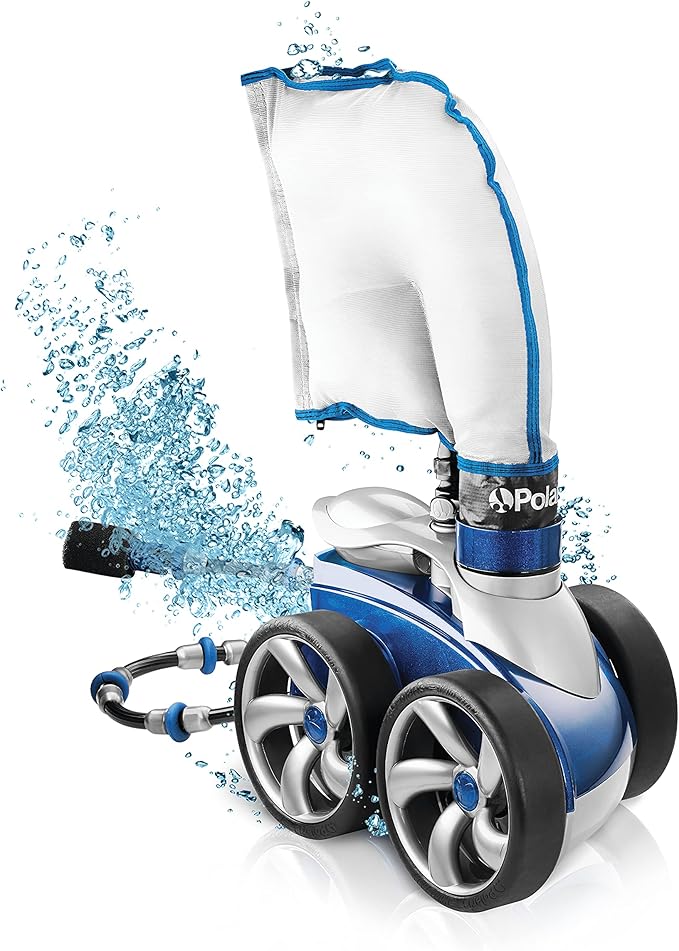
Triple venturi jets power make the Polaris Vac-Sweep 3900 Sport stand out in pressure-side pool cleaners, ideal for anyone with an in-ground pool looking for strong suction. It handles all pool shapes and surfaces, delivering deep cleaning performance without trouble.
Setting it up is straightforward thanks to its touch control method. Daily use involves watching it glide smoothly while it scrubs and sweeps both floors and walls.
The extra-large 2.5-inch inlet is great for picking up larger debris, meaning less frequent manual cleanup. Being weather resistant adds to its usefulness in various outdoor conditions.
Its main job as a vacuum cleaner is performed exceptionally well due to all-wheel PosiDrive and powerful jets. The build feels sturdy and designed to last through regular pool cleaning sessions.
Praised for unmatched vacuum power, some users note weight as a bit on the heavier side, which might affect handling during setup or removal.
The strongest praise highlights unmatched vacuum power and effective debris pickup, especially large leaves and dirt. The most common complaint revolves around its weight, which can make handling cumbersome during installation or removal from the pool.
Those with diverse pool surfaces and larger debris will find it reliable and tough enough for the job. People seeking a lighter, battery-powered or fully automatic cleaner might prefer other options tailored for easier handling or cordless operation.
Pros
- Powerful triple venturi jets
- Safe for all pool surfaces
- Large inlet picks up big debris
- Weather resistant design
Cons
- Heavier than some competitors
- Requires AC/DC power source
| Specification | Details |
|---|---|
| Power Source | AC/DC |
| Control Method | Touch |
| Capacity | 5 liters |
| Load Capacity | 5.3 pounds |
| Inlet Size | 2.5 inches |
6. Polaris Quattro T2 Pressure-Side Pool Cleaner

People with inground pools who want a cleaner that climbs walls and maneuvers slopes well will appreciate the Polaris Quattro T2. Its biggest strength is the TankTrax Technology, which provides excellent traction for tackling steps and uneven surfaces.
Setting up the cleaner involves connecting it to a dedicated booster pump, which powers the unit. Day-to-day use is straightforward with push-button and touch controls, making operation simple.
Its weather-resistant design means it can handle outdoor conditions without any trouble, keeping your pool clean regularly without much attention needed.
The cleaner moves smoothly across pool surfaces thanks to the track-drive system, reaching tough spots thanks to its superior traction. It feels solid and durable, built to last through multiple seasons.
Most praise highlights its consistent wall climbing and navigation, though some mention the need for a separate booster pump adds extra equipment and cost.
The Polaris Quattro T2 performs very well on walls and steps, thanks to its track-drive technology. It keeps moving smoothly around the pool and tackles slopes with ease. The common drawback is the need for a booster pump, which means extra installation and equipment costs.
Anyone looking for reliable wall cleaning and strong traction will be happy with this model. Those wanting a simpler or less bulky option may want to consider suction-side cleaners, as this one involves more setup and space around the pool pump system.
Pros
- Excellent wall-climbing with TankTrax Technology
- Simple push-button, touch operation
- Durable and weather-resistant design
- Strong suction with dedicated booster pump
Cons
- Requires separate booster pump to operate
- Larger setup compared to suction-side cleaners
| Specification | Details |
|---|---|
| Power Source | Pump Powered |
| Control Method | Push Button, Touch |
| Capacity | 2.75 inches |
| Load Capacity | 75 pounds |
| Special Features | Weather Resistant |
7. Upgrade Pool Pressure Side Sweeper

Designed for anyone looking to upgrade their pool cleaning routine, this pressure side sweeper stands out with its durable construction and ability to handle high water pressure. It fits pools equipped with specific pump requirements, making it ideal for those wanting a reliable, sturdy cleaner that won’t easily wear out.
Setting it up requires a 1.5-inch female thread connection to the booster pump and a water pressure of 4 Bar. The four-wheel design helps it move steadily around the pool, while the upgraded hose and plastic components feel tough enough to handle frequent use without breaking.
Regular use mainly involves fitting it correctly and ensuring your pool system meets the pressure needs for effective cleaning.
Cleaning performance matches the sturdy build; it sweeps debris using hydraulic power driven by the pool’s water flow. The materials used are noticeably high quality, contributing to a longer lifespan.
One standout feature is its durable construction, but some note that the connection thread and pressure requirements might limit compatibility with certain pool setups.
The strongest praise lies in its long-lasting, high-quality materials that handle regular pool cleaning well. The most common issue is its strict requirement for a 1.5-inch female thread and water pressure, which can exclude some pool systems.
Anyone with a compatible pool pump will find the durability and cleaning power satisfying. Pools without the necessary pressure or thread size should look into alternative models better suited for their setup.
Pros
- Durable, high-quality plastic components
- Stable movement with four-wheel design
- Suitable for pools with adequate water pressure
- Reliable hydraulic power operation
Cons
- Only fits booster pumps with 1.5-inch female thread
- Requires at least 4 Bar water pressure to work
| Specification | Details |
|---|---|
| Power Source | hydraulic_powered |
| Connection Requirement | 1.5-inch female thread |
| Required Water Pressure | 4 Bar |
| Design | Four-Wheel Design |
8. Upgrade Pool Pressure Side Sweeper

Upgrade Pool Pressure Side Sweeper is built to keep your pool clean with strong hydraulic power. Ideal for pools equipped with a 1.5-inch female thread booster pump and 4 Bar water pressure, it stands out for its durable materials and reliable performance in removing debris.
Setup requires connecting to a water inlet with proper threading and pressure, which means checking your pool pump compatibility first. The four-wheel design lets it move steadily on pool floors, while the improved plastics help resist wear and tear, making daily pool cleaning consistent and straightforward.
It handles pool debris effectively thanks to its hydraulic power source. The high-quality plastic components increase its durability during frequent use.
Most praise highlights its sturdy build and efficient cleaning, while some users mention compatibility limits with certain pumps as a drawback.
Hose and machine parts use hard plastics that hold up well over time. The cleaner works reliably with a booster pump and pool water inlet that have 1.5-inch female threads and provide the needed water pressure. Some have found issues if parts were missing or didn’t match these specifications, but replacements can be requested through Amazon.
Ideal for pools with the right pump and inlet size, people wanting a durable pressure side cleaner will appreciate this model. Those with smaller water pressure systems or different thread sizes should consider cleaners that fit their setup better to avoid connection problems.
Pros
- Durable high-quality plastic parts
- Moves smoothly with four-wheel design
- Works with standard 1.5-inch water inlets
- Hydraulic power provides consistent cleaning
Cons
- Requires specific 4 Bar water pressure
- Not compatible with all pump connections
| Specification | Details |
|---|---|
| Power Source | hydraulic_powered |
| Hose and Components Material | high-quality plastics |
| Water Pressure Requirement | 4 Bar |
| Connection Thread Size | 1.5-inch female thread |
| Wheel Design | Four-Wheel Design |
9. Polaris Vac-Sweep 65 Pressure-Side Pool Cleaner

Cleaning a pool without constant supervision becomes a simple task with the Polaris Vac-Sweep 65 Pressure-Side Pool Cleaner. It suits people with in-ground vinyl or fiberglass pools, especially ones with uneven bottoms, who want a dependable cleaner that won’t bog down their filtration system.
Its biggest strength lies in how it uses pressure to clean thoroughly without stressing other pool equipment.
Setup requires just a few minutes with a straightforward installation. You connect it to your pool’s return line, and it runs on the pressure of clean water flowing back.
The unique detachable debris bag makes daily use practical because it catches everything from small leaves to bigger twigs, protecting your pump and filter. The jet sweep feature helps loosen dirt from walls and corners, making the cleaner efficient throughout the pool.
In performance, this cleaner vacuums the pool bottom and sweeps the sides effectively within about three hours. The build quality feels solid, with a well-designed debris bag that’s easy to empty and reattach. Many users appreciate its reliable cleaning power and ease of use, but some note that it might miss very fine particles occasionally or require occasional adjustment for best results.
The debris bag efficiently collects large objects like twigs and pebbles which helps to keep the filter and pump clean, though some users find the cleaner occasionally misses very tiny debris. Routine adjustments can improve performance but add to maintenance time.
Those with vinyl or fiberglass in-ground pools, especially with uneven bottoms, will find this cleaner a good match. Anyone looking for ultra-fine particle removal might want to consider additional filtration options or other cleaners specialized in fine debris.
Pros
- Handles uneven pool bottoms well
- Easy installation in minutes
- Catches larger debris before pump
- Jet sweep loosens dirt on pool walls
Cons
- May miss very fine particles
- Occasional adjustments needed for best performance
| Specification | Details |
|---|---|
| Works in Pool Types | In-ground vinyl or fiberglass pools |
| Load Capacity | 13.94 pounds or 10 lbs |
| Control Method | Touch |
| Cleaning Cycle Time | Three hours or less |
| Special Feature | Detachable Debris Bag |
10. Zodiac Polaris Vac-Sweep 280 Black Max Pressure-Side Pool Cleaner

A solid choice for anyone with an in-ground pool looking for efficient cleaning powered by a dedicated booster pump. Its biggest strength lies in thorough vacuuming, sweeping, and scrubbing, completing a deep clean in under three hours without extra manual effort.
Setup requires a 1.5-inch pressure cleaner line and the addition of a Polaris booster pump since it doesn’t include one. The 31-foot feed hose gives enough reach for most pools, and once connected, it runs on its own power. Daily use involves just letting it do its job while it moves automatically around your pool surfaces.
It does an effective job cleaning various pool surfaces thanks to its double venturi jet design, which improves cleaning power. The weather-resistant build stands up well over time.
Most praise points to how thoroughly it cleans, while a common complaint relates to needing the separate booster pump to operate.
People appreciate how well it vacuum sweeps and scrubs the pool surfaces efficiently. The main drawback is the need to purchase a separate booster pump for operation.
Those with an existing Polaris booster pump or willing to add one will benefit greatly from this cleaner’s thorough performance. Someone without a pressure line or who wants an all-in-one device might want to explore other options.
Pros
- Cleans thoroughly in under 3 hours
- Works on all in-ground pool surfaces
- Includes a 31-foot feed hose
- Weather resistant for outdoor use
Cons
- Booster pump sold separately
- Requires dedicated pressure line
| Specification | Details |
|---|---|
| Power Source | manual |
| Control Method | touch |
| Load Capacity | 50 pounds |
| Efficiency | cleans pools in approximately 3 hours or less |
| Special Features | weather resistant |
11. Pentair Kreepy Krauly Platinum Pressure-Side Pool Cleaner
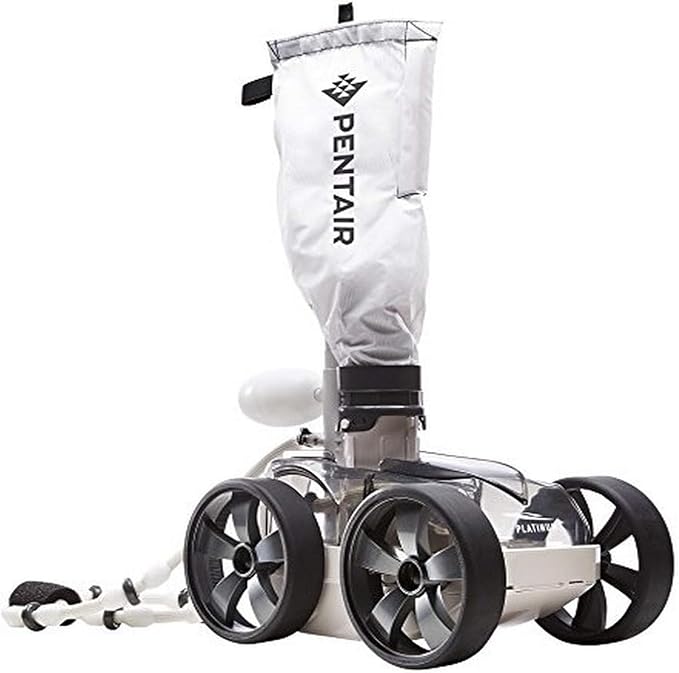
A lightweight pressure side pool cleaner designed for in-ground pools, the Pentair Kreepy Krauly Platinum works on multiple surfaces including concrete, vinyl, and fiberglass. Its biggest strength is how it efficiently cleans both floors and walls, making it a solid choice for anyone looking to maintain their pool with minimal effort.
Setting it up involves connecting the included 33-foot hose to your pool system, and the touch control makes operating it straightforward. It runs on a wood pellet power source, which avoids the need for complicated electrical hookups.
Daily use is mostly hands-off, with cleaning cycles completing in one to three hours depending on your pool size and condition.
It cleans well across different surface types, maintaining consistent suction and movement for clear floors and walls. The build is lightweight but durable enough to manage regular pool debris. Strong praise notes its reliability and wall-climbing ability, while occasional comments mention the hose length could limit very large pools.
The cleaner gets strong marks for reliably climbing pool walls and keeping all surfaces tidy without constant supervision. The most frequent complaint concerns the 33-foot hose, which might restrict cleaning coverage on very large pools.
People with average-sized in-ground pools who want a weight-friendly unit that tackles floors and walls will appreciate this model. Those with larger yards or who prefer electric-powered cleaners might want to consider other options with longer hoses or different power setups.
Pros
- Cleans both pool floors and walls
- Works with a variety of pool surfaces
- Lightweight and easy to handle
- Includes a 33-foot hose
Cons
- Hose length may be short for larger pools
- Powered by wood pellet, not electric
| Specification | Details |
|---|---|
| Power Source | Wood Pellet |
| Hose Length | 33′ |
| Cleaning Time | 1-3 hours |
| Compatible Surfaces | Concrete/gunite, vinyl-lined, fiberglass |
| Control Method | Touch |
| Weight | Lightweight |
12. Polaris F20 Vac-Sweep Pressure-Side Pool Cleaner

Pressure-side pool cleaners like the Polaris F20 Vac-Sweep catch attention for their ability to handle large debris, making them suited for pools that gather heavy leaves and twigs. Its standout feature is the single jet that provides a safe venturi vacuum, ensuring efficient cleaning without risking damage to the pool surface.
Setup involves connecting the cleaner to a booster pump since it requires extra water pressure to function properly. Using a separate debris bag keeps the pool water clear while the cleaner moves around, circulating filtered water as it cleans. The single jet aids in steady suction and reduces the need for frequent adjustments during regular pool cleaning sessions.
The cleaner performs well in picking up bulky debris, making it ideal for outdoor pools surrounded by trees or prone to larger dirt. The build is solid and reliable, with a one-year manufacturer’s warranty supporting its durability.
Commonly mentioned drawbacks include reliance on a booster pump, which adds to overall installation complexity and cost, but its cleaning efficiency receives frequent praise for thoroughness.
The cleaner reliably picks up large debris without scratching the pool surface, thanks to its safe venturi vacuum and sturdy design. The main drawback is the need for a booster pump, which makes installation more complex and might increase upfront costs compared to simpler models.
Those who have pools surrounded by heavy foliage or regularly face large debris will appreciate the performance here. Users with smaller pools or less debris might prefer a model without the booster pump requirement for easier setup and lower maintenance.
Pros
- Captures large debris in its own bag
- Safe venturi vacuum mechanism
- Circulates clean filtered pool water
- Simple single-jet design
Cons
- Requires booster pump for operation
- Setup can be more involved than suction cleaners
| Specification | Details |
|---|---|
| Brand Name | Polaris |
| Model Name | F20 |
| Unit Count | 1 Count |
| Manufacturer | Zodiac |
| Manufacturer Warranty Description | Warranted against manufacturer’s defects for 1 year |
Best Pressure Side Pool Cleaners Comparison Table
| Product | Power Source | Special Feature | Control Method | Load Capacity |
|---|---|---|---|---|
| Polaris Vac-Sweep 280 | AC | Faster Cleaning | Touch | 5 pounds |
| Upgrade Pool Sweeper | Hydraulic powered | Portable | Touch | 8.19 kg |
| Polaris Vac-Sweep 360 | No Power Source | Weather Resistant | Touch | 2 Liters |
| Polaris Vac-Sweep 380 | Dual Fuel | Weather Resistant | Touch | 5 liters |
| Polaris Vac-Sweep 3900 Sport | AC/DC | Weather Resistant | Touch | 5.3 pounds |
| Polaris Quattro T2 | Pump Powered | Weather Resistant | Push Button, Touch | 75 pounds |
| Upgrade Pool Sweeper Plus | Hydraulic powered | Four-Wheel Design | – | – |
| Upgrade Pool Sweeper Pro | Hydraulic powered | Four-Wheel Design | – | – |
| Polaris Vac-Sweep 65 | – | Detachable Debris Bag | Touch | 13.94 pounds |
| Polaris Black Max 280 | Manual | Weather Resistant | Touch | 50 pounds |
| Pentair Kreepy Krauly Platinum | Wood Pellet | Lightweight | Touch | – |
| Polaris F20 Vac-Sweep | – | 1 Year Warranty | – | – |
- Power SourceAC
- Special FeatureFaster Cleaning
- Control MethodTouch
- Load Capacity5 pounds
- Power SourceHydraulic powered
- Special FeaturePortable
- Control MethodTouch
- Load Capacity8.19 kg
- Power SourceNo Power Source
- Special FeatureWeather Resistant
- Control MethodTouch
- Load Capacity2 Liters
- Power SourceDual Fuel
- Special FeatureWeather Resistant
- Control MethodTouch
- Load Capacity5 liters
- Power SourceAC/DC
- Special FeatureWeather Resistant
- Control MethodTouch
- Load Capacity5.3 pounds
- Power SourcePump Powered
- Special FeatureWeather Resistant
- Control MethodPush Button, Touch
- Load Capacity75 pounds
- Power SourceHydraulic powered
- Special FeatureFour-Wheel Design
- Control Method–
- Load Capacity–
- Power SourceHydraulic powered
- Special FeatureFour-Wheel Design
- Control Method–
- Load Capacity–
- Power Source–
- Special FeatureDetachable Debris Bag
- Control MethodTouch
- Load Capacity13.94 pounds
- Power SourceManual
- Special FeatureWeather Resistant
- Control MethodTouch
- Load Capacity50 pounds
- Power SourceWood Pellet
- Special FeatureLightweight
- Control MethodTouch
- Load Capacity–
- Power Source–
- Special Feature1 Year Warranty
- Control Method–
- Load Capacity–
How to Choose the Best Pressure Side Pool Cleaner
Choosing the right pressure side pool cleaner depends on factors like pool size, debris type, and ease of maintenance. Picking the right model ensures efficient cleaning, reduces wear and tear, and helps avoid costly repairs or replacements over time.
Pool Size and Compatibility
Having tried several models, it’s clear that matching the cleaner to the pool’s shape and surface type can’t be overlooked. Odd-shaped pools or those with steps and ledges often need a cleaner designed to move smoothly around corners and varying depths.
A cleaner that works well on vinyl might struggle with rougher surfaces like concrete or gunite, leading to uneven cleaning or wear.
Compatibility with the pool’s pump and pressure system is just as important. Many cleaners specify minimum flow rates or pressure ratings; falling short can result in poor movement or weak suction.
Also, the cleaner needs to handle the pool’s volume effectively, too small a unit or one with insufficient capacity means longer cleaning times and more frequent manual intervention.
Check these points:
- Pool surface type (vinyl, concrete, fiberglass)
- Pool shape and presence of obstacles
- Pump flow rate and pressure specifications
- Pool volume versus cleaner capacity
Cleaning Performance and Efficiency
Cleaning performance depends heavily on suction power and how well the device collects debris. Small leaves, sand, and larger bits demand different approaches.
A weaker unit may only pick up fine particles but leave heavier debris behind or clog quickly. Cleaners that maintain consistent coverage and circulation ensure no spots are missed, which saves time and reduces manual cleanup.
The length of the cleaning cycle also affects convenience. Short cycles might need multiple runs a week, while longer ones can cover the pool in one go but could strain components if not designed for sustained use.
It’s useful to choose models that balance thorough cleaning on various debris sizes with cycle times that fit your schedule.
Focus on these features:
- Suction power (measured in PSI or flow rate)
- Debris collection method (bag, chamber size)
- Cycle duration
- Coverage pattern and consistency
Durability and Build Quality
Repeated exposure to pool chemicals and sunlight wears down many parts quickly. Cleaners made from UV-resistant plastics and chemical-proof materials tend to hold up longer. Hoses and swivels often fail first because they twist and stretch constantly, so pay attention to their build quality and the type of connections used.
Models that require frequent repairs or have fragile components quickly become more trouble than they’re worth. It’s helpful to pick options with commonly replaceable parts and a reputation for lasting a few seasons with regular use.
The less maintenance needed, the more time you save in the long run.
- UV and chemical-resistant plastics
- Durable hoses and swivels
- Ease of part replacement
- Manufacturer’s reputation for build quality
Ease of Installation and Maintenance
Installation without calling a pro is a major convenience factor. Units that come with clear instructions and snap-on fittings can be up and running quickly.
Complex setups often lead to mistakes that reduce cleaning effectiveness or cause leaks.
Access to filter bags or debris compartments makes a big difference in daily upkeep. Cleaners that allow removal and cleaning without tools save time and prevent frustration.
Replacement parts and accessories should be easy to find and affordable; some brands have better local support or online availability.
- Simple assembly steps
- Tool-free access to filter compartments
- Availability of replacement parts
- Clarity of instructions and customer support
Operational Noise and Energy Use
Noise levels can be quite noticeable if the cleaner runs often or during quiet times. Some models produce a steady hum, while others generate louder mechanical sounds.
A quieter unit makes pool maintenance less intrusive, especially in smaller backyard settings.
Energy consumption ties directly to how efficiently the device operates relative to pool size and cleaning power. A unit that draws excessive energy or causes the pump to run longer than necessary will increase running costs. Efficient models don’t just clean well; they also balance power use so the pool system functions economically without sacrificing performance.
- Decibel rating or user reports on noise
- Power consumption specs (watts or amps)
- Effect on overall pump operation time
- Impact on monthly energy bills
Tips for Optimizing Performance of Pressure Side Pool Cleaners
Pressure side pool cleaners rely on your pool’s pressure system to move around and collect debris efficiently. Setting the water pressure correctly can have a major impact on cleaning performance.
Too low, and the cleaner won’t move properly; too high, and it can cause parts to wear out faster or even dislodge the cleaner.
Here are some practical tips to get the best results:
- Check the manufacturer’s recommended psi range and adjust the booster pump or pressure valve accordingly.
- Ensure the cleaner’s tires or tracks are in good condition for smooth movement across various surfaces.
- Regularly inspect and clear the filter bag or debris collector to prevent clogging and maintain suction power.
- Position return jets to promote even circulation and assist the cleaner’s guided path.
Following these steps frequently will help the cleaner cover the entire pool floor and walls more effectively.
Essential Maintenance Practices to Prolong Your Pool Cleaner’s Lifespan
Routine maintenance extends a pressure side pool cleaner’s functionality and reduces the chance of breakdowns. Dirt, sand, leaves, and other debris can accumulate in small parts, restricting performance or causing damage.
Key maintenance tasks to keep in mind:
- After each cleaning session, remove and rinse out the debris bag or container thoroughly.
- Inspect moving parts like wheels, flaps, and the swivel joint for any signs of wear or blockage.
- Check hoses and connections for cracks or leaks and replace them promptly to avoid loss of pressure.
- Lubricate any parts specified by the manufacturer, usually the swivel or drive mechanisms.
Perform these simple tasks regularly to maintain steady operation and avoid costly repairs down the line.
Comparing Pressure Side Pool Cleaners with Suction and Robotic Alternatives
Pressure side pool cleaners differ from suction and robotic types in several ways, each with advantages depending on pool setup and user preferences.
Pressure side cleaners:
- Use the return water pressure from a booster pump, reducing debris load on the pool’s main filter.
- Generally better at handling larger debris such as leaves due to onboard collection bags.
- Require a compatible pool system with a booster pump or suitable pressure source.
Suction side cleaners:
- Attach directly to the suction line, pulling water and debris into the pool’s filtration system.
- Rely on the main pump, which can place more strain on the pool filter and may clog it faster.
Robotic cleaners:
- Operate independently with their own electric motors and filters.
- Offer programmable cleaning and energy efficiency, but may be pricier upfront.
Choosing between them depends on pool size, types of debris common in the area, and how much manual intervention you want.
People Also Asked
How Do I Maintain a Pressure Side Pool Cleaner Properly?
Regularly check and clean the filter bag and inspect moving parts for wear. Avoid debris buildup in the jet and wheels, which can slow down the cleaner or cause it to stop moving effectively.
What Size Pressure Side Pool Cleaner Fits a 20×40 Pool?
A pressure side pool cleaner designed for medium to large pools is suitable for a 20×40 pool. Choose a model with adjustable settings or that offers multiple hose lengths for optimal coverage.
Are Pressure Side Pool Cleaners Safe for All Pool Surfaces?
Most pressure side pool cleaners are safe for concrete, vinyl, and fiberglass pools but can be aggressive on delicate surfaces. Monitor your pool’s surface during the first use to ensure no scratching or damage occurs.
How Long Do Pressure Side Pool Cleaners Usually Last?
Pressure side pool cleaners generally last 3 to 5 years with proper care. Replace worn wheels or bearings promptly to extend the cleaner’s lifespan and performance.
What Are Common Problems with Pressure Side Pool Cleaners?
Clogs in the filter bag, hose leaks, and wheel or body wear are common issues. Regularly inspecting the hose and filter bag for damage can prevent these problems and keep the cleaner running smoothly.
Conclusion
Look for a pool cleaner that fits your pool size and shape well and effectively removes debris. Check the motor’s strength to ensure it can handle the job without frequent blockages.
Durability matters too since a cleaner that breaks down often means extra cost and hassle.
Choose a cleaner that suits how often you plan to use it and fits your budget sensibly. Investing in something too powerful isn’t necessary for small pools, but don’t go too cheap if your pool collects a lot of dirt.
Review the comparison table and the detailed picks above to find a model that matches your specific needs.