
Top 12 Best Pool Vac Picks That Will Blow Your Mind!
Many people with pools have dealt with the frustration of a vacuum that constantly clogs or can’t reach corners, turning pool maintenance into a tedious chore. The best pool vac can save time and effort by efficiently removing debris without frequent stops to clean the filter or untangle hoses. A poorly chosen vacuum often struggles with larger leaves or fine dirt, leaving patches of grime behind and requiring manual scrubbing afterward.
The most important aspects of a good pool vacuum include a strong suction motor, durable materials that resist corrosion, and a size that fits the pool’s dimensions. Vacuums with power ratings around 300-400 watts typically handle most debris, while a hose length of 30 to 40 feet offers enough reach without excessive tangling. Ease of cleaning the filter or debris bag and a buoyant design to avoid damaging the pool lining are also key factors to consider for practical use.
Need a Quick Check?
| Image | Product | Price |
|---|---|---|
Our Top Picks 1  | WYBOT C1 Robotic Vacuum | Check Price |
Our Top Picks 2  | KOKIDO XV910 Leaf Vacuum | Check Price |
Our Top Picks 3 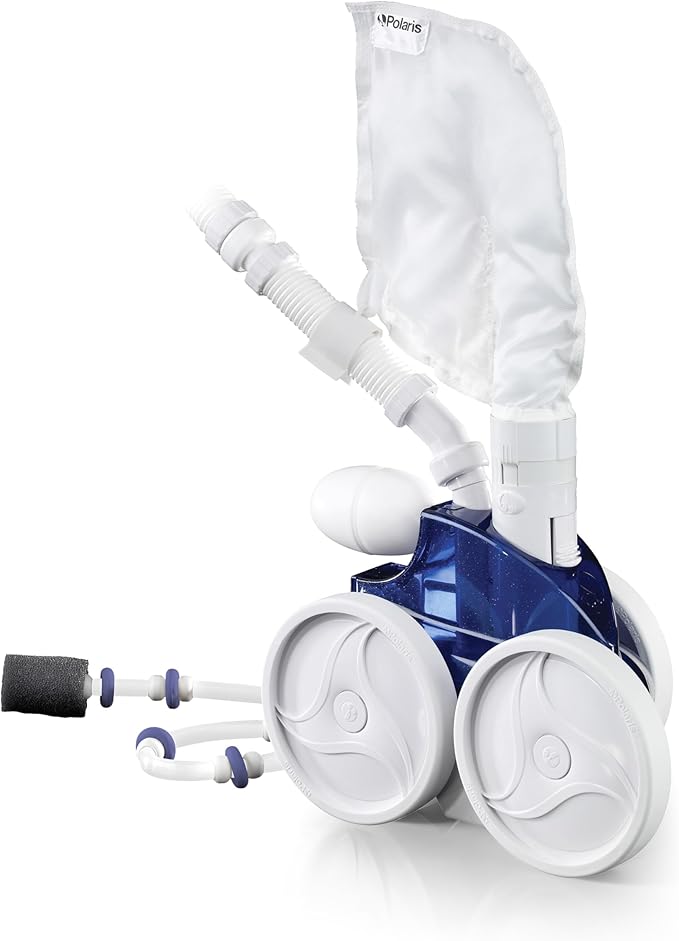 | Polaris Vac-Sweep 360 | Check Price |
Our Selected Top 12 Pool Vac Worth Your Money
This list features a variety of pool vacuums designed to keep your pool clean and clear. Each review explains how well the product performs, highlights its strengths and weaknesses, and identifies the type of user it best suits for efficient pool maintenance.
1. WYBOT C1 Cordless Robotic Pool Vacuum
Cleaning your inground pool becomes straightforward with a cordless robotic vacuum designed to tackle floors, walls, steps, and waterlines. Suitable for anyone with a pool who wants an easy, thorough cleaning, its key feature is powerful suction combined with smart navigation that easily manages slopes and obstacles.
Setup involves charging for about 160 minutes using its rechargeable lithium-ion battery, then controlling the device via an app for convenience. Its cordless design means no awkward wires in the pool, and the robot moves smoothly across surfaces thanks to dual high-grip track rollers and PVC brushes that help scrub while it vacuums.
Performance delivers on powerful suction with an upgraded water pump producing up to 3048 gallons per hour, efficiently picking up fine debris trapped by a 180μm filter. Build quality is solid with a triple-motor system that provides impressive climbing ability on steep slopes.
Praises focus on how well it cleans all pool surfaces, while some note charging time as a downside.
The vacuum’s strongest praise centers on its ability to clean every pool surface thoroughly with impressive suction and smart movement. A common complaint is about the lengthy charging time, which some find inconvenient for frequent use.
Those wanting a comprehensive cleaning solution with cordless freedom will find this robotic vacuum suitable. Pools requiring longer continuous operation might consider alternatives with extended battery life or faster charging options.
Pros
- Wireless, no cords to manage during cleaning
- Powerful suction system reaches 3048 GPH
- App control for easy operation and scheduling
- Climbs slopes up to 45° smoothly without issue
Cons
- Charging time takes 160 minutes
- Single battery limits longer cleaning sessions
| Specification | Details |
|---|---|
| Power Source | Battery Powered |
| Charging Time | 160 minutes |
| Battery Type | Lithium-Ion |
| Capacity | 3 liters |
| Suction Power | 3048 GPH |
2. KOKIDO XV910 Rechargeable Pool Leaf Vacuum
Heavy duty and cordless, the KOKIDO XV910 Rechargeable Pool Leaf Vacuum suits anyone dealing with serious pool debris especially during opening and closing. Its biggest strength lies in handling large amounts of leaves and dirt quickly with powerful suction and a roomy debris bag.
Setup is straightforward since it attaches easily to any standard pool pole. Charging the battery is simple and the vacuum runs for 75 minutes per charge, plenty of time for most pools.
Switching between the standard mesh bag and the finer filter lets you tackle varying debris sizes effectively. The touch controls mean you don’t have to fumble with buttons in wet conditions.
Powerblade technology pushes water at an impressive 62 gallons per minute, pulling in up to 7-inch debris without clogging. Its construction feels reliable, built for heavy use around larger debris.
The largest complaint is it can clog if leaves exceed recommended size. Suction power is solid and the extra-large 1.72-gallon bag reduces frequent emptying.
People praise its strong suction and large debris bag that make cleaning big messes quick and efficient. On the downside, clogging happens with oversized leaves, which slows down the process.
The vacuum is ideal for pools with lots of larger leaves or general debris. It’s less suited for cleaning tiny particles or algae, so those looking for that might want to consider more specialized tools.
Pros
- Runs cordless for 75 minutes per charge
- Large 1.72-gallon debris bag capacity
- Compatible with standard pool poles
- Touch controls convenient in wet conditions
Cons
- Leaves larger than 7 inches clog inlet
- Not designed for very fine debris like algae
| Specification | Details |
|---|---|
| Power Source | Battery Powered |
| Run Time | 75 minutes |
| Water Flow Rate | 62 GPM |
| Debris Bag Capacity | 1.72 gallons |
| Lithium Battery Voltage | 11.1 volts_of_direct_current |
3. Polaris Vac-Sweep 360 Pressure-Side Pool Cleaner
Constructed with durable weather-resistant materials, the Polaris Vac-Sweep 360 Pressure-Side Pool Cleaner suits in-ground pools of all shapes and surfaces. Its standout feature is operating solely on water pressure from the pool’s return line, requiring no booster pump for propulsion.
Attaching it to a pool with a dedicated cleaner return line is straightforward, and even pools without one can be retrofitted with a special eyeball kit to ensure proper operation. The cleaner holds up to 2 liters of debris, so daily upkeep involves emptying the trap periodically to maintain efficient cleaning.
Control is simple with touch adjustments, fitting smoothly into regular pool maintenance routines.
It delivers high cleaning efficiency, effectively picking up dirt and debris with its pressure-driven movement. The build is solid, designed to resist weather wear over time.
Users commonly praise its ability to keep pools consistently clean without extra pumps, but some mention challenges with ensuring the proper return line setup for optimal propulsion.
The cleaner is praised for providing strong, high-efficiency debris removal powered just by pool water pressure, eliminating the need for extra pumps. The most frequent complaint involves the necessity of having the right return line or modifying the pool setup, which some find inconvenient.
Those with pools already equipped with the proper return line or willing to retrofit one will find this cleaner effective and low-maintenance. Anyone without the means or patience to adjust their pool’s plumbing may want to consider alternative pool cleaner types.
Pros
- Runs without requiring an additional booster pump
- Compatible with all common pool surfaces
- Holds a sizable amount of debris at 2 liters
- Simple touch control method
Cons
- Needs a dedicated or retrofitted return line
- Setup can be tricky without proper pool equipment
| Specification | Details |
|---|---|
| Power Source | No Power Source |
| Efficiency | High |
| Load Capacity | 2 Liters |
| Control Method | Touch |
| Weather Resistant | Yes |
4. Hayward PoolVac XL Suction Pool Cleaner

Quiet operation stands out right away, making it ideal for anyone who values a peaceful pool cleaning experience. Designed for in-ground pools, it focuses on thorough debris removal through smart navigation technology that covers floor, walls, and coves efficiently.
Setup takes less than 10 minutes without needing any tools, connecting simply to a pool’s suction port or skimmer. Powered directly by your filtration system, you won’t have to worry about extra pumps. The vacuum’s wings and skirt ensure it grabs everything in its path while AquaPilot technology guides it smoothly around.
Maintenance is straightforward since there are no debris bags to empty.
Designed with patented AquaPilot technology, it cleans quietly and effectively with a wide vacuum inlet and unique wing design that handles leaves, twigs, and dirt reliably. The unit weighs 18 pounds, sturdy enough for reliable operation but light enough to manage.
The most common complaint involves occasional difficulty navigating complex pool shapes, though most find cleaning results very thorough.
Most praise highlights its quiet and efficient cleaning across all pool surfaces, with reliable debris suction. The common drawback lies in occasional navigation difficulties in pools with unusual layouts or many obstacles.
Perfect for anyone with a pool who wants easy, quiet, and low-effort maintenance that effectively removes debris. Those with irregularly shaped pools or limited filtration power might consider alternatives better suited to their specific needs.
Pros
- Quiet cleaning with intelligent steering system
- Easy setup without tools in under 10 minutes
- No debris bags to empty or maintain
- Strong suction for leaves and twigs
Cons
- Sometimes struggles with complex pool shapes
- Dependent on existing filtration system power
| Specification | Details |
|---|---|
| Power Source | Hydraulic Powered |
| Control Method | Touch |
| Voltage | 230 volts |
| Load Capacity | 18 pounds |
| Special Features | Patented AquaPilot technology, Wide vacuum inlet, Unique wing design |
5. Dolphin Nautilus CC Robotic Pool Vacuum
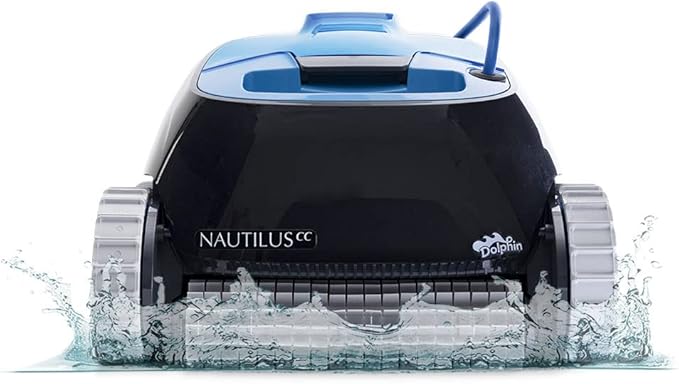
Robotic pool vacuums that clean walls and floors without manual scrubbing are especially helpful for busy people with pools. Suitable for various pool shapes and surfaces, the Dolphin Nautilus CC shines with its ability to climb and scrub walls effectively, making pool maintenance less of a chore.
Setting up involves just plugging it in and placing it into the pool, thanks to its plug-and-play design. A touch control method keeps operation simple, while the top-load filter basket lets you easily remove trapped debris, helping to keep the water clear. The corded electric power source ensures continuous cleaning without worrying about batteries.
The active scrubbing brush does an excellent job removing dirt without damaging pool surfaces, making the cleaning thorough. The build feels solid and well-designed for regular use, although some users mention the cord length can limit reach in larger pools. Cleaning and maintenance are straightforward, keeping the process easy and effective.
Cleaning is thorough thanks to the active scrubbing brush, which handles walls and floors well without damaging surfaces. Maintenance is straightforward with the top-load filter basket. Some find the cord length restrictive, limiting pool coverage in bigger spaces.
People with average-sized pools who want a hands-off cleaning solution will value its effectiveness and ease of use. Those with very large pools or without accessible 230 volts power outlets may want to explore alternatives better suited to their setup.
Pros
- Climbs and scrubs pool walls efficiently
- Easy to operate with touch control
- Top-load filter basket simplifies debris removal
- Gentle on surfaces but tough on debris
Cons
- Cord length may limit cleaning range
- Requires access to 230 volts power source
| Specification | Details |
|---|---|
| Power Source | Corded Electric |
| Control Method | Touch |
| Voltage | 230 volts |
| Special Features | AC_DC |
6. JESIMAIK Handheld Cordless Pool Vacuum

Cleaning leaves and debris from your above or inground pool just got much easier with a handheld device that fits in one hand without dragging a cord around. Suited for those who want quick touch-ups without hassle, its strongest point is the powerful suction combined with a widened nozzle that makes scooping up dirt faster.
Charging up the battery fully before use is a must. The unit is lightweight and easy to handle, switching between a scrubbing brush and a vacuum nozzle with a simple press of a button to fit the mess you’re tackling. Daily cleaning feels less like a chore because you don’t have to wrestle with bulky equipment or messy hoses.
Suction is strong thanks to an 18.5 gallons per minute flow driven by a 40W motor, picking up leaves and various debris without trouble. The dual head design adds versatility, letting you scrub or vacuum depending on pool needs. The build is lightweight and simple to clean, though some mention the battery life could be longer for bigger pools.
The strongest praise lies in the vacuum’s effective suction power combined with the widened nozzle that speeds up debris pickup. The most common complaint revolves around battery life, as it may not last long enough for bigger cleaning jobs without a recharge.
Anyone needing quick and cordless cleaning for a smaller pool will appreciate its ease of use and versatility. Those with larger pools or heavy-duty cleaning schedules might want to consider a model with longer battery life or more powerful capacity.
Pros
- Strong 40W motor for powerful suction
- Widened nozzle boosts cleaning efficiency by 60%
- Dual heads allow scrubbing or vacuuming
- Cordless and lightweight for easy handling
Cons
- Battery life may limit longer cleaning sessions
- Requires full charge before each use
| Specification | Details |
|---|---|
| Power Source | Battery Powered |
| Motor Power | 40W |
| Suction Flow Rate | 18.5 gallons per minute |
| Battery | 1 AAA battery included |
| Capacity | 18.5 gallons |
7. PC10 Handheld Rechargeable Pool Vacuum

Powerful suction from a 20V 40W motor makes this handheld rechargeable pool vacuum ideal for quickly picking up leaves, sand, and debris in pools, hot tubs, or spas. It suits those looking for a cordless, easy-to-handle option with enough runtime to clean medium-sized pools thoroughly.
Setup is simple since it’s cordless and rechargeable. The lightweight design and touch controls make daily use straightforward, letting you move around without getting tangled. It runs up to 60 minutes per charge and fully recharges in just 1.5 hours, giving enough flexibility for deep cleaning sessions without interruptions.
Strong suction handles a variety of debris well, cleaning efficiently. The build includes a 1.5-liter capacity container and five 2000mAh lithium-ion cells for lasting power. The common complaint mentions the need to clean and dry the machine after use to maintain performance, but overall, it holds up well in normal pool environments.
High suction power with a long runtime impress users looking for reliable debris pickup. Regular maintenance by cleaning and drying the vacuum after use is necessary to keep it working well over time without issues.
The vacuum is a great choice for people with pools who need a portable, cordless cleaner that offers strong suction. Those with larger pools or who dislike maintenance might lean toward bigger or corded options for extended use without frequent charging or upkeep.
Pros
- Strong motor with 20V and 40W output
- Runs up to 60 minutes on a single charge
- Quick recharge time of 1.5 hours
- Lightweight and cordless for easy handling
Cons
- Needs cleaning and drying after every use
- Battery powered, so occasional charging required
| Specification | Details |
|---|---|
| Power Source | Battery Powered |
| Voltage | 20 volts |
| Battery Description | Lithium-Ion |
| Capacity | 1.5 liters |
| Max Flow Rate | 4200L/h |
8. Gosvor LiteVac G1 Robotic Pool Vacuum

Anyone tired of manually cleaning every corner of their pool will find the Gosvor LiteVac G1 a solid pick. Great for medium to large pools, its main strength is the powerful suction combined with a comprehensive 4-in-1 cleaning that hits floors, walls, and waterlines without missing spots.
Setting the LiteVac G1 up is straightforward thanks to its app and push-button controls. The lightweight 15.2 lbs design makes it easy to handle, while the top-load 3.6L filter basket simplifies emptying.
You can choose cleaning modes like Smart, Floor, Wall, ECO, or Periodic, and it runs up to 200 minutes on a charge that takes about 3 hours.
Cleaning covers up to 2,153 sq ft per cycle with an impressive 3,960 GPH suction rate, safely grabbing the smallest debris down to 3 microns. The build feels sturdy with caterpillar treads and dual roller brushes that tackle climbing walls and tricky corners well. Some users note concerns about the app control occasionally lagging, but the machine rarely loses suction or needs recharging mid-cycle.
The vacuum thoroughly cleans with powerful suction and covers a large pool area without frequent recharging. Most find occasional slow app response to be the only real drawback in day-to-day use.
Perfect for those with a pool who want a lightweight, battery-powered cleaner that works on different pool surfaces. Those needing a simpler remote or wired option might want to consider alternatives.
Pros
- Strong 3,960 GPH suction power
- Cleans floor, walls, waterline, and shallow areas
- Lightweight at just 15.2 lbs
- Long battery runtime up to 200 minutes
Cons
- App control can lag occasionally
- Only one nonstandard battery included
| Specification | Details |
|---|---|
| Power Source | Battery Powered |
| Runtime | 150~200 Mins |
| Suction Power | 3,960 GPH |
| Filter Capacity | 3.6 Liters (Top-load) |
| Weight | 15.2 lbs |
| Charging Time | 3 Hours |
9. KOKIDO Cordless Handheld Spa Pool Vacuum

Cordless and lightweight, the KOKIDO Cordless Handheld Spa Pool Vacuum is designed for spot-cleaning small pools, hot tubs, and spas up to 20 feet. Its strongest feature is the 60-minute runtime that lets you clean without worrying about charging in the middle of the job.
Daily use is straightforward thanks to its cordless design and light weight under 3 pounds. Charging the built-in lithium-ion battery is simple, and the touch control makes turning it on or off easy.
It works quietly at 60dB and switches off automatically if accidentally lifted out of water, adding a layer of convenience and safety during quick touch-ups.
The vacuum delivers consistent suction suited for depths from 12 inches up to 9.8 feet. Built with IPX8 waterproof rating, it feels sturdy despite being compact at just 17 inches long. Users praise its quiet operation and portability, though some note the small 0.1-gallon capacity means frequent emptying during bigger cleanups.
The vacuum consistently runs for a full hour with good suction, making it perfect for quick cleaning sessions without noise disturbance. Frequent emptying is required due to the small capacity, which can slow down longer cleaning tasks. Battery safety features prevent damage when removed from water.
Those needing a compact tool for above-ground pools or hot tubs will appreciate its portability and quiet use. People with larger pools might find this model limiting and should look for one that offers bigger debris capacity and a longer reach.
Pros
- Lightweight and easy to handle
- Quiet operation at 60dB
- Runs for 60 minutes on a full charge
- Automatically powers off when not submerged
Cons
- Small 0.1-gallon debris capacity
- Not suitable for large or very deep pools
| Specification | Details |
|---|---|
| Runtime | 60 minutes |
| Water Depth Range | 12 inches to 9.8 feet |
| Weight | Under 3 pounds |
| Power Source | 3.7 volts Lithium-Ion Battery |
| Noise Level | 60 dB |
| Waterproof | IPX8 Grade |
10. Beatbot Sora 10 Cordless Pool Vacuum Robot

Beatbot Sora 10 Cordless Pool Vacuum Robot is perfect for people who want powerful, cordless pool cleaning. Its biggest strength is the massive 6,800 GPH suction that handles heavy debris with ease, making it ideal for large pools up to 3,229 sq.
ft.
Setting up involves charging its 7,800mAh battery and connecting to the app for control, so there’s no hassle with cords. It covers floors, shallow areas, and waterlines with three-zone coverage, running up to 300 minutes in one go.
The 5-liter debris capacity means fewer trips emptying it during cleaning sessions.
Performance excels with strong suction that picks up leaves and sand without clogging, while the dual brushes assist thorough scrubbing. Its build feels solid and well-designed for long runs on a single charge. One common drawback noted is the robot’s size, which might be bulky for smaller pools or storage spaces.
Strong suction and long runtime stand out as key strengths, allowing comprehensive pool cleaning including floors and waterlines without interruption. Some users find its size a drawback, especially if storage space is limited or they have a smaller pool to clean.
People with large pools and debris issues will appreciate the cleaning power and runtime. Those with limited space or smaller pools might want to explore more compact models for easier handling and storage.
Pros
- Strong 6,800 GPH suction power
- Runs up to 300 minutes on a single charge
- Handles large debris like leaves and sand easily
- App control for flexible operation
Cons
- Bigger size may be cumbersome in small pools
- Needs good storage space due to dimensions
| Specification | Details |
|---|---|
| Power Source | Battery Powered |
| Maximum Suction | 6,800 GPH |
| Battery | 7,800mAh Lithium Ion |
| Cleaning Duration | Up to 300 minutes |
| Debris Capacity | 5 liters |
| Pool Coverage | Up to 3,229 sq.ft (300㎡) |
11. Beatbot Sora 70 AI Pool Vacuum Robot

Cleaning the pool no longer feels like a chore with smooth, thorough coverage that reaches every corner, from the water surface to walls and shallow spots. Designed for those with pools seeking deep cleaning without constant supervision, its greatest strength lies in smartly covering every inch of the pool area.
Starting up involves just a few simple steps through the Beatbot app, which easily controls the vacuum. It automatically surfaces and parks itself, draining water inside after cleaning to make lifting easier.
The battery lasts long enough to clean large pools up to 3,200 sq. ft. on a single charge, reducing how often you need to recharge.
The JetPulse system stands out by pushing debris straight into the suction inlet, handling leaves and surface particles quickly and effectively. The build feels solid, with a good battery life of 5 hours running on a 10,000 mAh pack.
Many appreciate its smart surface parking feature, though some mention the 4.5-hour charging time as a drawback when used frequently.
The JetPulse system receives strong praise for precisely moving leaves and surface debris directly into the suction inlet, making pool cleaning appear quick and thorough. On the other hand, the need to wait 4.5 hours for a full recharge stands out as a common inconvenience for those using it repeatedly in short intervals.
Anyone with medium to large pools will likely enjoy the wide cleaning coverage and extended battery life. Those needing more frequent or continuous cleaning without charging breaks might want to consider alternatives with shorter recharge times or backup batteries.
Pros
- Full pool coverage including waterline and shallow areas
- Long battery life up to 5 hours
- Fast debris collection with JetPulse water jets
- One-touch retrieval via mobile app
Cons
- Charging takes 4.5 hours
- May require frequent retrieval in heavy debris
| Specification | Details |
|---|---|
| Power Source | Battery Powered |
| Battery Capacity | 10,000 mAh |
| Battery Voltage | 21.6 volts |
| Cleaning Coverage | Up to 3,200 sq. ft. per charge |
| Charging Time | 4.5 hours |
| Capacity | 6 liters |
12. VINGLI Automatic Wall-Climbing Pool Vacuum
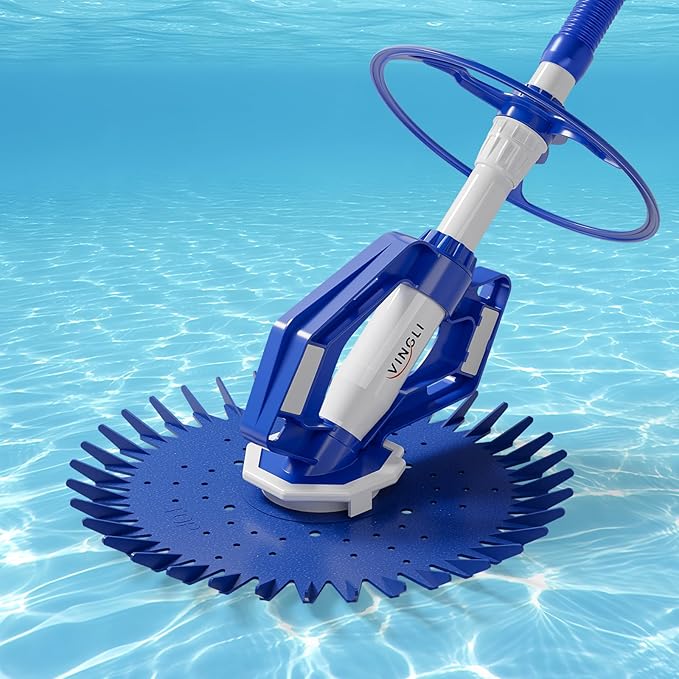
Perfect for anyone with an in-ground pool and a strong pump, this automatic pool vacuum cleans quietly and thoroughly. Its main strength lies in tackling pool debris with impressive suction power while silently climbing walls for a complete clean.
Setting it up takes just a few steps, and it connects easily to pumps with at least 3/4hp or 1600ghp. The adjustable suction control lets you fine-tune cleaning intensity, and the touch control system is straightforward to use.
Operating quietly means it won’t disrupt your backyard relaxation, making daily maintenance almost unnoticeable.
It handles dirt and debris efficiently, even on pool walls, thanks to strong air-powered suction. The build feels solid and designed to avoid getting stuck, though it requires a powerful enough pump to function well. Most praise its quiet operation; a common drawback is needing a minimum 3/4hp pool pump, which might be limiting for some.
The vacuum is praised for working quietly without that typical loud hammer noise, making pool cleaning less disruptive. Most users note it cleans pool walls and floors efficiently but must be paired with a strong enough pump, or it won’t operate properly.
People with a 3/4hp or more powerful pump looking for a mostly hands-off cleaning experience will appreciate its strengths. Those with smaller pumps or larger debris loads may want to look for alternatives better suited to their setup.
Pros
- Quiet operation, avoids loud hammering noises
- Efficient suction cleans floors and walls
- Easy assembly and installation
- Adjustable suction power control
Cons
- Requires a 3/4hp pump or stronger to work
- Limited capacity at 16 ounces
| Specification | Details |
|---|---|
| Power Source | air_powered |
| Load Capacity | 3/4 HP |
| Capacity | 16 ounces |
| Control Method | Touch |
| Special Features | Adjustable Suction Power |
Best Pool Vacuums Comparison Table
| Product | Power Source | Battery Energy | Capacity | Special Feature |
|---|---|---|---|---|
| WYBOT C1 Robotic Vacuum | Battery Powered | 99.34 watt-hours | – | Automatic, Cordless, Rechargeable |
| KOKIDO XV910 Leaf Vacuum | Battery Powered | – | 1.72 gal debris bag | Large leaf inlet |
| Polaris Vac-Sweep 360 | No Power Source | – | 2 Liters | Weather Resistant |
| Hayward PoolVac XL | Hydraulic Powered | – | – | Connects to skimmer |
| Dolphin Nautilus CC | Corded Electric | – | – | AC_DC |
| JESIMAIK Cordless Vacuum | Battery Powered | 2000 mAh | – | 18.5 GPM Powerful Suction |
| PC10 Handheld Vacuum | Battery Powered | 36 watt-hours | 1.5 Liters | Lightweight |
| Gosvor LiteVac G1 | Battery Powered | – | – | 150-200 Mins Runtime |
| KOKIDO Cordless Spa Vacuum | Battery Powered | – | – | IPX8 Waterproof |
| Beatbot Sora 10 | Battery Powered | 168.48 watt-hours | 5 Liters | 300 Min Runtime |
| Beatbot Sora 70 AI | Battery Powered | 203.04 watt-hours | – | Rechargeable |
| VINGLI Wall-Climb Vacuum | Air Powered | – | 16 ounces | Adjustable Suction Power |
- Power SourceBattery Powered
- Battery Energy99.34 watt-hours
- Capacity–
- Special FeatureAutomatic, Cordless, Rechargeable
- Power SourceBattery Powered
- Battery Energy–
- Capacity1.72 gal debris bag
- Special FeatureLarge leaf inlet
- Power SourceNo Power Source
- Battery Energy–
- Capacity2 Liters
- Special FeatureWeather Resistant
- Power SourceHydraulic Powered
- Battery Energy–
- Capacity–
- Special FeatureConnects to skimmer
- Power SourceCorded Electric
- Battery Energy–
- Capacity–
- Special FeatureAC_DC
- Power SourceBattery Powered
- Battery Energy2000 mAh
- Capacity–
- Special Feature18.5 GPM Powerful Suction
- Power SourceBattery Powered
- Battery Energy36 watt-hours
- Capacity1.5 Liters
- Special FeatureLightweight
- Power SourceBattery Powered
- Battery Energy–
- Capacity–
- Special Feature150-200 Mins Runtime
- Power SourceBattery Powered
- Battery Energy–
- Capacity–
- Special FeatureIPX8 Waterproof
- Power SourceBattery Powered
- Battery Energy168.48 watt-hours
- Capacity5 Liters
- Special Feature300 Min Runtime
- Power SourceBattery Powered
- Battery Energy203.04 watt-hours
- Capacity–
- Special FeatureRechargeable
- Power SourceAir Powered
- Battery Energy–
- Capacity16 ounces
- Special FeatureAdjustable Suction Power
How to Choose the Best Pool Vacuum
Choosing a pool vacuum depends on factors like pool size, surface type, and ease of use, ensuring thorough cleaning without damage. Picking the right features helps avoid frequent repairs and keeps maintenance simple, ultimately saving both money and effort over time.
Cleaning Efficiency
Handling a pool vacuum that struggles with leaves, fine sand, or algae can leave the bottom looking patchy and dirty despite frequent cleaning. Different surface materials like vinyl, concrete, and fiberglass react differently to cleaning tools.
Concrete pools often have rough textures that trap debris, so they need stronger suction and tougher brushes, while vinyl surfaces can get scratched if the brushes are too abrasive. Fiberglass, although smooth, can have stubborn dirt stuck in its gel coat.
A vacuum with adjustable suction power and multiple filter options handles a range of debris sizes more effectively. Look for units that offer suction ratings above 40 microns for fine particles and have softer brush attachments for delicate surfaces.
Models that combine strong suction with agitation brushes tend to deliver more thorough dirt removal and reduce the frequency of deep cleanings.
Ease of Use
Setting up a pool vacuum can be frustrating if it involves complicated assembly or requires special tools that aren’t included. Heavier models tire out the arm quickly, especially during manual operation, making the task feel like a workout instead of a chore.
Maneuverability affects how well the vacuum navigates corners and steps, areas that usually see the most buildup.
Lightweight designs under 5 pounds and swivel casters improve handling significantly. Choices between automatic operation, which lets the device roam and clean with minimal effort, and manual control, which gives precise cleaning in specific spots, cater to different user preferences.
A straightforward installation process with few parts and clear instructions usually means less time wasted before starting the cleaning.
Power Source and Runtime
The reliance on the pool’s pump pressure or battery power directly impacts how long and how effectively cleaning sessions can last. Pumps dependent on variable pressure may cause inconsistent suction, leaving some areas less covered. Battery-powered units can provide predictable cleaning but run the risk of dying mid-cycle if battery life is short.
Battery runtime of 60 minutes or more is practical for average-sized pools, with recharge times ideally under three hours to allow frequent use. Availability of replacement batteries or parts adds convenience and extends usable life. Constant power delivery, whether from strong pump flow rates or quality battery packs, means fewer interruptions and more reliable overall performance.
Durability and Materials
Pool water contains chlorine and other chemicals that degrade plastics and metals over time. Exposure to sun and UV rays also causes brittleness and fading, particularly in less durable models.
Moving components such as brushes and wheels endure regular wear and tear, often being the first parts to fail or require replacement.
Models with parts made from corrosion-resistant stainless steel or high-grade polymers last longer with less frequent breakdowns. Brushes made from nylon or polyurethane maintain effectiveness without wearing down too quickly.
A well-made vacuum resists chemical damage and includes easily accessible parts for maintenance, keeping operational quality high through many pool seasons.
Compatibility and Size
Different pools call for different equipment sizes and forms. A small above-ground pool needs a compact vacuum, while a large, irregularly shaped in-ground pool requires an adjustable model to handle curves and depths.
Compatibility with the current pool filter system or hoses ensures the vacuum connects easily without extra adapters.
Look for devices with telescoping poles or adjustable head angles to reach from shallow ends to deep bassins. Universal hose fittings sized to standard diameters like 1.5 inches avoid headaches with installation. Options that clearly list compatible pool types and sizes help avoid buying equipment that works poorly with a specific setup.
Effective Cleaning Techniques for Different Pool Types
Different pool surfaces and sizes need specific handling for effective cleaning. Concrete pools often collect tough dirt and algae, which means using a pool vacuum with strong suction and a stiff brush attachment pays off.
Vinyl-lined pools require gentler care to avoid surface damage. Soft brushes and lower suction settings help keep the liner intact. For fiberglass pools, a smooth brush paired with moderate suction avoids scratching the gel coat.
Besides the pool type, the vacuum head and movement pattern matter. Larger pools benefit from wider vacuum heads that cover more ground, while smaller pools suit compact designs for maneuvering tight spots.
Moving the vacuum slowly and systematically ensures no debris is missed. Circular motions work well on flat floors, whereas straight, overlapping strokes handle walls effectively.
- Match brush stiffness to pool surface
- Choose vacuum head size based on pool dimensions
- Adjust suction power according to debris and material sensitivity
- Use consistent, methodical motion patterns
Maintaining and Caring for Your Pool Vacuum to Maximize Lifespan
Routine upkeep of your pool vacuum will keep it running longer and maintain its cleaning power. After each session, rinse out debris from the filter or bag to prevent clogging.
Check hoses and connections for cracks or leaks that can reduce suction efficiency. Removing trapped debris from brushes and wheels also helps maintain smooth operation.
Storing the vacuum in a cool, shaded area protects sensitive components from sun damage and extreme temperatures. Lubricate moving parts or wheels occasionally if the manufacturer recommends it.
Inspect electrical cords and plugs for any signs of fraying or wear, replacing parts as necessary to ensure safety and reliability.
- Empty and clean filters or bags after use
- Inspect hoses and seals regularly for damage
- Store out of direct sunlight and extreme heat
- Perform periodic maintenance per the manual
Comparing Manual vs. Automatic Pool Vacuums: Pros and Cons
Manual pool vacuums require physical effort and steady control but tend to be less expensive and simpler to maintain. They allow precise targeting of problem spots but can be time-consuming over large pools.
Automatic vacuums handle cleaning with minimal supervision and can cover the entire pool surface efficiently. However, they often cost more upfront and may need occasional troubleshooting or part replacement.
Manual devices depend on your connection to the existing filtration system and work best with frequent use. Automatic models range from battery-powered to suction-driven units and offer various cleaning cycles. Their mobility enables reaching walls and steps without extra work, but some models struggle with debris-heavy pools or uneven surfaces.
- Manual vacuums: lower cost, hands-on control, more physical work
- Automatic vacuums: less effort, higher cost, occasional maintenance
- Manual suits small pools or spot cleaning
- Automatic fits larger pools or regular general cleaning
People Also Asked
How Do I Properly Size a Pool Vac for My Pool?
Choose a pool vacuum that matches the size and depth of your pool for effective cleaning. Larger pools benefit from a wider or more powerful vacuum head to cover more surface area, while compact models work better for small pools with tight spaces. Check the pool vacuum’s recommended pool size to decide.
What Maintenance Is Needed to Keep a Pool Vac Working?
Regularly clean the vacuum bag or filter to maintain suction and function. After each use, rinse off debris and check for blockages in hoses or the vacuum head. This simple upkeep prevents loss of power and extends the vacuum’s useful life.
Are Pool Vacs Safe to Use Around Children and Pets?
Pool vacuums can generally be safe around children and pets when supervised. Keep the vacuum’s cords and hoses out of reach to prevent tripping or entanglement. It is wise to turn off and unplug the device when not in use to avoid accidents.
How Do I Troubleshoot Common Problems with a Pool Vac?
Common issues include loss of suction or tangled hoses, often due to clogged filters or debris. Check for blockages in the hose and clean out the vacuum bag regularly to restore proper function. Also, ensure the vacuum head moves freely over the pool surfaces.
How Long Do Typical Pool Vacs Last with Regular Use?
Typical pool vacuums last about three to five years with regular maintenance and appropriate use. Avoid dragging the vacuum on rough surfaces and store it properly during off-seasons to prolong its lifespan. Replacement parts might be available if specific components wear out.
Conclusion
Consider the type of pool you have and the size of debris you need to clean. Ease of use is important, look for a vac that doesn’t require complicated setup or frequent maintenance. Power source matters too; battery-powered models offer mobility, while suction-only options might fit better with existing pool systems.
Choose a vacuum that fits your pool size and cleaning frequency, keeping your budget in mind. Larger pools or heavy debris might need a more powerful model, while smaller pools can get by with basic versions. Check the comparison table and product details above to find the pool vac that suits your specific needs.