
Top 12 Best Grease for Caliper Pins That Experts Swear By
Caliper pins can seize up or wear out quickly if they don’t get the right kind of lubrication. The best grease for caliper pins prevents sticking and corrosion, which stops annoying brake noises and helps maintain even brake pad wear. Using a cheap or unsuitable grease often leads to pins binding or rust building up, making brake jobs harder and reducing braking efficiency.
Grease for caliper pins needs to handle high temperatures, typically over 300°F, and resist water to avoid washing away during wet conditions. Lithium-based greases with molybdenum disulfide additives are common because they provide good lubrication and corrosion resistance.
A good grease also stays in place without running off and is thick enough to protect metal parts but easy enough to apply during maintenance.
Need a Quick Check?
| Image | Product | Price |
|---|---|---|
Our Top Picks 1  | AGS SIL-Glyde Brake Grease | Check Price |
Our Top Picks 2  | Universal Brake Caliper Grease | Check Price |
Our Top Picks 3  | Permatex Ultra Disc Lube | Check Price |
Our Selected Top 12 Grease for Caliper Pins You Can Trust
This list features greases specifically designed for caliper pins, highlighting their performance, compatibility, and durability. Each review covers key strengths and drawbacks, helping readers understand which product suits different needs and conditions for optimal brake maintenance.
1. AGS SIL-Glyde Silicone Brake Grease
AGS SIL-Glyde Silicone Brake Grease stands out with its built-in brush applicator, making it easy to apply a thin, even layer on caliper pins without mess. Suited for anyone needing to keep brake hardware quiet, lubricated, and protected from corrosion, it simplifies maintenance tasks with precise application.
Applying the grease is straightforward thanks to the brush in the cap, which lets you coat pins, pad ears, and clips evenly without touching the grease with your fingers. The tube fits comfortably in hand and controls the amount well.
This grease is designed specifically for brake hardware, so it should never touch pad friction surfaces or rotors.
Performance-wise, it does a solid job of stopping disc brake squeal by dampening vibrations and sealing out moisture and salt to prevent corrosion. The grease handles heat up to 425 °F and comes with a 20W-50 viscosity grade for reliable consistency. Most praise focused on its neat, targeted application and quiet braking.
Some users noted the tube could be stiffer for better control in colder weather.
Many appreciate the ease and cleanliness of the brush applicator combined with the grease’s effectiveness in stopping brake noise and preventing corrosion. A common drawback mentioned is the stiffness of the tube material in lower temperatures, which can make dispensing less smooth.
Those needing a simple, targeted way to lubricate caliper pins and related parts will appreciate this product. Avoid it if you want to grease brake friction surfaces or seek a grease that flows more easily in cold environments.
Pros
- Built-in brush applicator for precise, clean use
- Damps brake squeal by reducing vibration
- Protects hardware from water and road salt
- Suitable for various brake hardware parts
Cons
- Tube can be stiff in cold conditions
- Not for use on pad friction material or rotors
| Specification | Details |
|---|---|
| Container Type | Tube |
| Upper Temperature Rating | 425 °F |
| SAE J300 Viscosity Grade | 20W-50 |
2. Brake Grease for Caliper Parts
BTAS Brake Grease for Caliper Parts delivers strong, long-lasting lubrication that suits anyone working on brake caliper pins. Its key strength lies in reducing friction while preventing premature wear, making it ideal for maintaining smooth brake operation on various vehicles.
Applying the grease is straightforward thanks to the tube format. Its formula is compatible with plastics and rubber parts commonly found in brake assemblies, so you don’t have to worry about damage or breakdown of seals. The low viscosity (150 centipoise) means it spreads easily but stays in place, helping keep pins and pads moving quietly over time.
Performance excels with nano-solid ceramics and patented additives that significantly cut down annoying brake squeal, creating a quieter drive. Construction is fully synthetic, designed to handle temperatures up to 3000 °F without breaking down. The most noted praise involves its silence and smooth operation, while some feedback mentions the need for occasional reapplication during extended use.
Quiet braking is the product’s biggest advantage due to the nano-solid ceramic additives, which help eliminate noise and reduce friction. The common drawback lies in occasional need for re-greasing after prolonged or intense brake use, suggesting less endurance under extreme conditions.
Anyone looking for a synthetic grease compatible with diverse materials and capable of handling high heat will appreciate this. Drivers seeking something more heavy-duty for extreme temperatures might want to explore other options designed for those specific needs.
Pros
- Works with both plastic and rubber brake parts
- Heat resistance rated up to 3000 °F
- Effectively reduces brake squeal
- Low viscosity spreads easily in tight spots
Cons
- May require reapplication in heavy-use conditions
- Flash point at 250 °C limits some high-heat scenarios
| Specification | Details |
|---|---|
| Viscosity | 150 centipoise |
| Upper Temperature Rating | 3000 °F |
| Flash Point | 250 °C |
| Compatible Material | Plastic, Rubber |
| Container Type | Tube |
| NLGI Consistency Grade | Grade 1 |
3. Permatex Ultra Disc Brake Caliper Lube
Feels reliable under tough brake conditions, making it clear this grease is built for durability. Best suited for anyone working on brakes who needs a lubricant that stays put and keeps parts moving smoothly over time.
Its biggest strength lies in resisting melting even at high temperatures.
Application is straightforward with the bottle container, allowing precise control over how much lubricant goes onto caliper pins, sleeves, bushings, and pistons. The high viscosity means it clings well without dripping or running off during installation and use, so it stays in place during daily driving stresses.
Performance is steady, with the grease maintaining lubrication throughout the brake pad life despite exposure to heat up to 500 °F. Its synthetic formula handles metal components reliably, offering strong protection against sticking and seizing. Some mention the texture being thick, which requires effort during initial application, but that thickness contributes to its long-lasting effect.
Many appreciate how the grease holds up under high temperatures without melting, ensuring critical parts remain lubricated. On the downside, its thick consistency requires some effort during application, which might slow down the job slightly. This toughness in texture contributes to its staying power once applied.
Anyone needing reliable protection for metal brake components under heavy use will find it a good match. People looking for a lighter or quicker-spreading lubricant, or those working with non-metal parts, might want to consider other options more suited to those needs.
Pros
- Non-melting even under extreme brake heat
- High viscosity keeps grease firmly in place
- Works well on various caliper components
- Synthetic formula for long-lasting lubrication
Cons
- Thick texture makes application a bit tough
- Only compatible with metal parts
| Specification | Details |
|---|---|
| Upper Temperature Rating | 500 °F |
| Flash Point | 260 °C |
| Viscosity Level | High |
| SAE J300 Viscosity Grade | 20W |
| Compatible Material | Metal |
4. Keze Ceramic Brake Caliper Grease

Keze Ceramic Brake Caliper Grease suits anyone looking for a high-temp lubricant that tackles brake noise and prevents seizing. Its biggest strength lies in resisting extreme temperatures up to 3000°F, making it reliable for tough brake parts like caliper pins and slides.
Applying the grease is straightforward due to its thick, colored formula that clings well without dripping or mess. It spreads easily on brake pads, caliper pins, and shims during routine brake maintenance. The synthetic MCA combined with ceramic powder helps keep everything moving smoothly, cutting down friction and stopping annoying squeals on bolts and sleeves.
Performance-wise, it does a solid job resisting melting even under heavy brake heat, so parts stay lubricated and quiet. Built for harsh conditions, it protects metal components from rust and dirt by forming a strong barrier. Praise often highlights its temperature endurance and noise reduction, while the main complaint notes that the thickness can make initial spreading a bit tough.
The grease receives strong praise for preventing brake squeals and handling extreme heat without breaking down. Many mention how its thick texture can make application a little more challenging at first, but once in place, it stays put very well.
Those working on brake systems that see high temperatures and wet conditions will appreciate the protection this grease offers. Users wanting a lighter, easier-to-spread lubricant might look elsewhere, especially if they prefer applicators for precise application.
Pros
- Resists melting up to 3000°F
- Stops brake noise and seizing effectively
- Corrosion-resistant formula protects brake parts
- Thick, color-coded grease stays in place
Cons
- Spread may require extra effort due to thickness
- Comes only in bottle form, no applicator included
| Specification | Details |
|---|---|
| Upper Temperature Rating | 3000 °F |
| Container Type | Bottle |
| Flash Point | 3000 °F |
| Compatible Material | Brake Parts |
5. High Temp Brake Caliper Slide Lube

Ceramic particles form a protective and lubricating film in this tube of High Temp Brake Caliper Slide Lube, suited for anyone needing durable grease for caliper pins. Its greatest strength lies in handling extreme temperatures while preventing noise and wear during reliable braking.
Applying the grease is straightforward with its tube packaging that allows precise control, minimizing mess. It avoids contact with rotors and friction surfaces, focusing solely on caliper hardware. The lube remains effective in cold, wet, or hot environments, resisting water washout and keeping pin assemblies smoothly sliding without sticking.
Performance holds up well under intense heat, rated to 3000°F, so braking stays quiet and smooth with reduced vibration. It’s compatible with various materials like plastics and rubber parts, offering wear control through fine ceramic lubrication. The strongest praise highlights noise reduction, while the most common complaint points to careful application needed to avoid contamination of brake pads.
Quiet braking with less vibration stands out as the biggest plus, thanks to ceramic particles providing excellent lubrication and anti-squeal protection. Commonly, users mention that applying the grease carefully matters a lot to avoid accidental contamination of rotors and pads, which could impact brake performance.
Anyone needing a heat-resistant, reliable grease for caliper pins in varied weather conditions will appreciate this product. Those looking for something easier to apply without worrying about contamination issues might want to explore alternatives designed for broader brake system coverage.
Pros
- Withstands temperatures from -40°F to 3000°F
- Reduces brake squeal and vibration effectively
- Resists water washout during wet conditions
- Compatible with rubber and plastic brake parts
Cons
- Must avoid contact with rotors and friction surfaces
- Requires careful application to prevent contamination
| Specification | Details |
|---|---|
| Container Type | Tube |
| Viscosity | 150 centistokes |
| Upper Temperature Rating | 3000 °F |
| Compatible Material | Epdm Rubber, Nitrile Rubber, Plastic |
| Nlgi Consistency Grade | Grade 1 |
| SAE J300 Viscosity Grade | 75W-140 |
6. AGS SIL-Glyde Silicone Brake Grease
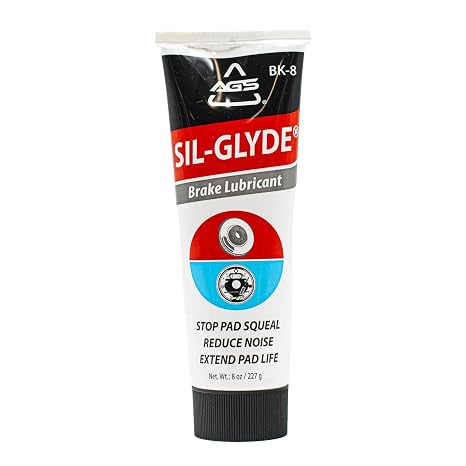
Quiet brakes after a pad job stand out immediately when using AGS SIL-Glyde Silicone Brake Grease. It’s designed specifically to stop disc brake squeal and suits anyone needing a reliable lubricant for caliper pins and related brake hardware. Its biggest strength lies in reducing vibration at critical contact points, keeping brakes silent and smooth.
Applying the grease to caliper slide pins, guide pins, and boots is straightforward, thanks to the handy tube container. Safe for rubber seals and plastic hardware, it means you don’t have to juggle multiple lubricants for different parts. Just avoid getting it on pad friction material, rotors, or drums, and you’re set.
This single grease covers everything from pad backing plates to piston boots, making maintenance simpler.
The lubricant performs well under heat, holding up to 425 °F while staying safe on rubber and plastic components. It prevents squealing effectively and protects moving parts from wear. Reviews often praise how it keeps brakes quiet; however, some users note that viscosity changes with temperature, which can affect application consistency.
It’s a solid, rubber-safe option that meets brake system needs without fuss.
Many users highlight how well this grease stops brake squeal and keeps caliper pins moving smoothly. A common drawback is the change in viscosity with temperature, which can sometimes make it a bit tricky to apply evenly in colder or hotter conditions.
This grease suits those looking for an all-in-one brake lubricant that’s safe on rubber seals and plastic parts. Those who prefer a grease with stable viscosity in extreme temperatures or need a product for direct contact on friction surfaces might want to consider other options.
Pros
- Stops disc brake squeal effectively
- Safe on rubber and plastic parts
- Covers multiple brake hardware components
- Heat resistant up to 425 °F
Cons
- Viscosity varies depending on temperature
- Not to be applied on friction surfaces
| Specification | Details |
|---|---|
| Upper Temperature Rating | 425 °F |
| Container Type | Tube |
| Compatible Material | Rubber, Plastic, Metal |
| Viscosity | Varies with temperature |
7. FOTU Brake Caliper Guide Pin Grease

Designed for brake caliper pins that deal with intense heat, this grease suits anyone needing reliable lubrication under pressure. Its key strength lies in withstanding extreme temperatures without melting or thinning out, ensuring your brake system keeps performing steadily.
Applying the grease is straightforward thanks to its bottle packaging, which lets you control how much you use without mess. It fits well on metal parts, keeping pin movement smooth. Thanks to its durability, repeated greasing isn’t necessary, which saves time on maintenance and keeps brakes functioning quietly and efficiently.
It holds up very well against the heat generated from braking, protecting pins from friction and wear over time. The formula lasts long after just one application. Users praise its consistent performance, though some mention wishing it came in a larger container for multiple jobs.
Its composition is reliable and made specifically for metal parts.
The grease consistently performs well under high temperatures, providing long-term lubrication and preventing wear on caliper pins, as stated in reviews. A common user concern is the relatively small container size, which may not be convenient for those with multiple vehicles or extensive brake work.
Drivers looking for a durable, heat-resistant grease for everyday brake maintenance will appreciate this product’s reliability. Those needing grease for non-metal parts or expecting a large quantity from one purchase should consider alternatives better suited to those needs.
Pros
- Handles extreme brake heat without melting
- Long-lasting lubrication with one application
- Works on a variety of vehicles
- Controlled application from bottle packaging
Cons
- Container might be small for multiple jobs
- Limited to metal parts only
| Specification | Details |
|---|---|
| Container Type | Bottle |
| Compatible Material | Metal |
| High-Temperature Resistance | Exceptional |
| Vehicle Compatibility | Cars, trucks, SUVs, motorcycles |
8. CRC Synthetic Brake and Caliper Grease

Stopping problems like caliper binding or corrosion can make brake maintenance a lot easier. Great for anyone working on brakes, especially when you want to avoid issues with vibrations or moisture affecting caliper pins.
Its main strength lies in handling extreme temperatures while protecting various materials.
Applying grease from a bottle makes the process straightforward at metal-to-metal contact points and sliding surfaces. It doesn’t harm rubber or plastic parts, so you don’t have to worry about damaging seals.
The formula sticks well, resisting moisture and washout, which keeps the caliper pins moving smoothly over time without constant reapplication.
It handles temperature swings from -40°F up to 400°F, so it won’t break down or lose effectiveness in demanding brake environments. The inclusion of molybdenum, PTFE, and graphite ensures reliable lubrication. Many users appreciate how it stops vibration and caliper binding, though a few mention the consistency can feel a bit thick to work with initially.
Many appreciate how well it prevents caliper pin binding and reduces brake vibration, making daily driving quieter and safer. The grease’s resistance to moisture means less frequent maintenance is needed. Some users find the grease thick, which makes it a bit tricky to apply evenly at first.
Ideal for anyone valuing lasting lubrication in extreme temperature conditions and safe use on plastics and rubber. Those looking for an easier-to-spread grease or different container types might want to explore other options.
Pros
- Prevents caliper binding and vibration
- Works across a wide temperature range
- Safe for plastic and rubber components
- Resists moisture and washing out
Cons
- Thick consistency can be hard to spread
- Only available in bottle container format
| Specification | Details |
|---|---|
| Upper Temperature Rating | 400 °F |
| Compatible Material | Metal;plastic;rubber |
| SAE J300 Viscosity Grade | 0W-20 |
| Container Type | Bottle |
| Flash Point | 232 °C |
9. Permatex Ultra Disc Brake Caliper Lube

High viscosity and a 204 °F upper temperature rating make it ideal for caliper pins working under tough brake conditions. Perfect for anyone needing a long-lasting, synthetic lubricant that keeps metal parts well-coated without melting or breaking down quickly.
Applying the grease is straightforward, and its synthetic makeup means it won’t run or melt even when brakes get hot. It fits right on caliper pins, sleeves, bushings, and pistons, making sure these parts stay lubricated throughout the brake pad’s life. You get consistent lubrication without frequent reapplications, thanks to the high viscosity and heat resistance.
It performs reliably in holding lubrication under demanding brake conditions, resisting breakdown at elevated temperatures. The high flash point of 500 °F adds to safety and durability. Its main praise focuses on lasting lubrication without melting, while some users find the high viscosity tricky in cold weather or tight spaces.
Lasting lubrication without melting is praised consistently, while the dense thickness sometimes makes it difficult to spread comfortably, especially in colder weather or cramped spots. Staying effective under heat without breaking down is its clear strength.
Anyone seeking dependable, heat-resistant grease for metal caliper parts will appreciate how it holds up during use. Those who prefer a thinner, easier-to-apply lubricant for colder climates or confined areas might want to explore other options better suited to those needs.
Pros
- Maintains lubrication through brake pad lifespan
- Non-melting under high heat
- Works well on multiple caliper components
- High flash point for safety
Cons
- High viscosity can be tough in cold conditions
- Application can be tricky in tight spaces
| Specification | Details |
|---|---|
| Viscosity | High |
| Upper Temperature Rating | 204 °F |
| Flash Point | 500 °F |
| Compatible Material | Metal |
| SAE J300 Viscosity Grade | 50 |
| Container Type | Box |
10. Brake Silicone Grease for Caliper Pins

People working on brake maintenance who need a grease that handles heat well will find this product suits their needs. Its standout feature is its ability to perform reliably under extreme temperatures, making it ideal for caliper pins exposed to heavy friction and heat during braking.
Applying the grease is straightforward since it works well with rubber, plastic, and metal parts commonly found in brake systems. Once applied, it forms a stable layer that fights moisture and oxidation, so it stays put even in wet conditions. This keeps the caliper pins moving smoothly, reducing the chance of sticking or squeaking over time.
Performance-wise, it does a solid job preventing brake noise and vibration by maintaining lubrication under temperatures up to 2100 °F. The grease’s resistance to water and oxidation extends the life of brake components noticeably. A frequent positive mention is its long-lasting waterproof protection. On the downside, some note it can be a bit thick and tricky to spread evenly in tight spaces.
The grease holds up well to very high temperatures and creates a lasting waterproof barrier, which helps in reducing brake noise and protecting components. Many appreciate its durability, although a common frustration is the difficulty spreading it evenly in confined areas.
Ideal for those who need a grease that can endure harsh heat and wet conditions while reducing brake noise. Users looking for something thinner for easier application might consider other options better suited for small, tight spots.
Pros
- Handles extreme heat up to 2100 °F
- Compatible with rubber, plastic, and metal parts
- Waterproof and oxidation-resistant formula
- Reduces brake noise and vibration effectively
Cons
- Thicker consistency can be hard to spread evenly
- May require careful application in tight spots
| Specification | Details |
|---|---|
| Upper Temperature Rating | 2100 °F |
| Compatible Material | Rubber; Plastic; Metal |
| Water Resistance | Waterproof |
| Oxidation Resistance | Yes |
11. AstraVox Ceramic Brake Grease

Designed for anyone looking to cut down on brake noise and protect caliper pins from rust, AstraVox Ceramic Brake Grease shines in noise reduction. It’s ceramic-based, so it really helps keep brakes quiet and smooth without the usual squealing sound that can get annoying on daily drives.
Applying this grease to brake calipers, guide pins, and pads is straightforward thanks to the bottle container. On a regular basis, it forms a solid protective layer that stands up well against moisture, preventing corrosion.
This means less maintenance hassle and longer-lasting brake components, which is handy for anyone driving in wet or varying weather conditions.
The grease performs well in quieting down harsh brake noises and vibrations, delivering a noticeable improvement in driving comfort. Reviews highlight how well it prevents rust and keeps the brake system stable over time. One downside mentioned is that the bottle size might feel a bit small for extensive projects, so it suits routine maintenance better than heavy-duty use.
Many appreciate its ability to eliminate brake noise and prevent rust, extending brake part life without fuss. A common downside is the bottle size, which may require repurchasing sooner for larger jobs.
Anyone needing reliable rust protection and quieter brakes on metal parts will be satisfied. Those requiring grease for other materials or larger quantities might want to look elsewhere.
Pros
- Effectively reduces brake noise and vibration
- Forms long-lasting rust and corrosion protection barrier
- Improves the stability of brake system performance
- Works well on metal components like caliper pins
Cons
- Smaller bottle size may run out quickly
- Not suitable for non-metal materials
| Specification | Details |
|---|---|
| Container Type | Bottle |
| Compatible Material | Metal |
12. Copper Anti-Seize Brake Caliper Grease

Copper Anti-Seize Brake Caliper Grease is a copper-based lubricant designed to prevent metal bonding and rust on brake caliper pins and related components. Ideal for anyone working on automotive brakes who needs reliable protection against corrosion and high heat, it excels at keeping parts easy to disassemble after long use.
Applying the grease is straightforward thanks to its tube container, making it easy to spread precisely on brake caliper pins and bolts. The high viscosity ensures it stays put under pressure and resists washing away in wet conditions.
It also suits use on various metal parts exposed to moisture, guarding them against rust and corrosion without frequent reapplication.
With a high upper temperature rating of 1800 °F, this grease maintains its effectiveness even in intense heat around brakes. The copper-based formula prevents seizing and metal bonding effectively. Most praise centers on how well it protects and prevents stuck parts, while some users note it can be a bit thick, which might require extra effort during application.
The grease is praised for its strong anti-seize properties, keeping caliper pins from rusting and locking up even under harsh conditions. Some find the thickness makes it a little challenging to spread evenly, especially in tight spots.
Ideal for those who need durable protection for brake components exposed to moisture and high heat. Those looking for something easier to apply or for use on non-metal parts may want to explore alternatives.
Pros
- Protects against rust and corrosion in wet conditions
- High viscosity stays in place under pressure
- Handles high temperatures up to 1800 °F
- Prevents metal bonding and seizing on brake parts
Cons
- Thick consistency can make application harder
- Only compatible with metal parts
| Specification | Details |
|---|---|
| Container Type | Tube |
| Viscosity | 0w |
| Upper Temperature Rating | 1800 °F |
| Flash Point | 1800 °F |
| Compatible Material | Metal |
| Viscosity Level | High |
Best Grease for Caliper Pins Comparison Table
| Product | Container Type | Upper Temperature Rating | Compatible Material | SAE J300 Viscosity Grade |
|---|---|---|---|---|
| AGS SIL-Glyde Brake Grease | Tube | 425 °F | – | 20W-50 |
| Universal Brake Caliper Grease | Tube | 3000 °F | Plastic, Rubber | 75W-140 |
| Permatex Ultra Disc Lube | Bottle | 500 °F | Metal | 20W |
| Keze Ceramic Caliper Grease | Bottle | 3000 °F | Brake Parts | – |
| High Temp Slide Lube | Tube | 3000 °F | Rubber, Plastic | 75W-140 |
| AGS SIL-Glyde Silicone Grease | Tube | 425 °F | Rubber, Plastic, Metal | – |
| FOTU Guide Pin Grease | Bottle | – | Metal | – |
| CRC Synthetic Brake Grease | Bottle | 400 °F | Metal, Plastic, Rubber | 0W-20 |
| Permatex Ultra Caliper Lube | Box | 204 °F | Metal | 50 |
| Silicone Caliper Pin Grease | – | 2100 °F | Rubber, Plastic, Metal | – |
| AstraVox Ceramic Grease | Bottle | – | Metal | – |
| Copper Anti-Seize Grease | Tube | 1800 °F | Metal | 0W |
- Container TypeTube
- Upper Temperature Rating425 °F
- Compatible Material–
- SAE J300 Viscosity Grade20W-50
- Container TypeTube
- Upper Temperature Rating3000 °F
- Compatible MaterialPlastic, Rubber
- SAE J300 Viscosity Grade75W-140
- Container TypeBottle
- Upper Temperature Rating500 °F
- Compatible MaterialMetal
- SAE J300 Viscosity Grade20W
- Container TypeBottle
- Upper Temperature Rating3000 °F
- Compatible MaterialBrake Parts
- SAE J300 Viscosity Grade–
- Container TypeTube
- Upper Temperature Rating3000 °F
- Compatible MaterialRubber, Plastic
- SAE J300 Viscosity Grade75W-140
- Container TypeTube
- Upper Temperature Rating425 °F
- Compatible MaterialRubber, Plastic, Metal
- SAE J300 Viscosity Grade–
- Container TypeBottle
- Upper Temperature Rating–
- Compatible MaterialMetal
- SAE J300 Viscosity Grade–
- Container TypeBottle
- Upper Temperature Rating400 °F
- Compatible MaterialMetal, Plastic, Rubber
- SAE J300 Viscosity Grade0W-20
- Container TypeBox
- Upper Temperature Rating204 °F
- Compatible MaterialMetal
- SAE J300 Viscosity Grade50
- Container Type–
- Upper Temperature Rating2100 °F
- Compatible MaterialRubber, Plastic, Metal
- SAE J300 Viscosity Grade–
- Container TypeBottle
- Upper Temperature Rating–
- Compatible MaterialMetal
- SAE J300 Viscosity Grade–
- Container TypeTube
- Upper Temperature Rating1800 °F
- Compatible MaterialMetal
- SAE J300 Viscosity Grade0W
How to Choose the Right Grease for Caliper Pins
Choosing grease that withstands high temperatures, resists water, and prevents corrosion ensures smooth caliper pin movement and longer part life. Prioritizing these qualities minimizes wear and maintenance, ultimately saving money and avoiding brake issues down the line.
Temperature Resistance
Brake caliper pins face extreme conditions as braking generates significant heat, often pushing temperatures above 300°F. The grease used must retain its texture without melting or evaporating, or the pins can seize up and cause uneven brake pad wear. Low melting point greases fail quickly here, leading to a noisy, sticky brake feel.
The ideal choice remains stable from below freezing to over 400°F, which means looking for a product rated specifically for automotive or high-temperature use.
Greases with a high dropping point and wide operating temperature range prevent breakdown even during intense stop-and-go driving. This avoids repeated maintenance and ensures smooth pin movement every time the brakes engage, critical for both performance and safety.
Water and Corrosion Resistance
Driving through rain or on wet roads exposes brake components to moisture that can cause rust on exposed metal parts. A grease lacking good water resistance washes away easily or lets water seep through, leading to corrosion on caliper pins and shortened part life.
This often results in sticking pins and uneven brake pressure, making braking less predictable.
Look for greases formulated to repel water and maintain a thick, protective barrier in humid or wet conditions. These greases also resist being flushed out during cleaning or rain, so lubrication lasts longer and protects effectively against rust. A water washout resistance rating of less than 5% is usually a sign of strong water resistance.
Compatibility with Materials
Caliper pins often slide inside rubber boots and interact with metals like steel or aluminum. Harsh chemicals or petroleum-based greases can degrade rubber, causing cracks or leaks in boots that then admit dirt and moisture. Similarly, some greases can corrode metals or react poorly with common brake materials.
Using a grease specifically labeled as safe for rubber seals and compatible with steel and aluminum ensures no damage over time. A synthetic or silicone-based formula tends to avoid chemical reactions and preserve the integrity of all the materials in the caliper assembly.
This means less risk of premature part failure or costly brake system repairs.
Viscosity and Consistency
Grease that is too runny can drip off pins during application or while driving, leaving areas unlubricated and prone to wear or corrosion. On the other hand, greases that are overly stiff might be hard to apply properly or fail to penetrate the tight gaps where lubrication is needed.
Both extremes cause uneven brake function and may require frequent re-greasing.
Medium-thick greases provide the best balance, they spread easily and stay put without creating a mess. This consistency reduces friction and ensures smooth caliper pin movement, contributing to quieter brakes and better pedal feel over time. Checking for NLGI grade 2 or a similar descriptor usually indicates a suitable viscosity for this purpose.
Durability and Longevity
Frequent reapplication can be inconvenient and increase the risk of grease contamination with dirt, dust, or brake dust, all of which degrade lubrication quality. Greases that cling well to caliper pins prevent these particles from embedding in the lubricant and maintain cushioning between moving parts over thousands of miles.
Long-lasting greases maintain their protective qualities without hardening or breaking down under stress. This durability reduces maintenance intervals and helps keep the braking system operating smoothly with minimal noise and wear.
Durable options often specify extended service life and resistance to mechanical shear or contamination.
Proper Application Techniques for Greasing Caliper Pins
Applying grease to caliper pins requires careful preparation and the right technique. Start by removing the caliper pins and cleaning off any old grease, dirt, or rust using a wire brush or cloth.
Avoid using compressed air to dry them as it may push debris deeper into crevices.
Apply a medium-viscosity brake grease that can withstand high temperatures without breaking down. A thin layer covering the entire pin surface is enough; too much grease can attract dirt, causing premature wear.
Before reinserting the pins, lubricate the caliper pin boots to ensure smooth movement and prevent trapping moisture. Tighten the pins to the manufacturer’s specified torque to avoid distortion or stripping. Proper lubrication reduces noise and improves brake response.
Maintenance Tips to Prolong Caliper Pin Longevity
Consistent maintenance is essential to keep caliper pins functioning correctly over time. Regularly inspect the pins and boots for signs of corrosion, cracks, or dirt buildup.
Replace any damaged boots promptly to keep contaminants out.
Reapply grease during routine brake checks or every 20,000 to 30,000 miles. Use a grease specially formulated for brake components, as general-purpose grease may wash away or fail under elevated temperatures.
- Clean pins thoroughly before each regreasing session.
- Ensure caliper pins move freely without excessive play.
- Check caliper alignment and sliding action to prevent uneven pad wear.
Following these steps helps maintain reliable braking and prevents costly repairs caused by seized pins.
Common Mistakes to Avoid When Lubricating Caliper Pins
Over-lubricating caliper pins often leads to grease squeezing out and attracting dust and debris, which accelerates wear. Apply only a thin, even coat to avoid this issue. Using the wrong type of grease, such as petroleum-based lubricants, can degrade rubber boots and cause pin corrosion.
Failing to clean pins and boots before reapplying grease allows old grime to remain, reducing the effectiveness of new lubrication. Avoid ignoring damaged or torn rubber boots; compromised seals expose pins to moisture and contaminants, leading to rust and sticking.
Neglecting to torque pins properly can cause uneven caliper pressures or strip threads, resulting in brake noise or failure. Taking time to follow proper procedures prevents problems down the road and extends the life of caliper components.
People Also Asked
How Do I Apply Grease to Caliper Pins Properly?
Use a small brush or your finger to evenly coat the caliper pins with a high-temperature brake grease before reinstalling. Avoid over-greasing, as excess grease can attract dirt and cause buildup inside the boot.
What Size Grease Tube Fits Most Caliper Pin Boots?
A standard 3 oz grease tube typically fits most caliper pin boots and is easy to apply without making a mess. Squeeze gently to control the amount dispensed, preventing oversaturation.
Is Grease for Caliper Pins Safe for Rubber Components?
Grease formulated for caliper pins is usually safe for rubber boots since it is silicone-based or synthetic, which doesn’t degrade rubber. Confirm the product label to avoid petroleum-based greases that can cause rubber to swell or crack.
How Often Should I Re-Grease My Caliper Pins?
Re-greasing caliper pins every 30,000 to 50,000 miles helps maintain smooth movement and prevent wear or corrosion. Inspection during brake service can help decide if reapplication is needed sooner.
What Are Common Problems Caused by Improper Caliper Pin Lubrication?
Insufficient lubrication causes the pins to seize or corrode, leading to uneven brake pad wear and possible sticking calipers. Lubrication failure often results in noisy brakes and reduced braking performance.
Conclusion
Choosing the right grease for caliper pins means focusing on a few key factors. It should resist water and brake dust to protect moving parts.
The grease should stay in place without washing out easily. Also, compatibility with brake components and high-temperature performance matter to avoid damage or failure over time.
Consider how often you will service your brakes and the conditions you drive in to decide on volume and type. A smaller tube may suffice for occasional use, while frequent repairs may call for a larger container. Refer back to the comparison table and detailed reviews above to find the product that fits your needs and budget best.