
Top 12 Best Dielectric Grease You Can’t Live Without Today
Electrical connections that aren’t properly protected often suffer from corrosion and poor conductivity over time. Using the best dielectric grease can prevent issues like these by blocking moisture and contaminants from reaching sensitive contacts. A low-quality or incorrect grease often breaks down or becomes sticky, causing more harm than good and leading to difficult maintenance or even component failure.
The most important features in dielectric grease include its dielectric strength, typically above 400 volts per mil, which ensures it can insulate against electrical current without degrading. Consistency matters as well; a silicone-based grease tends to stay stable over a wide temperature range from -40°F to 400°F and resists drying out. Ease of application and removal also affects usability, especially for automotive or outdoor electrical repairs where a clean, non-corrosive product is essential.
Need a Quick Check?
| Image | Product | Price |
|---|---|---|
Our Top Picks 1  | Permatex Tune-Up Grease | Check Price |
Our Top Picks 2  | Generic Dielectric Grease | Check Price |
Our Top Picks 3  | CRC Marine Grease | Check Price |
Our Selected Top 12 Dielectric Grease for Different Needs
This list features a variety of dielectric grease options suited for different applications and budgets. Each review explains how the grease performs, highlights its ideal users, and outlines its main advantages and disadvantages to help you make an informed choice.
1. Permatex Dielectric Tune-Up Grease
One of the main reasons to go with Permatex Dielectric Tune-Up Grease is its ability to protect electrical connections from damage caused by salt, dirt, and corrosion. It suits anyone working on car wiring or ignition systems that need reliable insulation against voltage leaks and long-lasting bulb sockets.
Applying it is straightforward since it comes in a container that’s easy to access. The grease stays put on wiring and connections without dripping or drying out quickly, which means it requires very little maintenance.
Because it’s designed for modern high energy ignition systems, it fits well in setups where strong, consistent insulation is crucial.
Performance-wise, it holds up well under heat, rated for up to 400 °C, and prevents voltage leaks effectively, extending socket life as intended. The grease’s clear strength lies in corrosion prevention.
Common critiques mention the flash point at 203 °F, which isn’t the highest compared to some other greases, meaning it’s best not exposed to flames or extremely high heat directly.
The grease is widely credited for keeping connections safe from corrosion and dirt, which greatly increases the durability of electrical parts. On the downside, the lower flash point means it’s not ideal around open flames or very hot engine compartments.
Drivers using modern ignition systems will appreciate its protective qualities. Those focused on extremely high-temperature environments may want to look for a grease with a higher flash point or different packaging options for more precise application.
Pros
- Protects against salt, dirt, and corrosion
- Prevents voltage leaks effectively
- Extends bulb sockets life
- Suitable for high energy ignition systems
Cons
- Flash point relatively low at 203 °F
- Only comes in a container format, no applicator
| Specification | Details |
|---|---|
| Upper Temperature Rating | 400 °C |
| Flash Point | 203 °F |
| Viscosity | 0w |
| Compatible Material | Electrical Connections |
| SAE J300 Viscosity Grade | 0W |
2. Dielectric Grease for Electrical Connectors
Protecting electrical connections from corrosion and wear keeps your vehicle’s electrical system reliable. Designed for automotive and other electrical setups, this dielectric grease is great for sealing, lubricating, and insulating connectors.
Its biggest strength is maintaining long-term performance by preventing moisture and oxidation damage.
Applying the grease is straightforward thanks to the tube packaging, allowing easy access to connectors without making a mess. It works well on multiple surfaces, including rubber, plastic, and ceramic, which covers most automotive electrical components.
The medium viscosity ensures it stays put under heat without dripping or drying out quickly, so routine checks won’t require constant reapplication.
It excels at preventing corrosion while tolerating heat up to 428 °F, so it keeps connections secure even in demanding engine environments. The silicone base resists oxidation effectively, ensuring long-term insulation. Praise revolves around its reliability in maintaining performance, while some users mention the tube size could be bigger for frequent use.
The grease reliably protects connectors over long periods, providing great oxidation and corrosion resistance, which keeps electrical components functioning well. A common complaint relates to the relatively small tube size, which may not last for frequent or widespread use.
Anyone seeking durable protection for automotive or electrical connectors that tolerate heat will find this grease helpful. Those needing larger quantities or a thinner consistency for precision tasks might want to explore other options.
Pros
- Effective sealant and insulator for electrical connections
- Resists oxidation and corrosion in harsh conditions
- Safe on multiple surfaces like rubber and plastic
- Withstands high temperatures up to 428 °F
Cons
- Tube size may be small for extensive projects
- Viscosity level might feel thick for delicate applications
| Specification | Details |
|---|---|
| Viscosity | 0W |
| Upper Temperature Rating | 428 °F |
| Flash Point | 500 °C |
| Compatible Materials | Plastic, Rubber |
| Container Type | Tube |
3. CRC Marine Dielectric Grease
With an upper temperature rating of 400 °F, CRC Marine Dielectric Grease is suited for anyone needing reliable protection against moisture and corrosion in electrical connections. It’s especially useful for those working with marine or automotive applications where durability under heat is crucial.
Applying this grease is straightforward thanks to its can packaging, which fits nicely in hand and lets you control the amount you use. It spreads smoothly on connectors and stays put without dripping or running, helping to keep contacts clean and sealed from water or dirt.
Daily maintenance of electrical parts feels easier with this handy protective layer.
Performance on corrosion resistance is solid, preserving electrical connections well even in challenging environments. The grease has a thick consistency that doesn’t break down quickly under heat, reflecting good build quality.
A common downside mentioned is that the can size and shape can make storage a bit awkward in tight spaces.
The grease holds up well against heat and moisture, providing dependable protection for electrical parts. Storage can be tricky due to the tall and narrow can design, which some find difficult to place in work areas. Application feels controlled but limited by the container shape.
People working in hot or marine environments will appreciate this grease for its protection and temperature tolerance. Those needing larger quantities or easier storage might look for alternative packaging options. It’s best when focused on protecting sensitive electrical connectors exposed to heat.
Pros
- High heat tolerance up to 400 °F
- Protects against corrosion and moisture
- Easy to apply from the can
- Stable consistency under heat
Cons
- Can shape makes storing inconvenient
- Small package width limits volume per application
| Specification | Details |
|---|---|
| Upper Temperature Rating | 400 °F |
| Container Type | Can |
| Package length | 2.032 cm |
| Package width | 2.54 cm |
| Package height | 20.066 cm |
| Product Type | AUTO ACCESSORY |
4. AGS Silicone Dielectric Grease

Anyone working with electrical connections in cars or boats will find the grease useful. Suited for spark plug boots, battery posts, and connector pins, its strongest feature is sealing out moisture and preventing corrosion to keep connections reliable over time.
Using it is simple because the built-in brush applicator in the cap puts on just the right amount of grease without mess. Make sure surfaces are clean and dry before brushing on a thin layer.
It spreads easily across rubber, plastic, and metal parts, helping prolong the life of terminals and boots without dripping or over-application.
The grease lives up to its purpose by forming a translucent, non-melting film that keeps salt, moisture, and corrosion out effectively. The container is solidly made as a can with a secure brush cap that avoids greasy fingers.
Most find the brush handy for targeted application, though a few mention the tube design might limit big jobs.
The grease’s main appeal is how well it seals out moisture and corrosion without melting or dripping, thanks to the thin, translucent film it forms. The integrated brush makes applying it neat and precise, although some users find the can format less suited to covering big areas quickly.
Ideal for anyone needing reliable protection on small terminal areas and spark plug boots. Those frequently tackling larger surfaces or wanting a more traditional squeeze tube might prefer a different style. Great for keeping electrical connections dry and corrosion-free in typical automotive and marine applications.
Pros
- Built-in brush applicator for precise application
- Seals out moisture, salt, and corrosion effectively
- Forms a translucent, non-melting protective film
- Works on multiple materials including rubber and metal
Cons
- Not ideal for large surface applications
- Can design may be less convenient than tubes
| Specification | Details |
|---|---|
| Container Type | Can |
| Compatible Material | Rubber, Plastic, Metal |
5. Silicone Dielectric Grease Automotive/Marine

Silicone Dielectric Grease Automotive/Marine stands out by offering solid protection against corrosion on electrical connections, especially suited for outdoor and marine settings. Its biggest strength lies in maintaining clean, corrosion-free pins and ports, which keeps gadgets like GoPros and fish finders powered reliably over time.
Applying the grease is straightforward: cleaning the port and pins first makes a noticeable difference, and then a simple swipe of the silicone compound seals things up. Daily use on boats or USB-powered gear reveals how it guards against moisture and salt, preserving connections that often fail in wet conditions. It handles multiple types of connections from batteries to navigation lights without causing any electrical issues.
The product holds up well under tough conditions, performing consistently to stop corrosion and support power stability. The tube container makes application neat and controlled.
Praise mostly focuses on its effectiveness in harsh marine environments, though some users mention the tube size could be bigger to cover more applications at once. The temperature tolerance up to 450 °F reassures its durability in warm engine spaces as well.
Reviews highlight how effectively the grease keeps navlight ports and USB connections corrosion-free, ensuring steady power for devices. At the same time, the small tube size is frequently mentioned as a limitation for users with many connections to cover.
People using this mainly for marine or harsh environment gear will appreciate the protection it offers. Those needing larger quantities or more container options might want to consider alternatives better suited for heavy or varied applications.
Pros
- Prevents corrosion on electrical connections
- Works well in marine and automotive environments
- Simple application with swab or brush
- High temperature resistance up to 450 °F
Cons
- Tube size can feel small for extensive use
- Only one container type available
| Specification | Details |
|---|---|
| Container Type | Tube |
| Upper Temperature Rating | 450 °F |
6. AstraVox Silicone Dielectric Grease
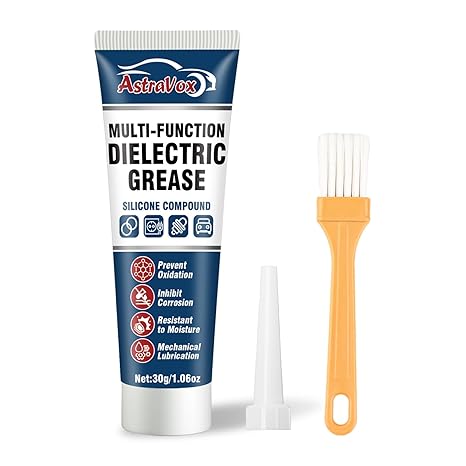
AstraVox Silicone Dielectric Grease is made to protect and secure electrical connections, especially in damp or dusty environments. It’s ideal for anyone needing reliable insulation to keep circuits safe from corrosion and shorts. Its standout feature is excellent waterproofing and anti-corrosion capability.
Applying the grease is straightforward since it comes in a handy bottle. Once spread on electrical connectors, it seals out moisture and dust effectively.
Regular exposure to outdoor or humid conditions won’t degrade its protective layer, so electrical parts maintain a solid connection without fuss or frequent reapplications.
The grease does its job well by preventing short circuits and corrosion, helping electrical setups stay secure for a long time. It’s built to withstand environmental challenges common in outdoor use. Most people praise its insulation qualities, but some mention the bottle can be a bit tricky to handle without making a mess.
The grease reliably prevents electrical shorts and protects metal parts from corrosion, but handling the bottle carefully is important to avoid spills. Its strong waterproof barrier is praised, although the packaging can be a bit inconvenient.
People working with outdoor electrical connections or in moist environments will appreciate its durability and protection. Those needing a grease for non-electrical or varied applications might look for alternatives better suited to other materials or uses.
Pros
- Effective waterproof seal for connectors
- Prevents corrosion on metal surfaces
- Good insulation properties
- Suitable for outdoor and humid conditions
Cons
- Bottle design can lead to mess during application
- Not indicated for use beyond electrical connectors
| Specification | Details |
|---|---|
| Container Type | Bottle |
| Compatible Material | Electrical Connectors |
| Insulation Ability | Prevents leakage and short circuits |
| Environmental Resistance | Waterproof and anti-corrosion |
7. Technician Grade Dielectric Silicone Grease

Feels smooth and easy to apply right out of the tube, perfect for anyone wanting to keep electrical parts clean and protected. It works best on spark plug boots and ignition systems, where reliable insulation and moisture protection are essential.
The single biggest strength lies in how well it seals and guards against corrosion.
Application is straightforward, spreading easily over rubber boots, wiring, and connectors without making a mess. It stays in place, so no worries about it running off or washing away during engine use. The grease also helps reduce voltage drops, which matters a lot in demanding conditions where consistent spark performance is important.
Built with a silicone formula designed specifically for electrical parts, it provides reliable insulation and lubrication. The grease creates a protective barrier on battery terminals and connectors, keeping out salt and dirt.
Many praise its durability, though some mention the tube size feels small for bigger jobs. It maintains conductivity effectively and prevents wear well.
The grease reliably seals and protects against corrosion while maintaining good conductivity, but the tube size is often noted as on the smaller side, which may require multiple purchases for extensive use. Its silicone base keeps connections insulated and lubricated under tough conditions.
Anyone working on spark plugs, ignition systems, or battery terminals will appreciate its performance. Those with frequent large-scale electrical maintenance might prefer a larger supply or alternative packaging for convenience.
Pros
- Easy to apply and spreads smoothly
- Seals out moisture and corrosion effectively
- Protects a variety of electrical connections
- Made in the USA with automotive-grade formula
Cons
- Tube size may be small for larger projects
- Grease texture might feel thick for some applications
| Specification | Details |
|---|---|
| Brand Name | Klear Concepts |
| Unit Count | 3.3 Fluid Ounces |
| Item Highlight | Klear Concepts Silicone Electrical Grease for Connectors, Spark Plugs & Rubber Parts, Automotive Formula, Made in the USA |
| Number of Packs | 1 |
| Number of Items | 1 |
| Manufacturer | Klear Concepts |
| Part Number | 900701 |
8. Super Lube Silicone Dielectric and Vacuum Grease

Super Lube Silicone Dielectric and Vacuum Grease works well for anyone needing reliable electrical insulation and moisture protection. Its biggest strength lies in being heat and moisture resistant while staying soft over time, making it a solid pick for various electrical and rubber parts.
Using it is straightforward, just squeeze the tube to apply the grease exactly where needed. It doesn’t dry out or harden, so you don’t need to reapply often. It’s great on battery terminals, brake parts, and bulb sockets, giving a lasting protective barrier against moisture and contaminants while dealing with heat up to 500 °F.
It does its job protecting electrical connections and rubber components without breaking down over time. The silicone base ensures it won’t cure or get crusty. Most appreciate how well it holds up under heat and wet conditions.
A common gripe mentions the tube can be tricky to control for precise application.
Super Lube remains soft and effective during use, giving strong moisture and heat protection. The biggest drawback noticed is the difficulty in applying small amounts from the tube cleanly.
People needing durable, waterproof grease for electrical or rubber parts will find this fits well. Those wanting a grease that hardens or cures might want to explore other options.
Pros
- Does not harden or dry out over time
- Resistant to heat up to 500 °F
- Waterproof, protects against moisture
- Works on rubber and electrical parts
Cons
- Tube can be hard to control precisely
- Not ideal for applications requiring curing grease
| Specification | Details |
|---|---|
| Container Type | Tube |
| Upper Temperature Rating | 500 °F |
| Flash Point | 572 °F |
| Compatible Material | Rubber |
9. Dielectric Grease 4-Pack

Silicone-based design sets this dielectric grease apart, offering strong sealing and insulating properties. Suitable for anyone needing reliable protection against moisture and corrosion in electrical connections.
Its main advantage is the ability to maintain performance across a wide temperature range, making it versatile for many applications.
Using the grease is straightforward thanks to the convenient 1oz tubes in a 4-pack, making it easy to apply on battery terminals, O-rings, or keyboard switches. It spreads smoothly to cover contacts without leaving a mess and helps prevent voltage leakage.
It serves as both a lubricant and protective barrier, which covers common needs with one product.
Performance holds up well even under extreme temperatures, reaching up to 400 °F. The silicone base keeps electrical connections well insulated and free from moisture damage. Most reviews highlight its excellent water resistance, while some point out that the tubes could be a bit larger to reduce frequent refilling on bigger projects.
The grease offers strong water resistance and keeps connections safe from corrosion and discharge. Its silicone base performs reliably in temperatures up to 400 °F. A common issue is the small size of each tube, requiring multiple applications for larger areas.
Ideal for those needing dependable protection in various environments, especially where temperature extremes occur. Users handling bigger projects might prefer a product with larger tubes to reduce application time.
Pros
- Excellent resistance to moisture and corrosion
- Works well as lubricant and insulator
- Maintains properties in high and low temperatures
- Four tubes provide good value and variety of applications
Cons
- Tubes could be larger for big jobs
- Application might be slower on very tight spaces
| Specification | Details |
|---|---|
| Container Type | Tube |
| Upper Temperature Rating | 400 °F |
| Pack Size | 4 Pack – 1oz tubes |
| Base Type | Silicone |
10. CRC Dielectric Grease

CRC Dielectric Grease stands out for its reliable moisture and corrosion protection, making it suitable for automotive, marine, and household use. Its biggest strength lies in keeping electrical connectors safe from harsh conditions, ensuring consistent performance over time.
Applying this grease is straightforward thanks to its opaque white gel form, which allows precise placement on terminals, plugs, and sockets. Using it as a dielectric lubricant helps reduce the risk of electrical failure by maintaining solid connections and preventing voltage leaks, especially in spark plug boots and other electrical systems.
The grease effectively guards against arcing and corrosion, even at high temperatures up to 204.4 degrees Celsius. It’s housed in a convenient bottle that makes it easy to control the amount used.
Common praise centers on its protective qualities, while some note it can be a bit sticky during application.
The grease delivers strong protection against moisture and voltage leaks, praised for keeping connections reliable even in tough environments. The most common issue is its sticky texture, which some find tricky when applying in tight spaces.
People needing durable electrical protection in automotive or marine settings will find it effective. Those looking for a less sticky or more transparent product might want to explore different options better suited for fine or delicate work.
Pros
- Prevents moisture and corrosion effectively
- Withstands temperatures up to 204.4 °C
- Easy to apply with precise gel form
- Suitable for many electrical components
Cons
- Can feel sticky during application
- Opaque gel may be harder to see in small areas
| Specification | Details |
|---|---|
| Container Type | Bottle |
| Upper Temperature Rating | 204.4 °C |
| Compatible Material | Electrical Connectors |
| Form | Opaque white gel |
11. Permatex Dielectric Tune-Up Grease PowerCan

Choosing a grease that really shields electrical parts from corrosion and voltage leaks is key for anyone dealing with automotive or marine wiring. Perfect for people focused on keeping connections reliable and extending the life of bulb sockets, this product stands out because it’s specifically tailored for modern ignition systems and harsh conditions.
The grease comes in a handy tube, making it easy to apply exactly where needed without mess. Applying it to spark plug boots, battery terminals, or trailer hitches feels straightforward due to its medium viscosity, which isn’t too runny or thick. Once applied, it won’t wash away easily, giving confidence that salt and dirt won’t cause trouble down the road.
It performs well in preventing voltage leaks and corrosion, sticking around to protect crucial connections through moisture and grime. The medium viscosity hits a nice balance, ensuring it stays put without gumming up the works. Most people praise how clean the tube is and how easily the grease spreads, while the main downside mentioned is that some find the tube size a bit small for bigger projects.
The grease earns consistent praise for how well it protects electrical connections from corrosion and prevents voltage leaks, which keeps wiring reliable over time. Frequent feedback points to the tube being somewhat small, which can limit how much can be done before running out.
Anyone needing reliable protection in automotive or marine environments will appreciate the formulation and ease of use. Those with larger electrical maintenance needs might prefer a product offered in bigger packaging.
Pros
- Medium viscosity for easy application
- Protects against salt and dirt
- Extends life of bulb sockets
- Suitable for modern ignition systems
Cons
- Tube size may be small for large jobs
- Flash point relatively low at 200 °F
| Specification | Details |
|---|---|
| Container Type | Tube |
| Viscosity | Medium |
| Flash Point | 200 °F |
| Compatible Material | Electrical Connections |
| Viscosity Level | Medium |
12. Permatex Dielectric Tune-Up Grease 6-Pack

Electrical connections often face issues from salt, dirt, and corrosion, making their maintenance crucial for reliable performance. Ideal for anyone working with automotive or high energy ignition systems, this grease’s biggest strength is protecting and extending the life of bulb sockets and connections.
Applying the grease is simple thanks to the tube packaging, allowing precise control during setup. Once in place, it prevents voltage leaks around electrical connections effectively. The pack of six tubes ensures you have enough for multiple uses, particularly useful for maintaining several bulbs or circuits regularly exposed to harsh conditions.
Protection against corrosion and voltage leaks works consistently, helping connections stay secure and functional over time. The product is designed specifically for electrical connections and performs well in preventing deterioration. Most praise highlights its ability to extend socket life, while a common complaint involves running out of grease faster than expected.
People appreciate how well it extends the life of bulb sockets, reducing maintenance frequency. On the downside, many find they need to restock sooner than they hoped due to regular use. The tubes do provide good control, but the amount can diminish quickly depending on application frequency.
This product suits those working with high energy ignition systems or needing reliable electrical connection protection in harsh environments. Anyone looking for grease usable beyond electrical components or larger quantities in a single container might want to consider alternatives.
Pros
- Protects from salt, dirt, and corrosion
- Prevents voltage leaks around connections
- Extends life of bulb sockets
- Handy tube packaging for precise use
Cons
- May run out faster than expected
- Only compatible with electrical connections
| Specification | Details |
|---|---|
| Container Type | Tube |
| Compatible Material | Electrical Connections |
| Sold in | Case packs of 6 |
| Intended Use | Modern high energy ignition systems |
Comparison of Top Dielectric Grease Products
| Product | Container Type | Upper Temperature Rating | Compatible Material | Flash Point |
|---|---|---|---|---|
| Permatex Tune-Up Grease | container | 400 °C | Electrical Connections | 203 °F |
| Generic Dielectric Grease | tube | 428 °F | Plastic, Rubber | 500 °C |
| CRC Marine Grease | can | 400 °F | – | – |
| AGS Silicone Grease | can | – | Rubber, Plastic, Metal | – |
| Silicone Dielectric Auto/Marine | tube | 450 °F | – | – |
| AstraVox Silicone Grease | bottle | – | Electrical Connectors | – |
| Technician Grade Silicone Grease | – | – | Connectors, Spark Plugs, Rubber | – |
| Super Lube Silicone Grease | tube | 500 °F | Rubber | 572 °F |
| Dielectric Grease 4-Pack | tube | 400 °F | – | – |
| CRC Dielectric Grease | bottle | 204.4 °C | Electrical Connectors | – |
| Permatex PowerCan Grease | tube | – | Electrical Connections | 200 °F |
| Permatex 6-Pack Tune-Up Grease | tube | – | Electrical Connections | – |
- Container Typecontainer
- Upper Temperature Rating400 °C
- Compatible MaterialElectrical Connections
- Flash Point203 °F
- Container Typetube
- Upper Temperature Rating428 °F
- Compatible MaterialPlastic, Rubber
- Flash Point500 °C
- Container Typecan
- Upper Temperature Rating400 °F
- Compatible Material–
- Flash Point–
- Container Typecan
- Upper Temperature Rating–
- Compatible MaterialRubber, Plastic, Metal
- Flash Point–
- Container Typetube
- Upper Temperature Rating450 °F
- Compatible Material–
- Flash Point–
- Container Typebottle
- Upper Temperature Rating–
- Compatible MaterialElectrical Connectors
- Flash Point–
- Container Type–
- Upper Temperature Rating–
- Compatible MaterialConnectors, Spark Plugs, Rubber
- Flash Point–
- Container Typetube
- Upper Temperature Rating500 °F
- Compatible MaterialRubber
- Flash Point572 °F
- Container Typetube
- Upper Temperature Rating400 °F
- Compatible Material–
- Flash Point–
- Container Typebottle
- Upper Temperature Rating204.4 °C
- Compatible MaterialElectrical Connectors
- Flash Point–
- Container Typetube
- Upper Temperature Rating–
- Compatible MaterialElectrical Connections
- Flash Point200 °F
- Container Typetube
- Upper Temperature Rating–
- Compatible MaterialElectrical Connections
- Flash Point–
How to Choose the Right Dielectric Grease
Choosing dielectric grease involves considering temperature resistance, water repellency, and compatibility with electrical components to ensure durable protection. Selecting the right type prevents corrosion and electrical issues, saving money and avoiding costly repairs over time.
Dielectric Properties
Connecting electrical parts often leads to corrosion and short circuits if the protective coating doesn’t hold up. A quality grease must resist electrical current, stopping arcing between contacts that can cause signal loss or damage.
The best products maintain their dielectric strength reliably through both cold mornings and hot afternoons, preventing current leakage regardless of temperature swings.
In daily use, poor resistance means disconnections and flickering lights or systems. Reliable insulation protects wiring without interfering with conductivity. Look for a dielectric grease that lists its breakdown voltage or dielectric constant; those ratings give a good indication of how well the grease insulates under electrical stress.
Temperature Resistance
Grease that melts or hardens quickly can ruin connections. Common issues arise in areas like engine bays where heat can exceed 200°F or in cold climates dropping below freezing. A grease’s operating temperature range tells how well it stands up to these extremes without breaking down or losing adhesion.
Consistent performance in heat avoids leaks and maintains the protective barrier against corrosion. In cold, the grease shouldn’t become brittle or crack. Checking for temperature ranges on product labels helps match the grease to the conditions it will face during use.
Compatibility with Materials
Electronics and automotive parts often use a mix of rubber, plastic, and metal. The grease must not cause swelling or cracking of rubber seals, fading or warping of plastics, or corrosion on metal surfaces. Reactions like these can quickly make components unusable.
Look for greases marked as safe or compatible with multiple materials, especially if you apply it on different components. This prevents damage that could cost time and money. Neutral formulas keep parts intact and functioning without surprises.
Water and Moisture Resistance
Water and moisture are major causes of rust and electrical failures. A good grease pushes water away and seals out humidity that can degrade connections.
Without this protection, metal connectors start to oxidize and electrical contacts lose their integrity.
Durability against moisture means fewer repairs and longer device life. Choose a product labeled as waterproof or moisture resistant, especially if used outdoors or in damp environments.
Protection that lasts under wet conditions offers real value over time.
Application and Cleanup
Spreading the grease evenly without making a mess is important for quick maintenance. Some greases come in tubes or syringes that allow controlled application, reducing waste and contamination. Thick or sticky greases can be tough to handle and clean up.
Easy removal from hands and tools saves time and prevents staining. Packaging designed with a nozzle or brush helps keep the workspace tidy and lets you store leftovers efficiently.
Consider how often you’ll use it and pick packaging accordingly.
Proper Application Techniques for Maximizing Dielectric Grease Performance
Applying dielectric grease correctly improves its effectiveness and extends the life of electrical components. Start by thoroughly cleaning the connection area to remove dirt, corrosion, or old grease. Use a small amount of grease on the contact points; a thin, even layer is sufficient to block moisture and prevent corrosion without interfering with electrical flow.
Avoid over-applying because excess grease can attract dust or dirt, leading to contamination. When working on connectors, apply the grease inside the rubber boots or on the mating surfaces before assembly. This practice seals out water while maintaining flexibility in the connection.
Applying it only on exposed contact points can help reduce wear caused by vibration as well. Regularly inspecting and properly greasing connectors during routine maintenance keeps circuits reliable, especially in outdoor or automotive environments where exposure to moisture and salt is common.
Maintaining Electrical Connections: Cleaning and Reapplying Dielectric Grease
Routine cleaning is essential before reapplying dielectric grease to maintain optimal electrical connections. Start by disconnecting the components and wiping away old grease, dirt, and corrosion using a cloth or brush with a mild solvent or electrical contact cleaner. Avoid abrasive tools that could damage connectors or protective coatings. Once the area is dry, apply a fresh layer of grease sparingly, focusing on sealing surfaces and contact points.
This prevents moisture intrusion and corrosion while ensuring consistent electrical conductivity. Skipping the cleaning step risks trapping debris under the grease, which reduces its effectiveness and could increase resistance or cause connection failure.
It’s best to check connections during regular vehicle or equipment maintenance to catch early signs of corrosion, especially in harsh environments, and keep the components functioning properly for a longer period.
Comparing Dielectric Grease with Other Electrical Insulation Options
Dielectric grease differs significantly from other electrical insulation materials like silicone sealants or heat shrink tubing. It serves mainly as a protective barrier against moisture and corrosion on electrical connections without affecting conductivity because it is non-conductive. Silicone sealants create a rigid waterproof seal, but once applied, they are difficult to remove and not suitable for connectors that require frequent disconnection. Heat shrink tubing provides mechanical protection and environmental sealing but does not prevent corrosion underneath if the connectors are exposed to moisture.
Dielectric grease remains soft and flexible, allowing connectors to fit snugly and maintain contact. For applications needing protection from dirt and water while allowing repeated disconnection, dielectric grease is often the preferred choice.
However, it does not insulate against electrical current; its role is to protect rather than provide insulation or secure connections mechanically.
People Also Asked
How Do I Apply Dielectric Grease Safely on Electrical Connections?
Apply dielectric grease by first cleaning the connection thoroughly to remove dirt and corrosion. Use a small amount on the metal parts to avoid excess that can attract dirt or cause buildup. Make sure to spread it evenly with a brush or your finger covered with a glove for best coverage.
Will Dielectric Grease Prevent Corrosion on Car Battery Terminals?
Dielectric grease helps prevent corrosion by sealing out moisture and oxygen from car battery terminals. It won’t conduct electricity, so you need to apply it after the terminals are cleaned and tightened to maintain a good connection and protect against rust.
Is Dielectric Grease Compatible with Rubber and Plastic Parts?
Dielectric grease is safe to use on rubber and plastic components since it won’t degrade these materials. It acts as a lubricant and protects seals from drying out, which can extend the life of gaskets or weather-stripping in automotive and electrical applications.
How Long Does Dielectric Grease Typically Last After Application?
Dielectric grease can last several years under normal conditions without needing reapplication. Exposure to dirt, water, and frequent disassembly can reduce its effectiveness, so inspect connections periodically and reapply if the grease looks dry or has been worn away.
Can Dielectric Grease Cause Problems If Used on Spark Plugs?
Using dielectric grease on spark plugs is generally fine on the boot to prevent moisture and ease future removal. Avoid putting grease on the actual spark plug electrode or threads, as it can interfere with proper grounding or cause misfires.
Conclusion
Choosing the right dielectric grease largely depends on its compatibility with the materials you will be using it on, how it handles moisture, and its ability to withstand the temperatures in your application. Thickness and ease of application also play a key role in making sure the grease stays where you need it without causing a mess.
Consider the size and shape of the area you plan to treat and how often the grease will need to be reapplied. More frequent use might justify buying a larger container. The comparison table and detailed picks above provide a clear overview to help match these needs to the best option for your specific situation.