
Top 12 Best Deck Board Removal Tool You Can’t Miss
Struggling with a cheap deck board removal tool can turn a simple project into a tiring ordeal. A dull blade or flimsy handle often bends or slips, causing damage to the boards or even risking injury.
Finding the best deck board removal tool means avoiding these pitfalls and getting through the job without extra frustration or wasted time.
The most important factors are a strong, well-tempered steel claw, a comfortable grip sized to your hand, and enough leverage to lift stubborn nails or fasteners efficiently. A tool length around 18 to 24 inches strikes a good balance between reach and control. Sturdy construction also helps prevent bending under pressure, while a clean design without crevices makes it easier to remove dirt and sap after use.
Need a Quick Check?
| Image | Product | Price |
|---|---|---|
Our Top Picks 1  | Deck Wrecker Tool | Check Price |
Our Top Picks 2  | meite 60″ Pry Bar | Check Price |
Our Top Picks 3  | 48 Pallet Buster Pry Bar | Check Price |
Our Selected Top 12 Deck Board Removal Tool Worth Considering
This list features a variety of deck board removal tools designed to help you remove boards efficiently and with minimal damage. Each review covers how well the tool performs, its ideal users, and highlights both its advantages and potential drawbacks.
1. Deck Wrecker Deck Board Removal Tool
Duckbill Deck Wrecker stands out as a specialized tool designed for removing deck boards with less strain and more efficiency. Ideal for anyone facing tough deck projects, it saves time and effort thanks to its intelligent design and durable materials.
Using the Deck Wrecker is simple thanks to its lightweight fiberglass handle, which feels easy to maneuver during extended use. The head’s heavy-gauge steel construction lets you pry up boards without worrying about damage or tool fatigue.
Its shape fits well under deck boards, making daily work feel smoother and less tiring.
Strong enough to handle stubborn nails and boards, the tool lives up to its promise of power and durability. Its fiberglass handle resists breaking while the steel head holds up well against hard use. Some users note it can be a bit stiff to position at first, but it generally performs reliably on all deck removal tasks.
The tool receives praise for its strong steel head and sturdy handle that handle stubborn deck boards without bending or breaking. One drawback mentioned is the initial stiffness when positioning the tool under boards, which some find a bit challenging at first.
Anyone needing a focused, tough deck board removal tool will find it effective and durable. Those looking for a multi-function tool or something with more ergonomic features might want to consider other options.
Pros
- Lightweight fiberglass handle for less fatigue
- Heavy-gauge steel head handles tough jobs
- Designed for quick, efficient deck board removal
- Durable build for long-term use
Cons
- Can feel stiff when first positioning
- Single tool, no added functions
| Specification | Details |
|---|---|
| Brand Name | DUCKBILL DECK WRECKER |
| Model Name | Duckbill Deck Wrecker |
| Manufacturer | Skagit Valley Innovations |
| Unit Count | 1 Count |
| Model Number | DW1F |
| Manufacturer Part Number | DW1F |
2. Meite 60 Inch Pallet Buster Pry Bar
Getting deck boards up feels much easier with the meite 60 Inch Pallet Buster Pry Bar, especially when dealing with tough nails and heavy wood. It suits anyone tackling demolition projects who wants a reliable tool to lift boards without straining their back. Its long handle and strong leverage stand out as the biggest strength.
Day-to-day use is straightforward once you get a grip on the bar’s size and weight. The 60-inch length means you can work while standing, avoiding constant bending or kneeling. The 110-degree fork angle slides under boards well, and the 2-inch forks fit most pallets and deck boards comfortably.
It’s entirely hand-powered, so no setup beyond hold and lift.
The carbon steel construction feels solid and built for heavy-duty use, offering good resistance to bending. It excels at removing deck boards and pallets, making those tough prying jobs feel less like a struggle. Heavy at just over 12 pounds, it requires strength but rewards with strong leverage.
Some mention that the weight can feel tiring during longer jobs.
The tool’s ability to pry up boards while standing is appreciated for preventing strain, making it effective on docks, decks, and pallets. Heavy weight at over 12 pounds is the most common drawback, as it may cause fatigue during extended work sessions.
Those looking for powerful leverage and a sturdy demolition tool will find it well suited. People needing lighter or more compact options should consider something smaller or less heavy for easier maneuverability in confined areas.
Pros
- Strong 60-inch lever reduces bending
- 110-degree fork angle for easy insertion
- Durable carbon steel construction
- 2-inch forks fit most pallets and decks
Cons
- Heavy weight can tire arms over long use
- Big size may be hard to control in tight spaces
| Specification | Details |
|---|---|
| Size | 60 Inch |
| Material | Carbon Steel |
| Item Weight | 12.62 pounds |
| Power Source | hand_powered |
| Fork Width | 2 Inches |
3. 48 Pallet Buster 110 Degree Decking Pry Bar
Strong leverage and good length make this a solid choice for removing deck boards without excessive strain. It suits people tackling decks, docks, or pallets who want to avoid bending over. The key strength is its ability to pry effectively while letting you work standing up.
Setup is simple since it’s a single, sturdy pry bar you just grab and use. The full 48 length helps apply force with less effort, sparing your knees and back from bending or kneeling. It’s hand powered, so no batteries or cords, just grab it and start pulling boards up.
The steel handle feels rugged and secure during use.
Made from high-quality carbon steel, it handles tearing and lifting without bending or breaking. Many praise how much easier it is on the back compared to shorter pry bars. The most common downside is its weight at 11.22 pounds, which can feel heavy during extended use.
Still, it does a reliable job on tough deck boards.
Many appreciate how it reduces strain on back and knees during deck removal. The most noted complaint is about the tool’s weight, which some find tiring for long projects. It performs well but requires some muscle to handle over time.
People struggling with back pain and looking for strong leverage will like this. Those wanting a lighter option or something more compact should consider other tools instead.
Pros
- 48-inch length saves back and knees
- Makes prying up deck boards easier and faster
- Stable, durable carbon steel construction
- Simple, hand-powered design
Cons
- Heavier than some alternative pry bars
- Bulkier size may be hard to store
| Specification | Details |
|---|---|
| Length | 48 inches |
| Material | High-quality carbon steel |
| Weight | 11.22 pounds |
| Color | Orange |
| Power Source | Hand powered |
4. HVDI 48 Pallet Buster Deck Board Removal Tool

High-quality carbon steel shapes a heavy-duty 48-inch pry bar designed specifically for removing deck boards and pallet plates. It suits anyone tackling large demolition without straining their back or knees thanks to its length, which provides excellent leverage and ergonomics.
Handling the tool is straightforward since it only requires hand power, and its 48-inch length helps keep you upright while working. This minimizes the usual bending or kneeling associated with deck board removal.
The wide pry bar surface easily fits under boards, allowing quick prying and pulling. Setup involves simply positioning it and using your body weight efficiently.
Built tough with carbon steel, the bar resists bending or breaking even under heavy use. It performs well at prying and removing boards without much effort due to its leverage. The biggest compliment from reviews praises how much it reduces back and knee pain during demolition projects.
A common complaint points out the tool’s 11.35-pound weight, which some find a bit heavy for prolonged use.
The main strength lies in reducing physical strain, allowing users to stay upright and avoid sore backs and knees. Heavy weight is the frequent downside mentioned, sometimes making it tiring to use over long periods.
Those working on big deck or pallet removal projects who need a tough, long pry bar will appreciate its construction and leverage. Users looking for a lighter tool or working in confined areas might want to consider alternatives.
Pros
- Strong carbon steel resists bending and breaking
- 48-inch length saves back and knees
- Simple hand-powered design
- Effective lever force for prying
Cons
- Relatively heavy at 11.35 pounds
- Large size may be unwieldy in tight spaces
| Specification | Details |
|---|---|
| Material | Carbon Steel |
| Length | 48 inches |
| Item Weight | 11.35 pounds |
| Power Source | Hand powered |
| Included Components | Pry Bar |
5. GreenTek Hardwood Floor Remover Pry Bar

GreenTek Hardwood Floor Remover Pry Bar stands out for its extra-long handle that helps protect your back during tough deck removal jobs. Ideal for anyone needing to take up deck boards or hardwood planks without straining knees and wrists.
Its biggest strength lies in combining power and ergonomic design to make demolition smoother and less tiring.
Using the tool is straightforward since it only requires hand power and arrives as a single sturdy pry bar. The long handle keeps you standing upright, cutting down the usual bending over or kneeling.
Handling weighs just under 10 pounds, which feels solid without being awkward. You simply slide the wide steel bar under deck boards and use leverage to pry them up fast.
Performance is impressive due to its durable steel construction that resists bending or breaking during heavy use. It removes full hardwood planks or deck boards in mostly one motion.
Reviews often praise its strength and ergonomic handle, while some users note it can be a bit heavy for extended tasks. It delivers force and comfort well for demolition.
Many users appreciate how the strong steel and extra-long handle make deck removal faster and easier while minimizing physical strain. The main complaint involves the weight, as the nearly 10-pound bar can become heavy during longer projects. Its solid construction rarely fails even on tough jobs.
People tackling large demolition tasks who want to protect their backs find this tool very effective. Those who prefer lighter or multi-attachment options might want to look for other models more suited to frequent, less heavy-duty use.
Pros
- Extra-long handle reduces back and wrist strain
- Removes entire hardwood planks quickly
- Heavy-duty steel resists bending or breaking
- Simple one-piece design for ease of use
Cons
- Almost 10 pounds can be tiring for some users
- Single tool does not include additional prying attachments
| Specification | Details |
|---|---|
| Manufacturer | GreenTek Tools |
| Item Weight | 9.98 pounds |
| Product Dimensions | 47 x 2 x 8 inches |
| Material | Steel |
| Power Source | Hand powered |
6. Wooden Pallet Buster Deck Board Removal Tool

Great for anyone needing to remove deck boards without breaking the wood, the Wooden Pallet Buster Deck Board Removal Tool excels at providing powerful leverage while protecting the materials. Its articulated pivot-action head and sturdy build make deck demolition less damaging compared to simpler tools.
Setup is straightforward since it’s hand-powered and ready out of the box. The 48-inch length means you can stand upright while working, reducing strain on your back and knees.
Using its pivoting head, prying and pulling deck boards is less labor-intensive. Its steel handle feels solid and provides a strong grip during use, helping get the job done efficiently.
Its carbon steel construction is both durable and stable, designed to prevent splitting or breaking of wood pieces. Most praise centers on how much easier it makes prying up deck boards compared to hammers or crowbars.
A common complaint is its relatively heavy weight at 12.12 pounds, which might tire some users after extended use.
The most commonly praised feature is the tool’s ability to remove boards without causing breakage thanks to its special pivot-action head. At the same time, the weight can lead to user fatigue during longer projects, which stands out as the main drawback.
Anyone prioritizing less damage to wood and physical comfort during deck removal will be happy with this tool. Those looking for a lighter tool or working on very small jobs might want to consider alternatives.
Pros
- Articulated pivot-action head for wood protection
- 48 inches long to avoid bending or kneeling
- Made of high-quality carbon steel
- Provides powerful leverage to reduce effort
Cons
- Relatively heavy at 12.12 pounds
- Steel handle can feel cold in lower temperatures
| Specification | Details |
|---|---|
| Manufacturer | AugFir |
| Item Weight | 12.12 pounds |
| Package Dimensions | 17.24 x 7.32 x 7.09 inches |
| Item model number | HDPB0001 |
| Size | 48 inches |
| Power Source | hand_powered |
7. VEVOR 50 Carbon Steel Pallet Buster Pry Bar

Struggling with removing old deck boards quickly without breaking them? The VEVOR 50 Carbon Steel Pallet Buster Pry Bar is made for anyone tearing down pallets or decks who wants strong leverage and minimal damage to boards.
The biggest plus is its long handle that helps save your back while prying.
Out of the box, it’s ready to go with no assembly needed. The curved pointed tip slides easily between boards to pry them apart, and the extended 54-inch handle lets you stand upright while working.
The 4-inch tooth spacing fits many pallet types, making it versatile for different projects.
The tool handles up to 2,000 pounds of prying force thanks to its heat-treated 45# carbon steel construction. Its durability stands up to tough jobs without bending or wearing out quickly.
Most praise highlights how well it preserves boards for reuse. A common drawback is the tool’s 10.8-pound weight, which can get tiring for long sessions.
The tool’s major strength is preserving deck boards with minimal breakage while providing strong leverage. The most common complaint is the weight, which some find tiring during extended use.
Those needing a durable, powerful tool for occasional heavy deck or pallet removal will appreciate its build. Users wanting a lighter, less physically demanding option may prefer a different model.
Pros
- Long handle reduces back strain
- Heat-treated carbon steel for durability
- Curved tip fits board gaps easily
- Works right out of the box
Cons
- Heavy for prolonged use
- May require strength to operate fully
| Specification | Details |
|---|---|
| Material | Carbon Steel |
| Length | 54 inches |
| Weight | 10.8 pounds |
| Prying Capability | Up to 2,000 lb |
| Tooth Spacing | 4 inches |
8. MightyPhine Pallet Buster Deck Wrecker Tool
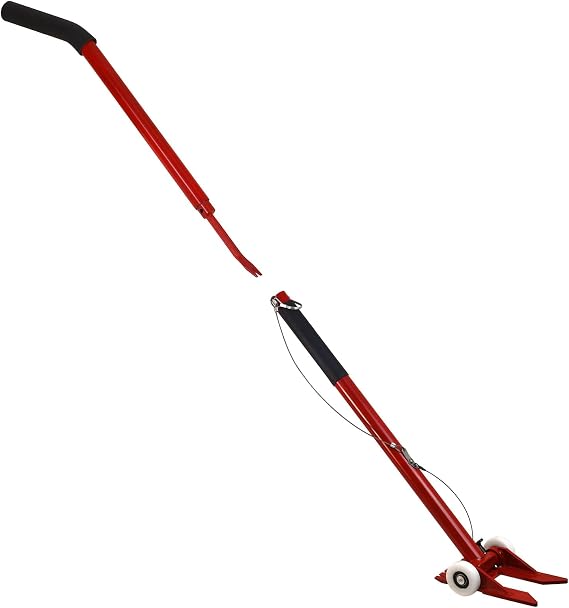
Extra-long handle delivers maximum leverage, making it easier to pry up deck boards and pallets without much struggle. Ideal for those who frequently reclaim wood or dismantle old decks and siding.
Heavy-duty construction ensures it takes on tough jobs without bending or rusting.
Handling the tool involves gripping the long steel handle to generate leverage on nails and boards. Its size and weight require some effort to maneuver, but the torque you get means less stress on your back. Daily use on job sites includes stripping floorboards and breaking down decks while keeping the lumber intact.
It excels at prying up stubborn boards thanks to the solid steel design and extra leverage from the long handle. The powder-coated finish protects against rust over time.
It is praised for strength and durability, though some find it a bit heavy to carry around for extended periods.
Many appreciate how it makes prying up deck boards easier without damaging the lumber, thanks to its strong construction and leverage. Some users feel the weight makes it tiring to carry for long stretches or use in confined areas. The tool stands up well to daily challenging use on job sites.
Those stripping pallets or older decks with tough boards will find this tool reliable and effective. Someone needing a lighter or more compact option for occasional use or tighter corners might want to look elsewhere. It fits jobs requiring power and durability over portability.
Pros
- Extra-long handle for high leverage
- Heavy-duty solid steel construction
- Powder-coated finish resists rust
- Designed to preserve lumber integrity
Cons
- Relatively heavy at 12 pounds
- Large size can limit use in tight spaces
| Specification | Details |
|---|---|
| Manufacturer | MightyPhine |
| Part Number | 147 |
| Item Weight | 12 pounds |
| Package Dimensions | 36 x 6 x 6 inches |
9. VEVOR 41 Carbon Steel Pallet Buster Pry Bar

Anyone dealing with deck or pallet board removal regularly will find the VEVOR 41 Carbon Steel Pallet Buster Pry Bar a great fit. Its biggest strength lies in the long handle and hinged head design that allows fast board removal while reducing damage for reusing lumber.
Setup consists simply of unpacking, as it comes ready to use with no installation required. Day-to-day use is straightforward thanks to the 41-inch handle that lets you pry boards while standing upright, minimizing fatigue.
The hinged head slips smoothly into gaps between boards, speeding up teardown by applying leverage exactly where needed. Gloves included help keep your hands protected during extended work.
Handling prying forces up to 2,000 pounds, it easily breaks down decks or pallets without bending or warping. The heat-treated 45# carbon steel construction offers strong resistance to wear, making it durable for heavy jobs. Strong points include effective leverage and cutting down board breakage for better reuse.
Common drawbacks involve its 16.2-pound weight, which some find a bit hefty, and the bright yellow color that may look dirty quickly.
It excels at prying heavy boards with minimal damage thanks to the hinged head and strong steel build. Weight near 16 pounds makes it cumbersome for long, continuous use in some cases. The provided gloves add extra safety during demanding prying jobs.
Anyone needing a reliable, heavy-duty prying tool for decks or pallets will appreciate the power and length. Those seeking a lightweight or more compact option for occasional use might want something less bulky.
Pros
- Long 41-inch handle supports upright stance
- Heat-treated carbon steel for durability
- Hinged head design slips into board gaps easily
- Comes ready-to-use with gloves included
Cons
- Heavy weight at 16.2 pounds can tire users
- Bright yellow finish shows dirt quickly
| Specification | Details |
|---|---|
| Material | Carbon Steel |
| Item Weight | 16.2 pounds |
| Overall Length | 44.49 inches |
| Tooth Spacing | 4 inches |
| Prying Capability | Up to 2,000 lb |
| Included Components | 1 x Pair of Gloves, 1 x Pallet Buster Tool |
10. 48 Pallet Buster 110 Degree Decking Pry Bar

Designed for heavy-duty deck board removal, this 48 pry bar stands out with its 110-degree fork angle and T-shaped handle for easier leverage. Ideal for those tackling large pallets or deck projects, it offers strong lifting power without putting strain on your back or knees.
Using the bar is straightforward thanks to its length and handle design. The T-shaped grip lets you apply pressure comfortably, while the 110-degree angle helps lift boards far enough off the ground for easy removal.
The tool stays stable during use, making it easier to work in an upright position and avoid awkward bending.
Made from carbon steel, it’s built tough and resists bending or breaking even under substantial force. The long length delivers excellent leverage on stubborn nails or boards.
Most praise focuses on its durable construction and comfortable handling, while a few mention it can feel heavy to carry around due to its 13.67-pound weight.
The tool’s durability and effective lifting angle get a lot of positive feedback for handling tough deck boards without bending. Its main drawback comes from its weight, which some find cumbersome for long periods of use or transport.
People needing strong leverage and a sturdy tool for tough demolition will appreciate the design. Those seeking something lightweight or small enough to easily carry around might want to look at other options.
Pros
- Long 48″ length for strong leverage
- Comfortable T-shaped handle grip
- 110° fork angle lifts boards effectively
- Durable carbon steel construction
Cons
- Can feel heavy during extended use
- Dimensions make it less portable
| Specification | Details |
|---|---|
| Length | 48 inches |
| Angle between fork and body | 110 degrees |
| Material | High-quality carbon steel |
| Handle type | T-shaped |
| Weight | 13.67 pounds |
| Power Source | Hand-powered |
11. USA Made 46 Deck Board Removal Steel Pry Bar

Hunters Creek LLC’s USA Made 46 Deck Board Removal Steel Pry Bar specializes in making deck board tear-outs easier while keeping your back in good shape. Best for those handling large demos, it uses a patented loop design to let you work standing up, which takes a load off your knees and spine during long days of work.
Set up is simple with its 46-inch Schedule 40 pipe handle and cushioned grip, providing solid control in hand. Switching between L and V modes handles boards close to the house and the rest of the deck effectively.
The twin blades, cut from 1/4 inch laser-cut steel, slip easily under boards, whether nailed or screwed, without much hassle in movement or positioning.
When lifting deck boards or subfloor planks, it performs reliably with excellent leverage thanks to the patented loop design. The solid steel build feels durable enough to last through many tear-outs.
Some users note the tool’s 13.37-pound weight can make it a bit tiring to maneuver for extended periods, but most find the balance and grip well thought out for control and power.
The patented leverage loop design is widely praised for letting you pop boards off while standing, easing back and knee strain. The main complaint is the tool’s weight, which can become tiring when used all day on big projects.
Those who work on large decks and want to avoid bending over frequently will appreciate this tool. People needing a lighter option or working on smaller projects may want to consider a lighter pry bar with less heft.
Pros
- Work standing up reduces back strain
- Dual L and V modes for full deck coverage
- Twin 1/4 inch laser cut steel blades
- Suitable for nailed and screwed boards
Cons
- Relatively heavy at 13.37 pounds
- Can tire arms during long tear-outs
| Specification | Details |
|---|---|
| Material | Steel |
| Size | 46 inches |
| Item Weight | 13.37 pounds |
| Manufacturer | Hunters Creek LLC |
| Part Number | DDM-2 |
12. Diamabrush Wood Deck Removal Tool Pack Of 3

Using the Diamabrush Wood Deck Removal Tool feels sturdy and effective for anyone looking to remove wood decks without fuss. Its biggest strength is the precise fit and coverage it offers, making the removal process more controlled and reliable.
It suits those who want a reliable attachment for a 4.5-inch tool setup.
Setting it up is straightforward due to the fully threaded design, which secures easily to compatible drills or grinders. The 4.5-inch diameter matches well with standard groove sizes, so it just slides right in place.
Handling day-to-day removal jobs is consistent, and the single-piece pack means you get just what’s needed for a focused task without excess weight or bulk.
The performance highlights how well the 4.5-inch outside diameter matches common wood deck sizes, allowing efficient removal with a solid build that feels durable under stress. Strong points include its tight thread coverage and compatibility with standard fastener sizes. The most noted downside is the limited number of pieces, which means no extras for backups in case of wear.
Many appreciate the tool’s precise fit and secure threading, making wood deck removal straightforward and reliable. A common complaint focuses on the pack including just one piece, which can be inconvenient if backup or replacement is needed during projects.
This tool will satisfy those who need a solid, well-matched deck removal attachment for a standard 4.5-inch setup. Those requiring multiple tools or different sizes may want to look elsewhere for more comprehensive packs or versatility.
Pros
- Fits standard 4.5-inch fasteners perfectly
- Fully threaded for secure attachment
- Durable single-piece construction
- Compact and easy to handle
Cons
- Only one piece included, no extras
- Limited to 4.5-inch groove compatibility
| Specification | Details |
|---|---|
| Thread Size | RM |
| Thread Coverage | Fully Threaded |
| Fastener Size | 4.5 inches |
| Item Diameter | 4.5 inches |
| Number of Pieces | 1 |
Best Deck Board Removal Tools Comparison Table
| Product | Size | Weight | Material | Power Source |
|---|---|---|---|---|
| Deck Wrecker Tool | – | – | – | – |
| meite 60″ Pry Bar | 60 Inch | 12.62 pounds | Carbon Steel | hand powered |
| 48 Pallet Buster Pry Bar | 48 Inch | 11.22 pounds | – | hand powered |
| HVDI 48 Deck Tool | 48 Inch | 11.35 pounds | – | hand powered |
| GreenTek Floor Remover | 47 Inch | 9.98 pounds | Steel | hand powered |
| Wooden Pallet Buster | 48 Inch | 12.12 pounds | – | hand powered |
| VEVOR 50 Carbon Pry Bar | 54 Inch | 10.8 pounds | Carbon Steel | hand powered |
| MightyPhine Deck Wrecker | – | 12 pounds | – | – |
| VEVOR 41 Carbon Pry Bar | 41 Inch | 16.2 pounds | Carbon Steel | hand powered |
| 48 Decking Pry Bar | 48 Inch | 13.67 pounds | – | hand powered |
| USA 46 Steel Pry Bar | 46 Inch | 13.37 pounds | Steel | – |
| Diamabrush Deck Tool Set | 4.5 Inch | – | – | – |
- Size–
- Weight–
- Material–
- Power Source–
- Size60 Inch
- Weight12.62 pounds
- MaterialCarbon Steel
- Power Sourcehand powered
- Size48 Inch
- Weight11.22 pounds
- Material–
- Power Sourcehand powered
- Size48 Inch
- Weight11.35 pounds
- Material–
- Power Sourcehand powered
- Size47 Inch
- Weight9.98 pounds
- MaterialSteel
- Power Sourcehand powered
- Size48 Inch
- Weight12.12 pounds
- Material–
- Power Sourcehand powered
- Size54 Inch
- Weight10.8 pounds
- MaterialCarbon Steel
- Power Sourcehand powered
- Size–
- Weight12 pounds
- Material–
- Power Source–
- Size41 Inch
- Weight16.2 pounds
- MaterialCarbon Steel
- Power Sourcehand powered
- Size48 Inch
- Weight13.67 pounds
- Material–
- Power Sourcehand powered
- Size46 Inch
- Weight13.37 pounds
- MaterialSteel
- Power Source–
- Size4.5 Inch
- Weight–
- Material–
- Power Source–
How to Choose the Best Deck Board Removal Tool
Choosing the right deck board removal tool depends on durability, ease of use, and compatibility with different board sizes. A tool that fits well and works efficiently reduces effort and prevents damage to boards, saving time and avoiding costly repairs during removal.
Leverage and Design
Trying to pry deck boards with the wrong tool often leads to frustration and wasted effort. The shape and handle design can make a big difference in how much force you need to apply. A tool with a curved or angled lever arm provides better mechanical advantage, making it easier to lift stubborn boards.
Handles with ergonomic grips help reduce hand fatigue during long projects, especially if you have to remove many boards.
The right size and weight affect maneuverability in tight spaces between deck boards and around fasteners. Too heavy, and it becomes tiring; too light, and it lacks the firmness to pry effectively.
A balanced tool typically weighs under 3 pounds and has a handle length between 10 to 14 inches. This range allows good leverage while still being easy to position where you need it.
Material Durability
Tools made from hardened steel or chrome-vanadium alloys tend to hold up well under prying forces without bending or breaking. Rust resistance is critical for outdoor work, so look for corrosion-resistant coatings or stainless steel components.
The prying edges or blades should stay sharp for clean board removal, and high-carbon steel usually offers better edge retention.
Handles made from reinforced fiberglass or heavy-duty plastic resist impacts from pounding or dropping. Grip materials like rubber or textured plastic also help maintain a firm hold even when sweaty or wet. Skimping on material quality often leads to premature wear or tool failure, making the job harder in the long run.
Compatibility with Deck Types
Different decks use boards of varying thicknesses and materials such as wood or composite, so a flexible tool suits a wider range of jobs. Tools with prying blades adjustable or sized to fit under thinner boards prevent damage while still providing enough lift.
Composite boards can be more prone to cracking, so gentle but firm leverage is important.
The ability to remove fasteners safely is another factor. Tools that can work around screws, nails, or hidden clips without bending or damaging these components save time and reduce material waste. Models designed with specific tips or interchangeable heads offer adaptability across common deck fastening systems.
Ease of Use and Safety
Non-slip grips reduce the chance of the tool slipping during use, which can cause hand injuries or damage nearby surfaces. Protective guards around the handle or blade edges help minimize accidental cuts or pinches.
A straightforward design without complicated moving parts allows even casual users to quickly master the tool.
Precise control is necessary to avoid breaking deck boards or scratching adjacent railing or posts. Tools that provide a comfortable grip and balanced weight distribution improve handling accuracy. This increased control helps prevent costly mistakes on delicate deck materials.
Maintenance and Storage
Wood and dirt often cling to deck tools after use, so smooth surfaces and fewer crevices make cleaning easier. Metal parts prone to rust benefit from a quick wipe-down and occasional lubrication.
Tools with detachable components or protective covers can simplify maintenance and prolong lifespan.
Storage plays a role in keeping the tool ready for its next use. Hanging loops or compact shapes prevent loss and protect edges from dulling.
Consistent upkeep like sharpening prying edges or oiling hinges keeps the tool effective and safe for repeated projects.
Tips for Efficient and Safe Deck Board Removal
Start by clearing the deck surface of loose debris and nails that are sticking out. This helps prevent accidents and makes board removal smoother.
Use a pry bar or a specialized deck board removal tool that fits under the boards without damaging surrounding materials. Always work slowly and methodically, focusing on prying up boards evenly to avoid snapping or cracking them. Wearing thick gloves protects hands from splinters and sharp edges.
Consider lifting one side of the board first, then moving gradually along its length. This reduces stress on the boards and lessens the chance of breaking them. Keep tools sharp and in good condition, as a dull blade or dull pry bar will require more force and may lead to slipping, which is dangerous.
Placing a small piece of scrap wood under your lever point can also reduce damage to joists or other framing beneath the deck.
Common Mistakes to Avoid When Using Deck Removal Tools
Avoid working on damp or wet boards, which tend to be weaker and may snap unexpectedly. Do not use brute force when removing deck boards; leverage and careful prying are more effective and safer.
Skipping safety gear like gloves and eye protection puts you at risk of injury from flying debris or nails. Using the wrong tool, such as a standard crowbar instead of a deck removal tool designed to fit under narrow boards, can cause unnecessary damage to wood and framing. Do not overlook hidden fasteners like screws or coated nails, as pulling a board without removing these can tear the wood.
Rushing through the task without checking each plank carefully often results in broken boards or damage to the deck structure underneath. Lastly, failing to clear away nails and screws after each board is removed can cause injury or damage to the tools.
Comparing Manual and Powered Deck Board Removal Options
Manual deck board removal tools typically consist of long pry bars or claw tools designed to slide under boards and lift them slowly. They allow for precise control and are quieter, which works better in residential areas or where noise is a concern.
Powered tools like reciprocating saws or specialized deck removal machines cut and pry boards faster but increase the risk of damaging wood if not handled carefully.
- Manual tools offer better control but require more physical effort and time.
- Powered options speed up the job but need skill to avoid cutting into joists or splintering boards.
- Manual removal is cheaper and less noisy; powered tools involve higher upfront costs and more maintenance.
- Consider the deck’s condition and your strength when choosing between manual and powered removal methods.
Both methods can work well, but matching the tool to the job details often leads to better results and less frustration.
People Also Asked
How Do I Safely Use a Deck Board Removal Tool?
Use a deck board removal tool by positioning it under the board edge and prying slowly to avoid sudden force. Work along the length of the board to reduce stress and minimize damage to surrounding boards. Wear gloves to protect your hands from splinters and sharp fasteners.
What Size Deck Board Removal Tool Do I Need for Standard Boards?
A standard deck board removal tool of 3 to 4 inches wide fits most deck boards, which commonly measure around 5.5 inches wide. The width helps get under the board evenly. Ensure the tool is sturdy enough to handle the thickness of typical decking materials.
How Long Does a Typical Deck Board Removal Tool Last with Regular Use?
With regular use, a good-quality deck board removal tool can last several years, depending on the frequency and intensity of its use. Keeping the tool clean and storing it properly prevents rust and wear. Sharpening or maintaining any edges can extend its lifespan.
Can a Deck Board Removal Tool Damage the Wood During Removal?
Using a deck board removal tool incorrectly can damage the wood, especially if forced aggressively or prying too close to fastener holes. To avoid damage, insert the tool carefully and apply steady pressure to gently lift the boards. Damaged boards might still be reusable if handled right.
What Are Common Problems When Using a Deck Board Removal Tool?
Common problems include slipping off the board causing scratches, bending the tool from excessive force, or struggling with tightly nailed or screwed boards. Applying lubricant to stuck fasteners and working slowly helps reduce these issues. Some tools with longer handles provide better leverage to ease removal.
Conclusion
Choosing the right deck board removal tool depends mainly on how tough the boards are, the tool’s weight, and how easy it is to handle. Strong leverage and a good grip can make the work much quicker.
Also, consider if you need a tool that works well in tight spaces or one that’ll handle larger boards without much effort.
Think about how often you plan to use the tool and how much space you have for storage. Spending more might be worth it for regular use, while a simpler tool could work for occasional projects.
Check the comparison table and the detailed picks above to find the one that fits your needs and budget best.