
Top 12 Best Air Cleaner for Allergies That Actually Work!
Cheap or poorly chosen air cleaners often miss the mark by not filtering out the tiny particles that trigger allergy symptoms, leaving you sneezing despite the unit running all day. The best air cleaner for allergies captures more than just dust and pet hair; it targets microscopic allergens like pollen, mold spores, and dust mite debris that really matter for sensitive noses.
Without the right filter, much of this irritant material just recirculates, making the effort pointless.
A good air cleaner for allergies usually features a true HEPA filter, which traps at least 99.97% of airborne particles as small as 0.3 microns. Size and power also matter since the cleaner needs to suit the room’s square footage; a unit rated for about 300-400 square feet covers most bedrooms or small living rooms well. Easy filter replacement and cleaning access make a practical difference, ensuring the unit performs consistently without degraded airflow or recirculated dust.
Need a Quick Check?
| Image | Product | Price |
|---|---|---|
Our Top Picks 1 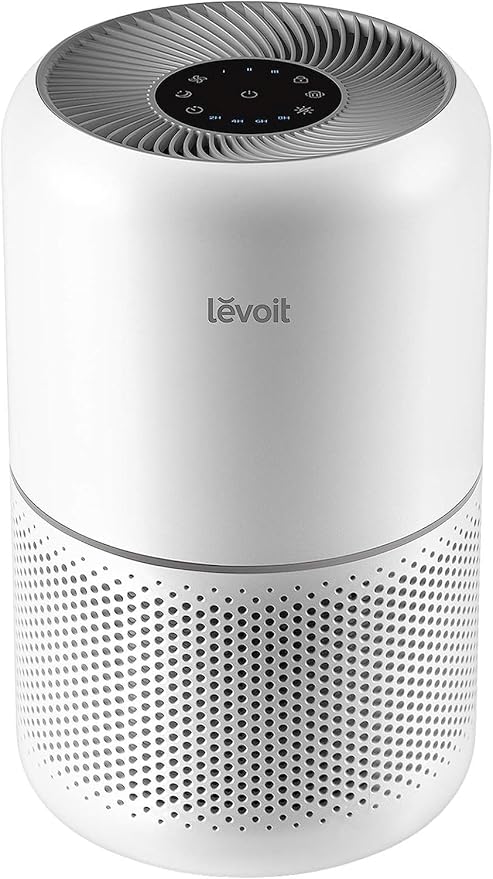 | Levoit Air Purifier | Check Price |
Our Top Picks 2  | Large Room Air Purifier | Check Price |
Our Top Picks 3  | Winix 5520 Purifier | Check Price |
Our Selected Top 12 Air Cleaner for Allergies for Every Budget
This list features air cleaners designed to reduce allergens in various room sizes and budgets. Each review explains how well the unit performs, highlights its advantages and drawbacks, and identifies the types of users or environments it is best suited for.
1. Levoit Air Purifier
Delivering a CADR of 143 CFM, this air cleaner covers large rooms up to 1073 square feet, making it ideal for homes where allergies are a daily struggle. Its HEPA-grade filter paired with quiet operation stands out for anyone wanting clean air without noise disruption.
Setting it up involves simply plugging it into an AC outlet and using touch controls for operation. Sleep Mode keeps the noise down to a whisper at 24 decibels, allowing continuous use overnight without interruption.
The filter change indicator helps track maintenance, and the included timer and portability add convenience for moving it between rooms.
Air purification happens quickly thanks to the 56W high-torque motor, which removes particles as small as 0.3 microns, including pet dander, dust, pollen, and smoke. The build feels solid and functional, with intuitive touch controls. High marks go to how quietly it runs during the night, while some users note that it could be more compact for tight spaces.
Quiet operation during Sleep Mode is consistently praised for allowing all-night use without disturbance. The most frequent complaint involves the unit’s size, which some find bulky in smaller rooms.
Anyone needing fast, quiet filtration for a large room will appreciate this model. Those with limited space or looking for smart device connectivity might consider alternatives.
Pros
- Effective on cigarette smoke and pet dander
- Quiet Sleep Mode at 24 decibels
- Easy touch control interface
- Large coverage area up to 1073 sq. ft.
Cons
- Larger size may limit placement options
- No clear details on software updates
| Specification | Details |
|---|---|
| Power Source | ac |
| Filter Type | 3 in 1 Filtration |
| Floor Area | 1073 square_feet |
| Noise Level | 24 db |
| Wattage | 56 watts |
| Particle Retention Size | 0.3 micron |
2. Unbranded Air Purifier for Large Room
Anyone dealing with allergies in a large space will find this air purifier a solid match. It’s designed for rooms up to 2600 square feet and its biggest strength is the triple intake system that speeds up cleaning the air effectively.
Setup is straightforward with plug-in power and touch controls simplifying daily operation. The HEPA filter tackles common allergens like pet hair and dust, while the PM2.5 sensor keeps you updated on air quality in real time. The washable filter helps reduce upkeep costs and airing out rooms becomes easier knowing the air purifier is actively working.
It excels at clearing a wide range of airborne particles, thanks to the efficient circulation and filtration system. The build feels durable and practical.
Most praise highlights how quiet the unit runs at 22 dB, making it easy to keep on throughout the day. The clearest frustration relates to the button control interface, which some find less intuitive than expected.
The purifier stands out for its quiet performance that allows continuous use without disturbance, paired with a highly effective triple air intake and HEPA filter system. The most frequent complaint notes the button control can be tricky to learn, requiring a little patience at first.
People who need allergy relief in large rooms and want continuous air quality feedback will appreciate its features. Those seeking a lighter or cordless option may want to explore other models better suited to portability or alternative power setups.
Pros
- Handles large rooms up to 2600 sq ft
- Quiet operation at 22 decibels
- Real-time PM2.5 air quality display
- Washable, reusable HEPA filter
Cons
- Button controls sometimes confusing
- Only corded electric power source
| Specification | Details |
|---|---|
| Power Source | Corded Electric |
| Control Method | Touch |
| Filter Type | HEPA |
| Floor Area | 2600 square_feet |
| Noise Level | 22 db |
| Wattage | 24 |
3. WINIX 5520 Air Purifier
Cleans air across large rooms up to 1,882 sq ft with verified HEPA filtration capturing tiny allergens as small as 0.01 microns. It suits allergy sufferers wanting a powerful purifier that handles pet dander, pollen, dust, and household odors effectively.
Its strength lies in combining True HEPA and carbon filters for broad contaminant removal.
Setup involves plugging in and connecting to the WiFi app or Alexa for control. Smart sensors monitor air quality and adjust settings automatically, while an auto mode keeps air fresh without constant manual input.
The washable fine mesh pre-filter handles bigger particles and extends the main filter life, reducing maintenance worries.
Filtering captures 99.99% of airborne allergens including smoke and VOCs with the carbon filter minimizing odors indoors. The build feels sturdy with a quiet fan running around 27 db and moderate 50 watts power use. Strong points include effective allergen removal and smart automation, but some find the app setup tricky and occasional noise noticeable on higher speeds.
Many users appreciate the high allergen capture rate and the smart automatic adjustments, which make it easy to keep the air clean without constant attention. Common issues include difficulties in setting up the app and some noise during intense use.
Ideal for people needing thorough air cleaning in large spaces and those who like automation features. Users who prioritize simple control or ultra-quiet operation might want to consider other options.
Pros
- Captures 99.99% of airborne allergens
- Smart sensors adjust air cleaning automatically
- Quiet operation at 27 db
- Washable pre-filter extends filter life
Cons
- App setup can be confusing
- Noise noticeable at higher fan speeds
| Specification | Details |
|---|---|
| Floor Area | 1881 square feet |
| Particle Retention Size | 0.01 micron |
| Noise Level | 27 db |
| Power Source | Corded Electric |
| Control Method | App, Amazon Alexa, Wifi |
4. PuroAir 240 HEPA Air Purifier

PuroAir 240 HEPA Air Purifier is designed to tackle allergens in large rooms up to 1,000 sq ft fast. Perfect for people dealing with allergies in spacious living areas, its biggest strength lies in filtering out nearly all airborne irritants quickly and quietly.
Setting up requires little effort thanks to the push-button controls. Daily use is simple, with an automatic air quality sensor that helps monitor pollution levels without manual checks.
The machine keeps noise low at 22 decibels and runs on standard AC power, making it easy to leave on for continuous air cleaning without disruption.
It uses a three-layer filtration system, a pre-filter, HEPA filter, and activated carbon, to capture 99.9% of dust, pollen, smoke, pet dander, and VOCs. Build quality feels solid and reliable, suited to regular use in homes where clean air is essential.
Most praise focuses on how effective and quiet it is, while the most common complaint involves its size and power consumption for some users.
The air purifier is praised for its strong performance and quiet operation, making it a reliable option for anyone sensitive to airborne allergens. Some users find the unit large and somewhat power hungry compared to smaller purifiers.
Those in need of cleaning air in bigger rooms will find it meets their needs well. People living in smaller spaces or with stricter power limitations might want to look for lighter, lower energy options.
Pros
- Effective 3-layer filtration system
- Quiet operation at just 22 dB
- Cleans large rooms up to 1,000 sq ft fast
- Automatic air quality sensor included
Cons
- Takes up considerable space in a room
- Consumes more power than compact models
| Specification | Details |
|---|---|
| Floor Area | 1000 square_feet |
| Noise Level | 22 db |
| Control Method | Push Button |
| Power Source | ac |
| Wattage | 22 watts |
| Filter Type | HEPA |
5. KNKA APH4000 Air Purifier

Breathing cleaner air at home feels simpler with the KNKA APH4000 Air Purifier. It’s well suited for anyone dealing with allergies or sensitive to pollen, smoke, and pet dander. Its biggest strength lies in quickly filtering large spaces, making it great for rooms up to 350 square feet.
Setting it up takes just a few steps thanks to the touchscreen controls and hand controller. Dual air intakes and side outlets help circulate air efficiently, moving fresh air faster throughout the room. You can switch between modes like PET and ECO, or let it auto-adjust based on air quality readings shown on the AQI display.
The washable pre-filter adds convenience by reducing filter replacements.
Filtering out particles as small as 0.3 micrometers, it handles smoke, dust, and VOCs effectively. The build feels solid with quiet operation around 22 dB for minimal disruption during use.
The main praise is the fast air exchange and visible air quality feedback. Some mention the 45-watt power consumption as a point to note, which might be a factor for energy-conscious users.
Strong airflow design supports quick air exchange and the AQI display helps keep track of changes in air quality. Most users appreciate how effectively it removes pollen and smoke but note the power usage might be a drawback for some.
This purifier fits well in clean air-focused homes with moderate space and allergy concerns. People needing ultra-low power consumption or extremely compact units may want to look for alternatives.
Pros
- High-speed air purification for medium rooms
- Dual air intakes and outlets improve airflow
- Quiet operation at 22 dB
- AQI display for real-time air quality
Cons
- Consumes 45 watts, higher energy use
- Hand control required for some functions
| Specification | Details |
|---|---|
| Floor Area | 350 square_feet |
| Noise Level | 22 db |
| Filter Type | HEPA |
| Power Source | ac_dc |
| Wattage | 45 watts |
6. VOOPNU Air Purifier

Great for allergy sufferers, this air purifier cleans large rooms quietly and fits in small spaces. Its biggest strength is handling allergens like pollen and pet dander in areas up to 1,076 square feet with very low noise.
Setup is simple with a single-touch control panel, making daily use straightforward. Its compact size fits easily on desks or corners without needing much space. Running it takes minimal effort since you just plug it in and tap once, no complex setup needed.
It uses activated carbon filters that target various contaminants including cigarette smoke, odors, and VOCs.
Performance is solid for a device of this size, filtering particles as small as 0.3 micron efficiently. The build is compact but sturdy, powered by a low 5-watt AC source.
Strong points include quiet operation at 22 decibels and effective coverage quickly removing airborne allergens. Some users mention a desire for more advanced controls, but the manual button setup keeps things simple.
Many find the quiet operation and effective allergen removal impressive, making long use comfortable. The main complaint revolves around the manual control method, which some feel could be updated with more options.
Those needing a compact, quiet purifier for medium-sized rooms will appreciate this unit. People wanting smart controls or covering much larger spaces continuously might consider alternative models.
Pros
- Very quiet operation at just 22 decibels
- Compact size fits easily in any room corner
- Covers up to 1,076 ft² per hour
- Simple one-tap control panel
Cons
- Manual button controls lack advanced features
- Coverage noted as 250 sq ft, not full 1,076 sq ft
| Specification | Details |
|---|---|
| Filter Type | Activated Carbon |
| Floor Area | 250 square_feet |
| Noise Level | 22 db |
| Particle Retention Size | 0.3 micron |
| Wattage | 5 watts |
| Control Method | Touch |
7. MOOKA Air Purifier

Plastic casing and a design that draws air intake from multiple sides make it a great choice for people with pets who need relief from allergens. Its biggest strength lies in handling pet hair and odors effectively, offering a clean indoor environment despite challenging air conditions like wildfire smoke or heavy smog.
Setting up involves plugging in the unit and using the touch controls to adjust settings. The built-in PM2.5 air quality sensor shows real-time data on a digital display, allowing easy monitoring. Automatic mode adjusts fan speed to maintain air quality, while a washable H13 HEPA filter reduces ongoing costs.
Sleep mode and a child lock provide extra convenience during daily use.
Performance in removing smoke, dust, pet dander, and pollen covers a large floor area of up to 2200 square feet. The 0.3-micron particle retention captures small allergens effectively.
Users praise the quiet operation at just 20 dB and appreciate the large air inlets that increase intake efficiency. Common complaints mention occasional filter replacement reminders being too frequent or intrusive.
The real-time PM2.5 display and large air intake make it a strong performer for homes with pets, especially when smoke and allergens are concerns. Most praise focuses on its quiet operation and effective filtration, while complaints revolve around the filter reminder being bothersome at times.
Those who want low noise and strong allergen removal for large spaces will appreciate this purifier. People seeking a cordless option or less frequent filter notifications might look for alternatives.
Pros
- Captures pet hair and odors efficiently
- Quiet operation at 20 dB
- Real-time air quality display
- Washable H13 HEPA filter saves cost
Cons
- Filter reminder can feel frequent
- Only corded electric power source
| Specification | Details |
|---|---|
| Floor Area | 2200 square_feet |
| Filter Type | HEPA |
| Noise Level | 20 db |
| Power Source | Corded Electric |
| Particle Retention Size | 0.3 micron |
| Wattage | 26 watts |
8. Unbranded HAP602 Air Purifier

One of the first things you notice is the real-time air quality display, which perfectly suits anyone sensitive to allergens. The biggest strength lies in how the unit adjusts its fan speed automatically, reacting to changes in the air you breathe, making it ideal for allergy sufferers who need constant monitoring.
Setting it up takes just a few moments with touch controls that are easy to get used to. The built-in PM2.5 sensor shows air quality clearly using color indicators like green to red, so there’s no guessing about pollution levels.
The auto mode quickly speeds up the fan if it detects worse air, and its 20 dB sleep mode keeps things quiet overnight.
Its filtration system captures even tiny particles down to 0.3 microns, which includes dust, pollen, pet dander, and smoke. Construction feels solid with 360° air intake and outlet for maximum coverage across large rooms up to 2400 square feet. Among the praise, the quiet operation stands out; however, some mention that the software update support details remain unclear.
The air purifier responds swiftly to changes in air quality and operates quietly, making it great for continuous use around allergies. Most users appreciate how the colorful display shows when attention is needed, but there is some uncertainty about ongoing software updates for the device.
People living in large spaces dealing with dust, pet dander, and smoke will be happy with its filtration and coverage. Those needing battery-powered units or clear software update plans might want to explore other options.
Pros
- Real-time PM2.5 air quality display
- Automatic fan speed adjustment in auto mode
- Very quiet 20 dB sleep mode
- True HEPA 3-stage filtration system
Cons
- Unclear software update support
- Requires AC power source only
| Specification | Details |
|---|---|
| Power Source | AC |
| Control Method | Touch |
| Filter Type | 3-Stage Filter |
| Floor Area | 2400 square_feet |
| Noise Level | 20 db |
| Particle Retention Size | 0.3 micron |
9. FULMINARE H13 Air Purifier

Perfect for allergy sufferers needing reliable air purification, it stands out with H13 HEPA 3-stage filtration that captures nearly all fine particles, including pet dander and dust. Its ability to cover large rooms evenly makes it a solid choice for homes up to a generous size.
Setup is straightforward, using touch controls that feel responsive and clear. The compact, portable design fits easily in different rooms.
Dual-channel airflow and a 360° outlet ensure fresh air moves efficiently throughout areas up to 1,086 ft². Switching it on produces a quiet hum around 20 decibels, which stays in the background without distraction.
The three-stage filtration system works very well, effectively trapping particles down to 0.3 microns. It also reduces household odors thanks to the activated carbon layer. Build quality feels solid and thoughtfully made for daily use.
Most appreciate the quiet operation, while some note the floor area coverage on specs is 225 square feet, which may not match the claimed larger space for some rooms.
Highly praised for its quiet and effective filtration, it cleans air thoroughly and keeps the noise minimal. Some users find the stated floor area coverage conflicting, leading to uncertainty about performance in very large rooms. Setup and controls are simple and user-friendly.
This air purifier suits those who want strong filtration and odor control in medium to large spaces. People needing precise coverage or software updates might want other options. Portability and quiet operation make it a good fit for bedrooms and living areas with allergy concerns.
Pros
- Captures 99.97% of tiny particles
- Portable and compact design
- Very quiet operation at 20 decibels
- Activated carbon reduces odors
Cons
- Floor area rating lower than overall coverage claim
- No clear info on software updates
| Specification | Details |
|---|---|
| Filter Type | HEPA |
| Floor Area | 225 square_feet |
| Noise Level | 20 db |
| Particle Retention Size | 0.3 micron |
| Control Method | Touch |
| Wattage | 24 watts |
10. BLUEAIR 211i Max Air Purifier

Allergic reactions can make breathing indoors uncomfortable, especially in larger spaces. Perfect for open floor plans and bigger rooms, the BLUEAIR 211i Max Air Purifier delivers fast and powerful air cleaning that handles pet dander, pollen, smoke, and dust with ease.
Its biggest strength is cleaning large areas quickly without adding much noise.
Setting up takes just a few minutes since it plugs into a power outlet and connects to your smartphone or Alexa for control. The washable pre-filter catches big particles first, while the HEPASilent filtration targets tiny allergens and smoke. The app lets you monitor air quality and adjust settings without leaving your chair.
It cleans up to 674 sq ft in about 12.5 minutes and even 3,235 sq ft in one hour, making it effective for most living spaces. Quiet operation at 23 decibels keeps it unobtrusive. The build feels solid and well-made.
Some users mention the size could feel bulky in small rooms. The strong fan ensures quick airflow but may require occasional filter replacement.
The strongest praise centers on how quickly it cleans large spaces quietly, making it easy to live with day to day. The most common complaint is its size, which some find too large for cozy rooms. The filter replacement need also comes up, though it is routine for air purifiers.
Anyone with big living areas or open floor plans will appreciate the rapid, thorough air cleaning and smart controls. People with smaller rooms or anyone needing a compact unit should consider a different model that fits better in tight spaces.
Pros
- Cleans large areas up to 3,235 sq ft
- Very quiet at 23 decibels
- App control via Alexa and smartphones
- Effective against pet dander and smoke
Cons
- Bulky size for small rooms
- Requires periodic filter changes
| Specification | Details |
|---|---|
| Floor Area | 3234.75 square_feet |
| Noise Level | 23 db |
| Power Source | Corded Electric |
| Filter Type | Activated Carbon |
| Wattage | 46 watts |
| Particle Retention Size | 0.1 micron |
11. BLUEAIR Pure 511i Max Air Purifier

Capturing 99.97% of airborne particles down to 0.1 microns makes the BLUEAIR Pure 511i Max perfect for anyone needing powerful allergy relief in small spaces like bedrooms or home offices. Its ability to refresh the air in areas up to 1,138 sq ft within an hour stands out as its biggest strength.
Setting up is straightforward since it’s corded and controlled by a simple button or app, fitting well into daily routines. The purifier runs quietly at just 19 dB, ideal for nighttime use without disturbing sleep. Compact design makes moving it between rooms easy, while the activated carbon filter helps reduce odors alongside allergens like dust, pollen, and pet dander.
It cleans effectively over a large area relative to its size, with solid construction that feels durable. The HEPA activated carbon filter works quietly and efficiently, which earns consistent praise.
A common complaint involves the moderate noise level reaching 48 dB under some settings, which might not be as quiet for very light sleepers.
Strong points include its quiet operation ideal for bedrooms and its ability to trap tiny allergens effectively. The most frequent downside is the noticeable noise on the higher speed settings, which some users found a bit distracting at night.
People who want quiet, consistent air purification in small to medium rooms will appreciate this model. Those with larger spaces or extremely noise-sensitive sleeping environments might want to explore other options.
Pros
- Captures 99.97% of particles down to 0.1 microns
- Quiet operation at 19 dB for nighttime
- Compact and easy to move between rooms
- Activated carbon filter reduces odors effectively
Cons
- Noise can reach 48 dB on higher settings
- Only suitable for rooms up to 526 sq ft comfortably
| Specification | Details |
|---|---|
| Power Source | Corded |
| Control Method | App |
| Filter Type | Activated Carbon |
| Floor Area | 526 square_feet |
| Noise Level | 48 db |
| Particle Retention Size | 0.1 microns |
12. WESTHEY H13 HEPA Air Purifier

People dealing with allergies who need clean air in medium to large rooms will find this air purifier very effective. It’s particularly strong at covering a wide area with its 360° surround air intake and H13 HEPA filter, capturing nearly all tiny particles that can trigger allergic reactions.
Setting it up involves plugging it into an AC power source and using the touch controls, which are straightforward and responsive. It works quietly at just 15 decibels, making it easy to keep running in bedrooms or offices without disruption.
The 12-watt power consumption keeps energy usage low while providing consistent filtration over a 538 square-foot area.
The purifier handles airborne particles down to 0.3 microns with 99.98% efficiency, making it reliable for allergy relief. It’s well-built for everyday use and designed to fit comfortably in various living spaces. Most praise highlights its strong filtration capability, while some note the covered floor area may be smaller than the maximum range suggests, requiring attention to room size.
This air purifier excels in capturing tiny airborne particles quietly and efficiently with its H13 true HEPA filter. Common feedback points to its effective filtration balance against real coverage area, which might not always reach the larger room sizes mentioned in marketing materials.
Those wanting a quiet, energy-efficient purifier for standard-sized rooms will appreciate this unit. People needing coverage for very large spaces may want to consider alternatives with clearly stated performance over wider areas or more detailed filter maintenance info.
Pros
- Captures 99.98% of particles at 0.3 microns
- Extremely quiet operation at 15 db
- Low energy use with 12 watts power
- Easy touch controls for daily use
Cons
- Effective floor coverage less than advertised max
- No information on filter replacement frequency
| Specification | Details |
|---|---|
| Power Source | ac |
| Control Method | Touch |
| Filter Type | HEPA |
| Floor Area | 538 square_feet |
| Noise Level | 15 db |
| Wattage | 12 watts |
Best Air Cleaners for Allergies Comparison Table
| Product | Floor Area | Filter Type | Particle Retention Size | Noise Level |
|---|---|---|---|---|
| Levoit Air Purifier | 1073 sq ft | 3 in 1 Filtration | 0.3 micron | 24 db |
| Large Room Air Purifier | 2600 sq ft | HEPA | 0.3 micron | 22 db |
| Winix 5520 Purifier | 1881 sq ft | HEPA | 0.01 micron | 27 db |
| PuroAir 240 HEPA | 1000 sq ft | HEPA | 0.1 micron | 22 db |
| KNKA APH4000 Purifier | 350 sq ft | HEPA | 0.3 micron | 22 db |
| VOOPNU Air Purifier | 250 sq ft | Activated Carbon | 0.3 micron | 22 db |
| MOOKA Air Purifier | 2200 sq ft | HEPA | 0.3 micron | 20 db |
| HAP602 Air Purifier | 2400 sq ft | 3-Stage Filter | 0.3 micron | 20 db |
| Fulminare H13 Purifier | 225 sq ft | HEPA | 0.3 micron | 20 db |
| Blueair 211i Max | 3234.75 sq ft | Activated Carbon | 0.1 micron | 23 db |
| Blueair Pure 511i | 526 sq ft | Activated Carbon | 0.1 micron | 48 db |
| Westhey H13 HEPA | 538 sq ft | HEPA | 0.3 micron | 15 db |
- Floor Area1073 sq ft
- Filter Type3 in 1 Filtration
- Particle Retention Size0.3 micron
- Noise Level24 db
- Floor Area2600 sq ft
- Filter TypeHEPA
- Particle Retention Size0.3 micron
- Noise Level22 db
- Floor Area1881 sq ft
- Filter TypeHEPA
- Particle Retention Size0.01 micron
- Noise Level27 db
- Floor Area1000 sq ft
- Filter TypeHEPA
- Particle Retention Size0.1 micron
- Noise Level22 db
- Floor Area350 sq ft
- Filter TypeHEPA
- Particle Retention Size0.3 micron
- Noise Level22 db
- Floor Area250 sq ft
- Filter TypeActivated Carbon
- Particle Retention Size0.3 micron
- Noise Level22 db
- Floor Area2200 sq ft
- Filter TypeHEPA
- Particle Retention Size0.3 micron
- Noise Level20 db
- Floor Area2400 sq ft
- Filter Type3-Stage Filter
- Particle Retention Size0.3 micron
- Noise Level20 db
- Floor Area225 sq ft
- Filter TypeHEPA
- Particle Retention Size0.3 micron
- Noise Level20 db
- Floor Area3234.75 sq ft
- Filter TypeActivated Carbon
- Particle Retention Size0.1 micron
- Noise Level23 db
- Floor Area526 sq ft
- Filter TypeActivated Carbon
- Particle Retention Size0.1 micron
- Noise Level48 db
- Floor Area538 sq ft
- Filter TypeHEPA
- Particle Retention Size0.3 micron
- Noise Level15 db
How to Choose the Right Air Cleaner for Allergies
Effective air cleaners for allergies should have true HEPA filters to capture tiny particles and sufficient coverage for the room size. Choosing the right capacity and filter quality helps prevent frequent replacements and ensures cleaner air, saving money and reducing health issues over time.
Filtration Technology
Many air cleaners rely on a combination of filters designed to tackle allergens of varying sizes. A True HEPA filter is the most effective at trapping particles as small as 0.3 microns, which includes pollen, dust mites, pet dander, and some mold spores.
Activated carbon filters add another layer by absorbing odors and some volatile organic compounds. Products that include both these filters tend to improve indoor air quality noticeably.
Daily use shows how important filter replacement frequency is. A clogged HEPA filter won’t capture allergens well, and activated carbon filters lose effectiveness once saturated.
Common replacement intervals range from 6 to 12 months. It’s practical to choose a model with widely available, affordable cartridges so upkeep doesn’t become a hassle or budget concern.
Coverage Area and Room Size
An air cleaner labeled for 200 square feet will struggle in larger living rooms or open-concept spaces, leading to insufficient allergen removal and faster filter clogging. Panels often specify coverage area, and matching that to your room size ensures steady airflow and longer filter life.
Bedrooms and offices, usually smaller and enclosed, don’t require units with high capacity but still need adequate filtration.
Expect the best performance in a room close to the recommended area. Bigger spaces reduce the device’s ability to cycle air frequently, while smaller rooms can sustain better purification but might cause overly strong airflow and noise. Checking specification labels for square footage helps pick a unit that fits your needs without wasting energy or filter material.
Noise Levels
Noise levels vary widely between models and fan speeds. On lower settings, some air cleaners operate quietly around 20 to 30 decibels, similar to a whisper or rustling leaves, which makes them suitable for sleep.
High-speed modes can reach 50 decibels or more, which can be distracting during work or quiet activities.
Many units include “silent” or “night” modes that reduce fan speed to maintain purification with reduced noise. Other designs add soundproofing measures internally. Choosing a unit with clear decibel ratings at different settings helps set expectations and keeps your environment peaceful.
Ease of Maintenance
Filter changes can turn into a chore if access to the compartment is awkward or requires tools. Models with easy-open panels or simple latch mechanisms save time and prevent frustration. Regular cleaning of pre-filters or external grills also keeps airflow steady but shouldn’t require aggressive scrubbing or disassembly.
Built-in indicators for filter replacement or maintenance alerts are very useful. They take the guesswork out of upkeep schedules and prevent performance drops caused by overdue changes.
Frequent reminders based on hours of operation help maintain good air quality without having to remember exact dates.
Energy Efficiency and Operation
Some air cleaners use around 20 to 60 watts on normal settings, similar to a low-power light bulb. This means they can run continuously without significantly increasing electricity bills. Energy-saving modes reduce power during periods of low allergen presence or at night.
Timers allow setting operating times, preventing unnecessary run time. Portable models, often lighter and compact, can be moved between rooms to save energy by purifying only needed spaces. Placement also matters; units perform best away from walls or obstructions to maximize airflow efficiency without extra power use.
How to Maximize Allergy Relief with Strategic Air Cleaner Placement
Locating your air cleaner in the right spot drastically impacts its ability to reduce allergens. Placing it in the rooms where you spend the most time, such as the bedroom or living room, ensures that the cleaner targets common sources of allergens like dust, pet dander, and pollen.
Keep the unit away from walls or furniture that can obstruct airflow. A minimum of a foot of clearance on all sides allows the air cleaner to circulate air efficiently.
Additional placement tips:
- Avoid placing the unit near windows or vents where outdoor pollutants can enter and overwhelm the cleaner.
- Position it on elevated surfaces rather than floors to catch airborne particles more effectively.
- Run the air cleaner continuously during allergy season for consistent relief.
Strategic placement cuts down on allergen buildup, which helps household members experience noticeable improvements in breathing and comfort.
Essential Maintenance Tips to Keep Your Air Cleaner Performing at Its Best
Regular maintenance is critical to keep an air cleaner working well, especially for allergy sufferers. Clogged or dirty filters reduce the device’s ability to trap allergens, letting irritating particles back into the air.
Check the manufacturer’s recommendations for how often to replace or clean filters; most HEPA filters need replacement every 6-12 months depending on usage and air quality.
Routine upkeep includes:
- Vacuuming pre-filters weekly to extend the life of main filters.
- Wiping down the exterior and vents to prevent dust buildup that can block airflow.
- Inspecting the unit for unusual noises or reduced airflow that signal needed servicing.
Consistent upkeep not only improves air quality but can prolong the lifespan of your air cleaner, saving money over time.
Comparing Air Cleaners and Natural Allergy-Reducing Alternatives
Air cleaners are designed to actively filter indoor air, capturing allergens like pollen, mold spores, and pet dander. They generally offer faster and measurable results compared to natural methods.
Natural allergy-reducing alternatives such as houseplants, frequent cleaning, and controlling humidity can complement air cleaners but often don’t remove airborne particles as effectively.
Here’s how they compare:
- Air cleaners use HEPA filters or UV light technology to trap or kill allergens directly.
- Houseplants may improve air quality by absorbing toxins but don’t remove allergens efficiently and can sometimes add humidity or mold.
- Regular dusting, vacuuming, and using hypoallergenic bedding help reduce allergen sources but rely on removing particles after they settle.
Combining a reliable air cleaner with thorough cleaning and humidity control gives a stronger defense against allergy triggers indoors.
People Also Asked
How Do I Choose the Right Size Air Cleaner for Allergies?
Pick an air cleaner sized for the room where you will use it; check the Clean Air Delivery Rate (CADR) to match your room’s square footage. A unit too small won’t clear allergens effectively, while too big might waste energy. Measure your room before shopping to pick the right model.
What Maintenance Is Required to Keep an Air Cleaner Effective?
Change or clean the filters on schedule, usually every 3 to 6 months depending on use and air quality. Some units have washable pre-filters, which cut down on dust build-up and extend the life of the main filter. Keep the unit dusted and don’t block air intake or outflow.
Are Air Cleaners Safe to Use Around Pets and Children?
Air cleaners with HEPA filters are safe around pets and children as they trap particles without ozone or chemicals. Avoid models that produce ozone, which can irritate lungs. Place the unit where pets and kids can’t knock it over or damage the cords.
How Long Does an Air Cleaner Filter Usually Last?
Filter lifespan varies but expect to replace HEPA filters roughly every 6 to 12 months depending on pollution levels. In homes with lots of allergies or pets, the filters may clog faster. Check the manufacturer’s recommendation and watch for reduced airflow or increased noise.
What Common Problems Should I Watch for with Air Cleaners?
Watch for reduced airflow or strange smells, which can signal a dirty filter or mechanical issue. Noise levels may increase if the fan is struggling or parts need cleaning. Check cords and controls regularly. Keeping the unit dust-free helps prevent common problems.
Conclusion
Choosing an air cleaner for allergies means focusing on its ability to capture fine particles like pollen and dust, the size of the area it can effectively cover, and how often you’ll need to replace filters. These factors affect both performance and ongoing costs.
Quiet operation can also be important if you plan to use it while sleeping or working.
Think about the room size where you’ll use the air cleaner most and your budget for filters and energy costs over time. Match those practical needs with the options in the comparison table and detailed reviews above to find the best fit for your space and lifestyle.