
Top 12 Best Water Deionizer for Car Washing You Need Now
Hard water spots and streaks often appear after washing a car, especially when the water used isn’t properly treated. A best water deionizer for car washing removes minerals like calcium and magnesium that cause these stubborn residues. Without one, it doesn’t take long before the paintwork looks dull and spotted despite careful washing.
Choosing the right deionizer can make a noticeable difference in achieving a clean, spotless finish.
Key factors that matter most in a water deionizer for car washing include resin quality, flow rate, and tank size. Resin beads that are durable and high-grade provide more thorough ion exchange and last longer before needing replacement. Flow rates typically range from 1 to 3 gallons per minute; faster rates reduce washing time but risk insufficient water treatment.
Tank capacity depends on the size of the car and washing frequency, with larger tanks offering more treated water per fill but requiring more space and maintenance.
Need a Quick Check?
| Image | Product | Price |
|---|---|---|
Our Top Picks 1  | Spotless Water Car Wash | Check Price |
Our Top Picks 2 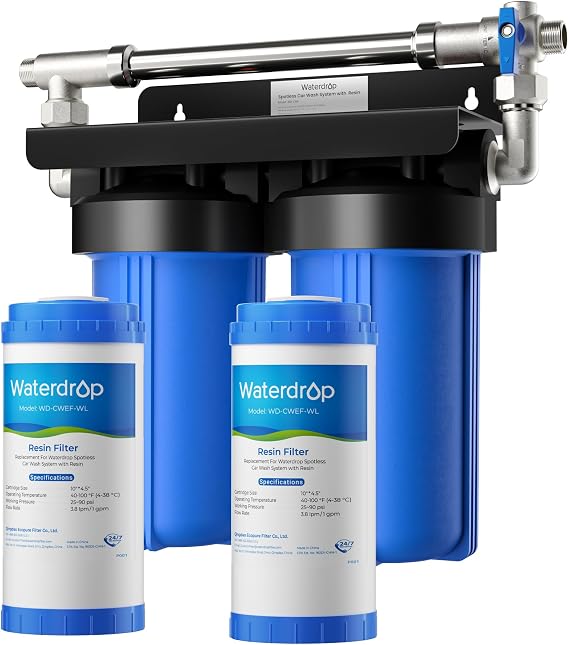 | Waterdrop CWE System | Check Price |
Our Top Picks 3  | iSpring WGB22BD System | Check Price |
Our Selected Top 12 Water Deionizer for Car Washing for Different Needs
This list features a variety of water deionizers designed to improve car washing by reducing water spots and mineral deposits. Each review covers performance, suitability for different users, and highlights strengths and potential drawbacks to help you find the right fit for your car care needs.
1. Spotless Water System for Car Wash
AKM akmjs-BP Spotless Water System is designed to give your car a spotless finish by removing mineral ions from water. It suits anyone who wants to avoid water spots after washing without the hassle of manual drying. Its biggest strength lies in producing pure, deionized water for a clean and shiny result.
Setting up the system involves connecting it to a garden hose using the included quick connectors. The 9 by 20 FRP tank comes pre-filled with mixed bed resin, ready to deionize up to 9.5 liters of water, or up to 10 liters after adding water.
Day-to-day use is straightforward, letting you rinse your vehicle with water free of minerals that cause spotting.
Performance is solid in removing mineral ions, leaving a clear, spot-free finish that saves time on drying. The build feels sturdy with a polyester-covered FRP tank weighing 24.3 pounds, making it portable yet durable. Strongest praise focuses on the spotless results, while some mention the system’s size and weight as a downside for storage and transport.
The system consistently produces spotless car washes, praised for eliminating manual drying to prevent water marks. Some find the 24.3-pound weight and dimensions a bit cumbersome when moving or storing the unit.
People needing spotless finishes without extra drying effort will appreciate this system. Those seeking a lighter, more compact option may want to consider different models better suited for space-limited setups.
Pros
- Effectively removes mineral ions for zero spots
- Includes all connectors and pre-filled resin
- Durable FRP tank with protective cover
- Portable size for easy use
Cons
- Relatively heavy at 24.3 pounds
- Size might be bulky for tight storage spaces
| Specification | Details |
|---|---|
| Model | akmjs-BP |
| Item Weight | 24.3 pounds |
| Package Dimensions | 24.5 x 9 x 8.75 inches |
| Tank Type | 9”*20” FRP Tank with polyester cover |
| Resin Capacity | 9.5 liters pre-filled (can be filled to 10 liters) |
| Connectors | 3/4″ garden hose quick connectors x 2 |
2. Waterdrop CWE Spotless Water System
Using the Waterdrop CWE Spotless Water System feels like a solid step up for anyone serious about car washing. It suits those wanting a clean finish without water spots and scratches. The biggest strength is its ability to remove minerals that cause spotting, so your car paint stays cared for over time.
Setting it up is straightforward since it sits freestanding and doesn’t need electricity. Switching between tap water and purified water is made simple with a bypass switch, saving effort during washing. The spotless rinse mode is easily activated for the final rinse, letting you just wait for the sparkling finish without extra work.
The system works well to reduce mineral and calcium-magnesium ion particles, leading to fewer spots and less paint wear. Its weight and size make it stable but not too bulky.
Strong points include its resin filter and ease of use. Some find the rinse duration of 8-10 minutes on the spotless mode a bit long for their routine.
The system effectively prevents water spots and minimizes paint wear thanks to its resin filter, but the spotless rinse requiring 8 to 10 minutes may feel lengthy during busy washes. It’s a well-built, freestanding unit that operates without electricity, making it user-friendly and durable.
Car enthusiasts who want to protect their paint and prevent water spots will appreciate this system. Those needing a more portable or quicker rinse option might want to explore alternatives. The value lies in quality finishing rather than speed or mobility.
Pros
- Removes minerals to prevent water spots
- Easy switch between tap and purified water
- Non-electric, simple installation
- Reduces paint scratches during washing
Cons
- Spotless rinse mode takes 8-10 minutes
- Weighs 27.5 pounds, not very portable
| Specification | Details |
|---|---|
| Manufacturer | Waterdrop |
| Item Weight | 27.5 pounds |
| Product Dimensions | 19.29 x 7.6 x 17.05 inches |
| Power Source | Non Electric |
| Installation Method | Freestanding |
3. iSpring WGB22BD Spotless Water System
Perfect for anyone serious about protecting their car’s paint, the iSpring WGB22BD Spotless Water System delivers 100% deionized water that stops mineral spots and micro-scratches. Its biggest strength lies in the flawless, spot-free finish it provides, especially for coated cars and delicate surfaces.
Setting it up is straightforward, and daily use revolves around its ability to feed pure DI water into your washing routine. It keeps soap working at full strength by removing hard water minerals that usually leave residue. Maintaining your pressure washer and equipment is easier since it prevents scale buildup, extending their life and saving headaches down the road.
The system delivers on its promise with spotless, streak-free water and no mineral crystallization after drying. The build appeals for reliability with its liquid form, making it easy to integrate with your existing equipment.
The most common praise highlights how it preserves ceramic coatings perfectly, while some people mention the system’s fit might not suit every setup without some adjustments.
The system impresses by consistently preventing water spots and preserving coatings during car washes. Most users praise how it stops swirl marks and extends equipment lifespan. A frequent downside is that it might not easily fit every pressure washer model without tweaks.
Anyone with ceramic-coated cars or delicate wraps will appreciate the flawless finish and equipment protection. Users needing broader surface compatibility or easier integration with all washers might want to explore other options.
Pros
- Delivers completely spot-free, mineral-free water
- Keeps car wash soaps effective with hard water
- Protects paint and coatings from micro-scratches
- Prevents scale buildup in washing equipment
Cons
- May require adjustments to fit some pressure washers
- Only suitable for automotive exterior and stone surfaces
| Specification | Details |
|---|---|
| Item Form | Liquid |
| Scent | Unscented |
| Specific Uses For Product | Automotive Exterior |
| Surface Recommendation | Stone |
| Special Features | Streak Free |
| Container Type | Can |
4. GLACIER FRESH RV06 Spotless Water System

Heavy-duty design with premium ion exchange resin targets mineral removal for spotless car washing. Perfect for anyone wanting to avoid water spots and keep their vehicle shining after every wash. Its standout feature is the quick switch between hard and soft water streams for optimal rinsing.
Setup involves connecting to your water source and using the three-way diverter valve to choose between raw and deionized water instantly. Switching to deionized rinse mode at the final stage helps maintain a spot-free finish without added drying effort. Handling daily rinses becomes simple with this easy-to-use valve system, making care straightforward.
Performance excels in removing calcium and magnesium ions, effectively preventing water spots and restoring gloss on car surfaces. The build feels solid, weighing 34.4 pounds with a compact size suited for home or RV use.
Strong praise focuses on how well it keeps cars shiny, while the main complaint relates to its weight making it less portable for some users.
The system reliably removes hardness ions, preventing water spots and keeping surfaces glossy, but its weight at over 34 pounds makes shifting it around less convenient for some. The three-way valve simplifies switching between water types, enriching washing ease and results.
Anyone focused on achieving a spotless final rinse without extra drying will find this device beneficial. Those needing a lightweight, easily movable unit might want to consider a more compact option better suited for frequent repositioning.
Pros
- Efficient mineral removal for spotless rinse
- Quick switch valve between water types
- Solid build quality supports durability
- Reduces need for additional drying
Cons
- Relatively heavy at 34.4 pounds
- Bulkier size limits portability
| Specification | Details |
|---|---|
| Brand | GLACIER FRESH |
| Model | RV06 |
| Item Weight | 34.4 pounds |
| Package Dimensions | 19.69 x 18.34 x 10.39 inches |
| Manufacturer Part Number | RV06 |
5. Spotless Water System Deionized Filter

Spotless Water System Deionized Filter is designed for those who want spotless, shine-worthy results after washing their vehicle. Perfect for car, motorcycle, or RV enthusiasts, its main strength lies in effectively stripping away minerals and impurities that cause water spots and stains.
Setting it up involves threading water through the mixed bed deionized resin, which works quietly in the background. Handling water up to 2000 ppm TDS means you can trust it in areas with high mineral content.
The leak-proof bottle is simple to manage during your regular car washes without worrying about spills.
The deionization system does exactly what you need by removing calcium, iron, and chlorine ions. Its build ensures no leaks and consistently clean, spot-free water for rinsing.
Most feedback praises the flawless finish it leaves, while some note that resin replacement details aren’t clear or readily available.
The system excels at providing spot-free rinse water, making car surfaces look brilliant without stains. The leak-proof design is praised, but some find the process for recharging or replacing the resin unclear. Users notice great water purification but want clearer maintenance guidelines.
This product suits anyone washing vehicles in hard water areas aiming to avoid spots and stains. Those needing detailed resin upkeep instructions or long-term resin supply might look for alternatives with more accessible support resources.
Pros
- Effectively removes calcium, iron, and chlorine ions
- Leak proof container prevents messes
- Handles water TDS levels up to 2000 PPM
- Leaves vehicle surfaces spot-free and shiny
Cons
- Resin replacement info not clearly provided
- May require monitoring for resin depletion over time
| Specification | Details |
|---|---|
| Purification Method | Deionization |
| Container Type | Bottle |
| Leak Proof | Yes |
| Supported Water TDS Level Maximum (PPM) | 2000 |
6. Spotless Water System with DI Resin

Perfect for anyone serious about protecting their car’s finish, the Spotless Water System with DI Resin thrives on delivering large quantities of pure deionized water. It’s ideal for heavy users who want spotless results without worrying about water spots, thanks to its large resin capacity and strong ion-exchange capability.
Setting up feels straightforward, with the system designed for frequent use. The 15L resin capacity means you won’t have to constantly swap out resin, letting you wash cars or RVs consistently without interruption.
It handles typical tap water with a TDS of 50 ppm well, creating purified water that avoids mineral deposits and spotting. Handling and storage are manageable despite its weight, which is something to consider for frequent moves.
Pure water production is impressive, enough for around 1,500 gallons based on typical input, which transforms into about 300 car washes or 75 RV washes. The build is solid but weighs over 40 pounds, which some find heavy for transport. The strongest feature is its longer resin life and efficient mineral removal, while some users mention the weight as the biggest downside.
The system’s top praise centers on its impressive resin capacity allowing for prolonged use without frequent refills. A common point of criticism involves the unit’s weight, which makes moving it around less convenient. The detailed ion-exchange performance minimizes spotting effectively, ensuring a clean finish.
People washing many vehicles regularly will appreciate the volume and quality of pure water this system delivers. Those who require a lightweight or highly portable option might want to consider alternatives that prioritize mobility over capacity.
Pros
- Large 15L resin for long service life
- Produces up to 1,500 gallons of DI water
- Reduces calcium and magnesium effectively
- Perfect for frequent car and RV washes
Cons
- Weighs over 40 pounds, making it bulky
- Actual lifespan varies with local water quality
| Specification | Details |
|---|---|
| Resin Capacity | 15L |
| Water Output | Up to 1,500 gallons with 50 ppm TDS input |
| Weight | 40.1 pounds |
| Model Number | akmjs-BP15TC |
| Package Dimensions | 31.75 x 12 x 11.25 inches |
7. Spotless Water System DIC-20
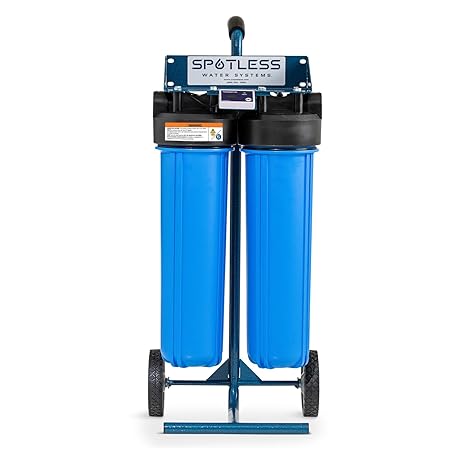
Hard water spots can ruin a freshly washed car’s paint job, leaving behind unwanted marks that no one likes. Perfect for car enthusiasts or anyone who wants their vehicle to look spotless, this deionizer’s biggest asset is removing minerals from water so your car can air dry without any spotting.
Setting up the system is simple since it’s freestanding and portable, making it easy to move around your backyard or garage. It runs on battery power, meaning no need for a direct electric connection.
The ion exchange purification method ensures thorough mineral removal, and you get a steady water flow of up to 2.5 gallons per minute for washing your car efficiently.
It handles its job of making water pure pretty well, allowing you to rinse off your car without worrying about water spots. The build feels durable enough for regular use, with a tube-type container that’s easy to manage. Most praise goes to how well it prevents spotting, while a common drawback is the limited water temperature tolerance at 90 °F, which might affect efficiency in warmer climates.
The system consistently delivers mineral-free water that prevents dryer spots on car surfaces, making rinses cleaner. Users commonly point out the limited maximum temperature of 90 °F can restrict performance in hotter water conditions. Setting it up takes no time, with convenient portability and freestanding design.
Anyone washing vehicles in average or cooler water temperatures who values spot-free drying will appreciate this unit. Those needing to process hotter water or unwilling to replace the filter yearly might want to look for alternatives better suited to higher temperatures or longer filter life.
Pros
- Removes all minerals from water effectively
- Portable and easy to relocate
- Battery-powered for versatile use
- Steady flow rate of 2.5 gallons per minute
Cons
- Upper temperature rating limited to 90 °F
- Filter must be replaced after one year
| Specification | Details |
|---|---|
| Purification Method | Ion Exchange |
| Power Source | Battery Powered |
| Maximum Flow Rate | 2.5 gpm |
| Upper Temperature Rating | 90 °F |
| Filter Life Cycle | 1 years |
| Installation Type | Freestanding |
8. AQUA CREST Hard Water Filter

Multi-filtration stands out as the key benefit here, with a unique setup that targets chlorine, heavy metals, and sediments. Designed for car washing and yard cleaning, it suits anyone wanting to protect their paintwork from hard water damage.
Setting up is straightforward, and the two-pack means you have a backup when the first filter needs replacing. The 5-micron aperture makes sure impurities get caught, letting you wash your car with softer, cleaner water. This filter works inline with your hose, making it a simple addition without extra tools or complicated connections.
It does a solid job reducing hard water spots, softening water enough to protect paint and windows from mineral build-up. The resin formula feels reliable and well-made.
The main praise is for noticeably fewer water spots after drying. Some mention the filter lifespan could be longer, meaning replacements come sooner than expected.
The product’s strongest point is noticeably reducing hard water spots, improving the quality of car washes by softening the water effectively. Most reviews point out that while performance is solid, the filters don’t last forever and may require regular replacement sooner than some expect.
Anyone washing their car at home or cleaning windows will find this filter useful for protecting surfaces. Those needing a longer-lasting solution or using stronger commercial equipment might want to look for a higher-end or industrial option instead.
Pros
- Multi-stage filtration for various contaminants
- Softens water to protect car paint
- Includes 2 compatible filters in one pack
- Simple inline installation with hose
Cons
- Filter replacement may be needed frequently
- Not suitable for high-pressure commercial washers
| Specification | Details |
|---|---|
| Model Number | AQU-CW |
| Unit Count | 2 Count |
| Filter Aperture | 5 micron |
| Manufacturer Part Number | AQU-CW-2 |
| Product Benefits | Reduces Hard Water Spots, Softens Water |
9. VEVOR Deionized Water System 10L

Anyone serious about car detailing at home will find this deionized water system handy. It suits those wanting a spotless finish without the tedious wiping afterward.
Its biggest strength lies in removing minerals like calcium and magnesium for a clean, streak-free dry.
Setting it up is straightforward thanks to its moderate size and manageable weight of 24.2 pounds. The 10-liter resin container means plenty of purified water is ready for several washes, allowing you to run continuous cycles without interruption.
Just connect it at the final wash stage to reduce mineral deposits effectively.
Performance is reliable when purifying tap water containing up to 200 ppm dissolved solids, delivering up to 400 gallons of purified water. The build is solid, with dimensions making it stable during use.
Users appreciate how well it creates spot-free dries, though some find the size a bit bulky for tighter spaces.
The system reliably provides a spotless car wash finish by effectively removing dissolved ions, making drying easier and quicker. A common downside is its size, which some find bulky for limited space garages.
Anyone needing a plentiful and consistent source of deionized water for regular car washing will benefit here. Those with very tight storage or who require higher input water tolerance might want to consider alternatives.
Pros
- Removes calcium and magnesium efficiently
- Supports up to 400 gallons of purified water
- Compact enough for home garage setups
- Allows air drying without spots
Cons
- Unit can feel bulky in smaller spaces
- Limited to average 200 ppm input water
| Specification | Details |
|---|---|
| Item Weight | 24.2 pounds |
| Product Dimensions | 9.25 x 9.25 x 23.62 inches |
| Brand | VEVOR |
| Model Number | PRS-XCG917 |
| Purified Water Capacity | Up to 400 Gallons (1514 L) |
10. VEVOR Deionized Water System 8L

VEVOR Deionized Water System 8L stands out for its ability to deliver spot-free car washes without any wiping. Perfect for car enthusiasts and professionals who want their vehicles to air dry naturally, it efficiently removes minerals like calcium and magnesium. Its biggest strength lies in providing pure deionized water for continuous use with minimal effort.
Setup involves filling its two 4L resin tanks, which then purify tap water inline. Daily use focuses on the final rinse stage of washing, where the water’s purity prevents spots and streaks, so you don’t need to dry the car manually. The system is designed to handle typical water hardness of 200 ppm and purify up to 330 gallons, supporting several washes without needing frequent resin replacement.
Performance is solid with a purification capacity that meets the needs of ongoing car washes. Built from durable materials, the unit weighs 42.6 pounds and has a compact size for its capacity.
Reviews mention how reliably it produces spotless water, though some find its weight and bulkiness a bit cumbersome to move around. Resins last as expected, keeping the water quality high throughout the process.
The system is praised for reliably delivering spotless, mineral-free water that allows cars to air dry without wiping. The weight and size are the most common downsides, as the unit isn’t very light or easy to move around frequently.
Anyone regularly washing cars who needs high purity water for a flawless finish will find this suitable. Those looking for a lightweight or more compact option may want to consider other models better suited for portability.
Pros
- Effectively removes dissolved ions for spot-free drying
- Good purification capacity for continuous car washes
- Compact enough for many garage spaces
- Uses premium mixed-bed resin ensuring high water purity
Cons
- Unit weighs 42.6 pounds, making it less portable
- Resin tanks may require eventual replacement after extended use
| Specification | Details |
|---|---|
| Resin Capacity | 2 x 4L premium mixed-bed resin |
| Rated Purified Water Capacity | 330 Gallons (1250 L) at 200 ppm water |
| Item Weight | 42.6 pounds |
| Product Dimensions | 18.31 x 14.96 x 37.01 inches |
| Manufacturer Part Number | Deionized Water System 4 L |
11. VEVOR Deionized Water System Resin

VEVOR Deionized Water System Resin suits those aiming for a spotless car wash without worrying about water spots. Its biggest strength lies in 2 x 0.5 L color-changing mixed-bed resin that cleans water of calcium, magnesium, and other ions, allowing cars to air dry naturally and spot-free.
Setting it up involves attaching the system at the final stage of your car wash routine. The dual resins change from purple to brown, showing exactly when to replace them.
The system handles up to 50 gallons of purified water under typical 200 ppm conditions, giving enough capacity for continuous use without interruptions.
The deionizer delivers well on making your car wash spot-free, with resin color-changing that clearly signals resin life. It’s compact at 9.45 x 5.12 x 13.39 inches and weighs just over 7 pounds, making it easy to handle and store. Some users noted that replacing the resin becomes necessary at brown color, which can feel like frequent maintenance in hard water areas.
The standout feature is the resin’s color-changing ability, which gives clear, visual feedback on when to swap it out. Many users appreciate this for avoiding guesswork, though the frequent resin replacements can be a downside, especially with harder water. The system generally performs as expected in removing dissolved ions.
People wanting a reliable system to achieve spot-free results will find this suitable. Those looking for lower-maintenance, higher capacity deionizers might want to consider bigger units or alternative solutions that require less frequent upkeep.
Pros
- Clear resin color change for easy use monitoring
- Purifies water effectively up to 50 gallons per resin set
- Compact size fits in most car wash setups
- Removes calcium and magnesium ions completely
Cons
- Resin replacement needed once color changes to brown
- Limited resin volume may need frequent changes
| Specification | Details |
|---|---|
| Brand | VEVOR |
| Model | Deionized Water System for Car Wash |
| Item Weight | 7.17 pounds |
| Product Dimensions | 9.45 x 5.12 x 13.39 inches |
| Resin Capacity | 2 x 0.5 L mixed-bed resin |
| Purified Water Capacity | Up to 50 gallons (189 L) |
12. Envig CarShine 713 Deionization System

Car washing feels smoother and less troublesome when you use a water deionizer that really cuts down on water spots. This model suits anyone wanting a spot-free rinse without the need for drying towels, especially useful for those using tap water with up to 60 PPM TDS.
Setting it up is straightforward thanks to the freestanding design and handy handle bracket, which also makes resin replacement easy. The inline TDS meter keeps you informed about water quality in real time.
Flow is regulated at 2.4 gallons per minute to make sure the resin lasts longer, letting you stick with your existing wash tools easily.
Removing total dissolved solids works reliably, producing clear water that leaves cars spot free after rinsing. Resin capacity is impressively high; about 500 gallons before needing a swap.
The build feels solid although some notes mention going through resin faster in very hard water areas. On the whole, it’s consistent at delivering clean water but does require occasional resin replacement.
The most praised feature is the accurate TDS measurement and the long resin life supporting about 500 gallons of spot-free water. On the downside, frequent resin replacement occurs in harder water than recommended, and the resin consumption can increase faster than expected. The unit is sturdy with helpful transport and maintenance design.
Someone who regularly washes their car and wants to skip drying will find this very convenient, especially with tap water under 60 PPM TDS. People dealing with extremely hard water might want to consider a system with higher resin capacity or pretreatment options to avoid frequent resin changes.
Pros
- Easy resin replacement with handle bracket
- Real-time inline TDS meter display
- Regulated 2.4 GPM flow rate
- Produces spot-free rinse up to 500 gallons
Cons
- Resin needs replacement after heavy use
- May consume resin faster with very hard water
| Specification | Details |
|---|---|
| Installation Type | Freestanding |
| Purification Method | Deionization |
| Maximum Flow Rate | 2.4 gpm |
| Supported Water TDS Level Maximum (PPM) | 60 |
| Resin Capacity | 113 grams (113,000 PPM), about 500 gallons |
Best Water Deionizers for Car Washing Comparison
| Product | Weight | Dimensions | Power Source | Max TDS Supported |
|---|---|---|---|---|
| Spotless Water Car Wash | 24.3 pounds | 24.5x9x8.75 inches | – | – |
| Waterdrop CWE System | 27.5 pounds | 19.29×7.6×17.05 inches | Non Electric | – |
| iSpring WGB22BD System | – | – | – | – |
| GLACIER FRESH RV06 | 34.4 pounds | 19.69×18.34×10.39 inches | – | – |
| Spotless Deionized Filter | – | – | – | 2000 PPM |
| Spotless DI Resin System | 40.1 pounds | 31.75x12x11.25 inches | – | – |
| Spotless DIC-20 System | – | – | Battery Powered | 350 PPM |
| AQUA CREST Hard Filter | – | – | – | – |
| VEVOR 10L Deionized System | 24.2 pounds | 9.25×9.25×23.62 inches | – | – |
| VEVOR 8L Deionized System | 42.6 pounds | 18.31×14.96×37.01 inches | – | – |
| VEVOR Resin Water System | 7.17 pounds | 9.45×5.12×13.39 inches | – | – |
| Envig CarShine 713 | – | – | – | – |
- Weight24.3 pounds
- Dimensions24.5x9x8.75 inches
- Power Source–
- Max TDS Supported–
- Weight27.5 pounds
- Dimensions19.29×7.6×17.05 inches
- Power SourceNon Electric
- Max TDS Supported–
- Weight–
- Dimensions–
- Power Source–
- Max TDS Supported–
- Weight34.4 pounds
- Dimensions19.69×18.34×10.39 inches
- Power Source–
- Max TDS Supported–
- Weight–
- Dimensions–
- Power Source–
- Max TDS Supported2000 PPM
- Weight40.1 pounds
- Dimensions31.75x12x11.25 inches
- Power Source–
- Max TDS Supported–
- Weight–
- Dimensions–
- Power SourceBattery Powered
- Max TDS Supported350 PPM
- Weight–
- Dimensions–
- Power Source–
- Max TDS Supported–
- Weight24.2 pounds
- Dimensions9.25×9.25×23.62 inches
- Power Source–
- Max TDS Supported–
- Weight42.6 pounds
- Dimensions18.31×14.96×37.01 inches
- Power Source–
- Max TDS Supported–
- Weight7.17 pounds
- Dimensions9.45×5.12×13.39 inches
- Power Source–
- Max TDS Supported–
- Weight–
- Dimensions–
- Power Source–
- Max TDS Supported–
How to Choose the Right Water Deionizer
Choosing the right water deionizer involves considering its capacity, regeneration ease, and filtration quality to ensure effective mineral removal. Picking the right type prevents water spots and protects your car’s finish, ultimately saving money on repairs and reducing maintenance hassles.
Water Purity and Output Quality
Hard water spotting after washing cars is common if the system doesn’t remove minerals effectively. A system that consistently produces water with very low dissolved solids helps achieve that spot-free finish.
Some devices reduce total dissolved solids (TDS) to under 10 ppm, which is usually low enough to prevent spotting on sensitive car surfaces.
In daily use, systems offering a flow rate of around 1 to 2 gallons per minute balance output and purity well. Too high a flow may compromise water quality by not fully deionizing the water, while too low a flow slows down washing.
A consistent, measurable drop in conductivity of the output water is a good sign of effectiveness. Look for units that specify their maximum flow rate along with purity level to match typical car washing demands.
System Capacity and Size
Smaller tanks or cartridges limit how much water you can get before needing to regenerate or swap them out, which interrupts washing. For routine home use, a capacity of 5 to 10 gallons between service intervals often fits well. Professional setups might require larger or multiple units to avoid downtime during busy periods.
Physical size affects where and how easily the system can be installed. Compact units under 2 feet in length and width fit better in tight spaces or with portable setups. Portability also matters if moving between wash locations.
Those with integrated handles or moderate weight (under 30 pounds) make relocation simpler without tools.
Maintenance and Ease of Use
Some resin cartridges require regeneration after processing a few hundred gallons, meaning adding chemicals and waiting. Devices that allow easy cartridge swaps reduce downtime and chemical handling.
Clear maintenance indicators, like LED alerts or simple mechanical gauges, prevent unexpected purity drops during washes.
Installation should not need plumbing expertise; systems that connect directly to garden hoses or common pressure washer fittings reduce setup time and errors. Simple, clear instructions and minimal tools needed also improve daily usability. Frequent users appreciate systems that maintain performance without frequent resets or calibrations.
Durability and Build Quality
Water deionizing systems constantly encounter water and cleaning solvents, so materials like high-grade plastics or stainless steel prevent corrosion. Cheaper plastics may degrade or crack, causing leaks or contamination over time. Durable construction matters to withstand moving gear or knocks in busy wash bays.
Seals and joints should resist leaks under typical pressures (around 40 to 60 psi). Units with reinforced fittings or molded housings avoid damage during handling. A rugged build reduces repairs and replacements, making these systems last through daily washing routines.
Compatibility and Integration
Connecting the system smoothly to existing pressure washers or hoses avoids extra adapters and potential leaks. Standard 3/4 inch garden hose threads or quick-connect fittings improve compatibility.
The system’s tolerance for input water pressure typical of household or commercial equipment (25 to 60 psi) is essential for stable operation.
Units that integrate with pre-filters or sediment traps improve overall water quality before deionization, offering better protection for resin life. Modular designs that stack with other treatment stages give flexibility for various water types and levels of contamination.
Proper Maintenance Practices for Extending the Life of Your Water Deionizer
Water deionizers rely on resin beads to remove minerals and impurities. Over time, these beads become saturated and less effective at purifying water.
Regularly regenerating the resin is crucial to keep the system working efficiently. This usually involves flushing the resin with a salt solution as specified by the manufacturer.
Cleaning the pre-filter and post-filter components helps prevent clogging and maintains proper water flow. Inspecting connections and hoses for leaks or damage extends the device’s lifespan and ensures consistent performance.
Avoid exposing the deionizer to freezing temperatures, as this can damage the resin and housing.
Key maintenance steps include:
- Following the regeneration schedule based on your water hardness levels
- Replacing filters when indicated by drop in water pressure
- Storing the unit properly during off seasons
- Regularly checking for physical wear and tear on parts
Adhering to these practices can help keep the water deionizer operating efficiently for years, producing clean water without mineral spots on your car.
Comparing Water Deionizers with Reverse Osmosis Systems for Car Washing
Water deionizers and reverse osmosis (RO) systems both offer purified water suitable for car washing but operate differently. Deionizers use ion-exchange resin to remove mineral ions, resulting in reduced spotting after rinse. RO systems force water through a membrane that filters out a higher percentage of dissolved solids.
Deionizers can produce purified water faster since they don’t require the slower filtration process that RO membranes do. However, they need routine resin regeneration to maintain performance. RO systems tend to handle a wider range of contaminants but typically have lower output rates and require more frequent filter replacements.
- Deionizer pros: faster output, simpler maintenance
- Deionizer cons: resin regeneration needed, performance varies with source water
- RO pros: thorough filtration, consistent water purity
- RO cons: slower water production, higher maintenance costs
Choosing between the two depends on wash volume, water quality, and how much time or effort you can dedicate to upkeep.
Common Mistakes to Avoid When Using a Water Deionizer for Automotive Care
One common error is neglecting the resin regeneration schedule. Overused resin loses ion-exchange ability, causing minerals to pass through and leave water spots. Another mistake involves letting the deionizer dry out completely during downtime, which can damage the resin beads.
Many users forget to check and clear the pre- and post-filters regularly, leading to blockages that reduce flow rate and system effectiveness. Using water with very high mineral content without adjusting regeneration frequency also stresses the system prematurely.
- Avoid skipping resin salt treatments
- Don’t let the deionizer dry out between uses
- Replace or clean filters as needed
- Ensure the system matches your water hardness level
Failing to address these points often results in wasted time, reduced water quality, and even costly repairs or part replacements.
People Also Asked
How Do I Properly Use a Water Deionizer for Car Washing?
Connect the water deionizer to your water supply and flush it before use. Use it at a low flow rate to prevent channeling and rinse your car thoroughly for spot-free drying. 2 | A small to medium unit is usually sufficient for a single car, generally around 1 to 3 gallons per minute capacity. Check flow rate and resin capacity to avoid frequent regeneration or shortage during use. 3 | Water deionizers produce purified water that is safe for automotive paint and reduces water spots. Avoid using soaps or detergents through the system to maintain resin life and water purity. 4 | Resin in a water deionizer typically lasts between a few hundred to a thousand gallons, depending on water hardness and usage frequency. Monitor the water quality output and replace resin when spotting or poor rinsing begins to appear. 5 | Common issues include channeling inside the resin bed, resin exhaustion causing spotty water, and resin leakage. Regular backflushing and timely resin replacement help maintain consistent performance during car washing.
What Size Water Deionizer Do I Need for My Car?
Choose a water deionizer that can handle at least 3 to 5 gallons per use for washing a typical car. Make sure it has enough resin capacity to treat the amount of water you plan to use regularly. Changing or regenerating the resin often will keep the water clean and prevent spots on your car’s surface.
Are Water Deionizers Safe to Use on Automotive Paint?
Water deionizers are safe to use on automotive paint as they remove minerals and impurities that can leave spots or residue. Using DI water for the final rinse prevents water spots and keeps the finish cleaner longer. Make sure the water is fresh and the system is well-maintained to avoid any contaminants that could affect the paint.
How Long Does a Typical Water Deionizer Last Before Replacement?
A typical water deionizer lasts about 1 to 3 years before it needs replacement. The lifespan depends on how much water passes through it and how hard the incoming water is. For car washing, monitoring the water quality regularly helps spot when the deionizer isn’t working well, so you can replace it just before it starts leaving spots on the car.
What Common Problems Occur with Water Deionizers During Car Washing?
Water deionizers often struggle with clogging and loss of efficiency over time during car washing. Hard water minerals can build up inside, reducing water flow and the device’s ability to remove impurities. Flushing the system regularly and using pre-filtered water helps extend the lifespan and maintain performance. Keeping an eye on water quality also prevents spotting on your vehicle.
Conclusion
Choosing the right water deionizer for car washing mostly comes down to how well it removes minerals, how much water it can process at a time, and how easy it is to maintain. These factors affect the quality of the water used, how long the unit will last, and how often you will need to replace resin or filters.
Consider the space you have available and how often you plan to wash your car before making a decision. A larger unit may be better for frequent use but could take up more room and cost more upfront. Check the comparison table and the product details above to find the best fit for your needs and budget.