
Top 12 Best Dust Separator You Can’t Live Without!
Woodshops and home workshops often deal with dust collection problems that slow work and clutter the space. A cheap or poorly designed dust separator can clog quickly, lose suction, or allow fine dust to escape back into the air.
Finding the best dust separator helps manage this by capturing most of the debris before it reaches the vacuum or dust collector, reducing filter cleaning and improving air quality.
The quality of a dust separator largely depends on the size and type of its collection chamber, the strength and fit of its cyclone design, and the ease of emptying the dust bin. A well-built separator uses durable materials like thick plastic or metal to withstand wear. The cyclone shape needs to match your vacuum’s airflow, often around 3500 cubic feet per minute for home use, to properly spin dust and chips down into the collection bin without losing power.
Easy access to clean out accumulated dust also saves time and effort.
Need a Quick Check?
| Image | Product | Price |
|---|---|---|
Our Top Picks 1  | PRO Cyclone Separator | Check Price |
Our Top Picks 2 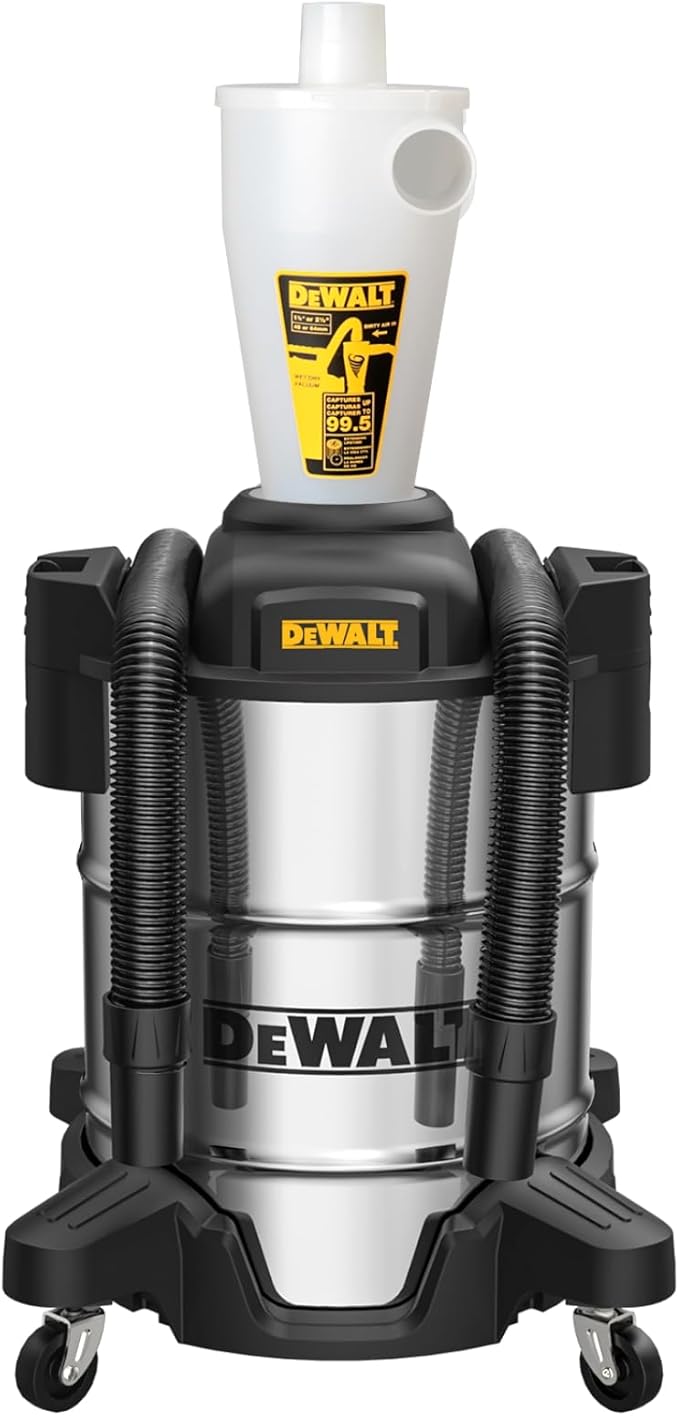 | Stainless Steel Dust Separator | Check Price |
Our Top Picks 3  | DEWALT 6 Gallon Separator | Check Price |
Our Selected Top 12 Dust Separator Picks for Every Need
These dust separators are designed to help improve dust collection efficiency in various workshop setups. Each review highlights performance, suitability for different tasks, and key advantages and drawbacks, helping readers find the right option for their specific needs and workspace conditions.
1. PRO Dust Collector Cyclone Separator
Perfect for woodworkers needing to cut fine dust from their shops, the PRO Dust Collector Cyclone Separator stands out for its proven dust separation efficiency. It’s designed not just to move air but to capture dust particles better than many competitors, especially useful in spaces where air clarity is crucial.
Setting it up is straightforward thanks to its compact 13 by 13-inch size and lightweight design at 1.63 kg, which makes it easy to connect to various shop vacuums or dust collectors. Daily use focuses on watching how well it keeps your filters clean and your workspace less dusty, as the separator takes care of most debris before it reaches your main vacuum or dust collector.
Performance-wise, it really shines because it’s engineered to maximize dust separation without depending solely on high air flow volume, reducing excess dust that usually escapes into the air. The sturdy 0.5-inch wall thickness and durable materials mean it holds up well over time, though a few users mention that the size might not fit all setups perfectly without adapters.
The separator earns strong praise for its ability to trap fine and coarse dust better than many low-profile alternatives, backed by independent testing results. The most frequent complaint is that its 2.25-inch diameter and overall size don’t fit all dust collector hoses straight out of the box, requiring some adjustment.
Those working in smaller to medium-sized shops looking for efficient dust control will appreciate its performance and solid build. Shops with larger, specialized dust collection systems might want to consider a model with bigger fittings or more customization options.
Pros
- Consistently high dust collection efficiency
- Compact and lightweight design
- Thick walls improve durability
- Optimized for dust separation, not just airflow
Cons
- May require adapters for some setups
- Size might be limiting in larger systems
| Specification | Details |
|---|---|
| Item Dimensions (L x W) | 13″ x 13″ |
| Item Weight | 1.63 kg |
| Nominal Wall Thickness | 0.5 inches |
| Outside Diameter | 2.25 inches |
| Item Length | 7 inches |
2. Dust Separator with Stainless Steel Tank
Dust buildup when cleaning garages or hard floors can be a real chore to manage. Suited for indoor use on surfaces like concrete and hardwood, this dust separator handles large amounts of debris without filling up quickly.
Its biggest strength is the 10-gallon stainless steel tank, which holds dust well while keeping things portable.
Setting it up is straightforward since it functions as an attachment with four wheels for easy movement. The cartridge filter keeps the fine dust contained and the single power level makes operation simple.
It fits neatly into home or garage cleaning routines where you switch between tile floors, carpets, and hardwood. Noise stays moderate at about 70 decibels while you work.
This device performs its job by effectively separating heavier dust particles before they reach your vacuum. The stainless steel tank feels durable and easy to clean, which helps maintain performance.
Positive remarks note the tank’s capacity and portability, while the limited power settings might not suit those needing variable suction strength.
The 10-gallon stainless steel tank offers solid dust-holding capacity and portability, praised for lasting through big cleanup jobs without needing frequent emptying. The most noted downside is the single power level, limiting control over suction force for different cleaning needs.
Anyone tackling heavy dust on hard indoor floors will find this setup helpful, especially in garages and workshops. Those wanting adjustable power settings or outdoor capability might want to explore other options better suited to variable tasks.
Pros
- Large 10-gallon stainless steel tank
- Portable with four wheels for easy movement
- Cartridge filter captures fine dust effectively
- Suitable for various indoor surfaces
Cons
- Only one power level available
- Designed solely for indoor use
| Specification | Details |
|---|---|
| Capacity | 10 gallons |
| Filter Type | Cartridge |
| Surface Recommendation | Concrete |
| Noise Level | 70 db |
| Number of Wheels | 4 |
| Indoor/Outdoor Usage | Indoor |
3. DEWALT 6 Gallon Dust Separator DXVCS002
Capturing up to 6 gallons of debris before it reaches your vacuum, this dust separator suits anyone working with a lot of wood chips or dust. Its ability to prevent suction loss is its biggest strength, saving time and money on filter replacements.
Setup involves connecting it easily to your existing vacuum and rolling it into place on the built-in four-caster base. The wheels make moving it around a workshop comfortable, and it handles a wide range of materials from drywall dust to pet hair without needing constant attention during use.
Its cyclonic filter type efficiently separates dust and debris, preserving vacuum performance. The hard plastic construction feels sturdy and durable.
Common praise highlights how well it prevents vacuum clogs, while some users find the capacity limiting for very large jobs.
Many users appreciate how effectively it reduces clogging and suction loss, making vacuum filter maintenance less frequent. A common downside is the 6-gallon size, which can feel small for bigger workshop tasks requiring longer operation without emptying.
It is well suited for small to medium-sized workshops focusing on wood or drywall debris. Those needing a larger capacity or multiple power settings might consider other options to keep up with higher dust volumes or specialized tasks.
Pros
- Captures wood chips before vacuum filter clogs
- Stable, easy to move on four casters
- Handles wet and dry debris
- Compatible with most materials and vacuums
Cons
- 6-gallon capacity may fill quickly in heavy use
- Only one power level available
| Specification | Details |
|---|---|
| Capacity | 6 gallons |
| Filter Type | Cyclonic |
| Surface Recommendation | Hard Floor |
| Number of Wheels | 4 |
| Style Name | Separator |
4. Rockler Dust Right Dust Separator with Hose and Bucket

Ideal for woodworkers looking to keep their vacuum filters clear and maintain suction power, the Rockler Dust Right Dust Separator works as a two-stage separator for sawdust and wood chips. Its biggest strength lies in capturing debris before it reaches your vacuum, helping extend filter life and overall vacuum efficiency.
Setting up involves attaching the portably designed dust cyclone separator to any shop vacuum with a 2-1/4” ID outlet. The included flex-form hose connects to the separator, which sits atop a 3.5-liter bucket to collect debris.
Daily use is straightforward: just run your vacuum as usual and watch as larger particles settle in the bucket, reducing filter clogs and keeping suction steady without constant maintenance.
Performance-wise, it effectively separates most wood chips and sawdust, preserving vacuum filter life and suction. It’s built from sturdy wood material, giving it a solid feel without excessive weight, at just over 11 pounds.
Most users appreciate how it prevents premature clogging, though some mention the hose length is quite short, which can limit flexibility in positioning the separator.
The strongest praise centers on how effectively it prevents loss of suction by stopping larger debris before reaching the vacuum filter. The most common complaint involves the short hose length, which restricts setup options and may not suit all workshop layouts.
Woodworkers wanting a practical solution to keep their vacuums running efficiently will appreciate this separator. Those needing more hose length or a different material may want to explore other models better suited to flexible placement and heavy-duty use.
Pros
- Captures sawdust before vacuum filter clogs
- Extends vacuum filter and impeller life
- Includes flex-form hose for easy connection
- Portable and compact design
Cons
- Hose length is very short, limiting placement
- Wood construction may require care to avoid damage
| Specification | Details |
|---|---|
| Manufacturer | Rockler |
| Part Number | 45556 |
| Item Weight | 11.18 pounds |
| Product Dimensions | 17.1 x 16.9 x 12.5 inches |
| Material | Wood |
| Hose Length | 0.91 decimeters |
5. VEVOR Cyclone Dust Separator with Metal Tank

VEVOR Cyclone Dust Separator with Metal Tank stands out for its high separation rate and transparent design, making it ideal for anyone wanting to keep their vacuum filter from clogging. Its clear view feature lets you watch dust collection in real time, which is really helpful for staying on top of maintenance without guesswork.
Setting up the cyclone separator is straightforward thanks to its compatibility with 4.0-inch commercial vacuum hoses. The transparent ABS tank makes daily checks easy, so you know exactly when it needs emptying.
Its size is manageable enough to fit into most workshop setups, while the metal drum adds solid durability without weighing it down too much.
The cyclone technology works well, capturing up to 99.61% of dust before it reaches the vacuum. The sturdy build combines steel and high-transparent ABS, ensuring durability and clear visibility. Positive points highlight its high separation rate and solid construction, but some mention the device’s somewhat bulky dimensions as a downside.
The clear design consistently earns praise for allowing real-time dust collection checks, eliminating the need to open the tank frequently. On the downside, the unit’s size and weight make it less practical for tight spaces or setups that require more portability.
People needing effective dust separation with easy maintenance will appreciate this unit’s sturdiness and visibility. Those with limited workspace or seeking lighter gear might want to consider more compact options.
Pros
- High dust separation rate at 99.61%
- Transparent tank for easy dust monitoring
- Compatible with standard 4.0-inch vacuum hoses
- Durable steel and ABS construction
Cons
- Somewhat bulky dimensions for smaller workshops
- Weight can feel heavy compared to plastic-only models
| Specification | Details |
|---|---|
| Separation Rate | 99.61% |
| Compatible Hose Diameter | 4.0-inch / 101.6mm |
| Material | High-transparent ABS + Steel |
| Item Weight | 17.86 pounds |
| Product Dimensions | 19.49 x 17.91 x 17.91 inches |
6. Dual Cyclone Dust Separator for Shop Vac

PEMEDOR PM004 Dual Cyclone Dust Separator tackles dust and debris before they reach your shop vac. Ideal for woodworkers and DIYers who want to protect their shop vac’s filter.
Its biggest strength lies in the dual cyclone design that traps most sawdust upfront, keeping suction strong longer.
Setting up involves snapping the unit onto a standard US bucket, no specialized tools needed. It fits 2.5-inch hoses common to many shop vacs, making it a good match for most setups.
Daily use means less frequent filter cleaning since most sawdust and fine dust drops right into the bucket.
It performs well at separating sawdust and fine particles, reducing vacuum filter clogging noticeably. The sturdy plastic construction feels solid and durable. Strong suction maintenance is the highlight, while a minor complaint involves the absence of a bucket in the package, so you must have your own or buy separately.
The dual cyclone structure efficiently captures sawdust and fine dust which significantly reduces filter clogging and keeps suction strong. The need to supply your own bucket remains the main drawback since it is not included. This means having a compatible bucket ready is essential before use.
Those who already own or can provide a standard US bucket will find this dust separator valuable to preserve their shop vac’s motor and filter longevity. Anyone without a compatible 2.5-inch hose system or unwilling to supply a bucket separately should consider other options.
Pros
- Dual cyclone design traps most dust upfront
- Fits standard US buckets securely
- Reduces shop vac filter clogging
- Includes hose for easy connection
Cons
- Does not include bucket in package
- Only fits 2.5-inch hose shop vac systems
| Specification | Details |
|---|---|
| Brand Name | PEMEDOR |
| Model Info | PM004 |
| Item Weight | 5.24 pounds |
| Package Dimensions | 13.6 x 12.6 x 10.7 inches |
| Color | 2.5-inch Dual Cyclone With Hose (No Bucket) |
| Included Components | Hose |
7. Cyclone Dust Collector Separator

Dust collection stays strong without constant filter clogs thanks to the Cyclone Dust Collector Separator, ideal for anyone using shop vacs or dust extractors. It stands out for keeping suction power steady and extending filter life by catching over 99% of debris before it reaches the vacuum.
Setup is simple with the rigid, cut-to-fit PVC connection that keeps everything airtight and secure, avoiding makeshift fixes you often see with other systems. It comes with two hose adapters for easy attachment.
Day-to-day use involves letting it spin fast to pull dust down into the bucket, so the vac works more efficiently and doesn’t lose suction.
Performance impresses with its parabolic design creating a faster airstream that results in better dust capture compared to straight-wall cyclones. The single-piece construction means there are no leaks or weak points. It weighs just over 11 pounds and is finished glossily in milk jug white and black.
The main complaint is about the size and bulk, which might not fit small spaces easily.
The strongest praise highlights how well it keeps suction strong and prevents clogged filters, which lets the vacuum run longer without maintenance. A common drawback is its bulkiness, making it less suited for tighter workshops or those needing a compact setup.
Anyone working in bigger spaces with room to spare and needing durable dust separation will find this very effective. People with limited workspace or who prefer lightweight gear may want to consider smaller or lighter options instead.
Pros
- Pre-separates over 99% of debris
- Rigid, airtight PVC connection
- Parabolic design increases suction power
- Cleans filters for longer vacuum life
Cons
- Bulky size takes up considerable space
- Heavier than some compact alternatives
| Specification | Details |
|---|---|
| Item Weight | 11.3 pounds |
| Package Dimensions | 29 x 16.25 x 12.5 inches |
| Power Source | Shop vac or dust extractor |
| Sound Level | 72 db |
| Special Features | Dry, Wet |
| Included Components | 2x Mullet Wet/Dry Vac Hose Adapters |
8. Low Profile Dust Separator for 5 Gallon Buckets

A straightforward dust separator designed for use with 5-gallon buckets makes cleanup a lot easier by trapping dust before it reaches your vacuum filter. Hobbyists or workshop users with wet/dry vacuums rated 5 HP or higher will appreciate how this product helps cut down on filter maintenance.
Setting it up requires attaching the separator to a standard 5-gallon bucket and connecting the included 2-1/2-inch hose to your wet/dry vacuum. The low-profile lid keeps your workspace compact, which is handy in tighter areas. Day-to-day use means most dust and debris settle into the bucket, letting your vacuum run longer without choking on dust build-up.
The separator does a solid job at catching dust early, which really cuts down on filter clogs and extends vacuum life. Build quality is decent; it’s light at just under 3 pounds and comes with connectors and 90-degree elbows that fit well. Common praise highlights less frequent filter cleaning, while some users mention being mindful to check rim shape and hose fit before buying.
The most notable advantage is less filter clogging, which means less maintenance hassle. However, paying close attention to your bucket’s rim shape and hose size is important to ensure a proper fit and avoid air leaks during use. This setup works well for users with compatible buckets and hoses but can be tricky otherwise.
People with standard 5-gallon buckets and higher-powered vacuums will find it useful and space-saving. Those using non-standard buckets or different hose sizes should look for alternatives that explicitly match their gear to avoid compatibility issues.
Pros
- Reduces filter cleaning frequency effectively
- Fits standard 5-gallon buckets reliably
- Compact low-profile design saves space
- Includes necessary connectors and elbows
Cons
- Must verify bucket rim shape for proper fit
- Only compatible with 2-1/2-inch nominal hoses
| Specification | Details |
|---|---|
| Package Dimensions | 14.61 x 13.11 x 4.92 inches |
| Item Weight | 2.95 pounds |
| Manufacturer | Cikawit |
| Item Model Number | ZXZ-DS-NEW |
| Included Components | 2-1/2-inch hose, 90-degree elbows, Dust Separator, connectors |
9. VEVOR Cyclone Dust Separator Kit with 5 Gallon Bucket

Constructed with a durable 2 mm thick polypropylene bucket, this cyclone dust separator suits anyone needing reliable dust and debris management. Its standout feature is the conical cyclone design, which delivers up to 99.5% efficiency in separating dust from air, helping protect your vacuum and reduce maintenance.
Setup is straightforward, thanks to the included PU hose, elbow adapter, and casters for easy mobility. The translucent bucket lets you see when it’s full, and the kit supports both dry debris and small liquid waste, making it versatile around workshops. The copper-coated steel wire reinforced hose ensures solid, flexible connections during daily operation.
Its cyclone structure handles sawdust, pet hair, and metal shavings well, significantly cutting down how often the vacuum filter needs cleaning. The thick bucket wall stands up to regular workshop use without cracking. The main complaint revolves around the limited 5-gallon size, which requires frequent emptying during large jobs.
Highly effective in trapping fine dust and debris before it reaches the vacuum, which reduces maintenance significantly. Frequent emptying is necessary due to the moderate 5-gallon capacity, especially during extensive use.
People working on small to medium projects will appreciate this kit’s efficiency and durability. Those handling particularly large volumes of dust might want a bigger capacity model for less downtime.
Pros
- Up to 99.5% dust separation efficiency
- Supports wet and dry debris
- Translucent bucket for easy monitoring
- Sturdy 2 mm thick bucket walls
Cons
- 5-gallon bucket requires frequent emptying
- May not handle high volumes without interruption
| Specification | Details |
|---|---|
| Brand Name | VEVOR |
| Item Weight | 5.7 pounds |
| Model Number | XFDT |
| Included Components | Bucket assembly, PU hose, cyclone separator, wrench, rubber parts, casters |
| Bucket Capacity | 5 Gallon |
| Material Thickness | 2 mm polypropylene |
10. Happy Tree Low-Profile Cyclone Dust Separator

High flow suction power is what stands out first about the Happy Tree Low-Profile Cyclone Dust Separator, making it an ideal fit for woodworkers, DIYers, and hobbyists aiming to keep their vacuum filters clear. Its ability to capture most dust and debris upfront helps maintain strong suction, which is exactly what a busy workshop demands.
Setting it up is straightforward, thanks to its airtight, leak-proof seal and space-saving design. You simply attach it to your shop vacuum, and it starts catching dust before it hits the filter. The anti-static feature is a practical touch for dusty environments, especially on hard floors, reducing static build-up that could otherwise be annoying during long sessions of cleanup.
It does a strong job preventing clogs and suction loss, allowing shop vacuums to work at peak performance. The cyclone dust collection system keeps filters cleaner longer, which is a cost saver for anyone tired of replacing filters frequently.
The structure is solid and well-sealed, though some people note the overall size may not suit very small workshop spaces.
This dust separator excels at preventing vacuum filter clogs and keeps suction strong, which helps extend filter life and reduce maintenance costs. Some users mention a challenge fitting it into smaller or more cramped work areas because of its size and shape. The reliable seal design is a frequent highlight for keeping dust contained.
Those who spend time woodworking or managing workshops on hard floors will appreciate the improved airflow and dust control this unit offers. People with limited space or needing a separator that works better on other flooring types might want to look at alternative options that suit smaller setups or carpets better.
Pros
- Captures 99.9% of dust before filters clog
- Maintains strong suction during use
- Airtight, leak-proof seal keeps debris contained
- Anti-static feature reduces dusty static build-up
Cons
- Low-profile design may not fit very tight spaces
- Only recommended for hard floors, limits some uses
| Specification | Details |
|---|---|
| Filter Type | 100 |
| Surface Recommendation | hard floors |
| Special Features | anti-static, leak-proof, airtight seal, filter fins |
| Recommended Uses | woodworking, auto body, construction cleanup, workshops |
| Style Name | Dust Separator |
| Indoor/Outdoor Usage | Indoor, Outdoor |
11. Low-Profile Cyclone Dust Separator for Wet/Dry Vacuums

Adding a pre-separation stage before your vacuum can save you time and extend filter life. Designed for workshop debris like sawdust and wood chips, this Low-Profile Cyclone Dust Separator fits wet/dry vacuums and is ideal for anyone tackling heavy dust and shavings.
Its main advantage is cutting down on filter buildup by catching particles early.
Setting it up involves securing the lid with the 4-clip leak-resistant seal onto a compatible bucket. Connecting hoses is straightforward using the included elbows and hose connectors. Day-to-day, it handles a variety of debris, including pet hair and small liquid spills, as long as you follow your vacuum’s filter guidance.
It stays lightweight and compact, keeping your workspace manageable while preventing clogging in your vacuum’s main filter.
Performance-wise, it efficiently directs most particles into the bucket, easing vacuum maintenance. The plastic build feels sturdy enough for regular workshop use.
Users praise how well it reduces vacuum filter cleaning. On the downside, effectiveness can vary depending on vacuum airflow and material type, and some mention occasional air leaks if the gasket isn’t perfectly seated.
Most users find it significantly reduces vacuum filter downtime by catching dust and chips early. Some experience minor air leaks caused by improper gasket seating, which affects suction slightly.
People who regularly clean woodshop sawdust or pet hair will appreciate the convenience it offers. Those requiring the absolute tightest seals or having vacuums with low airflow might want to consider other options.
Pros
- Four locking clips for a secure lid fit
- Works with wet and dry debris
- Relatively lightweight at just over 3 pounds
- Comes with multiple hose connectors
Cons
- Seal relies on perfect gasket placement
- Performance depends on vacuum airflow
| Specification | Details |
|---|---|
| Manufacturer | Cikawit |
| Item Weight | 3.14 pounds |
| Package Dimensions | 14.48 x 13.15 x 6.54 inches |
| Included Components | 2 90-degree elbows, 2 hose connectors, 2-1/2 hose, Dust Separator |
| Material | Plastic |
12. POWERTEC Low Profile Dust Separator for Shop Vac
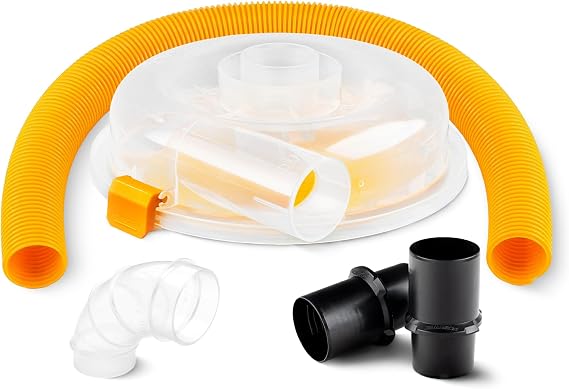
Dust and debris buildup can quickly ruin the filter and suction power of your shop vacuum. Ideal for DIYers and workshop enthusiasts, the POWERTEC Low Profile Dust Separator reduces the load on your vacuum by trapping most of the dry dust before it gets inside. Its main strength is capturing up to 99.9% of dust, keeping your vacuum running smoothly.
Setup involves connecting the separator to a 2-1/4” shop vacuum hose with the included elbow and hose adapter. It also works with 2-1/2” or 4” dust collection systems, offering flexibility depending on your workshop setup.
Everyday use is straightforward since the separator runs inline, intercepting dust before it reaches your vacuum’s filter, which means less clogging and consistent suction without extra effort on your part.
Performance-wise, it does well at trapping dust and debris, which helps reduce the frequency of filter cleanings. The body is built with practical dimensions, about 13.4 inches long and 12.6 inches wide, fitting easily in tight spaces.
Positive notes point out how effectively it keeps the vacuum’s filter cleaner, though some users mention that effectiveness can vary depending on the vacuum’s power and hose size.
Many highlight how well the separator keeps vacuum filters cleaner and reduces clogging, which helps maintain strong suction. However, some mention that the actual dust capture can be less reliable if the vacuum’s power or hose diameter isn’t ideal.
People with standard shop vacuums or dust collection setups looking to protect their filters will appreciate this product. Those with weaker vacuums or unusual hose sizes might want to explore other options better suited for their gear.
Pros
- Captures up to 99.9% of dry dust and debris
- Works with multiple hose and dust collection sizes
- Helps maintain consistent suction power
- Compact size fits well in small spaces
Cons
- Effectiveness depends on vacuum power and hose size
- Setup requires compatible shop vac or dust system
| Specification | Details |
|---|---|
| Item Dimensions L x W | 13.39″L x 12.6″W |
| Outside Diameter | 2.25 inches |
| Item Length | 3 feet |
| Compatibility | 2-1/4” shop vacuum hose, 2-1/2” and 4” dust collection |
| Dust Separation Efficiency | Up to 99.9% |
Best Dust Separators Comparison Table
| Product | Capacity | Weight | Material | Special Features |
|---|---|---|---|---|
| PRO Cyclone Separator | – | 1.63 kg | – | – |
| Stainless Steel Dust Separator | 10 gallons | – | – | Portable, Cartridge Filter |
| DEWALT 6 Gallon Separator | 6 gallons | – | – | High Power, Wet/Dry, Wheels |
| Rockler Dust Right Separator | 3.5 liters | 11.18 lbs | Wood | Portable |
| VEVOR Metal Tank Separator | – | 17.86 lbs | ABS + Steel | Transparent Separator + Black Drum |
| Dual Cyclone Shop Vac Separator | – | 5.24 lbs | – | Dual Cyclone, Hose Included |
| Cyclone Dust Collector | – | 11.3 lbs | – | Works with Shop Vac |
| Low Profile 5 Gallon Separator | – | 2.95 lbs | – | Includes Hose & Elbows |
| VEVOR Cyclone Separator Kit | – | – | – | Full Kit, Wrench Included |
| Happy Tree Low-Profile Separator | – | – | – | Anti-static, Airtight Seal |
| Wet/Dry Vac Cyclone Separator | – | 3.14 lbs | Plastic | Includes Hose & Elbows |
| POWERTEC Low Profile Separator | – | – | – | Low Profile, 3 feet length |
- Capacity–
- Weight1.63 kg
- Material–
- Special Features–
- Capacity10 gallons
- Weight–
- Material–
- Special FeaturesPortable, Cartridge Filter
- Capacity6 gallons
- Weight–
- Material–
- Special FeaturesHigh Power, Wet/Dry, Wheels
- Capacity3.5 liters
- Weight11.18 lbs
- MaterialWood
- Special FeaturesPortable
- Capacity–
- Weight17.86 lbs
- MaterialABS + Steel
- Special FeaturesTransparent Separator + Black Drum
- Capacity–
- Weight5.24 lbs
- Material–
- Special FeaturesDual Cyclone, Hose Included
- Capacity–
- Weight11.3 lbs
- Material–
- Special FeaturesWorks with Shop Vac
- Capacity–
- Weight2.95 lbs
- Material–
- Special FeaturesIncludes Hose & Elbows
- Capacity–
- Weight–
- Material–
- Special FeaturesFull Kit, Wrench Included
- Capacity–
- Weight–
- Material–
- Special FeaturesAnti-static, Airtight Seal
- Capacity–
- Weight3.14 lbs
- MaterialPlastic
- Special FeaturesIncludes Hose & Elbows
- Capacity–
- Weight–
- Material–
- Special FeaturesLow Profile, 3 feet length
How to Choose the Right Dust Separator
Choosing the right dust separator depends on its size, capacity, and compatibility with your existing equipment to ensure efficient dust collection. Prioritizing these factors helps prevent clogging and maintenance issues, saving both money and time in the long run.
Compatibility with Tools
Dust separators vary a lot in how well they fit different vacuums and dust collection systems. One time, I bought a separator only to find its hose diameter didn’t match my shop vac, so I had to hunt down adapters. Many models come with standard sizes like 1.5 or 2.5 inches, which cover most tools, but some require extra fittings.
It’s also important to check if the separator handles both wet and dry debris; not all are designed for wet material, which can clog or damage the unit.
Using a separator that matches your vacuum hose size makes setup straightforward and leak-free. Adapters, when needed, should fit tightly without gaps to avoid loss of suction.
Confirm the product lists compatibility or includes adapters for common diameters. This saves frustration and keeps your dust collection system working efficiently.
Filtration Efficiency
Some separators capture only the largest dust chunks, letting fine particles pass through and reach the vacuum motor. In daily use, this causes filters to clog quickly and reduces suction over time.
I’ve seen separators with multistage filtration that trap fine dust better, easing maintenance and extending vacuum life. These typically feature a combination of cyclonic action and fine mesh or foam filters.
A model rated to remove around 90% or more of dust before the vacuum performs best. Look for units that highlight preventing fine dust from entering the motor area, protecting it from abrasive wear.
Avoid simple single-stage separators if you generate a lot of fine dust from sanding or cutting.
Capacity and Size
Separators with too small capacity require frequent emptying, breaking workflow and creating a mess. I’ve used several models with 5 to 10-gallon collection bins, which balance holding enough debris and fitting into tight shops. Big units quickly fill up under heavy use, while smaller ones may not last a full project session.
Consider physical size beyond capacity. Some separators are compact, fitting next to a workbench easily, while others can dominate your workspace. Portability is another factor; wheeled units or those with handles help if you move between sites or different rooms.
A separator’s size and capacity choice should match typical project scale and workspace size.
Build Quality and Materials
Cheap separators often use thin plastic that cracks after a few months. I’ve found models made from thick polycarbonate or metal perform much better, handling impacts and heavy dust loads without damage.
Transparent walls or viewing windows are handy to visually check dust levels without opening the unit.
Look closely at how well-sealed the connections are. Poorly fitting hoses or lids allow dust to escape, tossing debris around your shop. Tight seals and sturdy clamps keep everything contained, reducing cleanup time and improving air quality.
The build quality directly affects how long the separator lasts and how clean your environment stays.
Ease of Maintenance
Removing and emptying dust bins should be quick and clean. Some separators use buckets with handles or slide-out bins that simplify this task.
Designs that require unscrewing multiple parts or using tools increase frustration. Quick-release latches or twist-lock mechanisms save time.
Cleaning filters and disassembling units varies widely between models. Choose one where filters can be removed and replaced without specialized tools. Frequent maintenance needs to be straightforward, or you risk skipping it altogether, reducing efficiency and vacuum protection.
Effective Maintenance Practices for Prolonging Dust Separator Lifespan
Regular cleaning of the dust separator is key to keeping it working efficiently. Dust and debris build-up can reduce airflow and strain the system. After each use, empty the collection bin to prevent overload and clogging.
Check seals and connectors to ensure no air leaks are present, as these reduce the unit’s performance.
Routine checks should include:
- Inspecting the cyclone or separator for cracks or damage
- Cleaning the inlet and outlet ports to avoid obstruction
- Verifying that the vacuum or dust collector connected to the separator is functioning properly
Replacing worn parts promptly also helps avoid bigger problems. By following these steps, it’s possible to extend the device’s useful life and maintain strong suction that captures most of the dust before it reaches your vacuum.
Common Mistakes to Avoid When Using a Dust Separator
Overloading the dust separator is a frequent mistake that limits its efficiency. Trying to collect too much material at once can cause blockages and reduce airflow, compromising dust separation. Attaching the separator to a vacuum or dust collector that’s underpowered also leads to poor performance.
Mistakes to avoid include:
- Ignoring signs of reduced suction like visible dust leaks or slower pick-up
- Using the dust separator without regularly emptying the bin, causing mess and decreasing capacity
- Not securing fittings properly, which allows dust to escape and creates extra cleanup
Following the manufacturer’s guidelines for capacity and matching it with an appropriate vacuum system keeps the separator working correctly and prevents early wear.
Comparing Dust Separators with Alternative Dust Collection Methods
Dust separators work by spinning dust particles out of the airflow before reaching the vacuum, reducing filter clogging and improving suction. This differs from standard vacuum filters, which trap dust directly and may require frequent cleaning or replacement.
Comparisons with other methods:
- Bag filters: Capture dust on fabric but lose efficiency as they clog. Separators reduce this by removing most particles first.
- Wet dust collectors: Use water to trap dust but can be messy and need more maintenance.
- Electrostatic precipitators: Use electric charge to capture particles but are more complex and costlier for typical workshop use.
Dust separators strike a balance between cost, maintenance, and effectiveness for many DIY or professional setups where capturing large debris and fine dust before the vacuum filter increases overall system longevity.
People Also Asked
How Do I Properly Size a Dust Separator for My Workshop?
Choose a dust separator based on the airflow requirements of your tools and the capacity of your vacuum. Measure your tool’s CFM and match or exceed it with the separator to avoid performance loss. Oversizing slightly is better than undersizing to prevent clogging and maintain suction.
What Safety Precautions Should I Take When Using a Dust Separator?
Disconnect power before cleaning or adjusting to avoid accidents. Keep the separator and hoses free of blockages and inspect connections regularly for leaks. Use a dust mask when working around fine dust and ensure good ventilation in your workspace.
How Do I Clean and Maintain My Dust Separator Effectively?
Empty the separator’s collection bin before it overflows to maintain efficiency. Routinely check and clean the filter inside the separator to prevent clogs. Using a brush or compressed air can help remove dust buildup around seals and joints.
Will a Dust Separator Work with My Existing Shop Vacuum System?
A dust separator usually works well with most shop vacuums but check the hose diameter and connection type to ensure compatibility. Some setups may require adapters for a secure fit. Test the airflow system after installation to confirm suction isn’t significantly reduced.
What Common Problems Should I Watch for with Dust Separators?
Watch for loss of suction, which could mean a clogged filter or full bin. Loose connections can cause leaks and reduce performance, so secure all fittings tightly. Dust bypassing the separator indicates it might be too small, requiring a larger model or a different setup.
Conclusion
The best dust separator should fit the size of your shop and handle the amount of dust your tools produce. Look for one that connects easily to your existing dust collection system and has a good balance between capacity and portability. Efficiency in trapping dust before it reaches the vacuum or collector is key to keeping filters clean and extending their life.
Consider how often you’ll use the separator and how much space you have available. Spending more won’t always be worth it for occasional use or small areas. Take a moment to review the comparison table and detailed picks to find the option that aligns with your workshop setup and budget.