
Top 12 Best HVAC Vacuum Pump That Pros Swear By
Struggling with slow evacuation or leaks during HVAC maintenance is a common annoyance for anyone relying on a vacuum pump. Using the best hvac vacuum pump helps avoid downtime by effectively removing moisture and air from refrigerant lines. Cheaper pumps often fail to reach the necessary vacuum level and can introduce contaminants, resulting in poor system performance.
What sets a good HVAC vacuum pump apart is mainly its ultimate vacuum capability, typically measured in microns; a dependable pump can get below 500 microns for a complete evacuation. Oil quality and type matter as well, low vapor pressure oils reduce contamination risks.
Size and power play roles too, with faster pumps clearing systems quicker but requiring more careful handling to prevent overworking the motor.
Need a Quick Check?
| Image | Product | Price |
|---|---|---|
Our Top Picks 1  | VIVOHOME 1/3 HP Vacuum Pump | Check Price |
Our Top Picks 2  | Fieldpiece VP67 6 CFM Pump | Check Price |
Our Top Picks 3  | VEVOR 7 CFM Vacuum Pump | Check Price |
Our Selected Top 12 Hvac Vacuum Pump Worth Buying
This list features carefully chosen HVAC vacuum pumps known for reliability and efficiency. Each review details performance, ideal users, and key advantages and disadvantages to help you find the best match for your specific needs and ensure effective system maintenance.
1. VIVOHOME 110V 1/3 HP Rotary Vane Vacuum Pump and Manifold Kit
Strong suction and user-friendly design make the VIVOHOME 110V 1/3 HP Rotary Vane Vacuum Pump ideal for handling both automotive and home HVAC systems. Its quick evacuation ability combined with a solid build suits anyone needing reliable moisture removal before refrigerant charging.
Setting it up is straightforward thanks to color-coded hoses and the included manifold gauge set, which makes monitoring pressures easy. The clear oil sight glass lets you keep an eye on oil levels without stopping work, while the bottom drain port simplifies oil changes and helps avoid spills. The built-in high-volume cooling fan means it can run longer without overheating.
This pump performs well in quickly removing moisture and air from HVAC systems, ensuring efficient refrigerant charging. The die-cast aluminum body provides durability, and the anti-slip base keeps it steady during use.
Its main praise comes from strong vacuum performance and ease of oil management, though some find the 17.6-pound weight a bit heavy to carry around.
Strong vacuum pull and simple oil maintenance are often mentioned as highlights, making daily tasks more efficient and less messy. However, the weight of almost 18 pounds is a common downside for those moving it frequently across job sites.
Anyone needing a reliable vacuum pump for automotive or household HVAC systems will appreciate this unit’s performance and included accessories. Those seeking something lighter for frequent transport might consider a more compact option.
Pros
- Fast, deep evacuation for HVAC systems
- Built-in cooling fan for prolonged operation
- Clear oil sight glass for easy oil level checks
- Color-coded hoses and manifold gauge set included
Cons
- Relatively heavy at 17.6 pounds
- Manual mirror adjustment can be inconvenient
| Specification | Details |
|---|---|
| Model | VH322 |
| Power | 1/3 HP |
| Voltage | 110 volts |
| Weight | 17.6 pounds |
| CFM Rating | 4 CFM |
| Pump Oil Included | 0.35 qt / 330 ml |
2. Fieldpiece VP67 6 CFM Vacuum Pump
Fieldpiece VP67 6 CFM Vacuum Pump excels at quickly evacuating HVAC systems, perfect for professionals needing reliable power. Its powerful 1/2 HP DC motor, paired with a 15-micron vacuum, keeps it efficient even during low voltage conditions.
Setup is straightforward with multiple port sizes (1/4, 3/8, 1/2) to fit different hose connections. The compact design and sturdy base keep it stable during work and easy to carry around. Changing oil takes seconds thanks to the RunQuick Oil Change system, and the backlit reservoir helps you keep an eye on oil quality without any guesswork.
Performance stays consistent with an 8 CFM flow rate that handles system evacuation smoothly. The build feels solid and the compact footprint fits well in a busy work environment. Positive feedback points to fast operation and easy maintenance, while some users note the pump’s weight at 29 lbs.
as a mild drawback for transport.
The most praised feature is the quick and efficient evacuation process combined with easy oil changes. The most common complaint concerns the weight, which some find cumbersome when carrying between jobs. Stability and monitoring features receive positive attention for daily reliability.
Professionals working on demanding HVAC jobs will appreciate the power and durability. Those prioritizing lightweight equipment for frequent transport might want to consider smaller alternatives.
Pros
- Strong power-to-weight performance
- RunQuick Oil Change system reduces downtime
- Backlit oil reservoir for easy monitoring
- Multiple port sizes for hose flexibility
Cons
- Relatively heavy at 29 lbs.
- Compact size limits workspace convenience
| Specification | Details |
|---|---|
| CFM Flow Rate | 8 CFM |
| Ultimate Vacuum | 15 microns |
| Motor Power | 1/2 HP DC motor |
| Port Sizes | 1/4″, 3/8″, 1/2″ |
| Weight | 29 lbs. |
| Footprint | 1,478 cubic inches |
3. VEVOR 7 CFM 3/4 HP Two Stage Rotary Vane Vacuum Pump
Running smoothly with enough power for most HVAC jobs, the VEVOR 7 CFM 3/4 HP vacuum pump is designed for technicians who need reliable deep vacuuming. Its standout feature is the strong 3/4 HP motor paired with a two-stage rotary vane system, making it fit for thorough and consistent maintenance work.
Setting up the pump is straightforward thanks to its manageable size and weight of about 21 pounds. The built-in cooling fan helps keep it from overheating during longer sessions, so it’s good for extended use without slowing down. You get steady vacuuming at 7 CFM, making it suitable for clearing out your HVAC system quickly and efficiently.
Performance-wise, the pump achieves a strong 0.3 Pa vacuum, showing it can handle deep cleans well. The cast-iron and die-cast aluminum housing feels solid and durable.
The main praise is about its dependable operation over time. On the downside, some find it a bit on the heavy side to carry around frequently.
Deep vacuuming reaches a pressure of 0.3 Pa, supported by a reliable motor and cooling fan, making it dependable for HVAC tasks. The weight near 21 pounds is useful for stability but may become tiring to move around frequently or into cramped spots.
Anyone needing a steady pump with enough vacuum power for regular maintenance will find it a good fit. Those requiring something lighter or more compact for occasional lighter work might want to consider other options.
Pros
- Strong 3/4 HP motor delivers solid vacuum power
- Durable cast-iron and die-cast aluminum housing
- Built-in cooling fan prevents overheating
- Stable performance for extended use
Cons
- Relatively heavy at 20.9 pounds
- Size might be bulky for tight workspaces
| Specification | Details |
|---|---|
| Motor Power | 3/4 HP |
| Flow Rate | 7 CFM |
| Vacuum pressure | 0.3 Pa |
| Weight | 20.9 pounds |
| Dimensions | 12.8 x 4.92 x 8.86 inches |
| Motor Type | 4-pole high-torque |
4. OMT 14.4 CFM Two Stage Vacuum Pump

Great for HVAC technicians needing a reliable vacuum pump, the OMT 14.4 CFM Two Stage Vacuum Pump stands out for its powerful 14.4 cfm airflow and deep vacuum capabilities. It suits those servicing AC systems using various refrigerants like R134a and R410A, offering quick evacuations and consistent performance.
Setup is straightforward, with the dual stage design helping to speed up the process by pulling down systems quickly to low micron levels. Its 1.5 hp motor powers through efficiently while the oil mist-free cap keeps the workspace cleaner. Running under 70 dB ensures it’s not disruptive in typical work areas.
Performance-wise, it gets HVAC systems to 1.5 microns rapidly, making the job faster compared to single-stage pumps. Built solidly at just under 40 pounds, it’s portable enough for daily use but feels sturdy and well-made.
Most users praise its quiet operation, while some note that the weight can be a bit much for extended carrying.
The pump’s ability to reach 1.5 microns quickly is often praised as it shortens servicing time significantly. Its quieter performance compared to similar pumps creates a more comfortable work setting. The main drawback mentioned involves its weight, which some find less convenient to transport frequently.
This vacuum pump fits well for professionals who need a powerful and reliable tool for various refrigerants and regular use. Those looking for something extremely lightweight or compact might want to explore smaller models suited for occasional or light-duty jobs.
Pros
- Powerful dual stage pump for faster evacuation
- Quiet operation under 70 dB
- Oil mist-free cap reduces mess
- Reaches deep vacuum level of 1.5 microns
Cons
- Close to 40 pounds, heavier to carry around
- Size may be bulky for tight workspace
| Specification | Details |
|---|---|
| Pumping Speed | 14.4 cfm |
| Motor Power | 1.5 hp |
| Vacuum Level | 1.5 microns (0.2 Pa) |
| Noise Level | Below 70 dB |
| Weight | 39.6 pounds |
5. XtremepowerUS HVAC Vacuum Pump Manifold Kit

Die-cast aluminum alloy casing gives this pump a sturdy yet lightweight feel, perfect for anyone needing a durable vacuum pump without carrying extra bulk. It suits HVAC professionals and DIY enthusiasts looking for a quiet, powerful tool that handles standard refrigeration tasks efficiently.
Setup is straightforward thanks to the included manifold gauge and R-134A dispensing valve designed to work with common refrigerant cans. It connects easily with 1/4 male threads and runs on 115 volts.
Day-to-day use stays cool thanks to the internal high volume fan, and the hand-operated punch valve offers simple control over the refrigerant flow.
The pump runs at 1/4 HP and delivers 3 CFM on a single stage, making it powerful enough for most automotive and HVAC vacuuming needs. The aluminum casing keeps it lightweight at just 10 pounds, but it feels solid and tough. The most frequent praise is about its quiet operation during use, while some mention the pump could perform better under continuous heavy workload.
XtremepowerUS HVAC Vacuum Pump Manifold Kit is praised for its solid build and efficient vacuum performance. The 1/4 HP rotary air pump delivers steady suction with minimal noise, helped by the internal cooling fan. Some note the setup can be a bit bulky and the oil cap fittings require careful handling to avoid leaks during transport or storage.
People working regularly with R-134a refrigerant will find this kit useful due to its compatibility and durability. Someone needing a compact, ultra-quiet pump for occasional light use might want to consider smaller or quieter models. This pump suits hands-on tasks well but may feel heavier or more cumbersome than simpler kits in tight spaces.
Pros
- Lightweight die-cast aluminum construction
- Quiet operation during use
- Includes R-134A valve for easy refrigerant connection
- Internal cooling fan for extended runtime
Cons
- May struggle with heavy continuous use
- Oil leaks possible if safety caps aren’t secured
| Specification | Details |
|---|---|
| Model | Manifold Gauge and Pump Set |
| Item Weight | 10 pounds |
| Dimensions | 10.5 x 14 x 12.5 inches |
| Voltage | 115 volts |
| Horsepower | 1/4 HP |
| CFM | 3 CFM |
6. Robinair 15500 VacuMaster 5 CFM Two Stage Vacuum Pump

Quiet operation is where this vacuum pump really stands out, making it ideal for anyone working in tight spaces or noise-sensitive environments. It suits HVAC professionals needing a reliable pump for various refrigerants and oil types, with a solid 5 CFM two-stage design delivering strong vacuum power.
Setup is straightforward with a 115-volt power source and moderate weight of 21 pounds for easy positioning. An intake screen keeps debris out, and the internal exhaust filter manages oil vapor, so day-to-day maintenance stays manageable. The pump handles mineral, ester, alkyl benzene, and PAG oils, supporting flexibility across different systems without extra fuss.
Provides a high vacuum that effectively removes moisture and shortens evacuation time. Built with a two-stage rotary vane design, the pump feels sturdy and well-constructed. Most users appreciate its quiet yet powerful function, while a common downside is that at 700 watts, it requires a stable power supply and weighs a bit on the heavier side for portability.
Quiet yet powerful performance keeps the workspace comfortable, a clear plus. Common complaints revolve around its weight, which can be cumbersome during transport or extended use outside a fixed shop area.
Anyone working primarily with A/C-R systems needing strong vacuum power will find this pump reliable and efficient. Those needing something lighter for frequent field jobs might want to explore other, more portable options.
Pros
- Quiet operation for noise-sensitive workspaces
- Compatible with multiple refrigerant types and oils
- Effective moisture removal with high vacuum capacity
- Intake and exhaust filters improve the durability of the product
Cons
- Heavy at 21 pounds, limiting portability
- Requires consistent 115-volt power for optimal use
| Specification | Details |
|---|---|
| Voltage | 115 volts |
| Wattage | 700 watts |
| Item Weight | 21 pounds |
| Model Number | 15500 |
| Brand | Robinair |
| Type | Two Stage Rotary Vane Vacuum Pump |
7. VIVOHOME 110V 1.5 HP Dual Stage HVAC Vacuum Pump

Powerful enough for serious HVAC work, this vacuum pump suits technicians who need fast, deep evacuation of air conditioning and refrigeration systems. Its strongest feature is the 1.5 HP dual-stage motor that quickly removes air and moisture, making it a reliable choice for professional or heavy-duty use.
Setup involves placing it on a shock-absorbing, non-slip base that keeps it steady during operation. The aluminum alloy housing feels solid and resists wear.
Using the gas ballast valve helps remove moisture efficiently, which is key for maintaining system integrity. The pump’s size and weight mean it’s fairly portable but requires two-handed handling when moving.
It pulls a strong vacuum down to 0.2 Pa, which is excellent for deep cleaning of HVAC systems. The aluminum alloy build feels tough and durable, holding up well over time. The most praised feature is its steady, powerful evacuation rate of 14.4 CFM.
Some mention that at 30.4 pounds, it’s on the heavier side, making it less ideal for carrying around frequently.
The pump’s powerful 1.5 HP motor coupled with the gas ballast valve delivers effective evacuation, praised for achieving a deep vacuum quickly. Weight and size are commonly noted as drawbacks, especially when frequent transport is needed.
Those who need a solid, dependable vacuum pump for workshop or on-site HVAC system work will find this device suits their needs well. Anyone looking for a lightweight, compact option should consider other models.
Pros
- High flow rate for fast evacuation
- Durable aluminum alloy housing
- Shock-absorbing, non-slip base
Cons
- Relatively heavy at 30.4 pounds
- Size may be bulky for some users
| Specification | Details |
|---|---|
| Power | 1.5 HP |
| Flow Rate | 14.4 CFM |
| Vacuum Level | 0.2 Pa |
| Weight | 30.4 pounds |
| Dimensions | 15.1 x 5.4 x 10 inches |
8. NAVAC NP7DP Pro 7 CFM Dual Stage Vacuum Pump

Cleaning out contaminants and non-condensable materials from refrigeration lines quickly makes a big difference on the job. Ideal for HVAC professionals needing a reliable and powerful vacuum pump, the NAVAC NP7DP Pro stands out with its solid 7 CFM flow rate, ensuring efficient evacuation and time saved during system servicing.
Setting it up involves plugging into a standard 115-volt outlet, which is convenient for most work environments. The dual voltage design allows some flexibility, while the built-in check valve makes sure the vacuum stays intact even during power interruptions.
The oil mist filter helps to keep your workspace cleaner by trapping escaped oil mist, preventing mess and contamination on the job site.
The pump handles deep vacuum tasks well, thanks to its dual-stage motor and 0.73 horsepower strength. It’s built sturdy enough for regular daily use, feeling substantial but manageable. Praise often highlights the check valve’s reliability and steady flow, while the most common downside is its weight, making it a bit bulky compared to smaller models.
The pump’s reliable check valve keeps vacuum steady even if power cuts out, which users appreciate for avoiding repeat work. Many also find the weight on the heavy side, making transport and setup a bit more demanding on busy job sites.
Professionals working with various refrigeration lines will find this pump dependable and powerful enough for most tasks. Those needing super-lightweight equipment or wider voltage compatibility might want to consider other models better suited for mobility or international use.
Pros
- Strong 7 CFM flow rate for quick evacuation
- Built-in check valve prevents vacuum loss
- Oil mist filter keeps work area clean
- Dual stage motor for deeper vacuum
Cons
- Relatively heavy compared to smaller pumps
- Only 115 volts, may limit some locations
| Specification | Details |
|---|---|
| Flow Rate | 7 cfm |
| Voltage | 115 volts |
| Horsepower | 0.73 hp |
| Power Source | AC adapter |
9. VIVOHOME A2L 1/2 HP 5 CFM Two Stage Vacuum Pump and Manifold

5 CFM airflow and a sparkless, explosion-proof motor make the VIVOHOME A2L 1/2 HP Vacuum Pump a solid choice for anyone working with A2L refrigerants like R32. Its standout feature is a quick and safe vacuum to 0.2 Pa in 3 minutes, fitting well for precise HVAC evacuation needs.
Setting up involves connecting one of the multiple adapters on the manifold to your AC system, supporting a range from R12 to R502. Daily use is straightforward thanks to its dual 1/2” ACME and 1/4” SAE ports, ensuring a good fit for various service jobs. The ignition-proof switch adds a layer of safety during operation around flammable refrigerants.
The pump handles evacuation efficiently at 3456 r/min, powered by a reliable 375 W motor. It’s built solidly, weighing in at 30.6 pounds, which feels balanced for handling but not too heavy to move around. Many appreciate the safe sparkless operation, while some users note the size can be a bit bulky for tight spaces.
The pump’s sparkless, ignition-proof design is often praised for safety when working with flammable refrigerants, which makes it a reliable choice for modern HVAC systems. Common complaints point to its bulk and noise, which may be inconvenient in small or quiet environments.
Anyone needing a strong, safe vacuum pump for a variety of refrigerants and willing to handle a moderate size and noise level will find it dependable. Those working primarily in very tight spaces or noise-sensitive settings should consider a smaller, quieter option instead.
Pros
- Safe sparkless motor for A2L refrigerants
- Multiple adapter options for different systems
- Fast evacuation speed to deep vacuum levels
- Sturdy but portable weight and size
Cons
- Somewhat bulky for cramped working areas
- Noisy during extended operation
| Specification | Details |
|---|---|
| Motor Power | 1/2 HP (375 W) |
| Airflow | 5 CFM |
| Vacuum Rate | 0.2 Pa in 3 minutes |
| Weight | 30.6 pounds |
| Ports | Dual 1/2” ACME and 1/4” SAE |
10. VIVOHOME A2L 1/3 HP 5 CFM Single Stage Vacuum Pump and Manifold

Anyone working with HVAC or refrigeration systems needing reliable evacuation will find this vacuum pump a solid choice. It handles A2L refrigerants safely while delivering consistent power. The biggest strength lies in its sparkless explosion-proof motor, making it safer for use with newer refrigerants like R32 and R1234yf.
Setting it up is straightforward, thanks to dual inlet ports that fit different hose sizes, letting you connect easily without fuss. The corded electric power source keeps it running steadily, and the complete all-in-one kit includes everything needed for quick starts.
It runs quietly at 65 dB, which makes working nearby more comfortable during extended use.
Performance-wise, the 1/3 HP motor pumping out 5 CFM airflow reaches down to 15 microns vacuum, efficiently removing air to prep systems thoroughly. The build feels sturdy for regular HVAC and automotive AC service tasks, yet some find the 330 ml oil reservoir needs monitoring for longer jobs.
The pump performs well with safety features appreciated most, though occasional oil maintenance is needed.
The sparkless explosion-proof motor stands out for safe use with modern refrigerants, while the most frequent complaint involves the modest oil capacity requiring attention during longer jobs. The pump quickly achieves a strong vacuum level suited for most HVAC evacuation tasks.
Those who focus on safety and need a dependable pump for typical refrigeration and automotive AC maintenance will appreciate this machine. Users looking for ultra-fine vacuum levels or extended continuous use might want to consider options with larger oil reservoirs or multi-stage pumping.
Pros
- Safe sparkless motor for A2L refrigerants
- Dual inlet ports for versatile hose connection
- Quiet operation at 65 dB
- Complete all-in-one kit included
Cons
- 330 ml oil capacity requires regular checks
- Only a single-stage pump, limiting ultra-high vacuum
| Specification | Details |
|---|---|
| Motor Power | 0.33 hp |
| Air Flow Capacity | 5 cfm |
| Noise Level | 65 dB |
| Oil Capacity | 330 ml |
| Voltage | 110 volts |
| Vacuum with a 15-micron filter for thorough cleaning |
11. VIVOHOME 1/2 HP 5 CFM Two Stage Vacuum Pump and Manifold

VIVOHOME’s 1/2 HP 5 CFM two-stage vacuum pump is known for its strong flow rate and capability to achieve extremely low pressure, making it a solid choice for HVAC pros who need dependable deep vacuum performance. It suits technicians working on systems that demand precise evacuation and those valuing efficient heat dissipation during extended use.
Setting it up is straightforward since it’s compact at 12 x 4.8 x 9.1 inches and weighs just over 30 pounds. The built-in fan and motor heat fins keep temperatures under control during continuous pumping sessions. Dust and oil mist filters help maintain cleanliness, so you won’t have to deal with frequent maintenance.
The coarse filter on the air inlet is a helpful feature to keep the internals protected from debris.
Its performance stands out because it compresses gas in two stages, reaching down to a pressure of 22.5 microns, which makes it effective for thoroughly evacuating HVAC systems. The build quality feels solid, with heat dissipation components that prove useful during longer jobs. Most users praise its reliable vacuum strength; some mention it’s a bit heavier to transport around.
It manages the main task well without too many drawbacks.
Strong vacuum capability combined with good heat management makes it a dependable tool for system evacuation. Filters at both inlet and exhaust help maintain internal cleanliness, though its 30.8-pound weight could limit portability on longer jobs.
Perfect for HVAC technicians who prioritize deep vacuum and long-duration use. It may not suit those needing a lightweight or highly portable option for quick field tasks.
Pros
- Strong 5 CFM flow rate for efficient vacuuming
- Two-stage pumping for deeper evacuation
- Effective heat dissipation keeps motor cool
- Filtration system minimizes dust and oil mist entry
Cons
- Weight of over 30 pounds can be cumbersome
- Some find it less portable for field use
| Specification | Details |
|---|---|
| Flow Rate | 5 CFM |
| Horsepower | 1/2 HP |
| Pressure | 22.5 microns |
| Weight | 30.8 pounds |
| Dimensions | 12 x 4.8 x 9.1 inches |
| Model Number | VH1501 |
12. Fieldpiece VPX7 10 CFM 3/4 HP Vacuum Pump
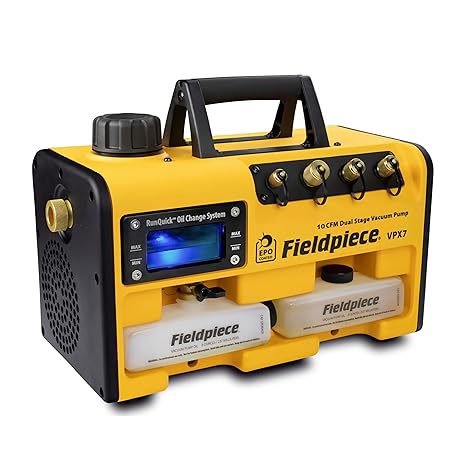
Fieldpiece VPX7 10 CFM 3/4 HP Vacuum Pump stands out for delivering powerful, reliable evacuation suited for HVAC professionals handling challenging systems. Its highest strength lies in the fast, efficient vacuuming thanks to a strong DC motor and excellent flow rate, making it a solid choice for fast-paced job sites.
Setting up the pump is straightforward, aided by the RunQuick Oil Change system that lets you swap oil in seconds, minimizing downtime. The backlit oil reservoir allows easy monitoring of oil condition during work.
Multiple port sizes accommodate different hoses, giving you flexibility on various rigs. At 28 pounds, it’s portable enough to carry around different locations without being a burden.
The vacuum pump reaches a vacuum level of 15 microns, allowing for thorough and fast system evacuation. The ¾ HP DC motor operates well even under low voltage, which means consistent performance on demanding jobs. Built solidly and compactly, it feels durable and professional.
Greatest praise highlights the quick oil changes, while the weight gets mentioned as the main downside for those wanting lighter gear.
The pump’s quick oil change system and strong motor get consistent praise for keeping downtime minimal and performance steady. Its weight, just under 30 pounds, is the most common complaint, especially when users are moving between sites regularly.
Those working on demanding HVAC systems and valuing fast setup will appreciate its power and easy maintenance. People looking for a very lightweight pump for constant transport might want to consider other options with a smaller footprint.
Pros
- Fast, efficient evacuation with 10 CFM flow rate
- Quick oil changes using RunQuick system
- Backlit oil reservoir for easy monitoring
- Works well under low voltage conditions
Cons
- Heavier at 28 pounds compared to some competitors
- May feel bulky for long carry jobs
| Specification | Details |
|---|---|
| Flow Rate | 10 CFM |
| Motor Power | ¾ HP DC Motor |
| Vacuum Level | 15 microns |
| Weight | 28 pounds |
| Dimensions | 17.5 x 10 x 13.7 inches |
| Port Sizes | 1/4″, 3/8″, 1/2″ |
Best HVAC Vacuum Pumps Comparison Table
| Product | CFM | Horsepower | Weight | Dimensions |
|---|---|---|---|---|
| VIVOHOME 1/3 HP Vacuum Pump | – | 1/3 HP | 17.6 lbs | 10.5 x 4.5 x 8.7 in |
| Fieldpiece VP67 6 CFM Pump | 6 CFM | – | – | – |
| VEVOR 7 CFM Vacuum Pump | 7 CFM | 3/4 HP | 20.9 lbs | 12.8 x 4.92 x 8.86 in |
| OMT 14.4 CFM Vacuum Pump | 14.4 CFM | – | 39.6 lbs | 18.5 x 13.7 x 9.5 in |
| XtremepowerUS HVAC Manifold Kit | – | – | 10 lbs | 10.5 x 14 x 12.5 in |
| Robinair VacuMaster 15500 | – | – | 21 lbs | – |
| VIVOHOME 1.5 HP Dual Stage | – | 1.5 HP Dual Stage | 30.4 lbs | 15.1 x 5.4 x 10 in |
| NAVAC NP7DP Dual Stage Pump | 7 CFM | 0.73 HP | – | – |
| VIVOHOME A2L 1/2 HP Vacuum | – | 1/2 HP | 30.6 lbs | 13.1 x 5.1 x 9.5 in |
| VIVOHOME A2L 1/3 HP Pump | – | 1/3 HP | – | – |
| VIVOHOME 1/2 HP Vacuum Kit | – | 1/2 HP | 30.8 lbs | 12 x 4.8 x 9.1 in |
| Fieldpiece VPX7 10 CFM Pump | 10 CFM | – | 28 lbs | 17.5 x 10 x 13.7 in |
- CFM–
- Horsepower1/3 HP
- Weight17.6 lbs
- Dimensions10.5 x 4.5 x 8.7 in
- CFM6 CFM
- Horsepower–
- Weight–
- Dimensions–
- CFM7 CFM
- Horsepower3/4 HP
- Weight20.9 lbs
- Dimensions12.8 x 4.92 x 8.86 in
- CFM14.4 CFM
- Horsepower–
- Weight39.6 lbs
- Dimensions18.5 x 13.7 x 9.5 in
- CFM–
- Horsepower–
- Weight10 lbs
- Dimensions10.5 x 14 x 12.5 in
- CFM–
- Horsepower–
- Weight21 lbs
- Dimensions–
- CFM–
- Horsepower1.5 HP Dual Stage
- Weight30.4 lbs
- Dimensions15.1 x 5.4 x 10 in
- CFM7 CFM
- Horsepower0.73 HP
- Weight–
- Dimensions–
- CFM–
- Horsepower1/2 HP
- Weight30.6 lbs
- Dimensions13.1 x 5.1 x 9.5 in
- CFM–
- Horsepower1/3 HP
- Weight–
- Dimensions–
- CFM–
- Horsepower1/2 HP
- Weight30.8 lbs
- Dimensions12 x 4.8 x 9.1 in
- CFM10 CFM
- Horsepower–
- Weight28 lbs
- Dimensions17.5 x 10 x 13.7 in
How to Choose the Right HVAC Vacuum Pump
Choosing the right HVAC vacuum pump comes down to factors like its maximum vacuum level, durability, and how easy it is to maintain. Choosing a reliable and efficient pump ensures faster system evacuation, preventing leaks and costly repairs while saving time and reducing energy use.
Pumping Speed and Cfm Rating
Many times, a slow evacuation leaves moisture trapped inside larger HVAC systems, causing repeated issues down the line. Pumps with a higher cubic feet per minute (CFM) rating clear air faster, reducing downtime and the risk of residual contaminants.
Choosing a pump with a CFM rating that matches or exceeds the system volume makes a real difference in how quickly a job finishes.
Continuous use affects pump performance. Some pumps slow down or overheat when working hard for hours, causing wear or incomplete evacuation. Pumps rated for heavy-duty operation handle prolonged tasks without losing efficiency.
Look for models with consistent vacuum flow and CFM ratings around 4 to 6 for typical residential or light commercial use.
Ultimate Vacuum Level
One key issue is incomplete moisture removal, which shortens compressor life and lowers system efficiency. Pumps with a lower ultimate vacuum level create a deeper vacuum, making sure trapped air and moisture are completely removed. This results in fewer breakdowns and better refrigerant performance.
The type of refrigerant dictates the vacuum needed. Some pumps barely hit the required vacuum level for newer refrigerants, leading to leaks or poor cooling. Seek out pumps that reach pressures well below 50 microns for compatibility with various refrigerants.
Deep vacuum levels also cut down the risk of oxidation inside the system.
Durability and Build Quality
Daily wear exposes pumps to dirt, chemicals, and moisture. Using models with corrosion-resistant bodies helps avoid rust and failure over time in these harsh conditions. Aluminum or stainless steel housings typically last longer without intensive upkeep.
Seals and bearings are where most parts break down. Poor quality ones lead to leaks and noise, plus pump inefficiency. Pumps featuring durable oil seals and precision bearings usually require fewer repairs.
Features like protective covers for internal components also help avoid early damage from dust or metal particles.
Noise Level and Operating Smoothness
Continuous operation in tight spaces gets uncomfortable fast if the pump is loud. Pumps running above 70 decibels can be intrusive, especially indoors.
Models known for quieter operation allow longer use without ear discomfort or disturbing nearby workers or residents.
Excessive vibration makes handling the pump tricky and can lead to premature failure of components or connections. Pumps with balanced motors and rubberized feet beat vibration problems. Some units incorporate noise reduction technology, making for smoother, quieter operation that’s easier to control and safer overall.
Maintenance and Oil Management
Changing and refilling oil regularly is a pain point for many DIY users and professionals alike. Pumps with large, accessible oil fill ports and easy-drain plugs make this task less messy and faster.
Clear oil level indicators help prevent overfilling or running dry.
Oil contamination from backflow reduces pump life. Models with anti-backflow valves or check valves keep the oil and pump internals cleaner. Also, pumps with widely available replacement parts and straightforward manuals simplify maintenance and extend the unit’s service life.
Proper Maintenance Practices to Extend the Life of Your HVAC Vacuum Pump
Regular oil changes are essential for keeping an HVAC vacuum pump operating efficiently. Over time, the oil collects moisture and debris, which can reduce the pump’s ability to create a strong vacuum. It’s important to drain the oil while the pump is still warm, allowing contaminants to flow out easily.
Cleaning or replacing the inlet filter prevents particles from entering and damaging internal components. Keeping the pump’s exterior free of dust also helps it run cooler and reduces wear on mechanical parts. Running the pump at the correct voltage and monitoring its operating temperature will avoid overheating and motor strain.
Key maintenance steps include:
- Changing oil according to manufacturer guidelines or after every major job
- Inspecting and cleaning filters regularly
- Checking belts and seals for wear and replacing as needed
- Storing the pump in a dry environment to prevent rust and corrosion
Routine attention prevents costly repairs and extends the useful life of the vacuum pump.
Safety Precautions When Operating HVAC Vacuum Pumps
Before starting the vacuum pump, confirm that all connections are secure to avoid leaks or exposure to harmful refrigerants. Operating the pump in a well-ventilated area reduces the risk of inhaling fumes released during evacuation. Avoid touching hot surfaces on the pump housing and motor, as these can reach high temperatures during extended use.
Using the correct power supply and grounding wires protects against electrical shocks. Never bypass safety switches or operate a pump with damaged cords. When unusual noises or vibrations occur, switch off the pump immediately and inspect it for mechanical issues.
Safety tips to keep in mind:
- Always wear protective gloves and eye protection when handling refrigerants or pump oil
- Keep the work area clean to prevent tripping hazards
- Follow manufacturer-specified operating time limits to avoid overheating
- Disconnect power before performing any maintenance or repairs
Proper safety precautions reduce risks and promote reliable pump performance.
Comparing HVAC Vacuum Pumps to Alternative Evacuation Methods
Vacuum pumps are designed specifically to remove air and moisture from HVAC systems, producing a deeper and more reliable vacuum than alternative methods like venturi vacuum generators or hand pumps. While hand pumps are portable and easy to use, they generally cannot achieve the same low pressure needed for thorough evacuation.
Venturi pumps work by using compressed air to create suction but rely on a constant air supply and typically produce less vacuum strength. This can leave residual moisture that may cause system corrosion or performance issues. Vacuum pumps with oil-sealed rotary vane mechanisms efficiently trap and remove contaminants, making them better suited for critical evacuation tasks.
Comparison highlights:
- Vacuum pump: High vacuum level, reliable moisture removal, suitable for heavy-duty use
- Hand pump: Limited vacuum depth, good for quick or light work, no power required
- Venturi pump: Air-powered, moderate vacuum, dependent on air compressor availability
Choosing the right tool depends on job requirements but vacuum pumps remain standard for thorough HVAC system evacuation.
People Also Asked
How Do I Properly Size an HVAC Vacuum Pump for My System?
Choose a vacuum pump with a capacity that matches or exceeds your HVAC system’s volume, usually measured in CFM (cubic feet per minute). A larger pump can speed up evacuation but might cost more upfront. Check the manufacturer recommendations for your equipment size to avoid purchasing an underpowered pump.
What Safety Precautions Should I Take When Using an HVAC Vacuum Pump?
Always wear safety glasses and gloves to protect against oil spills and debris. Work in a well-ventilated area to avoid inhaling fumes from the pump oil. Make sure to properly ground the pump to prevent electrical hazards during operation.
How Long Does a Typical HVAC Vacuum Pump Last with Regular Use?
A decent HVAC vacuum pump generally lasts around 5 to 10 years with consistent maintenance. Usage in harsh environments or infrequent oil changes can shorten the pump’s lifespan. Following the maintenance schedule is key to extending operational life.
What Common Problems Occur with HVAC Vacuum Pumps and How to Fix Them?
Common issues include oil contamination, motor overheating, and failure to achieve a proper vacuum. Changing the oil regularly prevents buildup, and allowing the pump to cool during extended use reduces overheating. When the motor won’t start, check power connections and thermal overload protection.
How Do I Maintain and Care for an HVAC Vacuum Pump Effectively?
Change the pump oil after every few uses or if it appears dark and dirty to keep performance strong. Clean the filters regularly and inspect for leaks in hoses or connections. Store the pump in a clean, dry place when not in use to avoid dirt and moisture damage.
Conclusion
Choosing the right HVAC vacuum pump comes down to its ability to achieve and maintain a strong vacuum level, durability for frequent use, and how easily it can be serviced or cleaned. Consider the pump’s power and size to ensure it handles the jobs you usually take on without being over or underpowered.
Solid construction materials and a good warranty also play a big role in long-term reliability.
Match the pump you pick with how much space you have for storage, your budget, and how often you plan to use it. Heavy daily use requires something rugged, while occasional use allows for simpler models.
The comparison table and detailed picks above give a clear overview of these points to help you find the right fit.