
Top 12 Best HEPA Air Purifier for Mold You Need Now!
Rooms treated with an average air purifier often still carry a faint musty smell, a clear sign that mold spores remain present. The best hepa air purifier for mold captures these tiny spores effectively, preventing them from spreading and causing health issues.
Many models claim high purification rates but struggle to handle mold particles due to inadequate filtration or inappropriate airflow.
A good HEPA air purifier for mold features a true HEPA filter capable of trapping particles as small as 0.3 microns with at least 99.97% efficiency. It should have a high clean air delivery rate (CADR) matching the room size, usually over 200 cubic feet per minute for medium rooms, to circulate air multiple times per hour. Easy access to the filter for cleaning or replacement is important since mold particles can clog the system.
Some units also include activated carbon filters to reduce odors and harmful gases commonly associated with mold growth.
Need a Quick Check?
| Image | Product | Price |
|---|---|---|
Our Top Picks 1  | Clorox Medium Air Purifier | Check Price |
Our Top Picks 2  | Clorox Turbo Air Purifier | Check Price |
Our Top Picks 3  | PuroAir 240 HEPA 2-Pack | Check Price |
Our Selected Top 12 Hepa Air Purifier for Mold Worth Your Money
This list features carefully chosen HEPA air purifiers designed to tackle mold effectively. Each review highlights the purifier’s performance, ideal usage environments, and key advantages and limitations, helping you find the best fit for your specific air quality needs.
1. Clorox Medium Room Air Purifier
Running quietly in the background, this air purifier suits anyone battling mold spores and allergies in a medium-sized room. Its biggest strength lies in capturing 99.97% of tiny allergens and particles without creating distracting noise, helping to make indoor air feel noticeably cleaner and fresher.
Setting it up takes moments thanks to the simple button controls and compact design. Day-to-day use involves minimal fuss since the 360° triple-layer filter handles dust, odors, viruses, and bacteria efficiently.
The programmable feature lets you adjust it based on your routine, while the 30 db noise level means it stays unobtrusive during daily activities or sleep.
It excels by trapping particles as small as 0.1 microns, covering a floor area up to 1000 square feet. The build feels sturdy and practical with a carbon filter that cuts down odors well.
Most users comment on how quietly it runs. Some find the power consumption at 120 watts higher than expected for a medium room model.
Many appreciate how quietly it cleans the air and the thorough capture of allergens and viruses. Common complaints focus on the higher power usage compared to other medium room purifiers. Daily use reveals a reliable performance that doesn’t interfere with living or sleeping.
People looking to improve air quality in spaces up to 1000 square feet with low noise will find this unit very suitable. Those prioritizing energy efficiency or smaller room sizes might want to consider alternatives with lower wattage or different designs.
Pros
- Captures 99.97% of particles as small as 0.1 micron
- Runs quietly at just 30 decibels
- Three-stage 360° filtration system
- Reduces odors with active carbon filter
Cons
- Consumes 120 watts, which may be high for some
- Filter replacement costs can add up over time
| Specification | Details |
|---|---|
| Power Source | ac_dc |
| Floor Area | 1000 square_feet |
| Noise Level | 30 db |
| Filter Type | HEPA |
| Wattage | 120 watts |
| Particle Retention Size | 0.1 micron |
2. Clorox Medium Room Turbo Air Purifier
Great for medium-sized rooms, this air purifier is aimed at those battling mold and allergens. Its standout feature is the True HEPA filter combined with a carbon filter that tackles both particles and odors effectively.
Setup is straightforward and quick, plugging into any standard outlet. The touch controls make it easy to switch settings without hassle. Running quietly at 24 decibels, it works unobtrusively day and night.
The 360° three-stage filtration system continuously pulls air from all around, capturing large particles first then finer allergens and odors.
Performance-wise, it handles allergens, mold spores, and bacteria with solid efficiency, capturing 99.97% of particulates as small as 0.1 micron. Its design feels sturdy and well-made for regular use. Reviews note how quiet it is as a major plus.
The main complaint centers on its filter replacement cost and occasional questions about the filter lifespan.
Consistent praise highlights how quietly it runs while handling allergens and odors efficiently. Most users mention the effectiveness of the multi-stage filtration but note concerns about how often the filters need replacing and the costs involved.
People with medium rooms facing common allergy or mold issues will appreciate its performance and quietness. Those looking for ultra-low maintenance or who need coverage for larger areas may want to look at other options.
Pros
- Captures 99.97% of allergens and particles
- Quiet operation at 24 decibels
- 360° air intake cleans room evenly
- Reduces odors with active carbon filter
Cons
- Filter replacement can be costly over time
- Filter lifespan details are unclear
| Specification | Details |
|---|---|
| Power Source | ac_dc |
| Noise Level | 24 db |
| Floor Area | 1000 square_feet |
| Particle Retention Size | 0.1 micron |
| Wattage | 30 watts |
3. PuroAir 240 HEPA Air Purifier 2-Pack
Crafted for large rooms, the PuroAir 240 HEPA Air Purifier 2-Pack uses a sturdy build and a 3-layer filtration system to handle pollutants effectively. It’s ideal for people dealing with allergies or mold concerns in spaces up to 1,000 sq ft, with a clear focus on thorough air cleaning across big areas.
Setting the unit up is straightforward with push-button controls and AC power. Regular use is quiet, only 22 dB, so it blends into your home environment without distraction.
The automatic air quality sensor adjusts the purifier’s activity, making it easy to maintain clean air without constant manual tweaks.
The purifier catches up to 99.9% of particles like dust, pollen, and VOCs down to 0.1 microns, meaning mold spores won’t slip through easily. Its construction feels solid and reliable, with well-placed filters for quick swaps. Most praise highlights how efficiently it cleans large areas, while noise complaints are rare given its low decibel rating.
Nearly all reviews confirm the purifier excels at clearing air in large rooms quickly and quietly, with very few finding the sound level intrusive. One frequent note is the straightforward button controls, which some find a bit simple compared to digital interfaces.
Anyone needing a reliable purifier for big spaces and who values low noise will appreciate this model. Those wanting a more advanced control system or cordless option might want to consider alternatives better suited to their preferences.
Pros
- Filters up to 99.9% of air pollutants
- Quiet operation at 22 decibels
- Automatic air quality sensor included
- Effective in rooms up to 1,000 sq ft
Cons
- Requires AC power source only
- Push button controls can feel basic
| Specification | Details |
|---|---|
| Power Source | AC |
| Control Method | Push Button |
| Filter Type | HEPA |
| Floor Area | 1000 square_feet |
| Noise Level | 22 db |
| Wattage | 22 watts |
4. Honeywell Allergen Plus HEPA Air Purifier

Quiet operation stands out with this air purifier, ideal for bedrooms or large rooms. It suits anyone looking to reduce mold spores, pet dander, and common allergens in spaces up to 1718 square feet.
The automatic air quality sensing keeps air fresh without constant adjustments.
Setting up takes just a moment with the simple touch controls and carry handle makes moving between rooms painless. The AQSense Auto Mode adjusts fan speed automatically based on real-time air quality, with clear color-coded indicators to help you know when the air needs more cleaning.
The LessMess system makes replacing the HEPA filter quick and clean.
Four-stage filtration captures 99.98% of allergens including dust, pollen, and cigarette smoke effectively while also reducing odors and VOCs. Solid build quality feels durable, with 360° air intake for thorough purification.
Users praise its quietness and efficiency but some mention the fan could be louder on higher settings.
Quiet operation and thorough allergen capture receive strong praise, while some users note fan noise when it ramps up. Daily use is easy with the automatic mode and simple filter changes.
People needing constant mold and allergen control in medium to large rooms will appreciate it. Those wanting completely silent operation or true portability might look elsewhere.
Pros
- Automatic AQSense adjusts air cleaning speed
- Captures 99.98% of allergens at 0.3 micron particle size
- LessMess system simplifies filter replacement
- 360° cleaning with multi-layer HEPA filters
Cons
- Fan can be noisy on high speed
- Requires AC power source, not portable without outlet
| Specification | Details |
|---|---|
| Power Source | ac |
| Control Method | Touch |
| Filter Type | HEPA |
| Floor Area | 1718 square_feet |
| Contaminant Filtration Capability | Dust, Odors, Pollen, cigarette_smoke, pet_dander |
5. Levoit Air Purifier for Pets and Allergens
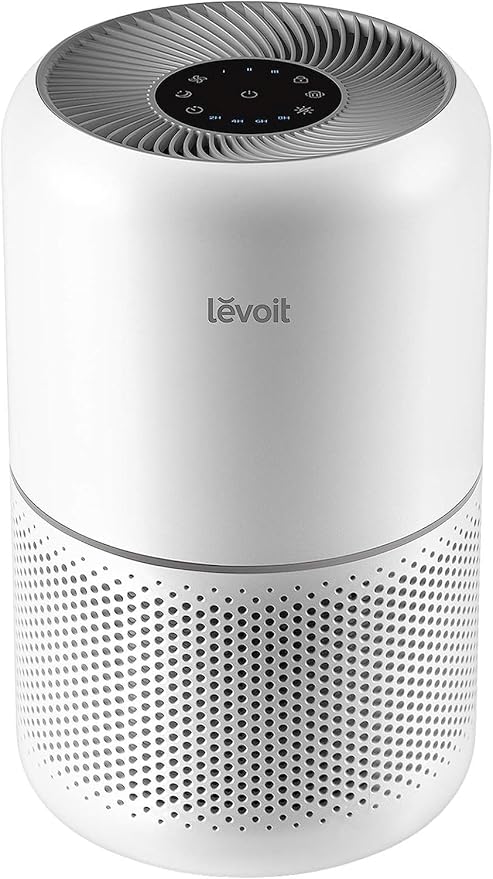
Choosing AHAM certified air purifiers ensures reliable performance and energy efficiency, which makes this model great for anyone dealing with pets and allergens while wanting solid mold filtration. Its biggest strength is the combination of a HEPA-grade filter and significant airflow, which cleans large rooms effectively and quietly.
Setting it up is simple; just plug it in and use the touch controls to adjust settings. The sleep mode keeps noise low at 24 db, so it won’t disturb your rest. The 3-in-1 filtration handles pet dander, dust, smoke, and odors, while a handy filter change indicator ensures you know when it’s time for maintenance.
It covers floor areas up to 1073 square feet, fitting a variety of living spaces well.
Its 56-watt motor runs a 143 CFM CADR, making air cleaning both quick and thorough. The build feels sturdy and designed for portability. Common praise focuses on how quietly it works during sleep mode.
A few mention that the touch controls can be a bit sensitive, which sometimes leads to accidental changes in settings.
The quiet Sleep Mode at 24 db is frequently praised for allowing undisturbed use overnight, meeting expectations for peaceful operation. Several users note that the touch controls sometimes respond too easily, causing accidental setting changes during daily use.
Anyone wanting efficient HEPA-grade filtration for a pet-friendly household and large rooms will find this purifier helpful. Those who need hard-button controls or updateable software might prefer to look for other options that suit those preferences better.
Pros
- Quiet operation in Sleep Mode
- Effective air cleaning with 143 CFM CADR
- Large coverage up to 1073 square feet
- Filter change indicator for easy maintenance
Cons
- Touch controls can be overly sensitive
- No software update information available
| Specification | Details |
|---|---|
| Power Source | ac |
| Control Method | Touch |
| Filter Type | 3 in 1 Filtration |
| Floor Area | 1073 square_feet |
| Noise Level | 24 db |
| Wattage | 56 watts |
6. HEPA Air Purifier for Large Rooms

Mold spores floating around a large living space can be tough to get rid of, especially with pets shedding and dust settling constantly. Designed for spaces up to 2600 square feet, this HEPA air purifier stands out for its triple intake system that speeds up air circulation to keep the environment cleaner and fresher over a wide area.
Setting it up is straightforward with just a power cord and touch controls on the front panel. The real-time air quality display constantly shows PM2.5 levels, which helps you keep an eye on how clean the air is. Its washable HEPA filter makes maintenance easier and less frequent, a big help when dealing with dust, pet dander, and odors daily.
Using a HEPA filter capable of capturing 99.97% of particles down to 0.3 microns, it does a solid job at filtering smoke, dust, pets’ hair, and smells. The triple intake design really helps speed up cleaning for large rooms compared to models with front intake only. At just 22 dB, it operates quietly enough for a bedroom or office.
Some find the button controls less intuitive and wish for app support.
The strongest point is the triple intake system combined with a high-efficiency HEPA filter, which delivers fast and effective purification over very large spaces while running quietly enough not to be distracting. The most common complaint involves the control panel’s button interface, which some find less user-friendly without touchscreen or app options.
People needing to clear large living areas or rooms filled with pet hair, dust, and odors will appreciate this model. Those looking for smart features or simpler digital controls might prefer to explore alternatives with app connectivity or touchscreens instead.
Pros
- Captures 99.97% of airborne particles
- Real-time air quality display
- Quiet operation at 22 db
- Washable HEPA filter for easier cleaning
Cons
- Button control can feel unintuitive
- No app or smart home integration
| Specification | Details |
|---|---|
| Floor Area | 2600 square_feet |
| Noise Level | 22 db |
| Particle Retention Size | 0.3 micron |
| Power Source | Corded Electric |
| Filter Type | HEPA |
| Wattage | 24 |
7. True HEPA Air Purifier for Large Rooms

Purifying air up to 2400 ft² twice per hour, this True HEPA Air Purifier suits large rooms and anyone dealing with mold or allergens. Its biggest strength lies in capturing 99.97% of microscopic particles, making it great for maintaining a clean and healthy environment.
Setting it up is simple with a touch control and a power source ranging from 100-240V. Day-to-day use benefits from an intelligent AQI display showing PM 2.5 levels and an infrared sensor that adjusts fan speed automatically.
The 22 dB sleep mode lets it run quietly at night, while the aromatherapy option adds a pleasant touch to indoor air. The 360° air outlet ensures even purification.
Performance excels in keeping mold spores, smoke, dust, and pet dander out of the air with 2X power filtration. The unit is solidly built and energy efficient at just 24 watts.
Praise often highlights its quiet operation and efficient large-room coverage. Common complaints mention the lack of clear information on software updates and occasional concerns about the size in smaller spaces.
The air purifier is praised for its quiet operation and effectiveness in large rooms, with the automatic fan speed helping keep the air clean with ease. However, many note the device’s size as a drawback in smaller spaces and wish for clearer information about software updates.
Those needing strong purification in big areas will find it a solid fit, especially to combat mold. It’s less suitable for smaller rooms or anyone wanting a compact design and frequent software updates.
Pros
- Captures 99.97% of airborne particles
- Auto fan speed adjusts to air quality
- Quiet 22 dB sleep mode
- 360° air outlet for even purification
Cons
- Size may be large for small rooms
- Software update support unclear
| Specification | Details |
|---|---|
| Floor Area | 2400 square_feet |
| Power Source | dc_100-240V |
| Noise Level | 22 db |
| Wattage | 24 watts |
| Filter Type | HEPA |
| Particle Retention Size | 0.3 |
8. Winix 5510 True HEPA Air Purifier

People dealing with mold spores and allergens in medium to large rooms will find this air purifier useful. Its biggest strength lies in the ability to clean a large space quickly, making it suitable for living rooms or bedrooms where mold tends to spread and settle.
Setup is straightforward with touch controls and integration with Alexa or Google Assistant for voice commands. The washable fine mesh pre-filter tackles bigger particles first, helping protect the True HEPA filter. Daily use involves managing fan speeds and checking the carbon filter for odor control, which helps with common indoor smells from pets or cooking.
Cleaning air of small particles as tiny as 0.01 microns works well, capturing pollen, dust, smoke, and pet dander effectively. Built to cover up to 1882 sq ft within an hour, it runs quietly at 27 dB. Some reviews mention occasional filter replacement costs, which is standard for HEPA units.
The carbon filter’s ability to reduce odors is often praised.
Cleaning effectiveness against fine airborne particles is strong and odor control stands out in daily use, while recurring filter replacement costs appear frequently in feedback. The purifier handles large spaces efficiently but requires budget consideration for filter maintenance.
This model fits well in homes needing allergen and mold control in bigger rooms. Those seeking lower power consumption or minimal upkeep might look at smaller or less feature-rich options instead.
Pros
- Captures 99.99% of airborne allergens as small as 0.01 microns
- Advanced carbon filter reduces odors and VOCs
- Quiet operation at 27 db suitable for bedrooms
- Washable pre-filter protects main HEPA filter
Cons
- Filter replacements can add to ongoing costs
- Power consumption is 65 watts, higher than some models
| Specification | Details |
|---|---|
| Floor Area | 1881 square_feet |
| Particle Retention Size | 0.01 micrometer |
| Noise Level | 27 db |
| Power Source | Electric |
| Control Method | Touch, Amazon Alexa, Google Assistant |
9. GermGuardian AC4300WPT Pet HEPA Air Purifier

Designed for medium to large rooms, the GermGuardian AC4300WPT Pet HEPA Air Purifier excels at removing allergens and pet dander while tackling airborne germs with its UV-C light. Ideal for anyone dealing with pets and mold concerns, it stands out by combining high efficiency filtration with germ-fighting technology.
Setting it up takes just a few minutes with a simple plug-in and touch button controls. Running quietly at 40 decibels, it offers three speeds to suit different needs throughout the day.
The Pet Pure HEPA filter focuses on hair and odors, while the UV-C light adds an extra layer to reduce airborne viruses and volatile organic compounds, making daily air cleaning comprehensive and straightforward.
It circulates air well enough for a 743 square-foot space, refreshing smaller rooms faster for thorough purification. The build feels sturdy and practical, though some mention the button control can be a bit sensitive. The filter captures particles as small as 0.1 microns, which covers typical mold spores effectively.
Noise levels are low, but a few users have noted occasional buzzing sounds during operation.
Many appreciate how effectively the HEPA filter and UV-C light work together to clear pet dander, mold spores, and germs, making the air noticeably fresher. The most common complaint involves some users finding the button controls too responsive, which may cause accidental adjustments.
People with pets and mold sensitivity in medium to large rooms will find the air purifier very useful. Those looking for ultra-quiet or more durable control mechanisms might want to explore alternatives.
Pros
- Captures 99.97% of allergens including mold spores
- UV-C light reduces airborne viruses
- Quiet operation suitable for bedrooms and dorms
- Three speed settings for customized air flow
Cons
- Button controls can be overly sensitive
- Occasional buzzing noise reported during use
| Specification | Details |
|---|---|
| Power Source | Corded Electric |
| Floor Area Coverage | 743 square_feet |
| Filter Type | HEPA |
| Noise Level | 40 db |
| Particle Retention Size | 0.1 micron |
| Wattage | 55 watts |
10. Levoit Core 400S Smart Air Purifier

Levoit Core 400S Smart Air Purifier is designed for large rooms up to 1,718 square feet and excels at filtering out mold spores along with dust, pollen, and smoke. Its biggest strength lies in its powerful 3-stage filtration system combined with smart sensors for real-time air quality monitoring.
Setup happens through simple plug-in and connecting to WiFi for voice control with Alexa or Vera. It uses a laser dust sensor to detect PM2.5 particles and adjusts fan speeds automatically based on air quality. Daily use involves minimal manual adjustments thanks to Auto Mode and a quiet operation level of 24 db, making it easy to leave running throughout the day and night.
Performance-wise, it captures 99.97% of particles down to 0.3 microns and has an activated carbon filter to reduce odors. The build is solid with a pre-filter for larger debris and a carbon filter to trap gases. Praised for its consistent air quality response, some find WiFi setup and app controls a bit tricky to manage at times.
Strong air quality response and automatic fan adjustments keep a room’s air noticeably cleaner. Some struggle with connecting the purifier to WiFi and managing its smart features.
Ideal for anyone needing powerful filtration in large spaces and who wants smart home integration. Less suited for users preferring simple, manual controls without app dependency.
Pros
- Effective 3-stage filtration captures tiny particles
- Real-time air quality monitoring with Auto Mode
- Quiet operation suitable for bedrooms
- Voice control compatible with Alexa and Vera
Cons
- WiFi setup and app controls can be complicated
- Filter replacement costs can add up
| Specification | Details |
|---|---|
| Floor Area | 1718 square_feet |
| Noise Level | 24 db |
| Power Source | ac |
| Particle Retention Size | 0.1 micrometer |
| Wattage | 24 watts |
| Control Method | Voice |
11. Pure Enrichment PureZone HEPA Air Purifier

Quiet operation and a thorough 4-stage filtration system make this a solid pick for anyone dealing with mold and allergens in rooms up to 200 square feet. It suits bedrooms, offices, or any medium-sized space, with its UV-C light adding a good layer of germ elimination on top of the HEPA filter.
Setup is straightforward, plugging into an AC source and using button controls to manage the settings. The washable pre-filter means less frequent replacements, which helps on maintenance days.
It runs quietly at 30 db, making it easy to leave on overnight without distraction. The touch control adds a simple, no-fuss way to switch between modes.
Captures 99.97% of particles down to 0.3 micrometers, making it effective against most allergens, including mold spores. Well put together with a sturdy build, but some find the power use at 60 watts a bit high. The UV-C light is a strong bonus for sanitizing, though a few users note the size limit means larger rooms might need more coverage.
The purifier gets praised for its effective four-stage filtration that includes UV-C light and a True HEPA filter cleaning small allergens and bacteria thoroughly. The most common complaint revolves around its power consumption being on the higher side and the limited coverage area for larger rooms.
Anyone with medium-sized rooms focusing on air quality and mold control should find this purifier a reliable choice, especially where quiet operation matters. Those looking to filter air in significantly larger spaces or wanting a unit with lower energy use might want to explore other options.
Pros
- Four-stage filtration including UV-C light
- Quiet operation at 30 decibels
- Captures 99.97% particles down to 0.3 micrometers
- Washable pre-filter for easy maintenance
Cons
- Limited to rooms of 200 square feet
- Consumes 60 watts during operation
| Specification | Details |
|---|---|
| Power Source | AC |
| Floor Area | 200 square_feet |
| Noise Level | 30 db |
| Filter Type | UV Light |
| Wattage | 60 watts |
| Particle Retention Size | 0.3 micrometer |
12. IQAir HealthPro Plus XE WiFi Air Purifier

Highly efficient at removing extremely fine particles, suitable for large rooms up to 1125 sq ft. Ideal for anyone battling mold spores or other tiny allergens in their home, it offers high-precision filtration that stands out in air purifiers.
Setup involves plugging into a power outlet and connecting to an app for full control, including touchscreen options. The app simplifies monitoring air quality and filter status. The low noise level of 35 decibels means it won’t disturb daily activities or sleep, while the energy-efficient fan keeps power use reasonable at 135 watts.
Exceptional at filtering particles as small as 0.003 microns, it captures nearly all dust, smoke, and allergens with its HyperHEPA and activated carbon filters. Build quality is solid and sizable to cover large areas. Many users praise its effectiveness, though some mention its size can be bulky in smaller spaces.
Filtration performs exceptionally well with nearly complete removal of tiny airborne particles, which users appreciate for allergy and mold control. The biggest complaint is its bulky size, which can make placement tricky in smaller rooms.
Anyone needing thorough purification in large rooms will find it very effective and reliable. Those with compact spaces or looking for portable options might want to consider a smaller model.
Pros
- Covers large spaces up to 1125 sq ft
- Removes particles down to 0.003 microns
- Energy-efficient fan system
- Quiet operation at only 35 dB
Cons
- Relatively large and bulky size
- Requires constant power connection
| Specification | Details |
|---|---|
| Filter Type | Pre-Filter, HEPA, Activated Carbon |
| Floor Area | 1125 square_feet |
| Noise Level | 35 db |
| Power Source | Corded Electric |
| Wattage | 135 watts |
| Control Method | App, Touchscreen |
Best HEPA Air Purifiers for Mold Comparison Table
| Product | Floor Area | Noise Level | Particle Retention Size | Contaminant Filtration Capability |
|---|---|---|---|---|
| Clorox Medium Air Purifier | 1000 sq ft | 30 db | 0.1 micron | – |
| Clorox Turbo Air Purifier | 1000 sq ft | 24 db | 0.1 micron | High |
| PuroAir 240 HEPA 2-Pack | 1000 sq ft | 22 db | 0.1 micron | – |
| Honeywell Allergen Plus | 1718 sq ft | – | 0.3 micron | Dust, Odors, Pollen |
| Levoit Pet Air Purifier | 1073 sq ft | 24 db | 0.3 micron | – |
| Large Room HEPA Purifier | 2600 sq ft | 22 db | 0.3 micron | Smoke, Dust, Odors |
| True HEPA Large Room | 2400 sq ft | 22 db | 0.3 micron | Smoke, Dust, VOCs |
| Winix 5510 HEPA Purifier | 1881 sq ft | 27 db | 0.01 micrometer | High |
| GermGuardian Pet HEPA | 743 sq ft | 40 db | 0.1 micron | – |
| Levoit Core 400S | 1718 sq ft | 24 db | 0.1 micrometer | Particles, Dust, Gas |
| Pure Enrichment PureZone | 200 sq ft | 30 db | 0.3 micrometer | True |
| IQAir HealthPro Plus | 1125 sq ft | 35 db | – | Dust, Smoke, Allergens |
- Floor Area1000 sq ft
- Noise Level30 db
- Particle Retention Size0.1 micron
- Contaminant Filtration Capability–
- Floor Area1000 sq ft
- Noise Level24 db
- Particle Retention Size0.1 micron
- Contaminant Filtration CapabilityHigh
- Floor Area1000 sq ft
- Noise Level22 db
- Particle Retention Size0.1 micron
- Contaminant Filtration Capability–
- Floor Area1718 sq ft
- Noise Level–
- Particle Retention Size0.3 micron
- Contaminant Filtration CapabilityDust, Odors, Pollen
- Floor Area1073 sq ft
- Noise Level24 db
- Particle Retention Size0.3 micron
- Contaminant Filtration Capability–
- Floor Area2600 sq ft
- Noise Level22 db
- Particle Retention Size0.3 micron
- Contaminant Filtration CapabilitySmoke, Dust, Odors
- Floor Area2400 sq ft
- Noise Level22 db
- Particle Retention Size0.3 micron
- Contaminant Filtration CapabilitySmoke, Dust, VOCs
- Floor Area1881 sq ft
- Noise Level27 db
- Particle Retention Size0.01 micrometer
- Contaminant Filtration CapabilityHigh
- Floor Area743 sq ft
- Noise Level40 db
- Particle Retention Size0.1 micron
- Contaminant Filtration Capability–
- Floor Area1718 sq ft
- Noise Level24 db
- Particle Retention Size0.1 micrometer
- Contaminant Filtration CapabilityParticles, Dust, Gas
- Floor Area200 sq ft
- Noise Level30 db
- Particle Retention Size0.3 micrometer
- Contaminant Filtration CapabilityTrue
- Floor Area1125 sq ft
- Noise Level35 db
- Particle Retention Size–
- Contaminant Filtration CapabilityDust, Smoke, Allergens
How to Choose the Right HEPA Air Purifier
Look for a HEPA air purifier with strong mold spore filtration and an activated carbon filter to reduce odors and volatile compounds. Choosing the right size and efficiency helps ensure cleaner air, prevents mold growth, and avoids wasted energy and frequent replacements.
Filtration Efficiency
Many air purifiers claim to reduce airborne particles, but only those with True HEPA filters can reliably trap mold spores, which are typically around 1 to 30 microns in size. Cheaper or faux HEPA filters let these spores pass through, allowing mold to keep circulating in the air.
Some units also include activated carbon filters that help cut down on musty odors and volatile organic compounds, common in moldy environments.
Filter maintenance plays a big role in performance. Overused filters get clogged, lowering airflow and filtration efficiency.
Replacing the HEPA and carbon filters every 6 to 12 months or according to the manufacturer’s schedule keeps the device working right. Models with tool-free access and clear replacement notifications simplify upkeep, so you’re more likely to adhere to the schedule and maintain clean air.
Coverage Area and Airflow
Air purifiers need to match the size of the room to actually reduce airborne mold spores effectively. Choosing one rated for at least the square footage of your space is crucial; otherwise, spores linger and multiply.
CADR ratings provide a useful reference point, showing how many cubic feet per minute of clean air the purifier delivers. Higher CADR means faster removal of contaminants.
Multiple fan speeds come in handy for balancing power use and noise. Lower speeds keep energy bills down and let the purifier run quietly overnight, though they clean air more slowly. Higher speeds quickly clear the air but can be louder and use more energy.
Having a range lets you adjust according to need, life situations, and time of day.
Moisture Resistance and Durability
Devices frequently used in damp or humid spaces must resist moisture to avoid developing mold themselves. Air purifiers built with corrosion-resistant plastic shells and stainless steel components last longer in such conditions compared to cheaper metal parts prone to rust.
Some filters come with antimicrobial coatings, preventing mold growth right on the filter media.
Durability extends to preventing warping or damage from persistent moisture. Units designed to keep electronics sealed and protected allow continuous operation in basements or kitchens. Those that last several years despite exposure offer better value and less hassle replacing parts prematurely.
Noise Levels
Quiet operation matters in bedrooms or workspaces where constant noise is distracting. Many purifiers operate between 30 and 60 decibels; 30 dB is about the level of a whisper, which is comfortable through the night.
Models often include a quiet or sleep mode that dims lights and lowers fan speed to reduce sound without completely shutting off.
Higher fan speeds increase noise but improve air cleaning. Balancing noise and efficiency depends on your tolerance and schedule. A unit with good noise control lets you run it almost continuously with minimal disturbance, critical for controlling mold over time.
Maintenance and Usability
Frequent filter replacement keeps the air quality steady but can be a chore if the design is difficult. Units with simple, tool-free filter access and clear markings reduce frustration.
Indicator lights or notifications help track when it is time to change filters so you don’t have to guess.
Compact, lightweight purifiers are easier to move between rooms prone to mold, like bathrooms or basements. User-friendly control panels with intuitive buttons or touchscreens streamline the adjustment of fan speed and modes.
Such convenience encourages regular use and proper maintenance.
Effective Placement Strategies for Maximum Mold Removal
Positioning an air purifier correctly can significantly improve its ability to reduce mold spores in your home. Placing the unit in areas with poor air circulation or known mold growth spots, such as basements or bathrooms, targets the source directly.
Avoid corners or behind furniture, which can restrict airflow and reduce efficiency.
Keep the purifier at least a few feet off the ground since mold spores often circulate at mid-room levels. In rooms larger than the purifier’s recommended coverage, consider moving the unit between spots or using multiple purifiers for better air turnover.
- Place near humid areas but not directly against walls.
- Ensure vents are unobstructed for proper intake and output.
- Close windows and doors to prevent fresh spores from entering during purification.
Following these placement tips helps the HEPA filter capture mold spores before they settle on surfaces or spread further indoors.
Essential Maintenance Tips to Prolong Your HEPA Air Purifier’s Life
Regular upkeep is crucial to maintaining the efficiency of a HEPA air purifier and extending its service life. Filters should be checked monthly; a visible buildup of dust or mold indicates it’s time for replacement. Most HEPA filters last between 6 to 12 months under typical use, but humid environments may shorten this span.
Cleaning pre-filters and housing components prevents clogging and allows smoother airflow. Use a soft brush or vacuum attachment to clear these parts without damaging the filter layers. Avoid washing HEPA filters unless specified by the manufacturer, as moisture can compromise their effectiveness.
- Replace filters on schedule to prevent mold and bacteria retention.
- Keep the unit in a dry spot to minimize internal moisture accumulation.
- Unplug when cleaning and follow manufacturer guidelines for maintenance.
Consistent maintenance helps the purifier function at its intended capacity, essential for controlling indoor mold.
Comparing HEPA Air Purifiers to Other Mold-Reduction Methods
HEPA air purifiers differ from other mold control methods by filtering airborne spores rather than addressing mold growth on surfaces. Unlike chemical sprays or cleaning products, purifiers offer continuous removal of particles that can cause allergies or respiratory irritation.
Dehumidifiers reduce moisture levels, limiting mold development, but they do not filter spores from the air. Ventilation improves airflow but may bring outdoor spores inside, especially in humid climates.
- Cleaning kills visible mold, but spores remain airborne until filtered.
- HEPA purifiers work best combined with moisture control for comprehensive mold management.
- Other air purifiers often lack true HEPA filters and don’t capture fine mold particles effectively.
Using a HEPA unit alongside other prevention steps creates a more reliable environment against mold-related issues.
People Also Asked
How Do I Properly Size a HEPA Air Purifier for Mold?
Choose an air purifier sized for the square footage of your room, aiming for one that can circulate the air at least five times per hour. Measuring your space and checking the purifier’s Clean Air Delivery Rate (CADR) rating will help match the device properly.
How Often Should I Replace the HEPA Filter to Stay Safe?
Replace the HEPA filter about every 6 to 12 months since buildup of spores and dust reduces effectiveness. When you notice a musty smell or reduced airflow, it’s a good idea to change the filter sooner.
Can HEPA Air Purifiers Remove Mold Spores Effectively from Air?
HEPA air purifiers can trap mold spores from the air effectively but won’t kill mold or remove it from surfaces. Regular cleaning of surfaces and controlling humidity are still important alongside using the purifier.
Is It Safe to Run a HEPA Air Purifier 24/7 Indoors?
Running a HEPA air purifier continuously indoors is safe and helps maintain cleaner air. Devices consume low power, but keep filters clean and the unit dust-free to ensure long-term reliable operation.
What Are Common Problems When Using a HEPA Air Purifier for Mold?
Common issues include reduced airflow from clogged filters and noise if the fan speed is set high. Some users find placement tricky; keep the purifier away from walls and curtains for better air circulation.
Conclusion
Choosing a HEPA air purifier for mold depends mainly on the size of the space you want to treat, how well the unit captures mold spores, and the ease of filter replacement. These factors affect both the purifier’s effectiveness and your ongoing maintenance. Also, noise level can be important if you plan to run it continuously in living areas or bedrooms.
Match the purifier’s capacity to the room size and consider how often you’ll run it each day to keep costs reasonable. It’s worth checking the comparison table to review features and costs side by side, then revisit the detailed picks to find one that fits your needs and budget best.