
Top 12 Best Steam Cleaner for Car Engine You Need Now!
Cleaning a car engine can easily turn messy and unsafe when using the wrong equipment. A cheap or poorly chosen steam cleaner might not reach tight spaces, or worse, could damage sensitive engine parts with excessive heat or pressure. The best steam cleaner for car engine use needs to balance power and precision to avoid these issues during the cleaning process.
Key factors to look for include a pressure range around 40 to 50 PSI and steam temperatures that are hot enough to loosen grime but safe for electrical connections and plastic components. The size and weight matter too; it should be portable enough to maneuver around the engine but sturdy enough to maintain consistent steam output. A stainless steel boiler is preferable for durability and corrosion resistance, and simple controls help make the cleaning process less cumbersome.
Need a Quick Check?
| Image | Product | Price |
|---|---|---|
Our Top Picks 1  | Engine Steam Cleaner 1500W | Check Price |
Our Top Picks 2  | Handheld 1700W Car Steamer | Check Price |
Our Top Picks 3  | Wagner 905e Auto Steamer | Check Price |
Our Selected Top 12 Steam Cleaner for Car Engine You Can Trust
This list features carefully chosen steam cleaners designed specifically for car engines, highlighting their cleaning effectiveness, ease of use, and suitability for various users. Each review outlines key advantages and drawbacks to help you decide which model best fits your needs and preferences.
1. Engine Steam Cleaner 1500W
Generating 221℉ steam in under 20 seconds, the Engine Steam Cleaner 1500W suits anyone who needs a powerful tool for deep engine cleaning without chemicals. Its main strength lies in delivering high-pressure steam quickly for tough grease and grime removal.
Setup is straightforward thanks to a large 42.2 oz water tank that holds enough for 30 minutes of continuous use. Top water filling and bottom drainage make refilling and emptying simple. The handheld, lightweight design with a carry handle makes it easy to maneuver around your car engine’s nooks and edges.
The cleaner operates at 1500 watts and can produce hot steam up to 221°F, effectively loosening stubborn stains and dirt. It feels solid but remains lightweight for manageable use.
Most praise focuses on how quickly it heats up and cleans thoroughly. A common complaint involves handling the steam pressure in tight spots, which requires care.
Fast heating and chemical-free steam cleaning are praised for making engine degreasing straightforward and effective. Handling the high-pressure steam near cramped or sensitive engine parts is noted as challenging by some.
People looking for a quick, powerful handheld steamer for detailed engine cleaning will find this suitable. Those requiring extensive area coverage might prefer a larger, less pressure-intense option.
Pros
- Heats up rapidly in 20 seconds
- Large water tank for 30 minutes’ use
- Lightweight with carry handle for easy use
- Cleans edges efficiently with high-pressure steam
Cons
- High pressure can be tricky in tight spots
- Handheld size limits large-scale cleaning speed
| Specification | Details |
|---|---|
| Wattage | 1500 watts |
| Maximum Temperature | 221 °F |
| Water Tank Capacity | 42.2 oz |
| Heat Time | 20 seconds |
| Voltage | 110 volts |
| Form Factor | Handheld |
2. Handheld 1700W Car Engine Steamer
Anyone who works on car maintenance or detailing and needs a powerful but handheld solution will appreciate this steamer. Its biggest strength is how quickly it heats up and delivers strong steam pressure, perfect for cutting through engine grime and stubborn dirt.
Setting it up is simple since it’s a corded electric model that heats water to 120°C in less than 10 seconds. The handheld design makes it easy to maneuver around tight engine spaces. It uses between 100-200ml of water per minute, so you’ll need to refill occasionally for longer jobs.
Safety is built-in with automatic shutoff for overheating or water shortage, which adds confidence during regular use.
Steam comes out at over 5KGF/CM2 pressure, making it powerful enough to handle tough stains when combined with detergent. The build feels solid and well thought out with the double security protection.
Most users praise how quickly it gets hot; some note that the water consumption requires frequent refills during extended cleaning sessions.
The fastest heat-up time and strong steam pressure often receive praise for efficient engine cleaning. At the same time, water consumption can interrupt cleaning with the need to refill frequently.
Anyone needing quick, targeted steam cleaning will find this unit suitable. Those wanting extended continuous use without breaks may want to look for a model with a larger water tank or longer runtime.
Pros
- Heats up in less than 10 seconds
- Strong steam pressure for tough stains
- Handheld design for easy maneuvering
- Automatic safety shutoff for overheating
Cons
- Uses 100-200ml of water per minute
- Requires frequent refills for longer use
| Specification | Details |
|---|---|
| Wattage | 1700 watts |
| Heat Time | 10 seconds |
| Maximum Temperature | 100 °C |
| Power Source | Corded Electric |
| Steam Pressure | >5KGF/CM2 |
3. Wagner Spraytech 905e Auto Steam Cleaner
Using 212°F steam under pressure, this cleaner targets tough grime and grease, which makes it ideal for cleaning car engines and other vehicle surfaces. It suits anyone looking for a versatile, handheld steamer that handles more than just the engine bay. Its key strength lies in how hot and powerful the steam gets to break down dirt effectively.
Setting it up is straightforward, with a carrying handle that makes moving it around easy during jobs. The 1500-watt power heats the steam to the right temperature quickly, so there’s little waiting time. Because it’s handheld, you can reach tight spots in the engine or inside the car, like upholstery and dashboards, and can even use it indoors on household surfaces.
The steamer does well cutting through grease and stains thanks to its pressurized steam and high heat. It feels solid and practical in hand.
Many find it reliable for various cleaning tasks beyond the engine. A common downside is that the handheld format might limit how long you can comfortably use it without breaks or refilling water.
The steam reaches 212°F, strong enough to handle grease and dirt well, making it a trusted cleaning tool for vehicles and more. The main complaint centers on water tank capacity, which some find too small for extended use without frequent refills.
People who want a portable cleaner that tackles multiple areas on their vehicles will appreciate its power and convenience. Those who prefer longer continuous cleaning sessions might look for a larger unit with a bigger water tank.
Pros
- Delivers high-temperature 212°F steam
- Handheld design with carrying handle
- Versatile for car interior and exterior
- Suitable for indoor household cleaning
Cons
- Limited steam duration per refill
- Handheld size may tire some users
| Specification | Details |
|---|---|
| Wattage | 1500 watts |
| Maximum Temperature | 212 °F |
| Form Factor | Handheld |
| Special Features | Multi Purpose |
4. Steam Cleaner 2500W Engine Steamer

Dyna-Living Steam Cleaner 2500W Engine Steamer stands out for its quick heat-up and chemical-free cleaning power. Ideal for car enthusiasts who need a strong and safe way to clear grime from their engine without harsh detergents, it shines with its ability to produce high-temperature steam rapidly.
Setting up takes moments since the unit heats up in just 10 seconds. Its handheld design feels manageable during use, and the 1000ml tank capacity means less time spent refilling. Running on 110 volts corded power, it delivers consistent steam for about 30 minutes, making it convenient to tackle car engines and other tough surfaces without breaks.
It cleans deeply with steam hitting 221 °F, cutting through grease and dust effectively thanks to its 2500-watt motor. Built to be sturdy yet portable, it handles regular use without issues.
Some praise how powerful it is, while others find it a bit heavy for extended sessions, but overall cleaning results are solid.
2500W power heats water quickly to produce steam at 105℃, breaking down grease and grime effectively without any chemicals. The 1000ml tank provides about 30 minutes of continuous cleaning time, which is enough for several tasks without refilling. Some find the device a bit heavy during prolonged use and wish the hose was longer for better reach in tight spaces.
People needing a strong handheld steam cleaner for car engines or tough kitchen and bathroom grime will appreciate the balance of power and portability. Those who require extended uninterrupted use or easier handling might prefer a lighter or larger model with a longer hose to avoid frequent breaks and strain.
Pros
- Heats up in just 10 seconds
- Holds enough water for 30 minutes continuous use
- Delivers high-temperature steam at 221 °F
- Chemical-free cleaning, no residue left behind
Cons
- Can feel heavy during prolonged cleaning
- Requires electric outlet, no cordless option
| Specification | Details |
|---|---|
| Wattage | 2500 watts |
| Maximum Temperature | 221 °F (105℃) |
| Water Tank Capacity | 1000ml |
| Heat Time | 10 seconds |
| Power Source | Corded Electric |
| Voltage | 110 volts |
5. WolfClean Steam Cleaner with Adjustable Handle

Using steam to clean the car engine feels practical and powerful thanks to the WolfClean Steam Cleaner with Adjustable Handle. It suits anyone looking for a reliable handheld steamer that can handle tough grime with its adjustable pressure levels and a good-sized water tank.
Setting it up is straightforward with a rapid 10-second heat-up time. The 3 level adjustable control lets you switch between gentle and tough steam settings easily. The 14.8-foot cleaning radius means you can move around without constantly unplugging.
The handle adjusts to fit different grips, making day-to-day use comfortable for longer cleaning sessions.
Cleaning performance holds up well against heavy stains, with steam reaching the maximum temperature of 212 °F. The unit is built from durable ABS polymer that resists heat and impact, so it’s solid during use. Most users praise how quickly it heats up, although some note the handheld design can feel a bit bulky during extended use.
The quick heat-up combined with the multi-level steam control receives strongest praise for handling tough engine dirt effectively. Common criticism revolves around the steamer’s bulkiness during extended use, which can affect maneuverability for some.
People focused on efficient, powerful cleaning and willing to manage the weight will be satisfied. Those looking for a lighter or cordless option could consider other models better suited for ease of movement over longer periods.
Pros
- Fast 10-second heat-up time
- Large 2.11-quart water tank for longer cleaning
- Three adjustable steam levels for different stains
- Adjustable handle for better grip
Cons
- Handheld design may feel bulky during long jobs
- Powered by AC only, limiting cordless use
| Specification | Details |
|---|---|
| Heat Time | 10 seconds |
| Water Tank Capacity | 2.11 Quarts |
| Cleaning Radius | 14.8 FT |
| Adjustable Handle Levels | 3 |
| Wattage | 1700 watts |
| Maximum Temperature | 212 °F |
6. 2500W Handheld Steam Cleaner with Tank
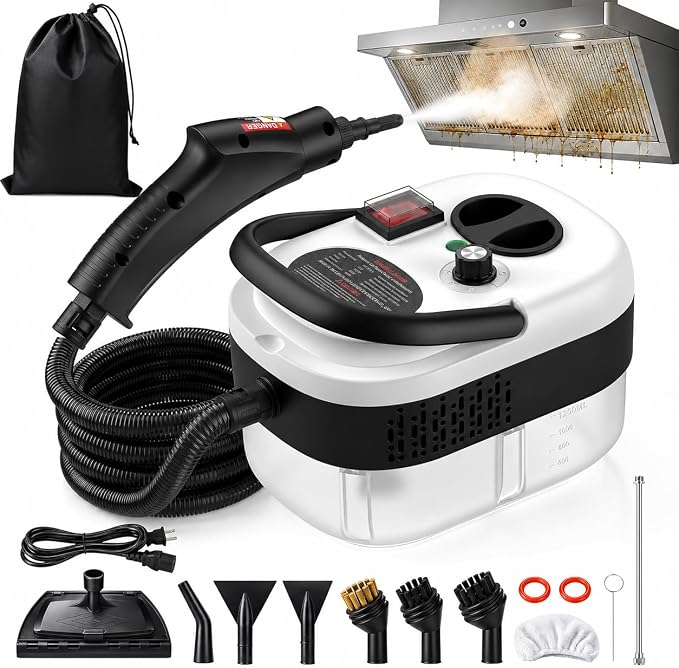
Strong steam output and quick heating make this cleaner ideal for anyone wanting chemical-free engine cleaning. Its powerful 2500W system is best suited for tackling tough grease and grime on car engines and other heavy-duty tasks around the home.
Setup takes just moments thanks to a short 15-second heat time, letting you get straight to cleaning almost immediately. The handheld design and 110-volt compatibility make it easy to handle and power from standard outlets. The 3 Bar steam pressure breaks down stubborn dirt, while the included tank offers continuous steam without frequent refills.
Steam reaches up to 221°F to effectively break apart baked-on engine grime, cutting through dirt without harsh cleaners. The build feels solid and durable, perfect for repeated heavy use.
Praise often mentions its fast heat time and powerful steam, while some point out the weight can make longer cleaning sessions a bit tiring.
High steam temperature combined with strong pressure breaks down engine grease effectively, speeding up cleaning. Users often praise the quick readiness, yet weight is frequently mentioned as a drawback during longer sessions.
Those needing intense, chemical-free cleaning for car engines will appreciate this cleaner. For something lighter during extended use, exploring smaller models might be a better choice.
Pros
- Powerful 2500W heating system
- Rapid 15-second heat-up time
- Reaches high steam pressure of 3 Bar
- Can tackle tough grease and grime
Cons
- Heavier than some handheld models
- Continuous use can feel tiring
| Specification | Details |
|---|---|
| Wattage | 2500 watts |
| Heat Time | 15 seconds |
| Voltage | 110 volts |
| Maximum Temperature | 221 °F |
| Steam Pressure | 3 Bar |
7. McCulloch MC1385 Canister Steam Cleaner

A sturdy canister design built from durable materials, the McCulloch MC1385 suits anyone wanting to clean tough grime chemically free. Its greatest strength is delivering high-temp steam cleaning without needing harmful chemicals, making it ideal for auto and home use.
Setup involves filling the large water tank and waiting about 12 minutes for a full heat-up, powered by a 1500-watt corded electric source. The steam control dial lets you adjust pressure depending on the task, while onboard accessory storage keeps brushes, nozzles, and pads handy for quick switching during cleaning sessions.
It does a solid job blasting grease and stains off engine parts and grout alike, thanks to its 200 °F steam output. Build quality is reliable, with a long hose and multiple brushes for detail work. The most common praise highlights its chemical-free cleaning power, while the primary complaint is that the 12-minute heat-up time can feel slow when you want to get started right away.
Steam cleaning at 200 °F manages tough dirt and grease well, praised for avoiding chemicals. Many note the heat-up time slows down quick jobs, making it less convenient for last-minute cleaning.
Anyone prioritizing chemical-free, detailed car or home cleaning will appreciate its power and accessories. Users needing fast startup and cordless freedom might prefer a different model.
Pros
- Cleans deeply without harsh chemicals
- Comes with 23 useful accessories
- Adjustable steam control for different surfaces
- Large capacity tank reduces refill frequency
Cons
- Heat-up takes around 12 minutes
- Cord limits reach during detailed work
| Specification | Details |
|---|---|
| Wattage | 1500 watts |
| Form Factor | Cannister |
| Heat Time | 12 minutes |
| Maximum Temperature | 200 °F |
| Power Source | Corded Electric |
| Special Features | Chemical-Free Steam, Large Capacity Tank, Personal Car Detailing at Home, Rapid Heat Up, Steam Control |
8. Gautye Steam Cleaner with Adjustable Handle

Easily the first thing that stands out is how compact and lightweight it feels while still packing plenty of power. Ideal for anyone looking to clean their car engine without lugging around bulky equipment, it offers adjustable steam levels right on the handle for precise control.
Setting up takes no time thanks to the rapid 15-second heat up, and the integrated design means all parts stay together without fuss. Carrying it around the garage or home is simple, with a 13.2-foot reach allowing access to tight spots under the hood without strain.
Controls are intuitive and right at your fingertips, so switching between steam levels during cleaning is straightforward.
Cleaning performance ranks high, easily handling grease and grime on engine components. The 1700-watt power and maximum 212°F temperature provide solid steam output that tackles tough dirt.
Its heat-resistant ABS housing is durable and easy to wipe down after use. A frequent compliment is the short heat-up time, while some find the water tank capacity could be larger for extended sessions.
The fastest heat-up time stands out, letting you get started quickly, while many mention the water tank size limits longer cleaning intervals. It effectively cleans engine grime but might require refilling during big jobs.
Those needing a portable, quick-to-use steam cleaner for light to medium engine cleaning will appreciate this model. Bigger tasks or those preferring heavier-duty tools should explore alternatives with larger tanks or sturdier handles.
Pros
- Compact, integrated design
- Rapid 15-second heat up
- Long 13.2-foot cleaning reach
- Easy steam level adjustment on handle
Cons
- Water tank capacity may be small for long jobs
- Some users find the plastic handle less durable
| Specification | Details |
|---|---|
| Wattage | 1700 watts |
| Maximum Temperature | 212 °F |
| Heat Time | 15 seconds |
| Cleaning Reach | 13.2 FT |
| Water Tank Capacity | 1.69 Quart |
| Steam Levels | 3 Adjustable Levels |
9. 2500W High Pressure Handheld Steam Cleaner

Strong power delivery makes the 2500W High Pressure Handheld Steam Cleaner an ideal pick for deep cleaning car engines. It suits anyone who needs a device capable of breaking down tough grime and carbon deposits quickly without switching tools.
Setup is simple, with a 5-minute heat time getting things ready for use. Its compact size at 19x15x13cm helps reach tight engine spots and also works well on interiors or wheels. Being handheld and relatively light reduces fatigue during extended cleaning sessions.
Multiple brush attachments mean you can adapt to various surfaces, while the corded design ensures uninterrupted power.
It tackles oil and baked-on grime with strong pressure and heat, reaching up to 248 °F to loosen stubborn dirt. The build feels solid for a portable unit, with a large capacity tank that minimizes refills.
Many appreciate the cleaning effectiveness, though some mention the cord limits mobility somewhat. The brushes help but attach securely enough during thorough scrubbing.
High pressure and temperature effectively remove oil and carbon buildup, making engine cleaning efficient. Most find the cord restricts freedom of movement, requiring some planning when cleaning complex engine bays.
Those needing a powerful, portable steam cleaner will appreciate this unit, especially for heavy grime. Buyers looking for cordless convenience or extremely lightweight tools might want to explore other options.
Pros
- Strong 2500W power for deep engine cleaning
- Compact size fits tight spaces easily
- Multiple brush attachments included
- Short 5-minute heat-up time
Cons
- Corded design limits reach around large engines
- Some brushes may not secure tightly
| Specification | Details |
|---|---|
| Wattage | 2500 watts |
| Heat Time | 5 minutes |
| Maximum Temperature | 248 °F |
| Form Factor | Handheld |
| Power Source | Corded Electric |
| Size | 19x15x13cm |
10. Steam Cleaner 1500W Handheld Engine Steamer

Cleaning grease and grime from a car engine usually means scrubbing and harsh chemicals, but a steam cleaner can make the task a lot easier. It fits best for anyone wanting a chemical-free, quick solution that blasts away dirt with high-pressure steam, especially in tight or hard-to-reach spots under the hood.
Setting up involves filling a large 42.2 oz water tank, which keeps the cleaner running for around 30 minutes straight, perfect for detailed engine cleaning. It heats up fast, reaching 221 ℉ in just 20 seconds, so you’re ready without a long wait.
The compact and handheld design makes it easy to carry around, and the carry handle adds convenience during use.
The steamer handles tough engine grime well, using hot-pressure steam that deeply cleans without leaving any chemical residue. It feels solid yet lightweight enough to maneuver comfortably.
Most users like how powerful the steam is and how quickly it heats up, while some mention that the water tank setup can be a bit fiddly when draining and refilling.
The steamer’s strongest point is its ability to generate high-pressure steam quickly, making deep cleaning straightforward and chemical-free. The most frequent complaint involves the water tank’s design, which can make filling and draining slower or less convenient than expected.
Anyone needing a fast, powerful, handheld steam cleaner that avoids chemicals will appreciate its use on car engines. People looking for a model with a more convenient water handling system or higher voltage compatibility might consider other options.
Pros
- Chemical-free cleaning with no fumes or residue
- Large water tank allows 30 minutes of use
- Quick heating time of 20 seconds
- Lightweight and easy to handle
Cons
- Water tank refilling and draining can be awkward
- Limited to 110 volts, may restrict power in some setups
| Specification | Details |
|---|---|
| Wattage | 1500 watts |
| Form Factor | Handheld |
| Heat Time | 20 seconds |
| Maximum Temperature | 221 °F |
| Water Tank Capacity | 42.2 oz |
11. BEAMNOVA 2500W Car Steam Cleaner

Generating steam at 221°F in just 15 seconds, this handheld steam cleaner suits anyone wanting a quick, chemical-free way to clean tough engine grime. Its strongest feature is reaching high temperature and pressure fast, making it great for deep cleaning without harsh chemicals.
Setup is straightforward: fill the large 1L glass tank with water, then switch it on. Steam pressure adjusts easily via a knob that controls how much steam comes out.
The compact, lightweight design means maneuvering around an engine bay isn’t tiring, and being cordless from a regular household outlet adds convenience for car detailing in the garage or driveway.
Cleaning power is solid, able to cut through grease and dust effectively thanks to the high temperature and pressure. Build quality feels good for handheld use, with a sturdy glass tank and solid controls.
Positive notes highlight its quick heat-up time and water efficiency. A common downside is the need to stay near an AC power source since it doesn’t run on batteries.
The quickest steam generation and consistent pressure make it effective on engine grime without chemicals. Many find that the need to plug into an AC outlet restricts mobility while cleaning larger or hard-to-reach engine areas.
Perfect for those who work near a power outlet and want fast, chemical-free cleaning of car engines. Anyone needing cordless freedom or extended reach may want to look for steam cleaners with battery operation or longer hose lengths.
Pros
- Rapid steam generation in 15 seconds
- Large 1L water tank for extended use
- Adjustable steam outlet via easy knob
- Chemical-free cleaning with high temperature steam
Cons
- Requires constant AC power source
- Not cordless, limits reach during cleaning
| Specification | Details |
|---|---|
| Wattage | 2500 watts |
| Heat Time | 15 seconds |
| Maximum Temperature | 221 °F |
| Power Source | AC |
| Form Factor | Handheld |
| Water Tank Capacity | 1L glass tank |
12. STEAMBOT 34-in-1 Steam Cleaner

Anyone looking for a versatile steam cleaner that handles tough engine grime and delicate car interiors will appreciate its power and multi-functionality. It suits those who want professional-level cleaning with just water and need a device that can tackle grease without chemicals. The biggest strength lies in its high-pressure, high-temperature steam that breaks down stubborn residue effectively.
Setup is straightforward with a compact cannister design that heats up in 9 minutes, reaching 302°F. The large capacity tank means less refilling during your cleaning session. Compact nozzles help reach tight spots in the engine bay as well as vents and cup holders inside the car. Child lock adds a safety feature while working around delicate components, making daily use practical and secure.
Cleaning performance is strong thanks to 66 PSI steam pressure that dissolves caked-on grease and burnt-on residue with water only. The heavy-duty build is designed for both interior and engine detailing, impressing with its professional touch.
Users commonly highlight its effective cleaning power, though the weight can feel a bit cumbersome for extended use.
The steam cleaner consistently delivers powerful and deep steam pressure that cuts through grease with just water, earning praise for tackling stubborn grime without chemicals. The most frequent issue noted is its weight, which can feel cumbersome for some users during extended detailing.
Ideal users are those needing a strong cleaner for engine bays and multi-surface car interiors who prioritize chemical-free cleaning. Those seeking a lighter or more portable option might want to consider other models better suited to quick, short jobs.
Pros
- High-pressure steam removes tough engine grime effectively
- Large water tank reduces frequent refills
- Compact nozzles access tight and delicate spaces
- Child lock provides safety during use
Cons
- Heavier weight makes longer cleaning sessions tiring
- May require caution on very sensitive interior surfaces
| Specification | Details |
|---|---|
| Wattage | 1500 watts |
| Heat Time | 9 minutes |
| Maximum Temperature | 302 °F |
| Pressure | 66 PSI |
| Form Factor | Cannister |
| Special Features | Child Lock, Compact Design, High Pressure, Large Capacity Tank |
Best Steam Cleaners for Car Engine Comparison
| Product | Wattage | Heat Time | Max Temperature | Form Factor |
|---|---|---|---|---|
| Engine Steam Cleaner 1500W | 1500W | 20 seconds | 221 °F | Handheld |
| Handheld 1700W Car Steamer | 1700W | 10 seconds | 212 °F | Handheld |
| Wagner 905e Auto Steamer | 1500W | – | 212 °F | Handheld |
| 2500W Engine Steam Cleaner | 2500W | 10 seconds | 221 °F | Handheld |
| WolfClean Adjustable Steam | 1700W | 10 seconds | 212 °F | Handheld |
| 2500W Handheld Tank Steamer | 2500W | 15 seconds | 221 °F | Handheld |
| McCulloch MC1385 Steamer | 1500W | 12 minutes | 200 °F | Cannister |
| Gautye Adjustable Steam Cleaner | 1700W | 15 seconds | 212 °F | Handheld |
| 2500W High Pressure Steamer | 2500W | 5 minutes | 248 °F | Handheld |
| 1500W Handheld Engine Steamer | 1500W | 20 seconds | 221 °F | Handheld |
| BEAMNOVA 2500W Car Steamer | 2500W | 15 seconds | 221 °F | Handheld |
| STEAMBOT 34-in-1 Steamer | 1500W | 9 minutes | 302 °F | Cannister |
- Wattage1500W
- Heat Time20 seconds
- Max Temperature221 °F
- Form FactorHandheld
- Wattage1700W
- Heat Time10 seconds
- Max Temperature212 °F
- Form FactorHandheld
- Wattage1500W
- Heat Time–
- Max Temperature212 °F
- Form FactorHandheld
- Wattage2500W
- Heat Time10 seconds
- Max Temperature221 °F
- Form FactorHandheld
- Wattage1700W
- Heat Time10 seconds
- Max Temperature212 °F
- Form FactorHandheld
- Wattage2500W
- Heat Time15 seconds
- Max Temperature221 °F
- Form FactorHandheld
- Wattage1500W
- Heat Time12 minutes
- Max Temperature200 °F
- Form FactorCannister
- Wattage1700W
- Heat Time15 seconds
- Max Temperature212 °F
- Form FactorHandheld
- Wattage2500W
- Heat Time5 minutes
- Max Temperature248 °F
- Form FactorHandheld
- Wattage1500W
- Heat Time20 seconds
- Max Temperature221 °F
- Form FactorHandheld
- Wattage2500W
- Heat Time15 seconds
- Max Temperature221 °F
- Form FactorHandheld
- Wattage1500W
- Heat Time9 minutes
- Max Temperature302 °F
- Form FactorCannister
How to Choose the Best Steam Cleaner
Choosing the right steam cleaner for a car engine means looking for strong steam pressure, temperature control, and safety features to protect delicate parts. Picking the right model ensures effective cleaning without damage, saving money on repairs and avoiding extra work down the line.
Steam Pressure and Temperature
Engines covered in tough grease and grime demand a tool that can cut through the buildup quickly. Machines with steam pressure rated around 40 to 60 psi proved effective in loosening stubborn deposits without repeated scrubbing. Temperature plays a key role too; steam closer to 210°F can melt and dissolve oily residues while staying safe for engine components.
Low-pressure units often leave behind residue requiring additional cleaning, which wastes time and effort. On the other hand, devices with adjustable pressure and temperature controls let users dial in the right setting for delicate or heavily soiled areas, protecting wiring and seals from damage.
Water Tank Capacity
Water tanks ranging from about 1 to 2 liters change how long the unit can run before a refill is needed. Those with smaller tanks can be carried easily but require frequent interruptions, which slows down thorough engine work.
Larger tanks support continuous operation, especially important when cleaning multiple vehicles or larger engine bays.
The convenience of refilling also varies. Models that allow top-fill or removable tanks save hassle during mid-clean. Mentioning whether the system supports distilled water helps too since some devices are sensitive to mineral buildup, which affects longevity and performance.
Portability and Size
Working around engine components often means reaching into cramped spaces, so compact cleaners make the job easier. Units weighing under 10 pounds reduce arm fatigue during sessions that can last over an hour.
The balance between size and power is crucial; overly bulky machines become unwieldy, especially in tight spots.
Electric cords measuring around 15 feet provide enough stretch to access most engine compartments without dragging extension cords. Cordless versions improve mobility but sometimes sacrifice continuous steam output. Choosing between these depends on the layout of the workspace and available outlets.
Safety Features
Heating steam to high temperatures always carries risk. Products that automatically shut off after a certain period or if water runs out prevent unsafe dry steaming, which can damage internal parts and pose fire hazards.
Pressure release valves are essential for letting off excess steam safely if pressure spikes unexpectedly.
Materials matter as well. Stainless steel or brass components offer better resistance to corrosion from water and heat compared to plastic parts near the boiler. This durability keeps the tool reliable over years of cleaning engines that generate considerable heat during use.
Attachment Variety and Ease of Use
Engines have many nooks and crannies, making the right attachments critical. Kits with angled nozzles, small brushes, and flat scrapers provide access to tight spots like valve covers, spark plug wells, and intake manifolds.
Without these, cleaning can become guesswork or incomplete.
Simple interfaces with knobs or buttons for steam adjustment help tailor steam pressure in real time. Quick-change attachment systems speed up switching between tools, which reduces downtime and keeps cleaning moving efficiently.
Effective Safety Precautions When Using a Steam Cleaner on Your Car Engine
Engines contain electrical components and sensitive parts that can be damaged if exposed to excessive moisture or heat. Before starting steam cleaning, disconnect the battery to prevent any short circuits. Allow the engine to cool completely, as applying steam on hot surfaces may cause thermal shock leading to cracks or other damage.
Basic safety steps include:
- Covering the air intake, distributor, and exposed electrical wiring with plastic bags or waterproof covers.
- Using a low-pressure steam setting to avoid forcing water into connectors or delicate areas.
- Wearing protective gloves and eyewear to avoid burns from hot steam.
These precautions help in minimizing risk and ensure that the cleaning process doesn’t cause further mechanical or electrical issues under the hood.
Common Mistakes to Avoid During Car Engine Steam Cleaning
A common error is rushing the drying process. Leaving moisture trapped can lead to corrosion or electrical problems later on.
Use compressed air or a clean cloth to dry small crevices and components immediately after steaming.
Another mistake is applying steam too close or using too high pressure. This can force water into seals or sensitive electronics. Maintaining a safe distance of at least 12 inches between the steam nozzle and engine parts prevents damage.
Some users also fail to protect vulnerable components, which leads to expensive repairs. Ignoring the step of shielding electrical parts or the air intake may result in water infiltration causing engine troubles.
Comparing Steam Cleaning to Traditional Engine Cleaning Methods
Steam cleaning uses high-temperature vapor to loosen dirt and grease with minimal water use. It avoids the heavy water runoff typical of pressure washing, reducing the chance of water damage in engine compartments.
Traditional methods often involve detergents and physical scrubbing, which can be time-consuming and risk removing protective coatings on wiring or surfaces. Steam cleaning softens grime gently without harsh chemicals.
However, steam cleaning requires appropriate equipment and safety steps, while traditional cleaning may be simpler for those without specialized tools. Steam cleaning tends to reach tight spaces effectively, but pressure washers provide a quicker rinsing process for larger debris.
People Also Asked
How Do I Safely Use a Steam Cleaner on My Car Engine?
Use a steam cleaner on a cool engine to avoid damage and electrical shorts. Cover sensitive parts like the alternator and air intake with plastic bags to keep them dry during cleaning. Allow the engine to dry completely before starting it again.
What Size Steam Cleaner Is Ideal for Cleaning Car Engines?
A steam cleaner with a medium water tank (around 1 to 2 liters) works best for car engines, providing enough continuous steam without being too bulky. Compact models are easier to maneuver around tight engine spaces.
Are Steam Cleaners Compatible with All Types of Car Engines?
Steam cleaners can be used on most car engines, but avoid older or exposed electrical components without proper protection. Newer engines with sealed electronics handle steam cleaning better as long as you shield sensitive areas.
How Long Does a Car Engine Steam Cleaner Typically Last?
Car engine steam cleaners typically last several years with regular maintenance like descaling and cleaning nozzles. Frequent use may require more upkeep to keep the machine in good working order.
What Are Common Problems When Using Steam Cleaners on Engines?
Common problems include electrical damage from water exposure and clogging from mineral buildup in the steam cleaner. Failing to protect sensitive engine parts can lead to costly repairs.
Conclusion
Choosing the best steam cleaner for a car engine comes down to a few key points. Look for one with strong steam power to break down grease and grime. Make sure it has a durable build since car engines can be tricky and rough on tools.
Also, pay attention to how easy it is to reach tight spots and control the steam flow.
The amount of space you have and how often you’ll clean your engine should influence your choice. Smaller models work better in limited spaces or for quick jobs, while larger units suit regular, heavy-duty use.
Check the comparison table and reviews above to find the right balance for your needs and budget.